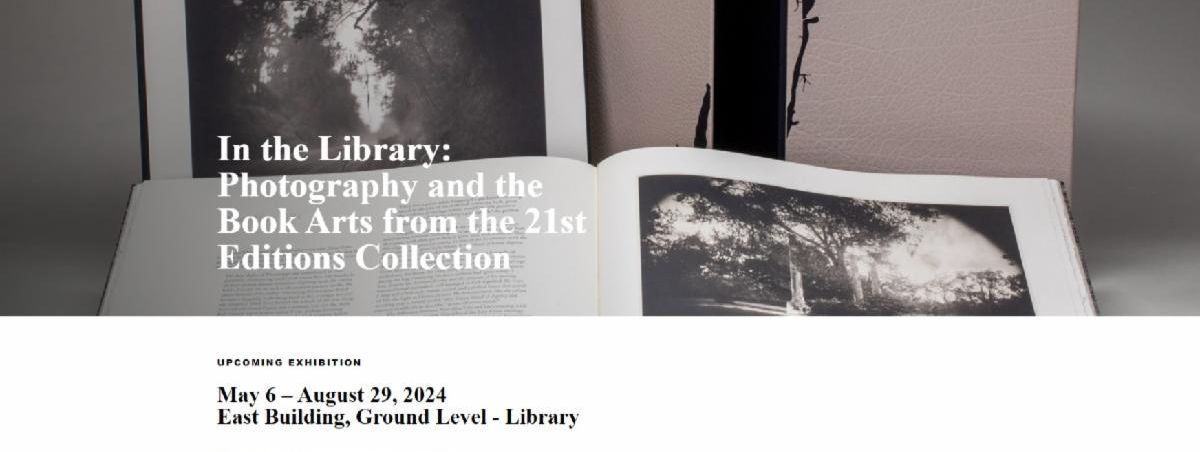
The National Gallery of Art and University of Minnesota Libraries will partner to produce concurrent exhibitions featuring these works and the stories behind the collaborations that made their creation possible.

The exhibition at NGA will begin May 6 and run to August 30, 2024. The exhibition at the University of Minnesota will run June 2 to September 30, 2024.

Click here for more information

Here are two of the twelve titles that will be exhibited at the National Gallery of Art exhibition.
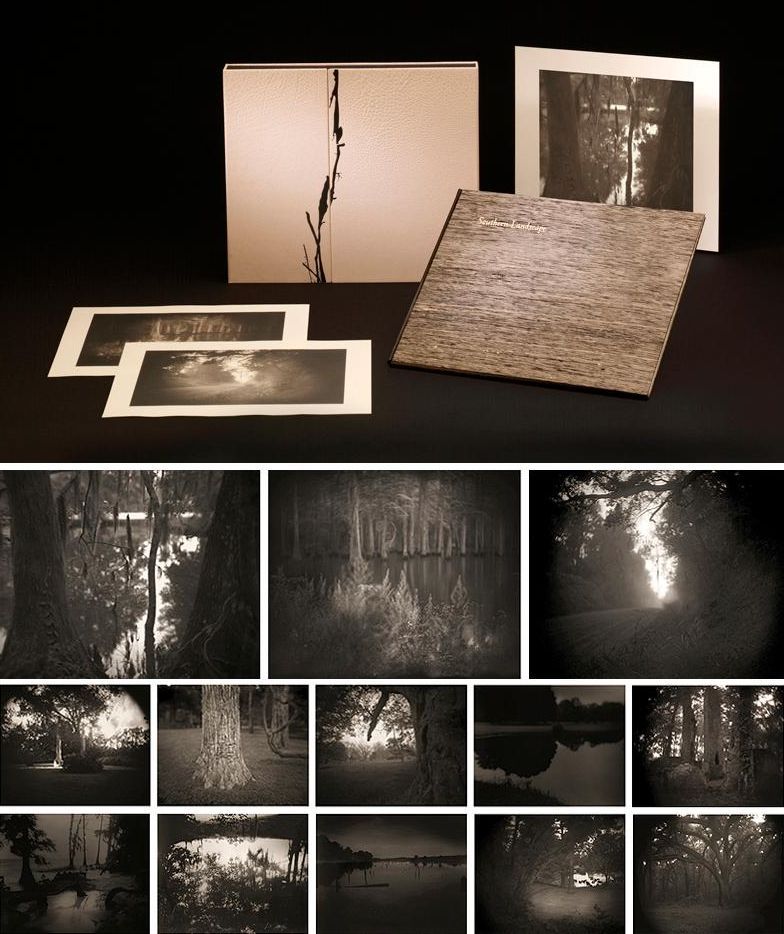
Southern Landscape
Sally Mann/John Stauffer

Perhaps it is no wonder that Sally Mann is drawn, both in her images and the literature she reads, to the gothic, with its eccentrics, its haunting, and its unruly landscapes. "I think the South depends on its eccentrics," she has said, and she considers herself one of them. Her work undermines prevailing platitudes, from perceptions of children to the South's "Lost Cause," which ignores the horrors of slavery and Jim-Crow segregation and presents the Old South as a utopian paradise. She named her son Emmett, in part after the young Emmett Till, whose lynching in 1955 sent shock waves throughout the country, exposing the savagery of Southern segregation; and she photographed the spot where Till's body had been dumped into the Tallahatchie River. She aptly revised Flannery O'Connor's understanding of the South as "Christ-haunted": "I say it's death-haunted." It is haunted by (among other things) the deaths of slaves, the deaths of its white men during the Civil War, and the deaths of lynching victims during Jim-Crow segregation. And she is explicit in connecting her photographs of the Southern landscape to the South's haunted past: 'The pictures I took on those awestruck, heartbreaking trips down south were pegged to the familiar corner posts of my conscious being: memory, loss, time, and love'..." - From Introduction by John Stauffer

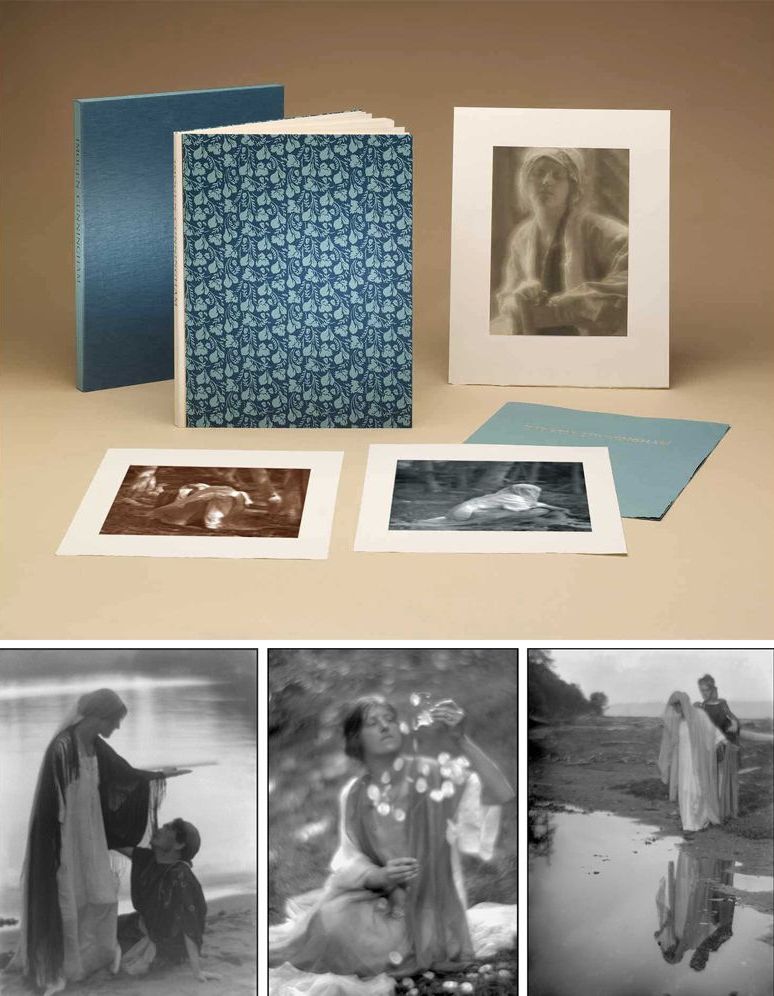
Imogen Cunningham: Symbolist
Imogen Cunningham/William Morris

What influence, one might wonder, could William Morris, poet, Utopian Socialist, revolutionary, English Arts and Crafts movement leader, textile and furniture designer,Pre-Raphaelite, a founder of the Society for the Protection of Ancient Buildings, and creator of the Kelmscott Press, have had on the work of the great Modernist American photographer Imogen Cunningham? Hardly any, one might assume. Yet she claimed him as an influence, and his influence was intellectual, social, and visual.

Cunningham’s work became more “Modernist” in appearance with the passage of time; however, that was not where it began. Her first major work was a powerful series of photographs inspired, she claimed, by Morris’s writings. - from the Introduction by John Wood



For more information call Pam or Steve at 508-398-3000