National Child Abuse Prevention Month

April 2024


National Crime Victims' Rights Week

April 21–27, 2024

Serving and Supporting Child Victims

In keeping with this year's National Crime Victims' Rights Week theme, "How Would You Help? Options, Services, and Hope for Crime Survivors," and in observance of National Child Abuse Prevention Month in April, the DCJS Victims Services and Juvenile and Child Welfare teams are offering training and resources related to serving and supporting child victims.

Resources for Professionals


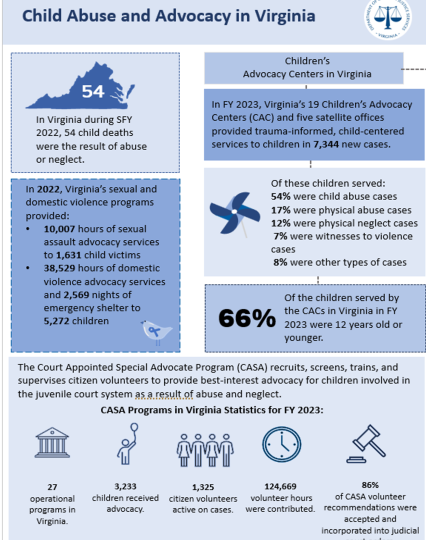
Highlighting the important work agencies in Virginia are doing to support and serve child victims, the Child Abuse and Advocacy in Virginia fact sheet also has shareable resources.


Download the Child Abuse and Advocacy in Virginia Fact Sheet

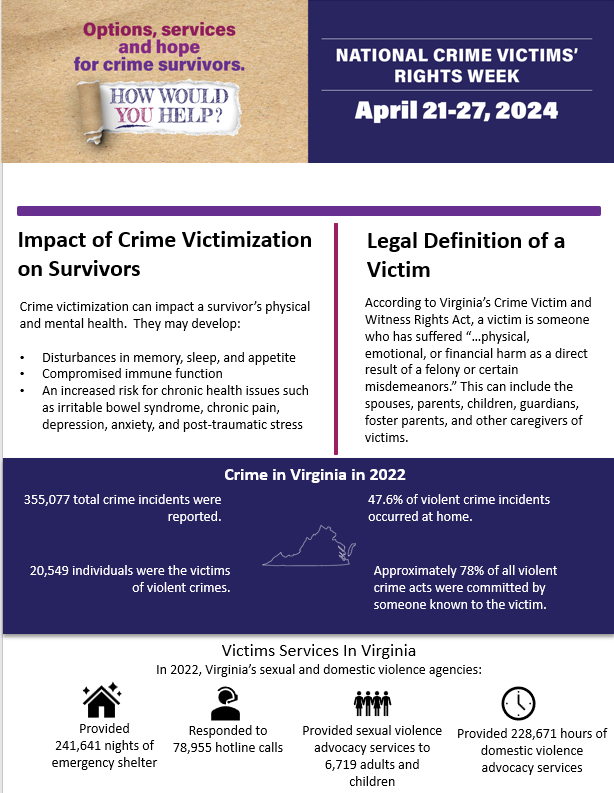
The National Crime Victims' Rights Week (NCVRW) fact sheet offers facts, statistics, and resources regarding Virginia crime victims and victim services.

Download the NCVRW Fact Sheet

This brief video shares the history of crime victims' rights, some state and federal crime statistics, and facts regarding the impact of crime on victims.

Watch Video

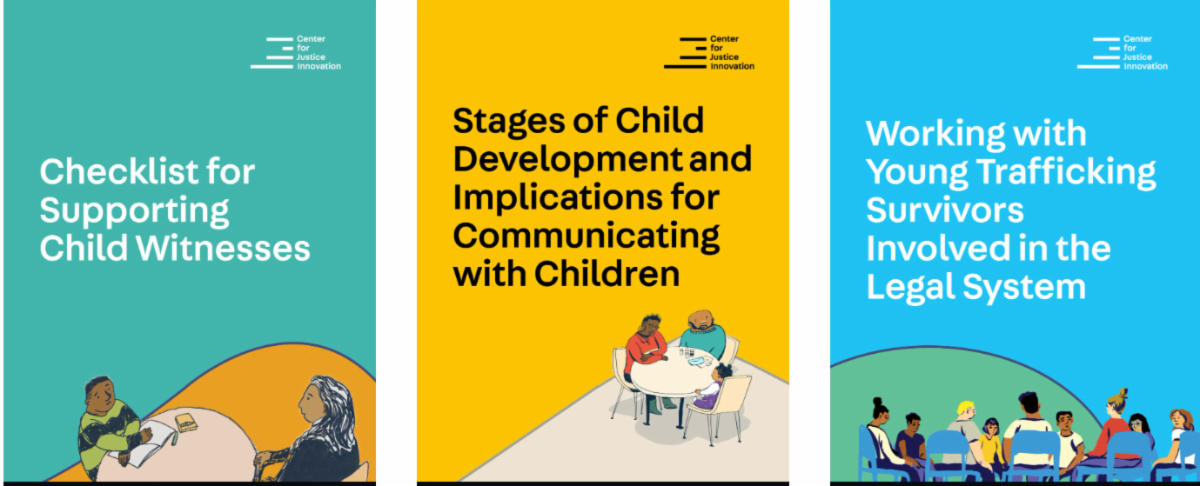
The Center for Court Innovation provides various resources for professionals who support child victims and witnesses. These resources include a guide that assists professionals in preparing and supporting children to testify in court, a checklist to help children identify their concerns about testifying and a resource with helpful tips and strategies for communicating effectively with children at different developmental stages. They also offer a resource guide on best practices for working with young trafficking survivors who are involved in the legal system.


Preparing Children for Court: A Prosecutor's Perspective–An Interview with Nancy Oglesby, Virginia's Domestic and Sexual Violence Resource Prosecutor


Jenna Foster, DCJS Children's Justice Act Coordinator, asked Nancy Oglesby, Commonwealth's Attorneys' Services Council, to share her insights into how to prepare children for court from a prosecutor's perspective. Nancy has been a career prosecutor in the Commonwealth of Virginia for over 25 years. She is currently Virginia's Domestic and Sexual Violence Resource Prosecutor. Nancy has handled thousands of domestic violence, child abuse, and sexual assault cases. In addition, she has provided training on these issues to many professionals, including prosecutors, law enforcement officers, advocates, medical professionals, and forensic interviewers. 


In your experience, what is the best approach to court preparation when working with a child victim?

Time. Preparing a child victim properly for court is not something that can be rushed. In order for a child to be able to share successfully what is a very personal and often traumatic experience, they must feel safe. Establishing a relationship with a child builds trust, and we all know that building authentic relationships takes time. Prosecutors are extremely busy, but prioritizing the time to meet with children who are going to testify on more than one occasion (and preferably several times) is a foundational key to not only success in the courtroom but also to creating an atmosphere that is safe for disclosure.


How does understanding how children use and develop language impact court preparation?

Every child communicates differently. The younger the child, the more critical it is to understand how developed the child is in terms of linguistic competence. Child forensic interviewers are very well trained in asking questions in developmentally appropriate ways. Prosecutors need training in this area as well. For example, not every child will be able to tell you how many times an event happened. This can be because something became so normal for them that they lost count, or it could be because they have yet to develop the skill of accurately counting events. In either case, if we focus our questions around asking a child to quantify times, we risk encouraging children to answer incorrectly by guessing or providing an answer simply because they want to please.


What approaches do you suggest to make a courtroom more child-friendly?

Prosecutors should spend time thinking about each particular child's needs in their particular courtroom. They can then file a motion in limine that covers things such as modifying the courtroom to accommodate the child witness, having the child take a "child-friendly" oath, allowing the child to bring a comfort item to the stand, requiring questions to be asked in a simple, understandable way on cross-examination, and my favorite, when available, the use of a certified facility dog pursuant to the Code of Virginia § 18.2-67.9:1. If anyone would like a sample motion, they can email me at noglesby@wm.edu and I will be glad to share!

DCJS "Supporting Child Victims" Training Series


DCJS is offering a weeklong, free training series to support professionals as they serve and support child victims.


"Where the Boys Are: Understanding the Impact of Trauma on Boys"

April 22, 2024, from 10:00 am–11:30 am


"Preparing Children for Court"

April 23, 2024, from 10:00 am–11:30 am


"Navigating the Realities of Childhood Disclosure: A Child Sexual Abuse Survivor's Perspective on Best Practices"

April 24, 2024, from 1:00 pm–2:00 pm


"Creating a Trauma-Informed System: The Important Collaboration Between Children's Advocacy Centers (CACs) and the Courts"

April 25, 2024, from 1:00 pm–2:30 pm


"Providing Culturally-Sensitive, Trauma-Responsive Victim and Survivor Services for Tribal Populations"

April 26, 2024, from 1:00 pm–2:30 pm

Learn More and Register

Resources for Children

Going to Court Coloring Book

DCJS offers this downloadable coloring book that explains to children what happens when they go to court and the roles of the professionals they might encounter there. Artist and survivor Mayday Trippe illustrated this coloring book.


Going to Court Coloring Book–English Version

Going to Court Coloring Book–Spanish Version

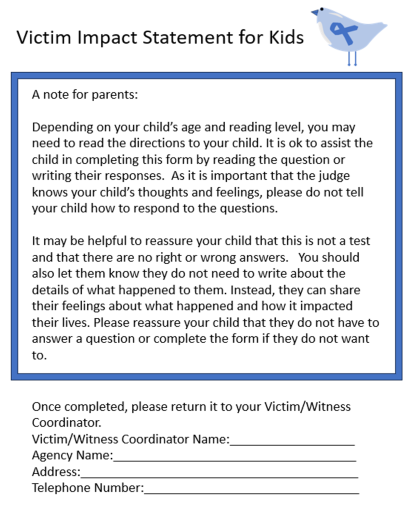
Victim Impact Statement for Children

This downloadable form is an impact statement for children that

allows them to communicate their feelings about what has happened to them in their own words.


Download here

Child Victims and Witnesses Support Materials

The Office for Victims of Crime (OVC) funded the Center for Justice Innovation to develop age-appropriate graphic novels for child victims and witnesses. Four different categories of materials are available: family and dependency court, criminal court, human trafficking, and child and youth in tribal communities. Each category offers downloadable booklets by age range. The materials also include resource guides for both practitioners and parents/caregivers. The booklets are available in Arabic, Chinese, English, Haitian Creole, Spanish, and Vietnamese.


All Child Victims and Witnesses Support Materials

FUNDING OPPORTUNITY

to Cover Printing Costs for Child Victims and Witness Support Materials


The Center for Justice Innovation is now accepting applications for grant funding of up to $10,000 for qualifying agencies to have the OVC's Child Victim and Witnesses Support Materials professionally printed for dissemination to child victims, child witnesses, and their parents and caregivers.


For a copy of the application, please click here. The application deadline is April 30, 2024.

Learn More

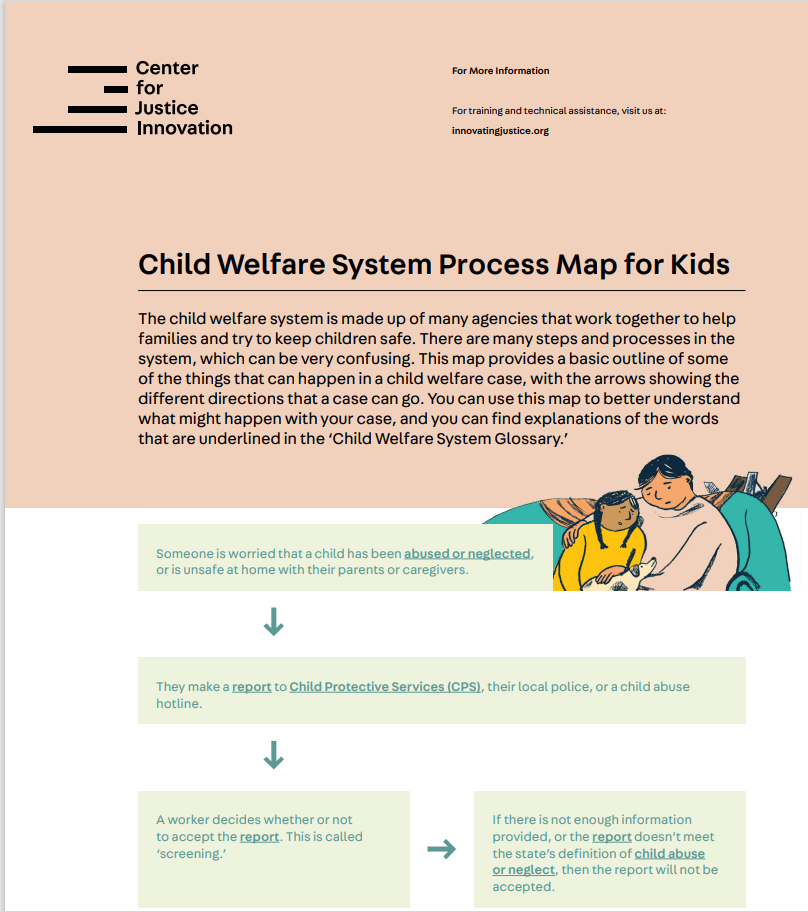
The Center for Justice Innovation has two process maps for children. The Child Welfare Process Map provides children with an age-appropriate explanation of a child welfare case's steps and possible outcomes. They also offer a similar process map that explains the steps and outcomes of a criminal legal system case. The Child Welfare System Glossary for Kids and the Criminal Legal System Glossary for Kids both provide definitions for court-related terms in a way that children will understand.


Additional Training Resources

Crimes Against Children Conference

August 11–15, 2024

Dallas, Texas


Sponsored by the Dallas Children's Advocacy Center, this weeklong conference provides training in the "investigation, prosecution, and healing of crimes against children" for professionals who support child victims of crime.

Learn More

Criminal Justice from the Child's Perspective: Supporting Child Victims & Witnesses

This recorded webinar from AEquitas and the Center for Court Innovation provides a perspective on how children perceive the court process and best practices for preparing and supporting them through that process.

Criminal Justice from the Child's Perspective: Supporting Young Trafficking Survivors

This recorded webinar from AEquitas and the Center for Court Innovation provides a perspective on how minor trafficking survivors perceive the court process and best practices for preparing and supporting them through that process.

"Materials for Child Victims and Witnesses"

This webinar provides guidance on how professionals can best use OVC's Child Victim and Witness support materials to educate children and teens about the criminal justice system and the family court system, and their rights in each.