|
New York State Joins New National Initiative to Address America’s Youth Mental Health Crisis
In response to America’s youth mental health crisis, New York State is joining forces with 10 other states, the Schultz Family Foundation, Pinterest and AmeriCorps to recruit, train and deploy the nation’s first Youth Mental Health Corps to help teenagers access critical mental health resources. The new Youth Mental Health Corps is an innovative, public-private collaboration, with a robust set of partners that include America's Service Commissions, America Forward and the National Council for Mental Wellbeing. The Corps will address the growing needs of young people while creating career pathways to address the national shortage of mental-health professionals. Corps members will be trained as navigators serving middle and high school students in schools and in community-based organizations. Read more here.
|  | |
Governor Hochul Celebrates Legislative Passage of Nation-Leading Bills to Combat Addictive Social Media Feeds and Protect Kids Online
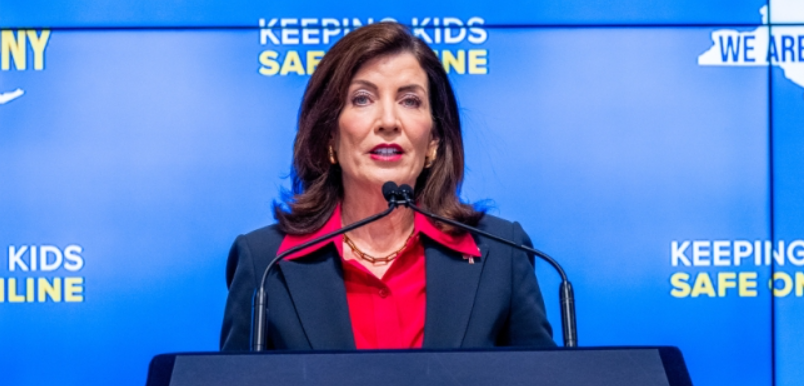
Governor Kathy Hochul last Friday celebrated the legislative passage of two nation-leading bills to protect kids online. The Stop Addictive Feeds Exploitation (SAFE) for Kids Act will restrict a child’s access to addictive feeds on social media, and the New York Child Data Protection Act will keep children’s personal data safe. The SAFE for Kids Act will require social media companies to restrict addictive feeds on their platforms for users under 18. Unless parental consent is granted, users under 18 will not receive addictive feeds. Users may still search for specific topics of interest. It will also prohibit social media platforms from sending notifications regarding addictive feeds to minors from 12:00 a.m. to 6:00 a.m. without parental consent. The legislation will authorize the Office of the Attorney General (OAG) to bring an action to enjoin violations of the new law as well as seek civil penalties of up to $5,000 per violation, among other remedies. Read more here.
Related: Attorney General James Applauds Passage of Legislation to Protect Children Online
|  | |
MHANYS Celebrates New Office Location with Community Open House
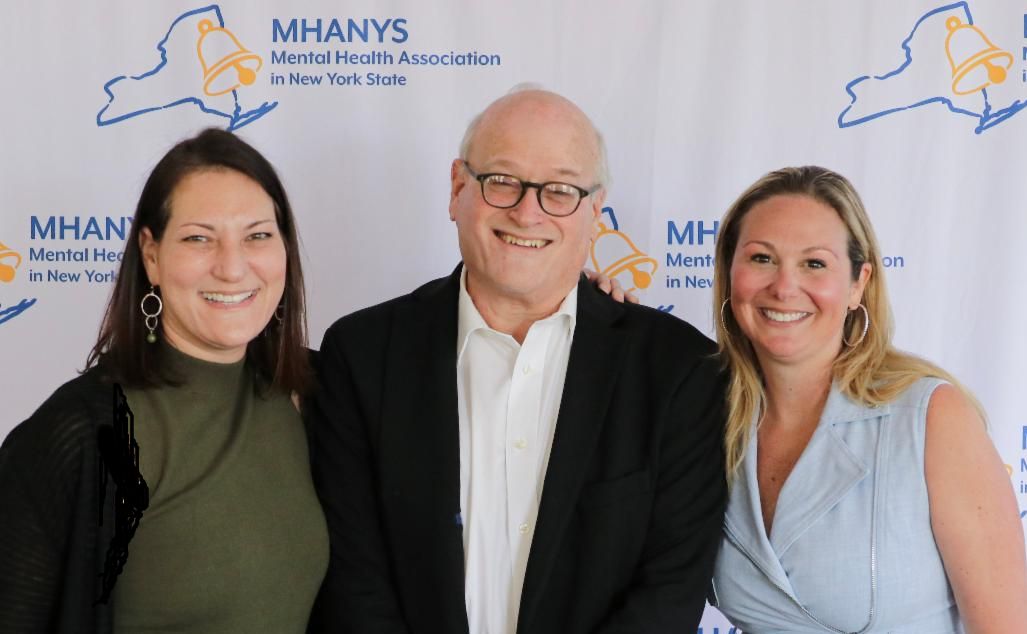
After 25 years in downtown Albany, the Mental Health Association in New York State, Inc. (MHANYS) has recently relocated its offices to 1 Park Place on Wolf Road. Training has become a significant part of MHANYS' mission, and the organization felt it was essential to acquire a space with a large training center to accommodate its various programs. On May 31st, MHANYS hosted an open house with friends and community members. CLMHD staff were delighted to attend the ribbon-cutting ceremony and celebration. Pictured from L-R: Francine Sinkoff (CLMHD), Glenn Liebman (MHANYS), Courtney David (CLMHD). Click here to view additional photos from the event.
|  | |
Governor Hochul Announces More Than $39 Million Awarded to Develop Comprehensive Psychiatric Emergency Programs
Governor Kathy Hochul on Wednesday announced that a total of $39.1 million in state funding was awarded to nine community-based hospitals to develop new comprehensive psychiatric emergency programs. Once established, the programs will increase the statewide total to 31 and provide needed capacity to serve thousands of additional individuals who experience a behavioral health crisis. “Expanding hospital-based psychiatric emergency programs is a critical component of our efforts to strengthen New York State’s mental healthcare system,” Governor Hochul said. “This funding will provide community-based hospitals with capital to establish new programs, so they can quickly evaluate and provide care to anyone experiencing a behavioral health crisis.” Read more here.
|  | |
Why Miami’s Approach to Addiction Is Working
The force behind Florida’s first legal needle exchange, Dr. Hansel Tookes, received an anxiety-provoking call from the state surgeon general’s office in April 2022. Health officials wanted to tour his Miami site, which provides clean syringes and other health care to people who inject drugs, an approach known as harm reduction that aims to stop people from getting hurt by drugs, rather than stop them from getting high. “I assumed that it would be a challenging visit,” said Dr. Tookes. When the delegation arrived, however, Dr. Tookes was pleasantly surprised. The officials seemed interested in how he distributed overdose antidotes and eased patients into medication treatment for addiction. They pressed him to explain how attracting people into care works better than forcing abstinence and imposing strict rules, he said. Read more here.
Related: Could this state's health ‘hub’ model treating opioid addiction go nationwide?
|  | |
Huge Study Reveals How Often Cannabis Triggers Psychotic Episodes
Cannabis exposure and psychosis have long been linked, even if we've struggled to pinpoint why and how often those psychotic episodes occur. A new analysis attempts to provide some clarity through the haze, collating data from numerous studies involving more than 200,000 participants. Where individual studies have suggested that psychosis occurs in anywhere from 1 to 70 percent of all cannabis users, the new analysis finds that roughly 1 in 200 (or just 0.5 percent) may experience a psychotic episode, which can involve hallucinations, delusions and paranoia. Read more here.
|  | |
Congress Reintroduces the Michelle Alyssa Go Act, a Critical Step for County Behavioral Health Systems
On May 28, the Michelle Alyssa Go Act (H.R. 8575) was reintroduced in the U.S. House of Representatives. This bipartisan legislation aims to increase the number of federal Medicaid-eligible in-patient psychiatric beds from 16 to 36, providing critical support for individuals seeking treatment for mental health and substance use disorders. The Michelle Alyssa Go Act would provide needed reforms to federal Medicaid policy that prohibits reimbursement for care provided in psychiatric or residential treatment facilities with more than 16 beds, defined as Institutions for Mental Diseases (IMDs). Read more here.
|  | |
ASAM Podcast: Hospital Initiatives to Transition SUD Patients From Acute Care to Community-based Services
Podcast host Shawn McNiel, MD, is joined by Noa Krawczyk, PhD, an assistant professor in the Department of Population Health at NYU Grossman School of Medicine, and an author of Initiatives to Support the Transition of Patients With Substance Use Disorders From Acute Care to Community-based Services Among a National Sample of Nonprofit Hospitals. Dr. Krawczyk discusses the gap in transition of acute care to community care services among most US hospitals, efforts to increase acute care interventions, and how clinicians providing SUD treatment can help hospitals identify and implement best practices to support continuity of care. Click here to listen to the podcast.
|  | |
Why Some States are Trying to Get People Medicaid Before They Leave Prison
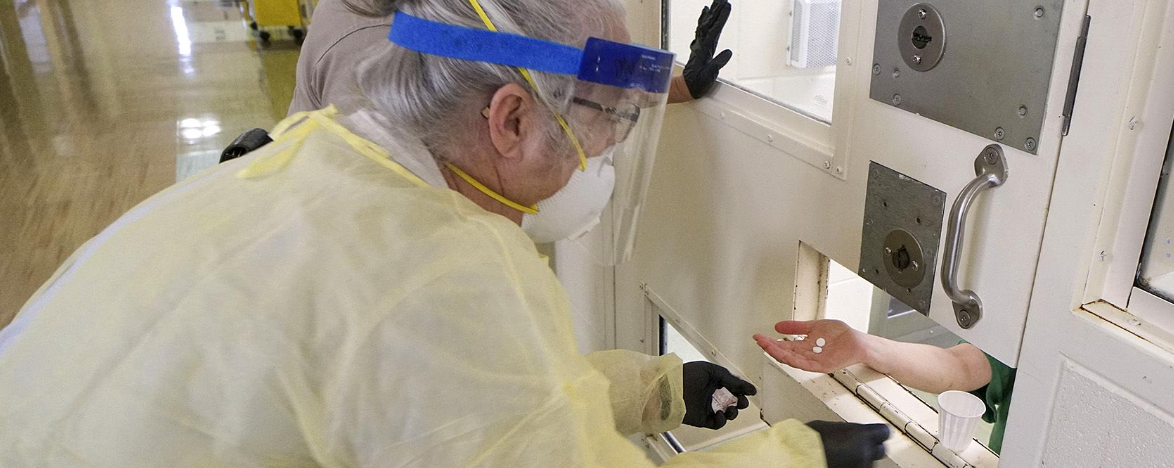
Some years ago, a man in Indiana shot and killed his 2-year-old daughter while he was in the throes of a psychotic break. Re-enacting the biblical story of Abraham’s sacrifice of Isaac, he thought God would intervene to save her. He was found guilty of the child’s murder and sent to state prison, where he was stable on psychiatric medications for 25 years. Then he got out and spent weeks scrambling to enroll in Medicaid, the government health insurance program, before his medication ran out. “I have a serious mental disorder, which is what caused me to commit my crime in the first place,” he told me then. In the last decade, more states have recognized the importance of providing health insurance to those leaving prisons and jails. Recently, states and the federal government have gone even further, proposing to enroll people in Medicaid before they set foot in the free world again. Read more here.
|  | |
For an Older Homeless Population, a New Type of Care
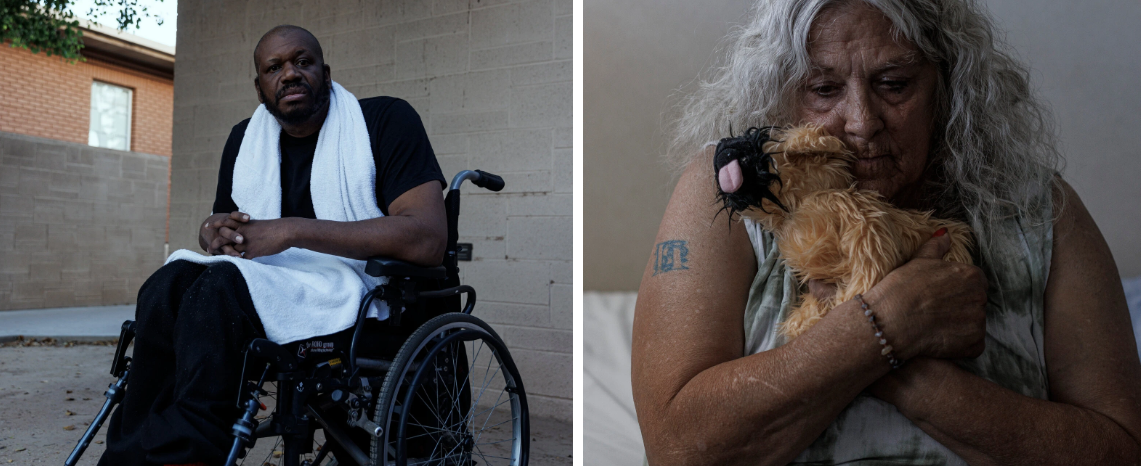
Five years on the Phoenix streets battered Vance Blair’s body. His vision dimmed, his speech slowed, and his hands began to twitch. A bulging pelvis revealed the need for hernia surgery, and the vacant lot where he slept was no place to keep dressings clean. Mr. Blair often lingered by a shaded building, and several women who worked there grew fond of the diffident man who asked permission to escape the sun. They brought him food and discovered his dilemma: Medicaid would cover his operation, but hospitals discharge patients quickly and surgeons would not proceed unless he had a place to heal. Then they learned that a Phoenix group runs what amounts to a nursing home for the homeless. Mr. Blair has remained there since his operation six months ago and says the care might have saved his life. Read more here.
|  | |
HBO Explores Collegiate Mental Health in First Trailer for ‘One South: Portrait of a Psych Unit’
HBO is diving into the world of mental help crises for its latest documentary installment. The two-episode “One South: Portrait of a Psych Unit” will debut its first part on June 25 followed by part two on June 26. Both parts will debut at 9 p.m. ET/PT. “One in 10 young adults in the United States are diagnosed with a serious mental illness. Utilizing rare access, ‘One South: Portrait of a Psych Unit’ demystifies the treatment process and offers a compassionate understanding of mental health issues young adults are facing today and how to help them,” a press release for the documentary reads. The two-part series looks at the inpatient psychiatric unit at Zucker Hillside Hospital in Queens, N.Y., which specializes in treating young adults. Specifically, it focuses on the hospital’s Behavioral Health College Partnership (BHCP), which is a community service program that works closely with 93 affiliated New York state colleges and universities and their student counseling centers. Read more here.
|  | |
The 988 Rollout Remains Uneven Two Years Later
Almost two years after the debut of a revamped national suicide hotline, its promise of a quicker, more seamless crisis response across the country is still a work in progress. Congress gave states $1 billion to build out the 988 hotline, amid nationwide concern over worsening mental health, with the expectation that states would establish their own own long-term funding to operate call centers and crisis services. But those efforts have been uneven, contributing to significantly lower response times in certain states. As with much of the health care system, the level of crisis services available to people depends greatly on where they live. Read more here.
Related: Insights for Groups Disproportionately Impacted by Suicide
| |
 | |
Mother Cabrini Health Foundation to Release Report Addressing Statewide Nursing Shortage
A new report addressing challenges to statewide registered nursing recruitment and retention will be released at the Healthier Communities, Healthier People summit on Wednesday, hosted by the Mother Cabrini Health Foundation at the Museum of the City of New York and presented by City & State. The study, prepared by Mother Cabrini in partnership with the University at Albany’s Center for Health Workforce Studies, will detail leading causes of nursing shortages and potential strategies to be implemented by New York state hospitals. Based on interviews and focus groups with chief nursing executives and human resource experts hailing from 60 hospitals, the analysis will identify the most promising solutions to address the shortage. Read more here.
Related: Report: Two-thirds of licensed registered nurses are active in New York state
|  |  | |
UPCOMING EVENTS & TRAININGS
Recovery Ready Workplace Workshop - IN-PERSON in Watertown, NY
June 13, 9:30 am - 12:30 pm, FOR-NY
Suicide Prevention in Corrections: Clinical and Legal Implications
June 13, 1 - 2:15 pm, American Jail Association
Introduction to Psychedelics for the Treatment of Substance Use Disorder
June 13, 1 - 3 pm, National Council for Mental Wellbeing
FentAlert Challenge: Youth Innovators Advancing Fentanyl Overdose Prevention
June 13, 2 - 3 pm, National Council for Mental Wellbeing
Beyond Video Visits: Using Asynchronous Telehealth to Improve Outcomes for Individuals with SMI
June 14, 3 - 4 pm, SMI Advisor
NYS Department of Financial Services (DFS) Complaint Submission Process Overview
June 13, 3 - 4 pm, NYSDFS
The Caring Connection: Trauma Informed Care and Recovery Planning (in Rural Settings)
June 17, 1 - 3 pm, NCROTAC
How to Support Youth as They Engage with Social Media
June 17, 3:30 - 4:30 pm, National Council for Mental Wellbeing
Person-Centered Care: Applications in Methadone Maintenance Treatment and Outpatient Program Settings
June 18, 1 - 3 pm, NCROTAC
Transitions of Care in Mental Health
June 18, 2 - 3 pm, NACo
Supporting LGBTQ+ Communities with an Intersectional Lens
June 20, 12 - 1 pm, SJLA
Care and Concern Interventions to Address Substance Use and Mental Health in Rural Communities
June 20, 1 - 3 pm, NCROTAC
Breaking the Hold: Addressing Racialized Trauma and Menthol Inequities
June 20, 3 - 5 pm, National Behavioral Health Network
Warmlines, Helplines, and Crisis Lines Offer the Help You Need When You Need It
June 20, 4 - 5:30 pm, NAMI
Recovery Ready Workplace Workshop - IN-PERSON in Johnstown, NY
June 21, 9:30 am - 12:30 pm, FOR-NY
The Living Room: Leveraging the Peer Workforce in Crisis Stabilization
June 24, 1:30 - 3 pm, SAMHSA
Strengthening the Workforce through New York State’s Public Health Corps
June 25, 2 - 3 pm, NY Health Foundation
Youth Cannabis Education and Prevention Providers and Mentors Workshop
June 25, 2 - 3:30 pm, OASAS
Ask the Expert: Community Response and Its Place in the Crisis Continuum
June 25, 2 - 3:30 pm, CSG Justice Center
Medications for Alcohol Use Disorder in Patients with Liver Disease: Leveraging an Underutilized Tool
June 26, 1 - 2 pm, National Council for Mental Wellbeing
The RED Tool: Identifying and Rectifying Racial and Ethnic Disparities in Treatment Court Programming and Outcomes
June 26, 2:30 - 4 pm, SAMHSA's GAINS Center
Addressing Racial Bias in AI for Equitable Substance Use Recovery
June 26, 3 - 4:30 pm, NAADAC
Promising Practices for Collaboration on State and Local Opioid Settlement Spending
June 26, 3:30 - 5 pm, NASHP
Delivering Comprehensive, Integrated Care for Pregnant and Postpartum People
June 27, 11:30 am - 1 pm, National Council for Mental Wellbeing
Building a Behavioral Health Continuum of Care: The Role of Rural Leaders and Behavioral Health Directors
June 27, 2 - 3 pm, NACo
Start with Hope: How Providers Can Navigate Culturally Responsive Substance Use Treatment and Care
June 27, 3 - 4:30 pm, National Council for Mental Wellbeing
Psychiatric Advance Directives to Promote Community Living
June 28, 1 - 2 pm, SAMHSA
MOUD in Recovery Housing: An Exemplary Case Study of Implementing Holistic Care in Indiana
July 8, 1 - 2 pm, National Council for Mental Wellbeing
Continuous and Collaborative: Best Practices for Family Treatment Court Screening and Assessment
July 16, 1:30 - 3 pm, SAMHSA's GAINS Center
The Intentional SUD Clinical Supervisor
July 17, 3 - 4:30 pm, NAADAC
Clinical Community Partnerships to Support Behavioral Health in Service Members, Veterans and their Families
July 30, 1 - 2:30 pm, SAMHSA
What Is Harm Reduction for Alcohol?
August 14, 3 - 4 pm, NAADAC
Ask the Expert: Collaborative Approaches to Providing Mental Health and Law Enforcement Services
August 20, 2 - 3:30 pm, CSG Justice Center
Barriers to Care: Solutions for Mental Health and Substance Use Treatment Provision in Rural Communities
August 21, 12 - 1 pm, National Council for Mental Wellbeing
Ask the Expert: Family-Centered Reentry Programming
September 25, 2 - 3:30 pm, CSG Justice Center
| |
CLMHD CALENDAR
JUNE
Addiction Services & Supports (ASR) Committee Meeting
June 13: 11 am - 12 pm
Developmental Disabilities Committee Meeting
June 13: 1 - 2:30 pm
Mental Health Committee Meeting
June 13: 3 - 4 pm
LGU Clinic Operators Meeting
June 18: 10 - 11:00 am
Children & Families Committee Meeting
June 18: 11:30 am - 1 pm
CLMHD Office Closed - Juneteenth
June 19
Mental Hygiene Planning Committee Meeting
June 20: 1 - 3 pm
LSP Support Session #4
June 27: 1 - 2:30 pm
| |