|
 |
|
2016 Jack White Crow Award Winner
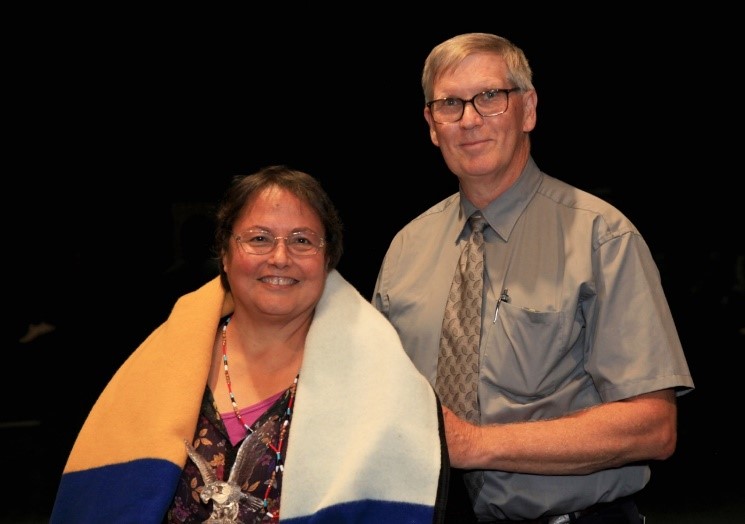
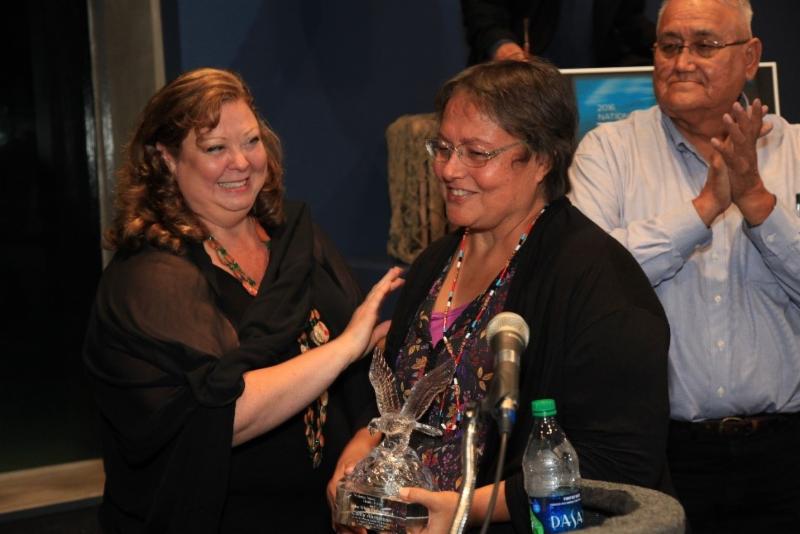
Cathy Abramson, Sault Ste. Marie Tribe of Chippewa Indians, poses with her husband, Tony, after receiving the Jake White Crow Award at the 2016 National Tribal Nations Annual Health Conference Heroes in Native Health Awards Gala for her lifelong dedication to advancing health in Indian Country.
The National Indian Health Board has the honor of working with some of the best and brightest advocates for American Indian and Alaska Native health. Every year, NIHB takes pride in highlighting, on a national platform, some of the great work
occurring throughout Indian Country. NIHB's Jake White Crow Award
recognizes an individual with outstanding lifetime achievements in elevating health care advocacy, raising awareness, or affecting change for American Indian and Alaska Native Health care.
During the Gala event, NIHB announced this year's Jake White Crow Award winner as Cathy Abramson of the Sault Ste. Marie Tribe of Chippewa Indians. Cathy was chosen for her extensive advocacy and service over the last three decades.
Cathy represented the Bemidji area Tribes (Michigan, Wisconsin and Minnesota) on the National Indian Health Board and served as the board Chairperson for several years. Cathy also served on the U.S. Department of Health and Humans Services (HHS) Secretary's Tribal Advisory Committee (STAC) as the first female Chairwoman, where she was able to advance Tribal priorities directly with the Secretary of the HHS. In 2010, she received the IHS Director's Special Recognition Award in Tribal Leadership and Partnership. After serving on the Sault Ste. Marie Tribe of Chippewa Indians Board of Directors for the past twenty years, Cathy retired this spring 2016.
Cathy was recognized, along with other award winners, on September 21, 2016 in Scottsdale, AZ during the Heroes in Native Health Awards Gala at NIHB's National Tribal Nations Annual Health Conference.
2016 Heroes in Native Health Award Winners
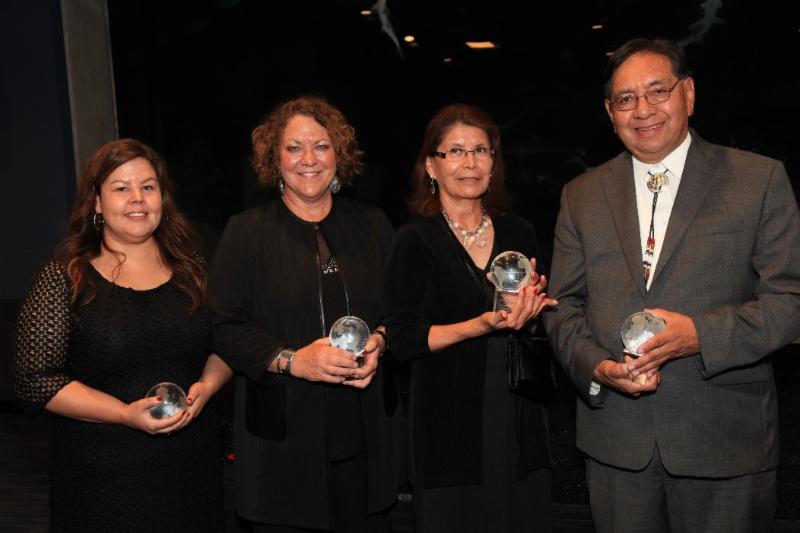
From left to right: Alberta Unok, Melissa Gower, Lillian Tom-Orme, and Arlan Melendez smile with their awards.
National Impact Award:
Honors an individual or organization whose work has made an impact on American Indian and Alaska Native health care on a national level.
- Alberta Unok, Yup'ik (Village of Kotlik)
- Melissa Gower, Cherokee Nation
- Notah Begay III Foundation
- Lillian Tom-Orme, Diné
- Arlan Melendez, Reno Sparks Indian Community
- Jim Roberts, Hopi Tribe
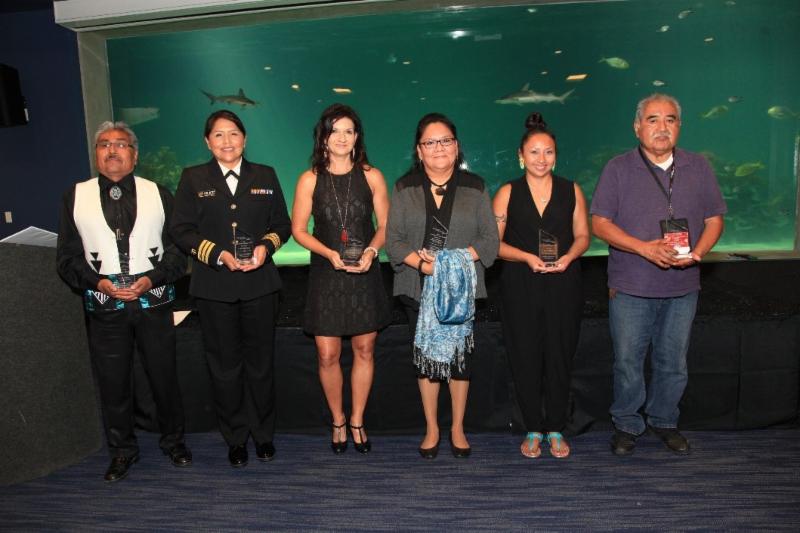
From left to right: Carleton Albert Sr., Leah Earl-Begay, Lisa Pivec, Nicole Lomay of Banner Alzheimer's Institute, CoCo Villaluz, and Chester Antone look on as they receive their award.
Area/Regional Impact Award:
Pays tribute to an individual or organization whose work has contributed to improving American Indian and Alaska Native health care or affected change on an area or regional basis.
- Carleton Albert Sr., Zuni Pueblo
- Transitions of Care Team, Alaska Native Tribal Health Consortium
- Gerald Howard, Bishop Paiute Tribe
- Leon Leader Charge, Rosebud Sioux Tribe
- Dee Sabattus, Passamaquoddy Tribe
- Leah Earl-Begay, Navajo Nation
- Lisa Pivec, Cherokee Nation
- Banner Alzheimer's Institute Native American Outreach Program
- Hnqhesnet Program, Coeur d'Alene Tribe
- CoCo Villaluz, Hidatsa
- Fort Peck Tribal College
- Chester Antone, Tohono O'odham Nation
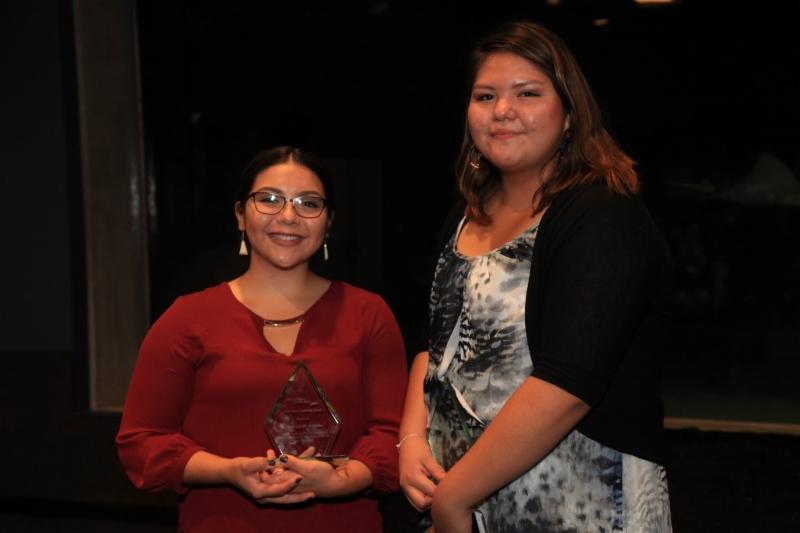
Leticia Lucille Gonzales and Wiyaka Little Spotted Horse at the 2016 Heroes in Native Health Awards Gala
Youth Service Award:
Commends American Indian or Alaska Native youth
for their leadership and outstanding efforts to increase the quality of healthcare or awareness of health issues within their peer group or community on a local or national level.
- Leticia Lucille Gonzales, Bishop Paiute Tribe
- Wiyaka Little Spotted Horse, Oglala Lakota
- Keioshiah Peter, Navajo Nation
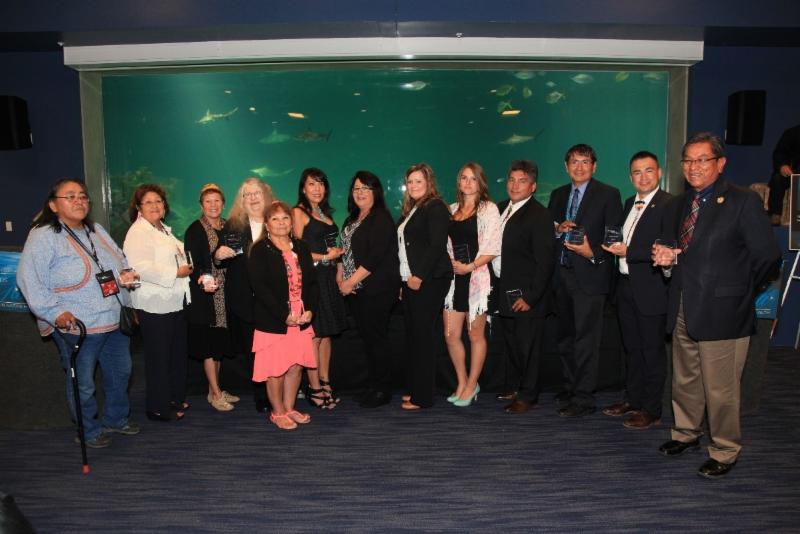
Local Impact Award:
Acknowledges an individual or organization whose work has affected change or impacted health care on the local and or Tribal level.
- Native American Professional Parent Resources, Inc.
- Dr. Tom Faber, Zuni Indian Health Service Hospital
- Rebecca Ling, Cook Inlet Tribal Council
- Council of Athabascan Tribal Governments Special Diabetes Program for Indians Team
- Carol Larsen, Susanville Rancheria
- Laura Borden, Yurok Tribe
- Anita Frederick, Turtle Mountain Band of Chippewa Indians
- Food is Our Medicine, Seneca Nation
- Melissa Canaday, Chickahominy Tribe
- Lyle Etsitty, Navajo Nation
- Diné Community Advocacy Alliance
- Torie Fuller, Citizen Potawatomi Nation
- Marty Wafford, Chickasaw Nation
- John Lockwood, Walker River Paiute Tribe
- Tania Wildbill, Confederated Tribes of the Umatilla Reservation
- Cynthia White, Quinault Indian Nation
- Tohono O'odham Community Action Team
- Randy Chatto, Ramah Band of Navajo
- Bonnie Culfa, Sault Ste. Marie Tribe of Chippewa Indians
- Deborah Barlese, Pyramid Lake Paiute Tribe
- Fort Peck Health Promotion Disease Prevention Program
- Jonathan Nez, Navajo Nation
- Shane Martin, Turtle Mountain Band of Chippewa Indians
- Phyllis Davis, Match-E-Be-Nash-She-Wish Potawatomi
|
|
Cherokee Nation First Tribe to Receive Public Health Accreditation
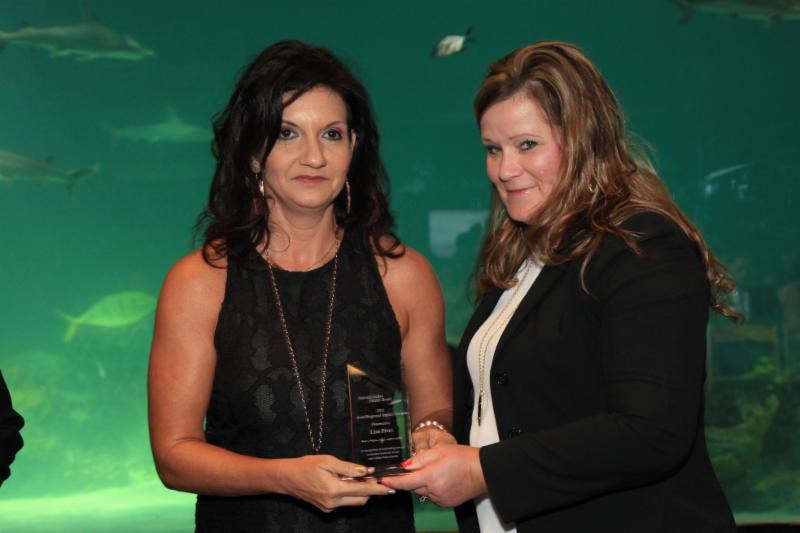
Area/Regional Impact Award winner Lisa Pivec,
Cherokee Nation, is presented her award by NIHB Board Member Marty Wafford,
Chickasaw Nation.
Washington, D. C. -
The National Indian Health Board (NIHB) congratulates Cherokee Nation Health Services in Tahlequah, Oklahoma for becoming the first Tribe to receive public health accreditation through the Public Health Accreditation Board (PHAB). They are one of 16 health departments notified on August 22, 2016 and one of 151 total accredited health departments, reaching more than half of the United States population.
"When we embrace Tribal Public Health Accreditation and build our Tribal public health capacity we're preventing disease, we're promoting health, we're honoring the ancestors, and we're honoring our own culture and traditions," explained Stacy A. Bohlen, (Sault Ste. Marie Chippewa), Executive Director, National Indian Health Board. "Cherokee Nation has demonstrated what Tribal advocates have long known - that Tribes can and are exercising their sovereignty to build high quality systems that support the health of their citizens.
Public health accreditation is the measurement of a health department's public health performance and systems against a set of national standards based on the 10 essential services of public health. The voluntary national accreditation program became available in 2011 and the goal is to improve and protect the health of the public by advancing the quality and performance of Tribal, state, local, and territorial public health departments. Health departments become accredited by meeting nationally recognized, practice-focused and evidence based standards.
According to the PHAB, to receive national public health accreditation, a Tribal health department must undergo a rigorous, multi-faceted, peer-reviewed assessment process to ensure it meets or exceeds a set of public health quality standards and measures. Since 2008, the National Indian Health Board (NIHB) has partnered with PHAB, the Centers for Disease Control and Prevention (CDC), Robert Woods Johnson Foundation (RWJF), and other national partners in an effort to advance public health practice in Indian Country.
At NIHB's 2016 Heroes in Native Health Awards Gala, Lisa Pivec, Senior Director of Public Health for Cherokee Nation, was honored with an Area/Regional Impact Award for her instrumental role in Cherokee Nation's accreditation process. Ms. Pivec has been a lifelong advocate for American Indian and Alaska Native health, and her leadership with Cherokee Nation has set an important precedent for all Tribes interested in becoming accredited. NIHB was honored to recognize her at the 2016 Gala event, and looks forward to advocating on behalf of all Tribes seeking to gain accreditation.
|
|
About the Awards
Cathy is greeted by Stacy Bohlen,
Sault Ste. Marie Tribe of Chippewa Indians
, Executive Director of NIHB, as she receives the coveted Jack White Crow Award. NIHB Board Chair Lester Secatero
Tỏ'Hajiilee Band of Navajos, looks on in congratulatory support.
NIHB's awards honored individuals or organizations for their achievements and contributions that go above and beyond the call of duty to enrich and improve American Indian and Alaska Native health. This year, forty-five individuals and organizations were chosen to receive recognition for their dedication to improving health outcomes in Indian Country. Some of these award winners have done tremendous work on behalf of their local community, while others have gone to great lengths to advocate and serve on a regional or national level.
Their work has focused on topics including: healthcare policy, chronic disease prevention and treatment, food sovereignty, healthcare delivery, and public health accreditation. NIHB is committed to recognizing the vision and commitment of youth leaders in Indian Country, who continue to set the standard for future generations. Additionally, NIHB sets aside a special honor to one individual with remarkable lifetime achievements to receive the Jack White Crow Award.
The NIHB congratulates all the award winners for their invaluable service to Indian Country.
|
|
|
|
|
|