InCommonNewsletter_Logo4.jpg

New Community Indicators Library

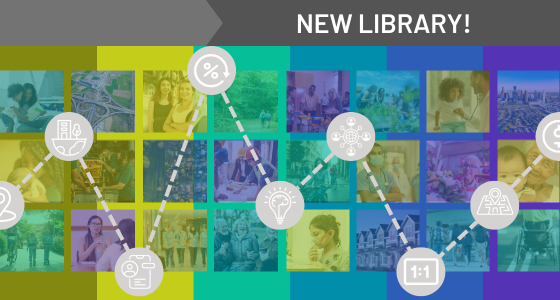
A collage of photos of people and communities, each with either a green, blue, or purple overlay. A variety of icons depicting community indicators connected with dotted lines is overlayed on top. A gray banner spanning the top of the image reads "New Library!".

The Community Indicator Library is a living library of data indicators, or metrics, that changemakers use to measure health, well-being, and equity in their communities. Our newest Community Commons library aims to help users find indicators relevant to their community change work, identify datasets and sources for those indicators, and explore related topics on Community Commons. It contains many indicators commonly used in community health practice from sources that make data available nationwide at the county- or Census-tract level, such as the American Community Survey, PLACES, Food Access Research Atlas, and others. Check out the new library now and explore indicators categorized by unit of analysis, methodological approach, measure type, and topic areas. 


EXPLORE THE LIBRARY >

Facebook  Twitter  Instagram  LinkedIn
CC_InCommonNewsletter_Banners _8_.png
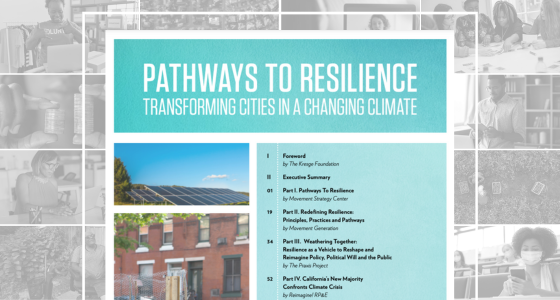
The cover page of "Pathways to Resilience: Transforming Cities in a Changing Climate" on a black and white photo collage background.

Pathways to Resilience: Transforming Cities in a Changing Climate


While climate change is a global problem, its effects are felt locally in communities. This report addresses urban resilience in the context of a changing climate, providing a comprehensive set of strategies to transform cities into more resilient entities. Read more about the need for proactive measures to adapt to climate-related challenges.


READ MORE >

A photo of an empty park bench

City Life Is Too Lonely. Urban Planning Can Help.


There is an epidemic of loneliness among Americans that is exacerbated by the way our communities are built. Although contemporary urban planning has been implicated in the loneliness epidemic, the built environment can also be part of the solution. Read more about design fixes that can help combat social isolation in this article. 


LEARN MORE >

CC_InCommonNewsletter_Banners _9_.png
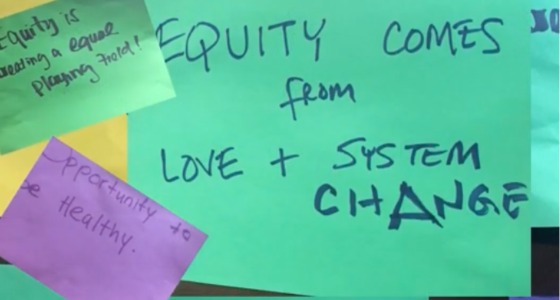
Photo of a green sticky note that reads "Equity comes from love and system change".

Achieving Health Equity: Shared Stewardship and the Vital Conditions Framework


The "vital conditions" refer to the properties of places and institutions that all people need for health and well-being. There is an ongoing movement to achieve equitable health and well-being through the use of the Vital Conditions Framework and shared stewardship. Learn more and explore examples of individuals and organizations adopting the framework and engaging in shared stewardship.


READ MORE >

Photo of a person with dark skin and curly natural hair sitting on the ground, looking distraught.

Black, Indigenous, and People of Color (BIPOC) and Eating Disorders


Black, Indigenous, and People of Color (BIPOC) have historically been omitted from our understanding of and discussions about health conditions, including eating disorders. As a result, there are stark disparities in the rate of eating disorders in BIPOC individuals and barriers BIPOC communities face to and in eating disorder treatment. Read on and learn more about factors contributing to these disparities and methods for addressing them.


LEARN MORE >

CC_InCommonNewsletter_Banners _10_.png
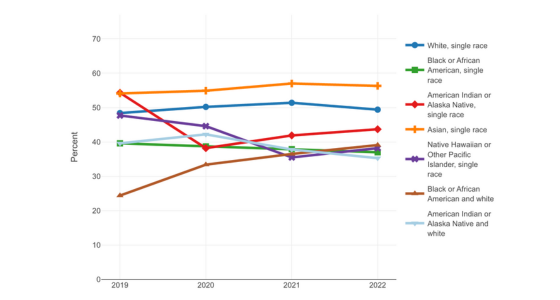
Line graph depicting the rate of adult flu vaccination by race/ethnicity.

Interactive Summary Health Statistics for Adults


The National Health Interview Survey (NHIS) has monitored the health of the nation since 1957. This tool provides annual estimates of selected health topics for adults aged 18 years and over based on final data from the National Health Interview Survey. Users can group these estimated statistics by different characteristics, including age, sex, and race. Learn more and explore trends in health topics and behaviors over time or in a single year.


EXPLORE THE DATA >

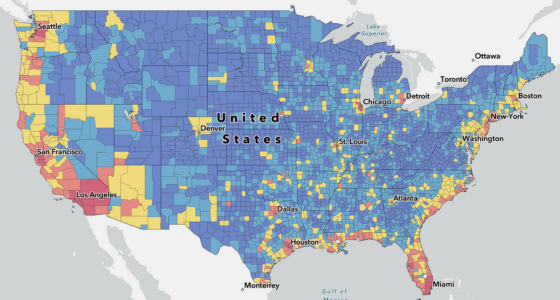
A map of the United States with counties and census tracts shown in different colors, ranging from red to blue.

National Risk Index


Natural hazards are defined as environmental phenomena that have the potential to impact societies and the human environment. This dataset and online tool help illustrate the United States communities most at risk for 18 natural hazards, including hurricanes, tornados, wildfires, tsunamis, and more. Users can explore and visualize natural hazard and community risk factors for each United States county and Census tract.


LEARN MORE >

CC_InCommonNewsletter_Banners _2_.png
Graphic of a magnifying glass over black text that reads "2023".

Most Popular on Community Commons in 2023

LEARN MORE >

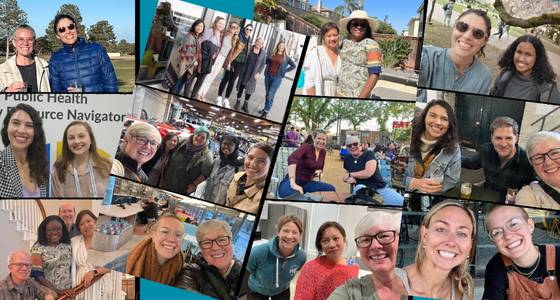
A collage of images of IP3 team members and staff throughout 2023.

IP3's Wrap-Up: 2023 in Review

READ MORE >

InCommonNewsletter_AboutUsGraphic_Footer _8_.png
Facebook  Twitter  Instagram  LinkedIn

To ensure you continue receiving our emails, please add us to your address book:

info@communitycommons.org


Copyright © 2021 Institute for People, Place and Possibility, All rights reserved.

You are a member of Community Commons and opted into our newsletter upon registration.