Quarterly Newsletter - April 2024 | |
Please share the newsletter with your colleagues and friends and subscribe here. | |
|
Welcome to YOUR Birth-to-Three Newsletter! We are so excited to share with you additional resources and opportunities for professional and personal growth! We have a new staff member that is a veteran - Amanda Hazen joined the management group in January as our newest Anchor Specialist and has since hit the ground running with observations in classrooms, supporting and developing Cohort-Based Learning communities and teaching ITS-SIDS. Welcome Amanda!
Spring is one of my favorite times of the year - and not just because my birthday and anniversary are in April. Our work with North Carolina’s youngest reminds me all the time of new growth and hope for what is coming for all of us! Remember to take time to enjoy the new growth: trees, flowers, the children in your care and in yourself.
Keep scrolling and let us know how you like the information within and what else we might be able to add to continue to support you in your very important work with our babies and toddlers!
Ginger, NC B-3QI Project Manager
You can find additional information by clicking on the links or by going to our website at www.childcarerrnc.org/special-projects/b3qi/.
Click the link to learn more about the topics featured in every edition:
| |
Cohort-Based Learning Communities | |
|
Cohort-based learning communities are about building relationships and learning together over time. Our cohorts are all application-based with limited spots. All the cohorts are free and meet virtually. Each cohort varies in the amount of contact credit hours a participant can receive. We currently have four cohorts taking place consisting of Planning with a Purpose and Supporting Healthy Lifestyles
Our newest topic, Love Them Through It, will start this month. There was an overwhelming amount of interest in this learning community. We opened three cohorts and we are actively working on how to offer this more frequently. Stay tuned for more information to come.
| |
|
Another new topic is Talk It Out. The application for this learning community is open now. This learning community will start in May.
Description: Have you ever experienced the silliness and fun of talking to a baby? Did you know you’re encouraging brain growth as you do this? Come join our cohort as we learn more about what this means for infant-toddler development. This is a language and literacy-rich cohort where we will discuss optimal verbal interactions with young children and strategies to incorporate literacy in early childhood education settings. It’s never too early to start working on literacy skills and lay a solid foundation for future growth and development. Babies learn to express themselves by being bathed in language from the start.
DCDEE contact credit hours will be awarded to participants who complete the course. The course is FREE and meets virtually. Click the application link to see dates and more information.
| |
|
Coaching and Resistance
NC Birth-to-Three Quality Initiative offers top-notch coaching delivered by Birth-to-Three Specialist coaches who have experience in all areas of early care and education. While many providers across the state welcome the opportunity for personalized and meaningful professional development, others feel anxiety when it comes to the process of goal setting, focused observation and reflection. This resistance often arises when participants feel that they have insufficient knowledge to enter into a coaching relationship, or on the other end of the spectrum when they no longer see the need to develop their skill sets through self-reflection. Participants may also show resistance by being reluctant to accept another child care expert offering hands-on support or by hesitating because it feels like yet another thing on their ever-growing to-do list. Some participants may feel intimidated by the idea of another child care expert offering hands-on support, or simply feel weary because it feels like yet another thing on their ever-growing to-do list.
As a provider of high-quality care and education to our youngest and most important population, we invite you to question how you feel about being partnered in a coaching relationship. Do any of the above sources of resistance sound like they apply to you? No matter where you are on your professional journey, NC B-3QI is always available to help and is always free for participants. Take a moment or two to list the areas in your day where you would like events to go more smoothly or where you could use a clearer understanding. Check off any of the following items that may have shown up on your list:
| |
- Transitions between activities
- Group time
- Diapering
- Handwashing
- Mealtimes
- Naptime
- Behavior guidance
- Biting and/or throwing
| |
- Positive language and tone
- Stress management
- Self-care strategies
- Room arrangement
- Family communication
- Staff morale
- Administrative tasks
- Parent engagement
| |
|
Using a simple cycle of continuous improvement, B-3QI Birth-to-Three Specialist coaches can support you with any of the above areas, whether you have been in your field for a few months or a few decades. Now more than ever, we need community and partnership to be able to lift ourselves into spaces where we feel competent, calm, and motivated. Birth-to-Three Specialist coaches are committed to their own self-reflection, self-care and development, which is how they are able to offer these collaborative services to you.
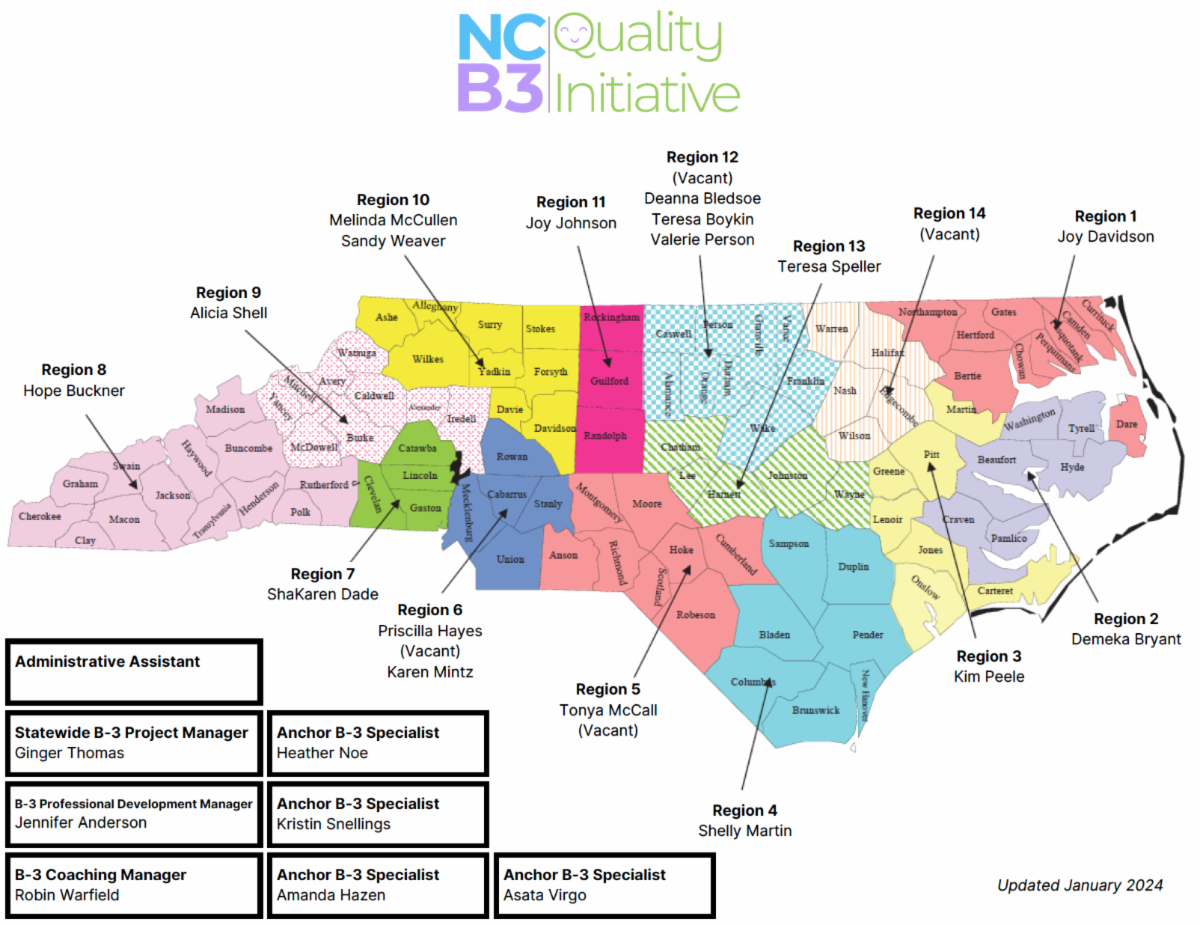
Are you ready to benefit from an accountability and support person dedicated to assisting you with the kind of professional growth that is most relevant to you in your daily schedule? If so, reach out for more information today! Email us at b3qi@childcareservices.org or visit our website to find your Regional Birth-to-Three Specialist coach.
| |
Language is very important for children of all ages but sometimes we have trouble knowing how to communicate with infants and toddlers. Especially when most of their communication is nonverbal. Remember to respond to coos, shrieks and babbles. You can do this by making eye contact and repeating the sounds. You can also use “self talk” and “parallel talk”. You can do this by making eye contact and repeating the sounds that children make. You can also use “self talk” to describe what you are doing, seeing, hearing or feeling, and “parallel talk" to describe what the child is doing, seeing or feeling. This will enrich their language and development. | |
|
As early care and learning teachers, you have the ability to notice the difference between typical and atypical development within the children in your classroom. Typical development is when "there are certain behavioral expectations and developmental milestones that children should master within certain age ranges." When children are not meeting appropriate milestones for their age, this could be considered a "red flag." When "red flags" are identified, the need for additional screening may be necessary. This process is called developmental monitoring.
The Centers for Disease Control and Prevention (CDC) provides free tools such as the CDC's Developmental Milestones to help you monitor development. The skills identified on each milestone checklist will help you notice typical development and potential "red flags."
| |
Teaching and helping your child/children understand their emotions and the emotions of others is an essential step in their social and emotional development. Children and adults share emotions and express the same feelings; the big difference is that, as adults, we are better equipped to understand and manage them. Whether good or bad, our experiences and what we have been taught about self-soothing and regulation when expressing our big feelings, show up in how we react to others. Children are born already equipped with feelings, emotions, reactions and behaviors. Our job as parents and caregivers is to help them understand how to move through social-emotional regulation as gracefully and effectively as possible. Through our empathetic and compassionate care, we can help children form healthy self-regulation and caring behaviors for others. | |
Including and Celebrating ALL of Us | |
As mentioned in our last newsletter, we are beginning the work of unpacking The Diversity-Informed Tenets for Work with Infants, Children and Families one at a time and what they mean to our project and its services. Developed by the Tenets Initiative, The Tenets are a set of strategies for strengthening the commitment and capacity of individual professionals, organizations and systems that serve young children and their families to embed diversity, inclusion and equity principles into their support. The ten tenets are divided into four principles. Central Principle for Diversity-Informed Practice includes the first tenet, while tenets two through five fall underneath Stance Toward Infants, Children, and Families for Diversity-Informed Practice. Tenets six through nine are a part of Principles for Diversity-Informed Resource Allocation, and the final tenet represents Advocacy Towards Diversity, Inclusion and Equity in Institutions. We invite you to download the Tenets and think about how they apply to your work! | |
|
NITTO is free with 14 contact credit hours earned upon completion. It is located on DCDEE’s Moodle website. You will need your NCID to register. The course is designed to complete one section per week over the course of 7 weeks, but you may take longer if you need it.
Here is a quote from an evaluation about how NITTO helped an Early Care and Learning Director: "We will redesign our infant and toddler rooms according to the recommendations given in the NITTO Training. Also, we will get new toys following the recommendations in the training resources."
For more information about NITTO contact itorientation@childcareservices.org.
| |
B-3QI has partnered with the Healthy Social Behaviors Project (HSB) on their Mighty Networks platform for Social Emotional Connections. Once you join, you can choose groups that you want to be connected with. B-3QI is helping to facilitate the infant/toddler group and the administrator group. This is a free, private way to connect with others across the state who do what you do. There is even an app for Mighty Networks! | |
|
Unless you find yourself reading up on personal health and wellness articles, you may not realize just how multifaceted wellness is. In fact, there are eight components of wellness, all of which impact the mind, body, and soul.
Nonetheless, one can reach an optimal level of wellness by understanding how to maintain and optimize each of the dimensions of wellness, including with the tips identified in their respective dimension.
| |
|
Box Art
This project will allow parents, relatives and caregivers the chance to see their child’s creative thinking for themselves. Some families may not have time in their week to provide one-on-one time with their children. By organizing the material and sending it home with the family, it becomes a home-school experience. Children are always excited to show their loved ones the art they have created at school so they will be excited to share the same with their teachers, and their families will be excited as well. This is a great way to bridge the gap. Display the art in a special location for all to enjoy. Collect shoe boxes to use to send the material home with them and let the children decorate their boxes. The boxes can be used more than once.
| |
Self-Care: Connect with Yourself | |
|
Self-Care Activities That Help Boost Mood
As humans, we place demands on ourselves on a daily basis, striving to be the best personally and professionally. On a personal level, we make sure our family needs are met. Professionally, we push ourselves to high levels of productivity to reach our highest ambitions. The issue? Ongoing neglect of personal self-care needs results in stress, fatigue and decreased mood levels. Practicing self-care regularly will have profound effects on your overall well-being and mood. Self-care can help you live a more balanced life, become more resilient and be better able to confidently navigate challenges you may face in life.
| |
|
Reading Tip: Make Books a Part of Your Daily Routine
The more that books are woven into children’s everyday lives, the more likely they will are to see reading as a pleasure and a gift.
| |
|
Going on a Nature Hunt (seek and find book) by Busy Hands Books (author)
Full of bright colors, simple bold images and plenty of nature words to describe the treasures to be found outdoors! With a catchy rhyming verse and pages of seek-and-find activities, this book about nature will keep your toddler engaged and intrigued.
Hello, World! Garden Time (board book) by Jill McDonald (author)
This cheerful and informative Hello, World! board book teaches toddlers all about gardens - with easy-to-understand facts about how plants grow and how gardening puts food on our tables. Told in clear and easy terms ("roots spread into the soil below, and then a shoot pushes up out of the earth") and featuring bright, cheerful illustrations, Hello, World! makes learning fun for young children. Each sturdy page offers helpful prompts for engaging with your child. It's a perfect way to bring science and nature into the busy world of a toddler, where learning never stops.
Let's Go Outside! (paperback) by Amy Pixton (creator) and Ekaterina Trukhan (illustrator)
Enjoy the wonders of nature in an indestructible book! Look up at the BIG BLUE sky. SPLISH in the water just like a fish. Take a walk and STRETCH like tall, tall trees.
My First 100 Nature Words: An Early Learning STEM Board Book for Babies and Toddlers about Environments, Animals, Plants and More! by Chris Ferrie (author) and Lindsay Dale-Scott (illustrator)
Babies and toddlers are curious and ready to learn! Introduce your little one to nature words beyond the basics. From oceans to rainforests, from islands to wetlands, from plants to animals to fungi and more, this is the bright and simple introduction to the smart words every budding scholar needs!
Nature Stories: Little Sunflower (board book) by Igloo Books (author) and Gina Maldonado (illustrator)
Little Sunflower is a captivating and beautifully illustrated padded board book that will ignite young minds with wonder and curiosity about the mysteries of nature. Have you ever wondered what happens to a seed when it is planted in the ground? Immerse yourself in this beautifully illustrated storybook of a humble seed as it transforms into a vibrant sunflower, encountering bees and uncovering the magic of pollination along the way in Nature Stories: Little Sunflower. With vibrant illustrations that come alive with every turn of the page, this book provides an accessible exploration of growth, pollination, and the natural world.
| |
|
Question: How do I communicate with children without using negative language? (Ex: no, stop, don’t).
Answer: That is a great question! This often happens daily in many classrooms. Let’s look at some specific examples and how to respond to children in a positive way.
Many times throughout the day, teachers might use phrases that include negative language rather than telling children what they should do. Sayings like, "no running," "no hitting," "don't put that in your mouth," can be a quick reaction that teachers use. Many times children only hear the last thing that you say. In these situations, they hear, "running," "hitting," "put that in your mouth." When you tell children what you want them to do, they learn what the appropriate action is. This helps them learn what is appropriate in a positive way.
Using positive language and guidance techniques, such as redirection, with young children allows them to learn what is expected without drawing additional attention to the undesired behavior. Minimizing unnecessary negative messages is important in the development of positive self-esteem. Commenting on positive behavior when you observe it also reinforces positive classroom behavior.
| |
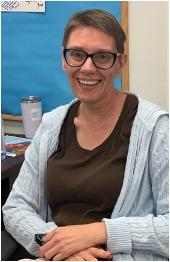
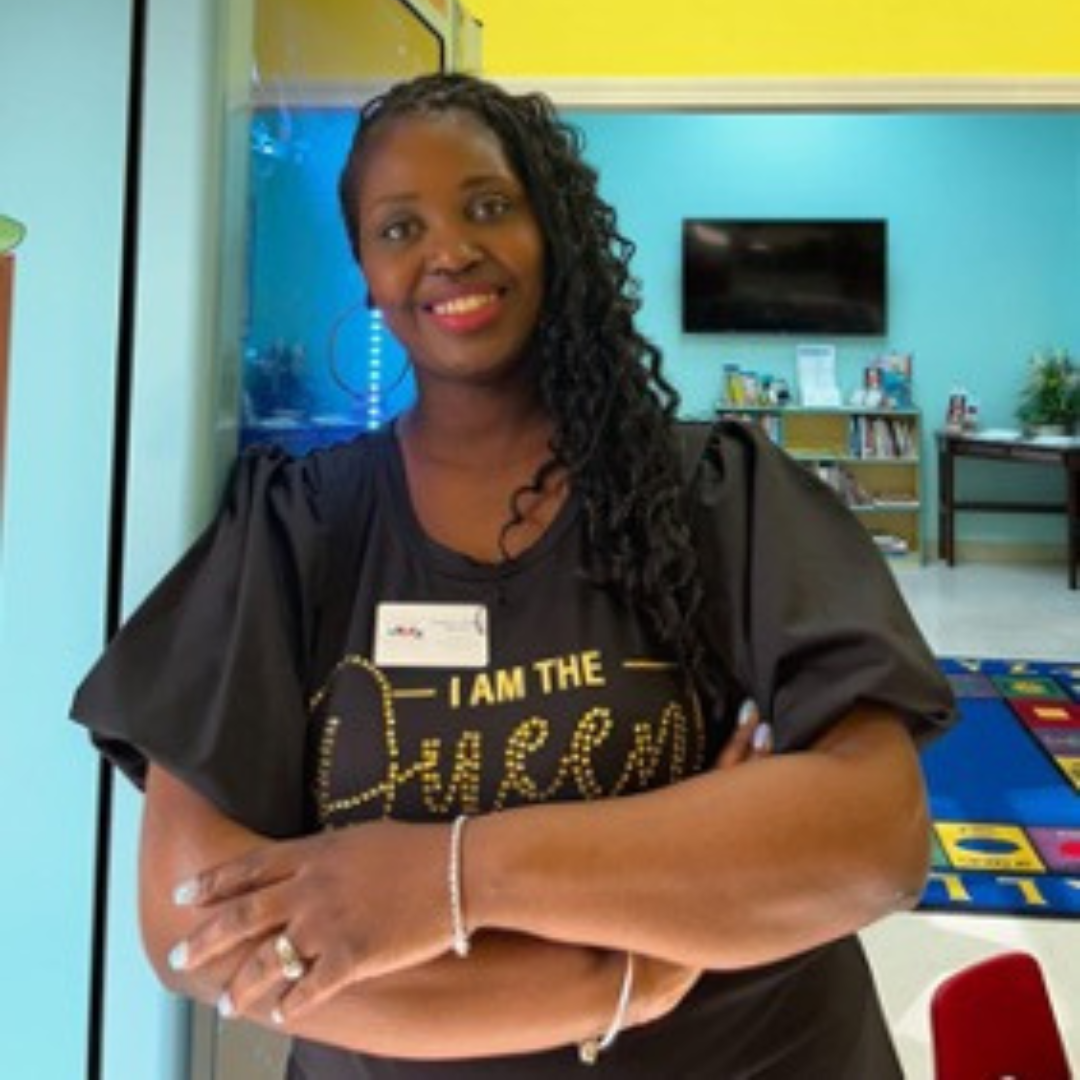
Meet a Few of the Regional Birth-to-Three Specialists | |
Follow Us on Social Media | | | | |