|
|
|
|
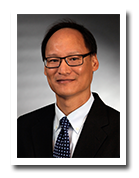
Robert Yang
Program Executive |
Dear Flight Opportunities community,
Thank you once again for taking time to read up on the latest from the Flight Opportunities program. As we head into fall, new opportunities and flights are on the horizon. In addition, the program's efforts to advance commercial small launch capabilities through public-private partnerships continue to move forward, as we strive to expand the platforms available to researchers for technology demonstrations and research. Thank you for following our journey.
This month, we're covering:
- The successful launch of Vector's first rocket from Spaceport Camden
- An introduction to new Flight Opportunities campaign manager Ryan Dibley
- Highlights of the upcoming MISSE-9 mission to test material specimens in the harsh space environment aboard the International Space Station (ISS)
- New opportunities and solicitation selections
We hope you enjoy. And as always, please reach out if you have suggestions for content you might like to see in future issues of the newsletter.
Robert
Yang,
Program Executive
NASA's Flight Opportunities program
|
|
Small Launch Vehicle News
|
|
Vector Launches First Rocket from Spaceport Camden
Vector
, a microsatellite space launch company, conducted a successful suborbital flight of its B0.002 test vehicle on August 3rd. The vehicle is a full-scale prototype of the company's Vector-R launch vehicle.
A recipient of a 2015 NASA Space Technology Mission Directorate (STMD) Announcement of Collaborative Opportunity (ACO) award, Vector received technical and facility support from NASA's Marshall Space Flight Center to develop the propulsion technologies for this vehicle using additive manufacturing.
"This is a significant accomplishment for Vector and for NASA's initiatives to advance enabling technologies for suborbital and orbital small launch vehicles," said Ron Young, Flight Opportunities Program Manager. "NASA's role in helping the industry develop small satellite launch capabilities through the STMD ACO awards enables companies such as Vector to offer this capability to the commercial marketplace sooner."
The flight test is particularly significant for Vector because the company is manifesting customer experiments and payloads--a major achievement among the next generation of small launch vehicle developers. Test packages related to real-time satellite imagery data and space-based medicine research and applications highlight Vector's mission to deliver increased access for organizations looking to launch microsatellites more affordably and at a higher frequency than ever before.
|
|
|
Meet Our New Campaign Manager: Ryan Dibley
|
|
|
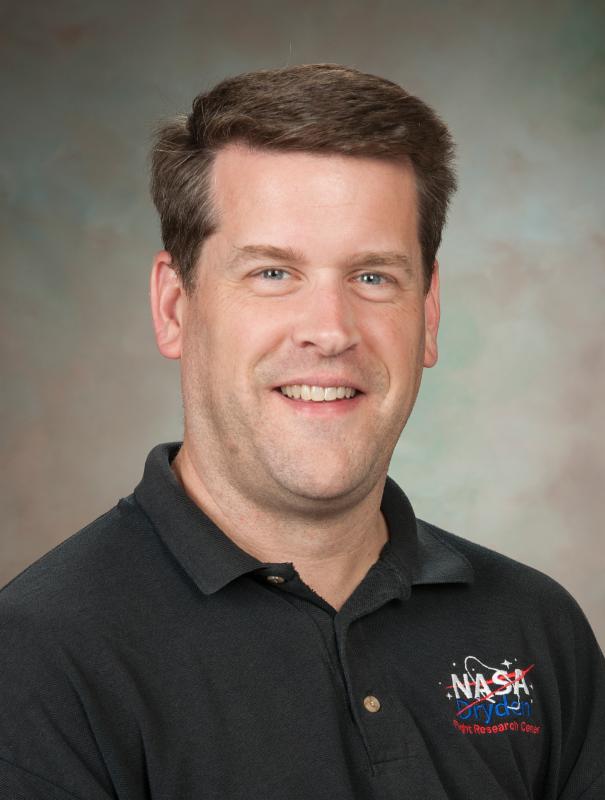
New to the Flight Opportunities team: Ryan Dibley. Dibley joins NASA's Paul De León in handling campaign management for the program. |
With 17 years of experience at NASA's Armstrong Flight Research Center, aerospace engineer Ryan Dibley brings a rich technical background to his new role as campaign manager for the Flight Opportunities program. Dibley will manage flight campaigns for technology payloads flying with Blue Origin, Virgin Galactic, Masten Space Systems, and Zero Gravity Corporation (ZERO-G).
We sat down to talk with Dibley recently about his background and why he is excited to be joining the dynamic team at Flight Opportunities.
Tell us a bit about your background at NASA? What were you doing before joining Flight Opportunities?
Prior to this new role, I was the chief engineer on the subscale Towed Glider Air Launch System at Armstrong. I then took a couple months off--my wife and I had our first baby in May--and now I'm back and getting my feet wet here with Flight Opportunities.
While this campaign manager role is a new career track for me, so much of my experience at NASA has been in flight testing. I started here in 2000 in the Controls and Dynamics Branch. And then in 2014, I moved over to the Systems Engineering Branch. Prior to that, I worked at NASA's Ames Research Center while I was getting my master's at Cal Poly San Luis Obispo. So, I've been with NASA for my entire career and really see the value of flight tests and how they can help advance the technologies NASA will need for future missions.
How are you hoping to apply that experience to this new role?
My flight test experience is really key to the practical knowledge I bring to the table in terms of what it takes to get an experiment to flight. In my role as a chief engineer, I was charged with bringing together all of the disparate (often competing) disciplines, and getting them to communicate and work together. Because of that, I think I'm able to see the big picture of these flight campaigns. So, that should be an asset to the principal investigators and the flight providers.
What excites you about working with the Flight Opportunities program and its mission?
I really like the people that I've met so far on the team. It's a really great group of smart and dedicated people. I'm looking forward to working with them. I also really like the idea of being involved in the process of maturing technologies that will have an impact on future NASA space missions. I'm excited to bring my experience to that.
Thanks so much, Ryan, and welcome to the Flight Opportunities team!
|
|
|
Upcoming MISSE-9 Mission Debuts New Flight Facility to Test Materials Durability in Space
|
|
|
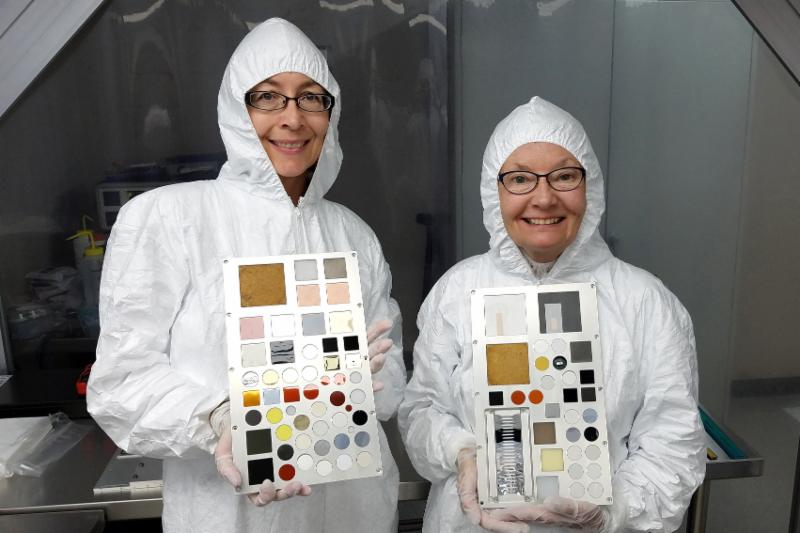
| Kim De Groh (left) of NASA's Glenn Research Center and Langley's Sheila Thibeault with their material samples, slated for testing on MISSE-9 |
|
It's been 6 years since NASA's last Materials International Space Station Experiment (MISSE) mission--a program enabling researchers to test material samples in space. In that time, the program has seen many changes, including a newly designed flight facility platform that exposes material samples to the space environment. Now part of the Flight Opportunities portfolio of offerings for demonstrating new technologies, the MISSE program will continue to help advance key technology capabilities.
The new flight facility, with hardware built and integrated by
Alpha Space Test & Research Alliance
of Houston, Texas, will be used for the first time this fall, when the MISSE-9 mission heads to the ISS, where it will remain for the next year before returning the experiments to Earth for analysis.
A Legacy of Materials Testing
The MISSE program has been a successful part of ISS research since 2001, when its original flight hardware became the first payload to be installed on the outside of the space station. In 2014, MISSE was recognized with an ISS Top Discovery in Microgravity Award.
Sheila Thibeault of NASA's Langley Research Center is one of the original pioneers of the MISSE program. Like other researchers, she relies on MISSE missions to test and qualify the resistance of materials to low-Earth orbit.
"The space environment is very harsh, and materials--especially polymeric materials--can erode away," said Thibeault. "There are a lot of different environmental complications happening at the same time. Atomic oxygen, charged particle radiation, ultraviolet radiation, temperature extremes, vacuum conditions, micrometeoroids and orbital debris... the list goes on."
Thibeault noted that, although researchers can test their materials' resistance to these conditions on the ground, there are limits.
"We can test for one condition and then another and so forth, but we can't test for these things all at the same time in the way they exist in space," said Thibeault. "That's why we really need to test these material specimens in the actual space environment. And missions like MISSE are important because they bring our samples back to us, so we can get as much data as possible."
The MISSE program's legacy of long-duration testing of materials has paid off with a wealth of data that has enabled the manufacturing of long-life, reliable components for spacecraft as well as uses on Earth.
"The original MISSE hardware was a very clever design," said Thibeault. "It looked like a suitcase. When you opened it up and turned it around 180 degrees, it formed a platform that was used to expose the material samples to the space environment."
With its newly designed flight facility, the MISSE-9 mission will offer more room than ever for both NASA researchers and academic or commercial organizations to fly their material samples.
"Now with our new flight facility design we have a box configuration. So, more sides can be exposed to the environment," noted Thibeault.
MISSE-9 will enable testing of material specimens from various NASA centers as well as academia and commercial organizations.
|
|
|
|
MISSE-11 Selections Announced
NASA has selected five technologies to be part of its MISSE-11 mission, which will test the technologies aboard the International Space Station (ISS). The MISSE flight facility enables long-term exposure of materials to the harsh space environment, allowing researchers to assess the performance of their innovations.
The following proposals were selected for the MISSE-11 mission:
- 3D-MAT On-Orbit Exposure, Jay Feldman (NASA's Ames Research Center) - Assess the effects of low-Earth orbit (LEO) exposure on a new structural ablative composite developed by NASA specifically to meet Orion requirements
- Electrodynamic Dust Shield Experiment, Carlos Calle (NASA's Kennedy Space Center) - Test the Electrodynamic Dust Shield (EDS), an active dust mitigation technology that uses dynamic electric fields to remove dust from surfaces
- Space Qualification Studies of Quad Photodiode, Focal Place Array, and Solar Paint, Narasimha Prasad (NASA's Langley Research Center) - Assess the impact of the space environment on the performance of various technologies for imaging, sensing, and power generation
- Risk Reduction for Mars Ice Home Materials, Sheila Thibeault (Langley) - Expose candidate Mars Ice Home materials to an actual space environment and determine post-flight results on strength, flexibility, mass erosion yield, and transparency to light in the visible range
- Materials Experiment for Long Duration Exploration (MELDE), Miria Finckenor (NASA's Marshall Space Flight Center) - Determine atomic oxygen erosion yield and optical property changes due to the LEO environment on a variety of materials proposed for use in NASA missions and other space applications
The next call, for MISSE-12, is expected to open in December. Stay tuned to the Flight Opportunities newsletter and
website
for details.
|
|
NASA Selects 10 New Partnerships for Space Technology Development
NASA recently announced
10 new collaborative partnerships
focused on U.S. industry-developed space technologies that can advance the commercial space sector and benefit future NASA missions through the Announcement of Collaborative Opportunity (ACO)
solicitation
released by NASA's Space Technology Mission Directorate (STMD).
Flight Opportunities is particularly interested in partnerships related to ACO Topic 1: Small Launch Vehicle Technology Development. Through these selected projects, NASA will partner with industry to continue to expand commercial small launch capabilities, one of the key objectives of the Flight Opportunities program.
- LauncherOne Small Launch Vehicle Propulsion Advancement, LauncherOne, Long Beach, California; partnering with NASA's Marshall Space Flight Center and Glenn Research Center
- Propulsion System and Second Stage Structural Loads Interaction Test Platform, Relativity Space, Inglewood, California; partnering with NASA's Stennis Space Center
- SPYDER Technology Guidance, Navigation, and Control Affordable Vehicle Avionics (AVA) Development, UP Aerospace, Littleton, Colorado; partnering with NASA's Ames Research Center
Through the ACO, NASA's investments in industry partnerships can reduce the cost of the development of technologies and accelerate the infusion of emerging commercial capabilities into space missions.
|
|
Sources Sought for Suborbital Launch Vehicle Flight and Payload Integration Services
NASA's Armstrong Flight Research Center is conducting market research to identify potential sources capable of performing Armstrong's Suborbital Launch Vehicle Flight and Payload Integration Services Support. Responses are due October 5, 2017. For more information, see the official notice.
|
SpaceTech-REDDI-2017 Appendix F1(B) Solicitation Open
NASA has released a solicitation, titled "Technology Advancement Utilizing Suborbital Flight Opportunities," as an appendix to the Space Technology Mission Directorate (STMD) NASA Research Announcement (NRA), titled "Space Technology Research, Development, Demonstration, a
nd Infusion 2017 (SpaceTech-REDDI-2017)."
The SpaceTech-REDDI solicitation seeks proposals to demonstrate cross-cutting space technologies in relevant space-like environments using currently available U.S. commercial reduced-gravity, high-altitude balloon, and suborbital reusable flight opportunities.
Applications are due on or before November 3, 2017, and NASA plans to announce selections in February 2018. Flight Opportunities will conduct two Q&A sessions to provide an overview of the solicitation and to answer questions about the proposal process. The dates for the sessions will be announced in the near future. See the solicitation page on NSPIRES for more details.
|
NASA Internal Call for Payloads
The NASA Internal Call for Payloads applies to internally funded NASA development activities seeking maturation advancement beyond Technology Readiness Level (TRL) 4. Reviews of proposals from the most recent NASA Internal Call for Payloads (NTRNL-Jan-17) are underway, with announcements expected soon. Watch the newsletter for an announcement of the next internal call, or c
ontact Steve Ord to learn more about the program and discuss how to best prepare for your submission.
|
New Opportunities for Balloon Flights for Biologists
"Ballooning for Biologists: Mission Essentials for Flying Life Science Experiments to Near Space on NASA Large Science Balloons,"
by David Smith and Marianne Sowa, has recently been published in the Journal of the American Society for Gravitational and Space Research. Highlighting the many advantages of balloon flights, including cost effectiveness and efficiency, the paper makes a case for researchers in aerobiology, astrobiology, and space biology to make balloon flight experiments an intermediary step in their technology maturation plans (from ground-based testing to low-Earth orbit and finally deep-space studies). The paper provides an overview of balloon operations, topics that can be uniquely addressed in the stratosphere, and a roadmap for developing payloads to fly with NASA.
|
|
|
Upcoming Conferences & Events
|
|
Don't forget to check out these upcoming events...
|
Ha
ve ideas
or
feedback
for the
Flight Opportunities
newsletter
?
|
|
NASA Flight Opportunities Program
|
|
|
|
|
|