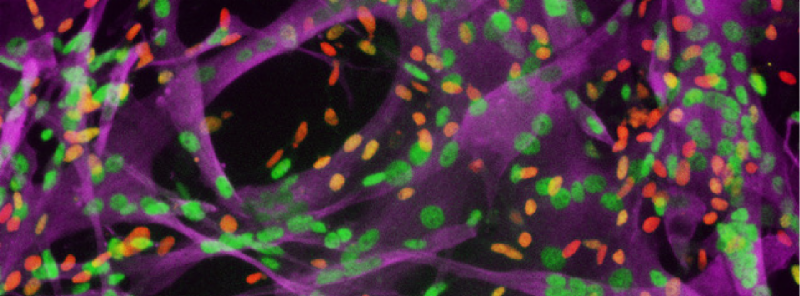
Many types of stem cells can be made by converting skin cells, but previous attempts to make muscle stem cells have faced limitations. In a recent study, researchers led by HSCI Principal Faculty member Konrad Hochedlinger developed an improved technique.
What they did:Researchers used a cocktail of proteins and small molecules to convert skin cells into muscle progenitor cells, which are similar to muscle stem cells but have a more specific development potential.
What they found:The muscle progenitor cells showed properties of muscle stem cells, including contributing to muscle regeneration in mice with leg injuries.
Why it matters:This technique could be applied to skin cells of patients with muscular dystrophy, in order to develop laboratory models or cell therapies.
Ebert studies the biology and treatment of blood disorders. He particularly focuses on myelodysplastic syndromes, which occur when blood cells do not develop normally.
The award recognizes and supports leading scientists who push the boundaries of biomedical research.
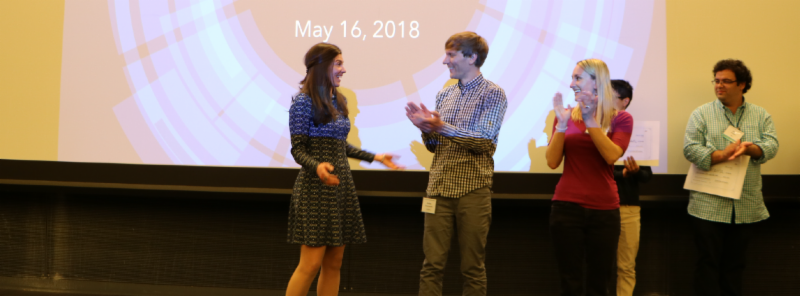
Meryem Gonzalez Celeiro, a graduate student in Ya-Chieh Hsu's laboratory, is announced the Grand Prize winner for best trainee presentation.
Keynote presentations were delivered by Nick Leschly, CEO of gene therapy company bluebird bio, and Sally Temple, Director of the Neural Stem Cell Institute.
HSCI faculty and trainees presented and discussed new projects, technologies, and ideas.
Trainees were awarded prizes for best talks and posters, based on audience voting.