News & Updates

Welcome


We are pleased to announce that Rana Sagha Zadeh, MArch, PhD, has joined CCHEq as the Ithaca-based Co-Associate Director of the Research, Training, and Mentoring Core. Dr. Zadeh is an associate professor and the co-director and co-founder of the Health Design Innovations Lab in the Department of Design & Environmental Analysis at Cornell University.


Dr. Zadeh specializes in evidence-based and human-centered healthcare design. Her work focuses on improving quality-of-life and symptom management for vulnerable populations specially individuals who experience chronic, advanced, or life-limiting illness, and optimizing the working environments and caring experiences for their formal and informal caregivers.


Zadeh’s lab develops translational solutions to bring best evidence with a lens of equity to practice using a systems approach combining available capacities in design, policy, engineering, business, and medicine in partnership with communities. Some examples of the work include:


  • Medication safety for community dwelling older adults with polypharmacy, and their caregivers, through policy-related, educational and technological solutions.
  • Systems approach to palliative and supportive care.
  • Sleep and circadian rhythm optimization, especially for those with chronic or advanced illness, through educational, technological and environmental solutions.
  • Tech-to-market advancement for occupant sensing and health monitoring technologies.
  • Healthy aging.
  • Workplace design and management with a focus on equity.


Dr. Zadeh has worked with international and national organizations, community representatives, advocacy groups and stakeholders, on system transformation, implementation, documentation and communication of practices and policies to improve health, as well as the related economic and societal outcomes.


For more information about Dr. Zadeh’s experience and interests, please visit her Cornell or CCHEq profiles.

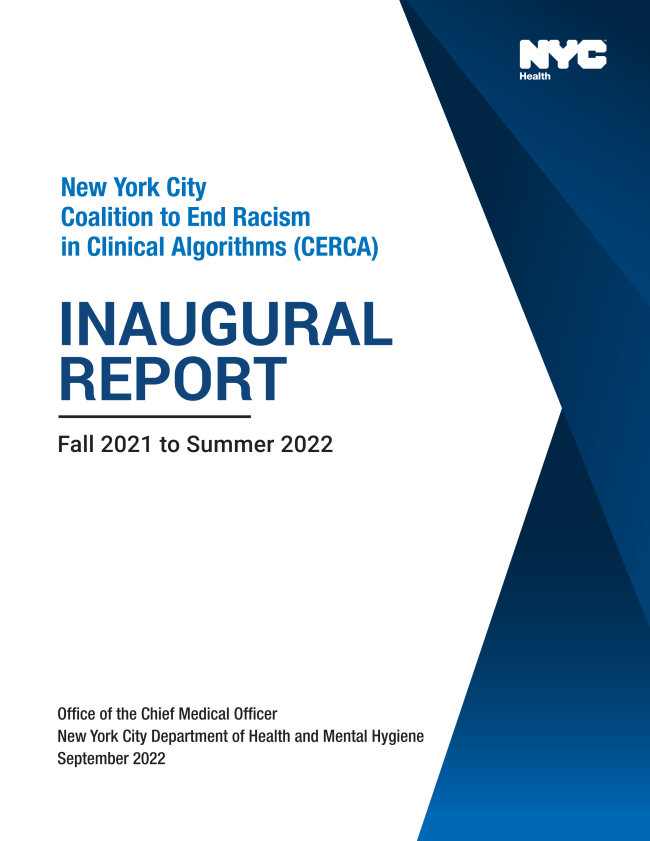
New York City Coalition to End Racism in Clinical Algorithms (CERCA)


The objective of the Coalition to End Racism in Clinical Algorithms (CERCA) is to promote a healthier and more just healthcare landscape in NYC by convening stakeholders across public health, health systems, clinical research, health informatics, and social sciences to end race adjustment, monitor the impact on racial health inequities, and engage patients whose care was negatively impacted by it.


The inaugural report captures the theoretical frameworks and background research related to race modifiers in clinical algorithms, analytic approaches for prospective assessment and redress of race-adjusted algorithms, early feedback on barriers and facilitators from our health systems stakeholders, and future directions for ending racism in clinical algorithms in New York City and beyond.

Community Solutions partners with Dr. Katherine Levine Einstein and Dr. Charley E. Willison to research homelessness policy

A nonprofit and researchers from Boston University and Cornell University will study the landscape of homelessness public policy and its consequences.


Little is known about the types of policies that are targeted toward homelessness at the local level, how these policies are organized around different goals that may or may not work to effectively reduce homelessness, and whether these goals are carried out in implementation.


Two prominent homelessness researchers are embarking on a three-year research project, “Invisible Policymaking: The Hidden Actors Shaping Homelessness,” in conjunction with Community Solutions to explore these issues more fully.


The research aims to answer:

  1. What is the full landscape of homelessness policy?
  2. How does homelessness policy get made?
  3. What are the consequences of these policy decisions for unhoused people?


In partnership with Community Solutions, Dr. Katherine Levine Einstein of Boston University and CCHEq academic member Dr. Charley E. Willison of Cornell University will study how the structure of public policy making, in both decision-making and policy implementation, contributes to homelessness.


In close consultation with Community Solutions, they will also select four cases for in-depth investigation. These case studies will feature detailed interviews with key stakeholders — including bureaucrats across levels of government and individuals with lived experience of homelessness — alongside the analysis of large databases, including police reports and land use/zoning decisions.


Dr. Willison states, “Most homelessness research is on best practice solutions. We know affordable housing, and permanent supportive housing, are the best ways to end homelessness. Yet little research to date has examined policy uptake, or political factors shaping policy choices. Cities face political pressure to enlist punitive, criminalization responses over evidence-based housing solutions, which actually facilitate cycles of homelessness. Our research explores political determinants influencing different local-policy approaches."

Lung Cancer Screening


Lung cancer incidence and mortality have disproportionate consequences for racial and ethnic minority populations. The extent to which the 2021 changes to the US Preventive Services Task Force (USPSTF) screening guidelines have reduced the racial disparity gap in lung cancer screening eligibility is not known. The publication, authored by center members, Analysis of Eligibility for Lung Cancer Screening by Race After 2021 Changes to US Preventive Services Task Force Screening Guidelines assesses the consequences of the changes in USPSTF low-dose computed tomography eligibility criteria for lung cancer screening between 2013 and 2021 among Black and White community-dwelling adults.

Read More
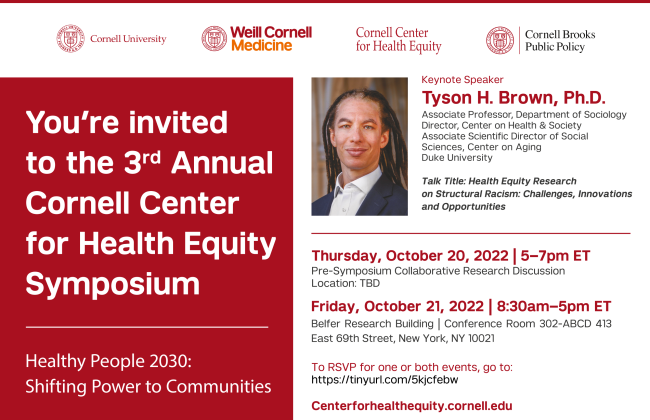
Upcoming Events

Friday, October 7, 2022 | 12:30 PM - 1:30 PM


REGISTER HERE

TALK TITLE:

"Medical Segregation: That was then; this is also now"


TALK ABSTRACT:

Medical racial segregation of health care personnel and patients is not new, nor is it over. This symposium will describe its historical roots in early American philanthropy in the 1910s-1930s, its inadequate attenuation through hospital integration cases of the 1960s, and its contemporary persistence through persistent shortages of African American doctors, concentration of shortages in places that practiced legalized racial segregation, restricted access to care for African American patients including through race corrections, racial disparities in care, and continued racial segregation in hospitals. Undoing the effects of our history of medical segregation will require concerted efforts from policymakers, lawyers, administrators, and medical personnel. Our first step is to comprehensively understand the legacy of our history. By charting the paths that have created and sustained racial disparities in medicine we aim to engage participants in understanding how historical perspectives on race in medicine contribute to ongoing consequences and in considering coherent contemporary policy and practice responses.

SPEAKERS:

Michael Meltsner is Matthews Distinguished University Professor of Law at Northeastern University. Hired by Thurgood Marshall, he was the first assistant counsel to the NAACP Legal Defense Fund in the 1960s, where he handled major cases before the federal courts. Among his clients were the North Carolina doctors and dentists who ended Southern hospital racial segregation, Mohammad Ali, and numerous death row inmates challenging capital punishment. A prolific author, his latest book is a civil rights era crime novel, Mosaic: Who Paid for the Bullet?https://law.northeastern.edu/faculty/meltsner/


Leila Morsy is an academic whose current work focuses on the history of segregation in medicine and its contemporary consequences.

Join Us in the Pursuit of Health Equity

Become a Member


The Cornell Center for Health Equity is delighted to announce that it has reached 266 Center members. Complete the membership application to become a member today!


Membership Application

Find Collaborators

Leadership & Cores

Contribute to the e-newsletter

Make a Donation

Contact Us

Follow Us
Twitter