November 2023 | The Council of State Governments | Midwestern Radioactive Materials Transportation Committee

Midwestern Radioactive Materials Transportation Committee Newsletter

Upcoming Events

*All times are Central Time

November 8 - 9:

Western Interstate Energy Board (WIEB) Fall 2023 Meetings - Idaho Falls, ID

November 12 - 15:

2023 American Nuclear Society (ANS) Winter Meeting and Technology Expo - Washington, D.C.

January 24-25, 2024:

Tribal Radioactive Materials Transportation Committee (TRMTC) Mid-Year Meeting - Carlsbad, NM

June 3 - 6:

2024 Annual Meeting of the National Transportation Stakeholders Forum (NTSF) - Denver, CO

June 10 - 24, 2024:

IAEA International Symposium on the Management of Spent Fuel from Nuclear Power Reactors - Vienna, Austria

Join Our Mailing List!
Committee Happenings

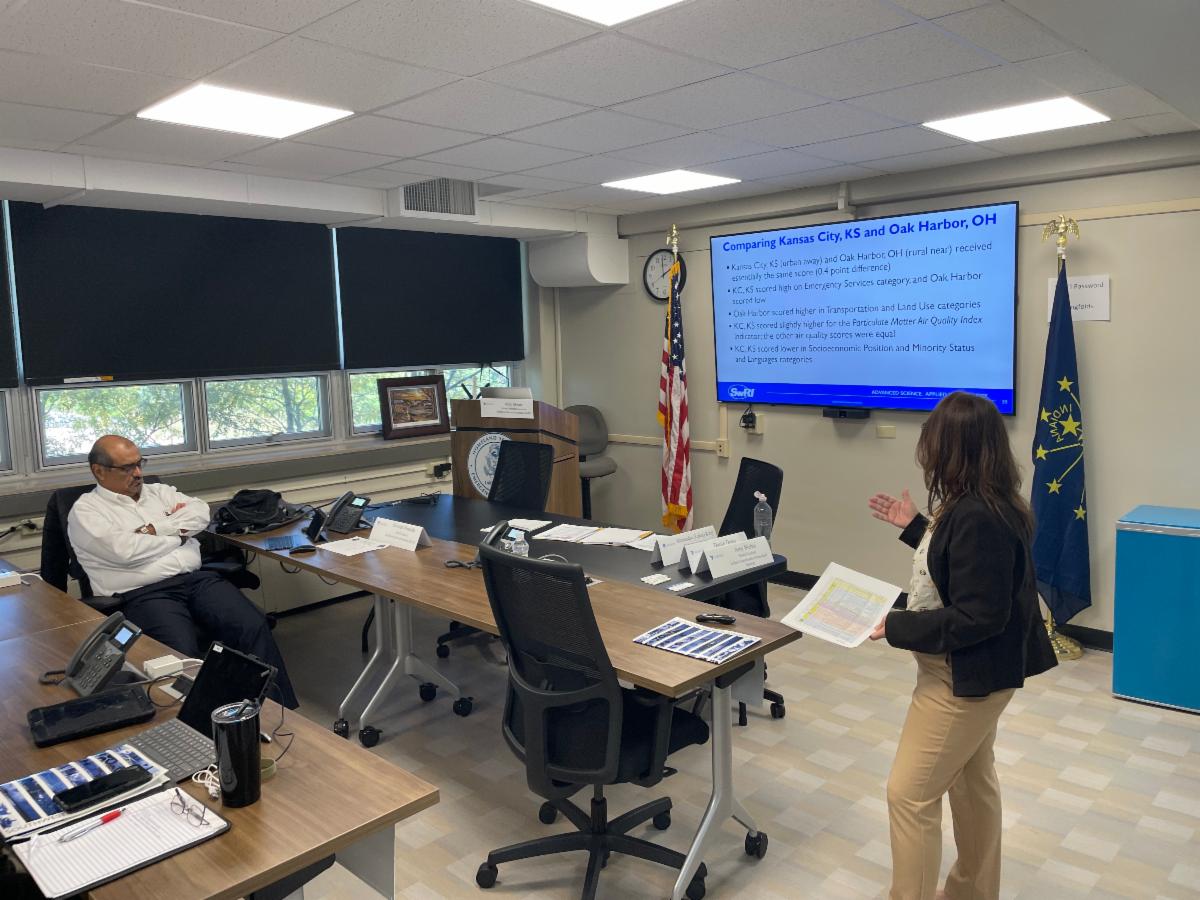
The Midwestern Radioactive Materials Transportation Committee (MRMTC)'s CSG-Midwest staffers Mitch Arvidson and Melissa Shahzadeh were in Lake County, Indiana during the first week of October conducting a Ground Truthing Session along with Amy Minor and Osvaldo Pensado of the Southwest Research Institute (SwRI). Members of the Indiana Department of Homeland Security and the Indiana Emergency Management Agency received a day-long training on the utility of the Community Readiness Assessment Framework for Transportation (CRAFT) tool. The feedback generated during the training was used by the SwRI scientists and engineers to improve the tool so that it better captures the lived experiences of the first responders and community members. CSG-Midwest received SwRI's final report on the CRAFT tool on October 24, and the report was distributed to interested parties on October 25. Contact Mitch or Melissa if you would like a copy of the report.


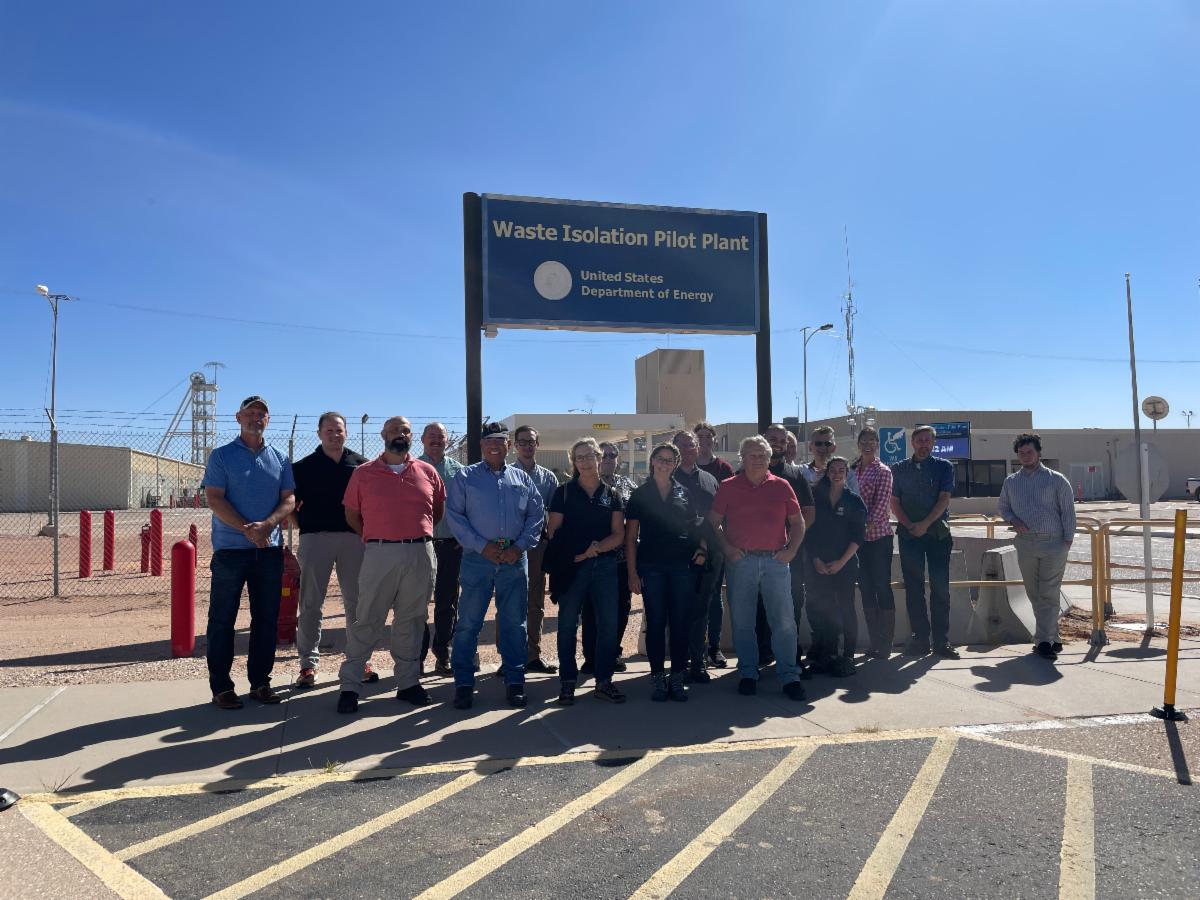
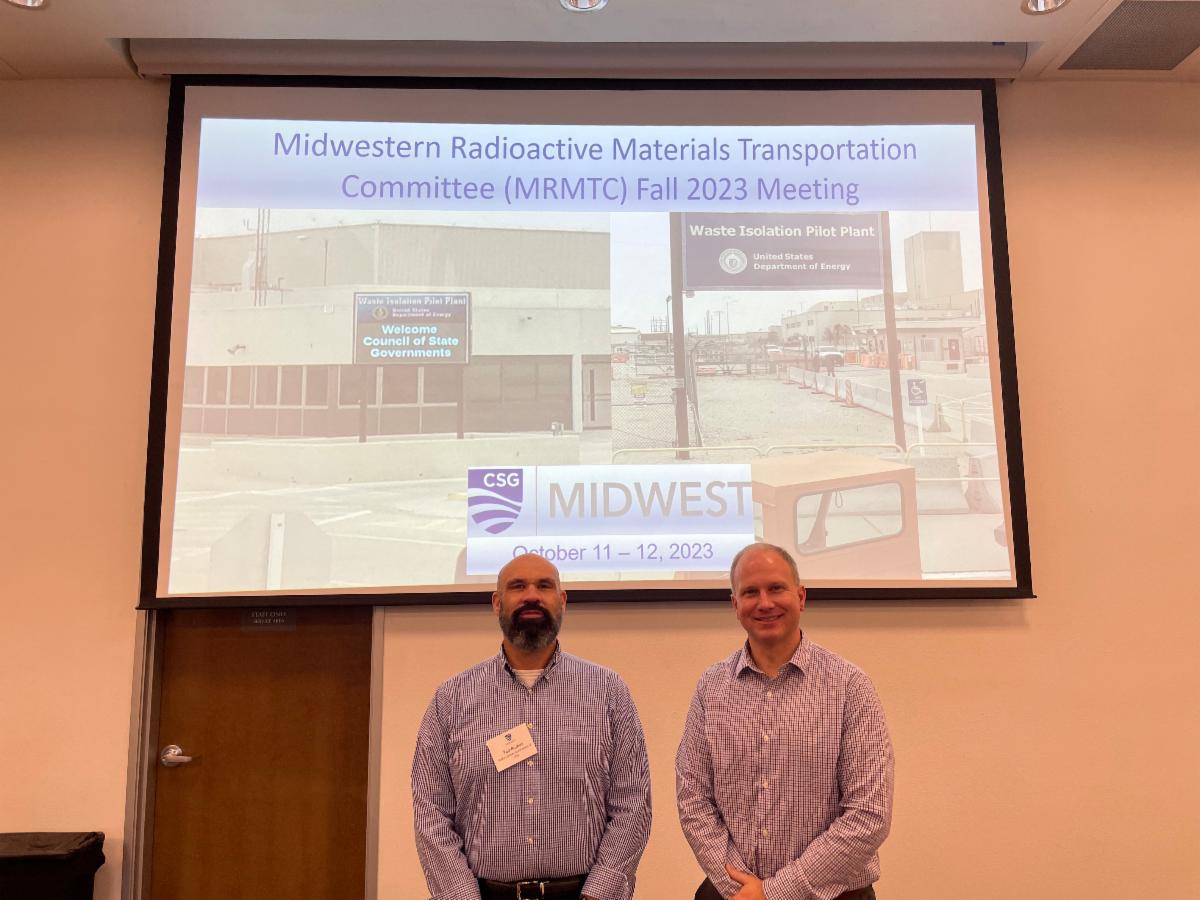
Later in October, Mitch and Melissa, along with other members of the MRMTC, travelled to Carlsbad, NM for the annual Fall MRMTC meeting. The meeting took place on Wednesday, October 11, chaired by the indefatigable Tad Rumas from the Great State of Ohio. MRMTC members then toured the Waste Isolation Pilot Plant (WIPP) on October 12. Details of the meeting can be found below in the Focus This Month.


On October 16, Melissa attended a WIPPTrex training exercise conducted under the U.S. Department of Energy (DOE) Transportation Emergency Preparedness Program (TEPP) and sponsored by the State of New Mexico WIPP Transportation Safety Program in Santa Fe, NM. This was a radiopharmaceuticals exercise designed to establish a learning environment in which first responders perform those actions usually associated with a hazardous materials incident. These actions include command and control, communications, victim rescue, triage and treatment, hazard identifications among others. The exercise was observed by New Mexico State personnel and members of the Carlsbad Field Office, as well as staffers from the Western Interstate Energy Board and the Southern States Energy Board.


Finally, on October 30, the Regional Tribal Engagement (RTE) work group held its quarterly virtual meeting. Ten members were present on the call and availed themselves of the opportunity to update each other on items of interest. The group welcomed its newest member, Chelsa Johnson, who is an environmental protection specialist with the Bureau of Indian Affairs in the Midwest Regional Office. Welcome Chelsa! Additionally, Mitch announced that Melissa will be stepping in as CSG-Midwest's lead staffer of the RTE beginning in the new year. Good luck Melissa! Look for the summary of the meeting on the RTE website shortly.

MRMTC Members Visiting WIPP on Day 2 of the Annual MRMTC Fall Meeting

National Transportation Stakeholders Forum

Members of The National Transportation Stakeholders Forum (NTSF) Planning Committee attended a virtual meeting on October 16 to specifically discuss breakout sessions and speakers for the annual meeting upcoming in June 2024. The committee was heartened to hear that the scheduler for U.S. Secretary of Transportation Pete Buttigieg had expressed interest in the possibility of Mr. Buttigieg speaking at the event in Denver, but the committee continues to consider alternative names in the event the Secretary is unavailable.


Additionally, the committee discussed breakout sessions for the first day of the meeting. Four concurrent sessions are currently on the docket and topics under consideration include package performance evaluations and incident commander perspectives. Members of the committee who recently participated in the MRMTC Fall meeting suggested the possibility of a breakout focusing on the inspection processes for radioactive material shipments by highway and rail. Certainly, there is more discussion to come. The next meeting of the committee is scheduled for Thursday, November 2.


We wish to remind everyone that presentations from the 2023 meeting have been uploaded to the NTSF website and are available for perusal along with NTSF webinars from previous years (2014 - 2022). If you fancy a walk down memory lane, you can find and view these webinars here.

Focus This Month

MRMTC Fall Meeting Recap

As mentioned above, the Fall meeting of the MRMTC took place in Carlsbad, NM on October 11. The meeting was chaired by Tad Rumas from Ohio, who set the respectful tone by acknowledging that the meeting was being held on the ancestral, traditional, and contemporary lands of the Mescalero Apache Tribe.


After introductions and welcomes, Ellen Edge of the DOE's office of Environmental Management (DOE-EM) and Sara Hogan of the DOE's office of Nuclear Energy (DOE-NE) offered program reports and facilitated committee discussion. Ms. Edge highlighted that collaboration is the critical substructure of the DOE-EM's guiding principles, which include openness, transparency, and stakeholder consideration. She emphasized that public and intergovernmental involvement is an essential component of the DOE-EM's success. Subsequently, Dr. Hogan highlighted four activities to be undertaken by the DOE: 1. Effective implementation of a federal consolidated interim storage facility; 2. full-scale package performance study; 3. Engagement with state and tribal partners to cooperatively plan for large-scale spent nuclear fuel (SNF) transportation; and 4. developing purpose-built railcars for SNF and developing associated security plans.


Committee members also heard from James Mason of the Carlsbad Field Office (CBFO) and Bobby St. John of WIPP. Mr. Mason spoke about the frequency of WIPP shipments as well as TEPP trainings and radiological assistance programs including the WIPPTrex events like those attended by Melissa (described above). Mr. St. John provided a WIPP site update. He explained that WIPP is receiving a 10-year renewal contract but is not expanding its mission. The site is currently 42% full of defense-generated transuranic waste and expansion is underway. Mr. St. John emphasized that logistics and timing are being managed appropriately to ensure there is no interruption to shipment receipt or entombment. MRMTC committee members visited WIPP the following day but were unfortunately unable to take the scheduled subterranean tour due to maintenance on one of the below-ground conveyances. The disappointment was substantially mitigated by witnessing the handling of a cask by WIPP personnel.


After the WIPP update, reports were delivered by the various NTSF Ad Hoc Working Groups followed by a regional roundtable, which certainly served to underscore both the scope and engagement of all individuals and agencies present at the meeting. The effort underway is a testament to how much can be accomplished when smart, committed people work together to accomplish a shared goal. The cooperative agreement group reports further highlighted this truism.


The penultimate presentation was from Tad Rumas, who provided an introduction to the inspection processes for radioactive material shipments by highway and rail. The objective was to provide a brief overview of the mechanisms and protocols currently in place to ensure the safe transportation of radioactive shipments whether by rail or by highway. The meeting closed with a presentation by Jack Volpato of Carlsbad Department of Development regarding the Holtec HI-STORE consolidated interim storage facility currently being litigated within New Mexico. Mr. Volpato suggested that the efforts of New Mexico's legislative body to stonewall the Holtec facility are in conflict with the desire of the local community. He indicated that the Carlsbad community is supportive and the project has local buy-in particularly due to the anticipated economic benefit such a project would bring to the community. Mr. Volpato stated that WIPP is the number one employer in the city right now and emphasized that WIPP has been a force for the good of Carlsbad since the early 90s.


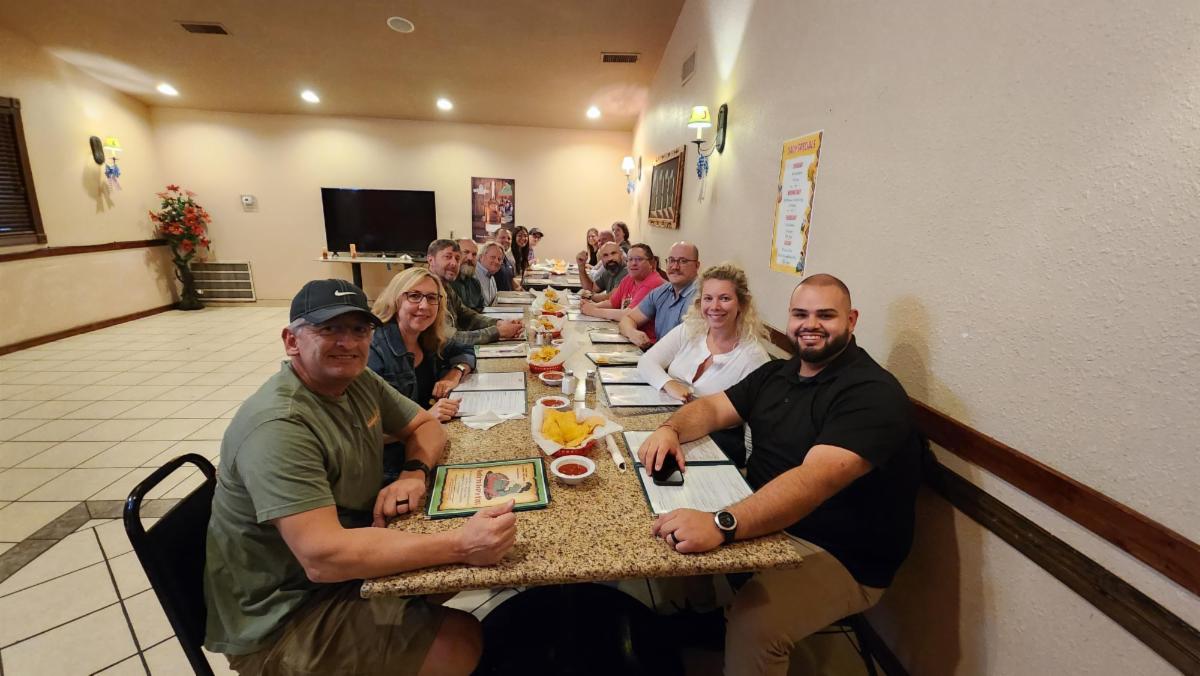
The MRMTC meeting concluded with the election of the new co-chair. Illinois' Rodney Pitchford completes his term at the end of this year, and Mark Paulson of Wisconsin was elected by the committee to fill Mr. Pitchford's vacancy. Congratulations, Mark! That evening, MRMTC members descended on Lucy's MexiCali Restaurant to celebrate a job well done and to usher Mr. Paulson into his new role in style. The group of Midwesterners tucked into the spicy local fare with enthusiasm and demonstrated characteristic imperturbability when forced to answer the question that stymies even the savviest tourist to New Mexico: Red or Green?

Nuclear News

New Safety Test Performed on Nuclear Fuel

The U.S. Department of Energy - Office of Nuclear Energy (DOE-NE) announced on October 4 that researchers at the Idaho National Laboratory performed an experiment that simulated the conditions of a loss of coolant accident (LOCA). This safety test was the first of its kind performed within the U.S. in more than 35 years, and the data collected will help the nuclear industry assess fuel performance, answer regulatory questions, and develop new fuel technologies. According to the announcement, LOCA testing is crucial to determining the behavior of fuels and materials under adverse conditions as well as developing accident tolerant fuels. Read more about this testing at the DOE's website.


NuScale's Reactor Technology to Power Data Centers in Ohio and Pennsylvania

World Nuclear News reported on October 9 that Standard Power intends to develop small modular reactor (SMR) facilities in Ohio and Pennsylvania by enlisting the assistance of the independent global energy development and production company, ENTRA1 Energy. ENTRA1 is NuScale's global strategic partner for the commercialization of SMR technology. Standard Power's plans include NuScale providing 24 units to collectively produce 1,848 MWe of clean energy for the data centers. According to NuScale, "The development of a commercial SMR power facility will not only help the data center achieve carbon reduction targets, but will also support the development of a new clean energy source to meet diverse energy transition needs." Standard Power's founder and CEO Maxim Serezhin believes SMR technology is the solution to delivering reliable 24/7 energy to consumers. He says, "We see a lot of legacy baseload grid capacity going offline with a lack of new sustainable baseload generation options on the market especially as power demand for artificial intelligence (AI)-computing and data centers is growing. By bringing together ENTRA1's superior strengths in project development and investment with NuScale's proven SMR technology, consumers can reduce their emissions footprint."


Ohio's HALEU Demonstration Project Kicks Off

The DOE-NE announced on its website on October 11 that the American Centrifuge Operating (ACO), a subsidiary of Centrus Energy Corp, started enrichment operations at the DOE's facility in Piketon, OH. This brings the nation one step closer to producing the first commercial quantities of high-assay low-enriched uranium, known as HALEU, which is the fuel for the United States' future fleet of advanced reactors. The demonstration project should produce 20-kg of HALEU by the end of this calendar year, and production is expected to continue into 2024 with increasing quantities. ACO's target is an annual production rate of 900-kgs of HALEU per year, with options to produce more in future years. The Ohio-generated fuel will be used to power the initial cores of two demonstration reactors that were awarded under the DOE's Advanced Reactor Demonstration Program.


Missouri's Weldon Spring Site Identified as "One of the Most Unique Tourist Attractions"

The Times of India printed a story on October 10 that identifies Missouri's Weldon Spring Site as "one of the most unique tourist attractions that one will come across in the United States." The article briefly describes the history of Weldon Spring and its status as a legacy site and suggests that visitors should take advantage of the rare opportunity to climb the "mini man-made mountain" (referring to the Weldon Spring Disposal Cell) in which 1.48 million cubic yards of nuclear waste is entombed. The travel feature ends with a cheeky statement that tourists need not rush to visit: "the facility is built to last thousands of years."


Michigan Banks on Hydrogen

The Detroit News reported on October 13 that the DOE is giving the Midwest Alliance for Clean Hydrogen, known as MachH2, $1 billion to develop regional supply chains for the production, distribution, and use of hydrogen in trucks and heavy-duty vehicles. The Midwest hub will produce hydrogen using "diverse and abundant energy sources," the DOE said, including renewable energy, natural gas, and nuclear energy. Whilst most hydrogen fuel today is produced from natural gas, the precise recipe of energy sources MachH2 will use to create hydrogen has not yet been announced. "If you can make the hydrogen with a clean source that's not generating carbon dioxide, then it puts you in a position to decarbonize those industries," said Todd Allen, co-director of MI Hydrogen and the University of Michigan's Glenn F. and Gladys H. Knoll department chair of nuclear engineering and radiological sciences. Energy Secretary Jennifer Granholm is quoted as stating that unlocking the full potential of hydrogen is crucial to American's clean energy future.


Let Us Read, And Let Us Dance

Voltaire declared that these two amusements -- reading and dancing -- will never do any harm to the world and, in service to bonhomie, Dr. Steve Maheras of the Pacific Northwest National Laboratory (PNNL) wanted to highlight two publications of interest to the MRMTC. The National Academies of Sciences, Engineering, and Medicine published a report entitled Laying the Foundation for New and Advanced Nuclear Reactors in the United States. Though unlikely to leave readers fleet of foot, this report explores the existential challenge posed by climate change and the role nuclear power might play in the future. Also of interest, the International Atomic Energy Agency (IAEA) published a report entitled Detection at State Borders of Nuclear and Other Radioactive Material Out of Regulatory Control. This publication provides guidance for States on planning, implementing, and evaluating nuclear security detection systems and measures at State borders. The IAEA website suggests that border guards, customs authorities, and national or local law enforcement might be particularly interested in the guidance developed in this report. That sounds worthy of dancing!

Thank you for reading. Watch for the next edition coming out on

December 7, 2023.

Missed a newsletter? Past issues are archived on the committee's webpage.
DOE Nuclear Awardee Logo

Please do not reproduce or create new content from this material without the prior express written permission of CSG Midwest.


This material is based upon work supported by the Department of Energy under Award Numbers DE-EM0005277, DE-NE0009117, and DE-EM0005281. Logo was developed by the U.S. Department of Energy to indicate receipt of DOE funding. Not an endorsement by DOE.


This report was prepared as an account of work sponsored by an agency of the United States Government. Neither the United States Government nor any agency thereof, nor any of their employees, makes any warranty, express or implied, or assumes any legal liability or responsibility for the accuracy, completeness, or usefulness of any information, apparatus, product, or process disclosed, or represents that its use would not infringe privately owned rights. Reference herein to any specific commercial product, process, or service by trade name, trademark, manufacturer, or otherwise does not necessarily constitute or imply its endorsement, recommendation, or favoring by the United States Government or any agency thereof. The views and opinions of authors expressed herein do not necessarily state or reflect those of the United States Government or any agency thereof.