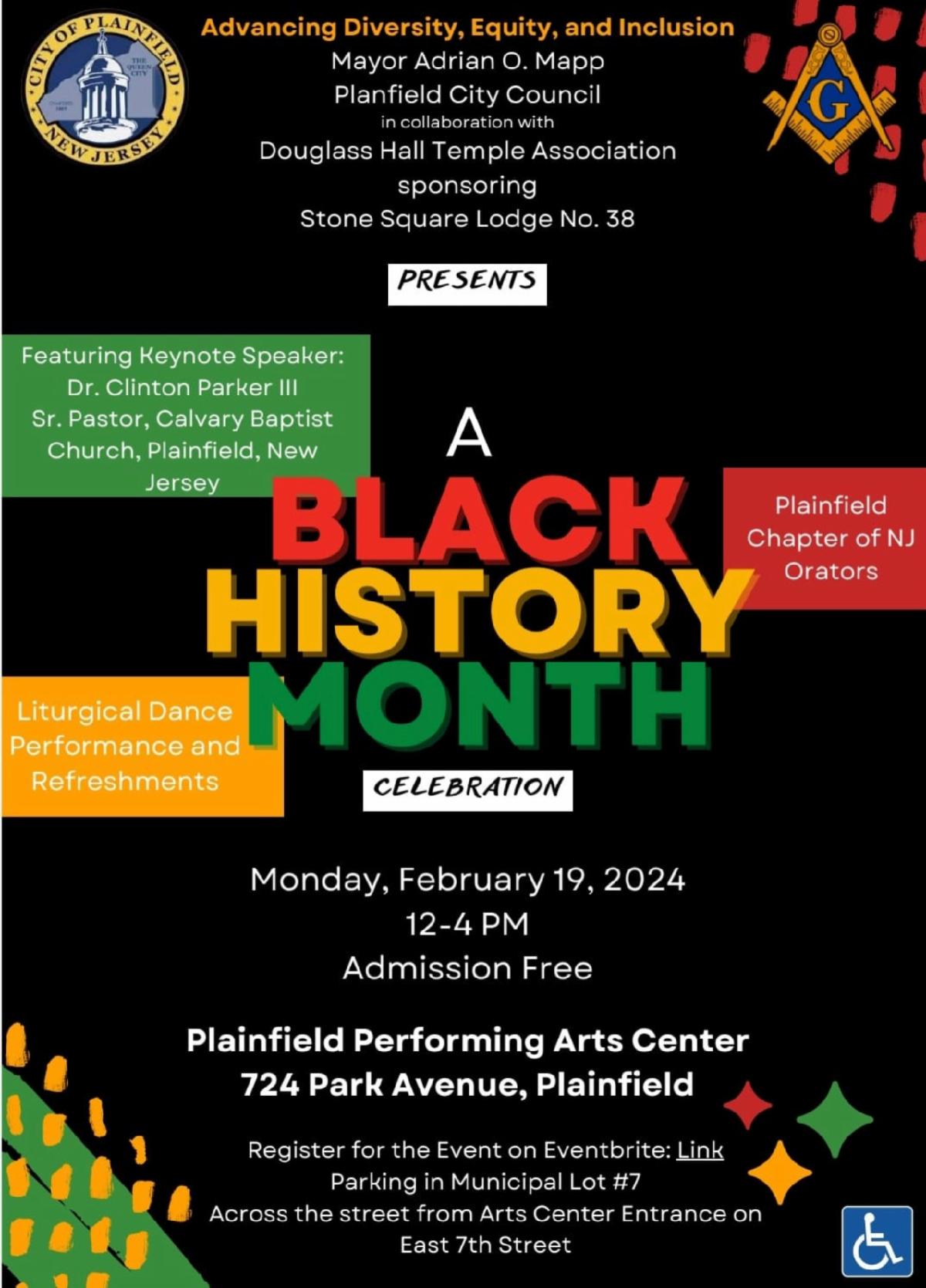
We Must Celebrate Black History Month | |
Dear Jazz,
The profound significance of Black History Month cannot be over emphasized. This month serves not only as a reflection on the past but as a beacon for the future. This annual observance is not just a period to reflect on the past; it's a powerful reminder of the journey and contributions of Black Americans throughout our nation's history. It serves as a testament to resilience, innovation, and the undying quest for justice, equality, and equity.
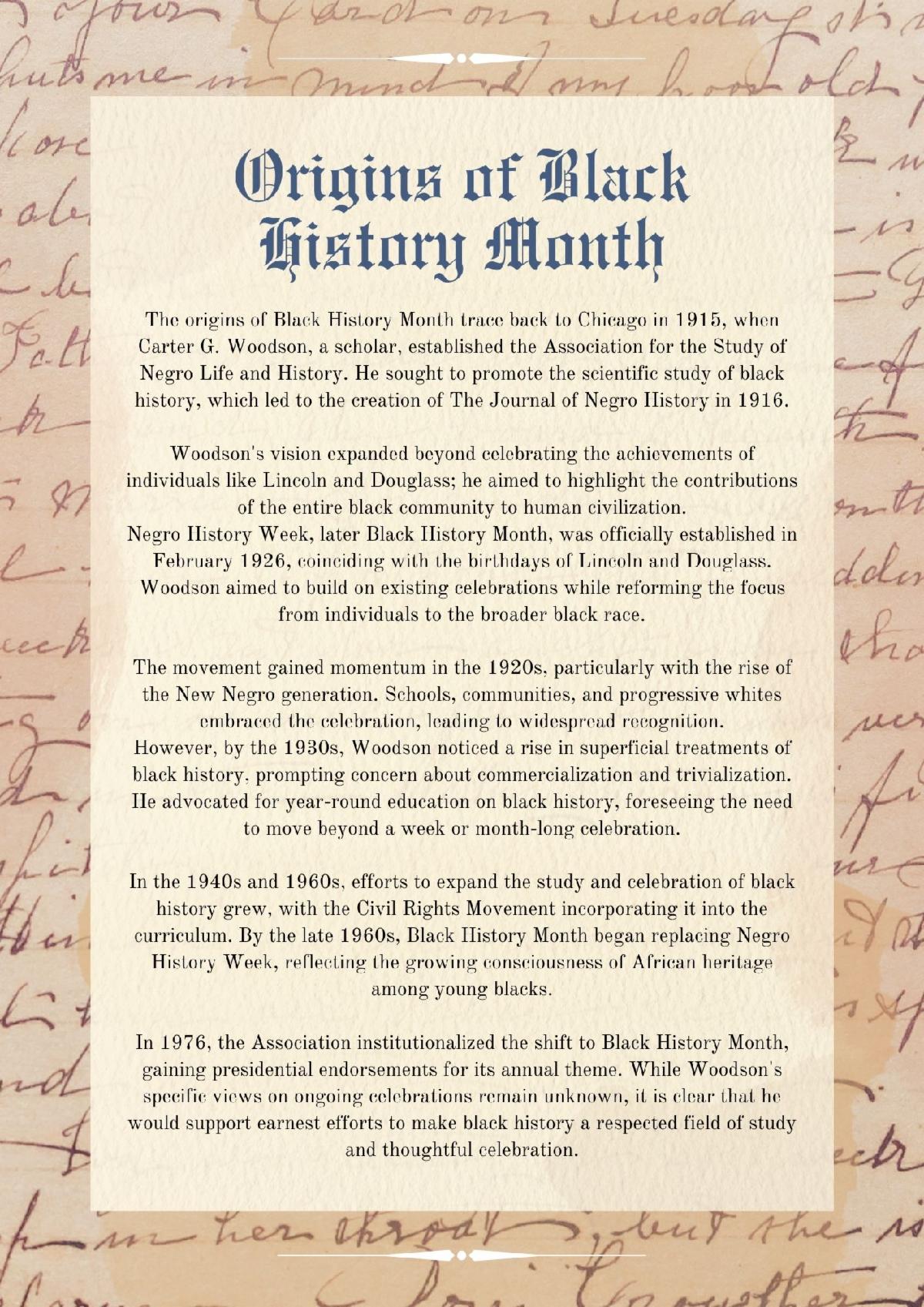
The genesis of Black History Month can be traced back to the visionary historian Carter G. Woodson and the Association for the Study of African American Life and History. Initially conceived as Negro History Week in 1926, this celebration was strategically placed in the second week of February to coincide with the birthdays of Abraham Lincoln and Frederick Douglass. These figures were central to the African American experience and the broader struggle for freedom and equality. It wasn't until 1976, amidst the civil rights movement's aftermath and a growing awareness of the need for inclusivity in the narrative of American history, that this week-long observance was expanded to a month-long celebration. This expansion was a recognition of the need to devote more time and space to reflect on and celebrate the myriad contributions of Black Americans to national and global progress.
In our diverse community, the importance of celebrating Black History Month is even more vital. It represents an opportunity for all of us, regardless of background, to engage with a part of our collective history that has often been marginalized. This month offers a dedicated time to engage with the rich tapestry of African American history, which is, in essence, American history. Celebrating this month encourages dialogue, promotes understanding, and fosters a sense of unity and respect among all community members. It's a time to highlight the achievements and contributions of Black Americans in every field of endeavor, from science and politics to arts and social justice, acknowledging their pivotal role in shaping our nation.
Black History Month is essential in the ongoing fight against racial injustice and inequality. It reminds us of the resilience and determination of Black Americans in their struggle for civil rights and social justice. This commemoration is a call to action for all community members to stand in solidarity against racism and to work towards a future where equality and justice are realities for everyone. It is about acknowledging past and present struggles and committing to a future where such disparities no longer exist.
Perhaps most importantly, the celebration of Black History Month is crucial for our younger generations. It is imperative that we pass on this legacy of resilience, achievement, and advocacy. Our children need to understand the struggles and triumphs of those who came before them, not only to appreciate the freedoms and rights they enjoy today but to inspire them to continue the work of building a more inclusive, equitable, and compassionate world. By keeping the legacy of Black History Month alive, we ensure that future generations can draw strength and inspiration from the past, recognizing their role in shaping a future where diversity is celebrated, and equality is a reality for all.
As mayor, I am committed to fostering a community that recognizes and celebrates the contributions of Black Americans not just in February but year-round. Let us all pledge to honor this rich history and to educate ourselves and others about the importance of this month. Together, we can keep the legacy of Black History Month alive for future generations, ensuring that the lessons of the past guide us toward a more inclusive and equitable future.
#LovePlainfield #AmoPlainfield
Creating One Plainfield. One Future.
| | |
|
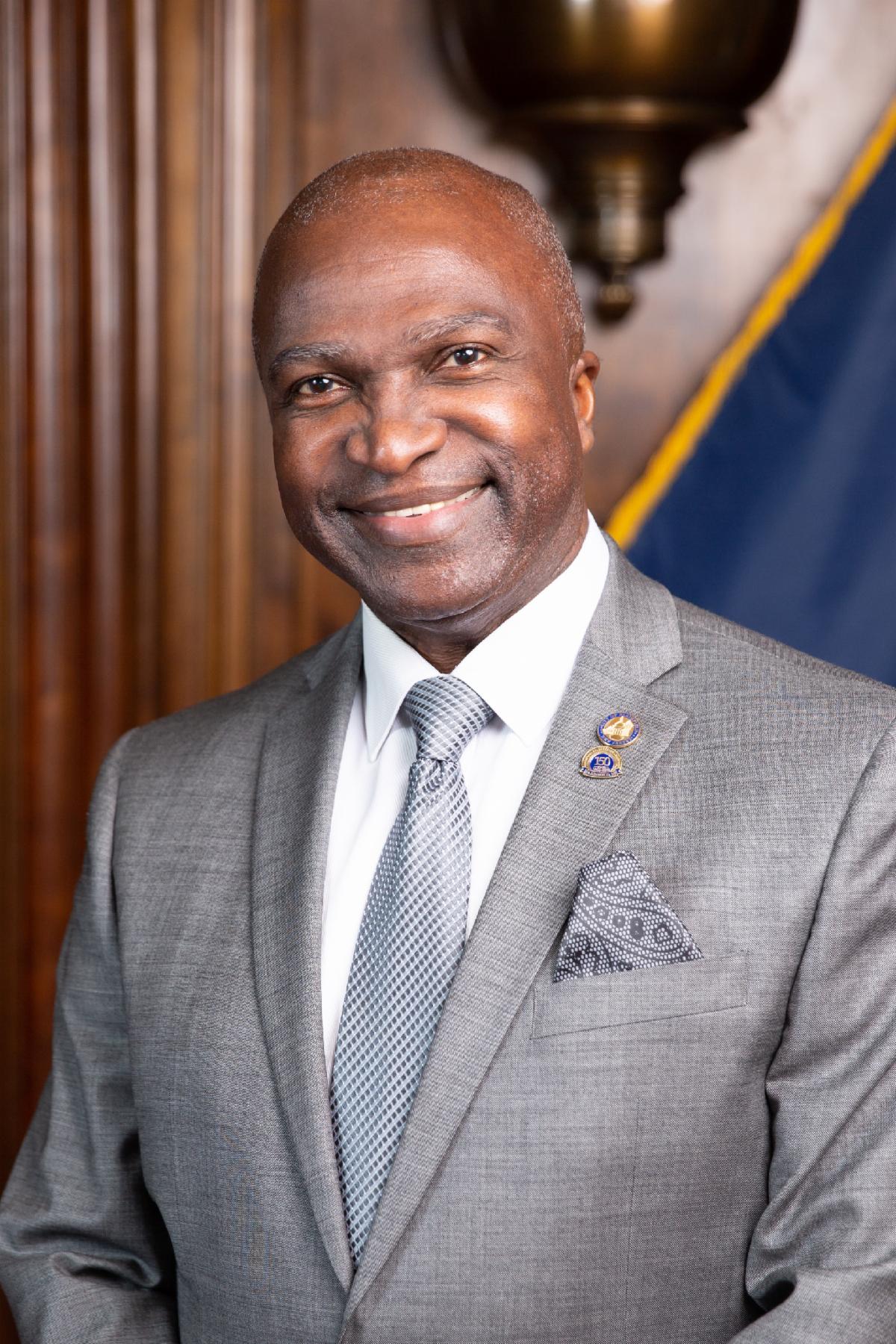
Mayor Adrian O. Mapp
City of Plainfield
| |
Debemos celebrar el Mes de la Historia Afroamericana | |
|
Querido(a) Jazz,
No se puede dejar de enfatizar el profundo significado del Mes de la Historia Afroamericana. Este mes sirve no sólo como una reflexión sobre el pasado sino también como un faro para el futuro. Esta celebración anual no es sólo un período para reflexionar sobre el pasado; es un poderoso recordatorio del viaje y las contribuciones de los afroamericanos a lo largo de la historia de nuestra nación. Sirve como testimonio de la resiliencia, la innovación y la búsqueda eterna de justicia, igualdad y equidad.
La génesis del Mes de la Historia Afroamericana se remonta al visionario historiador Carter G. Woodson y la Asociación para el Estudio de la Vida y la Historia Afroamericana. Inicialmente concebida como la Semana de la Historia Negra en 1926, esta celebración se ubicó estratégicamente en la segunda semana de febrero para coincidir con los cumpleaños de Abraham Lincoln y Frederick Douglass. Estas figuras fueron fundamentales para la experiencia afroamericana y la lucha más amplia por la libertad y la igualdad. No fue hasta 1976, en medio de las secuelas del movimiento de derechos civiles y una creciente conciencia de la necesidad de inclusión en la narrativa de la historia estadounidense, que esta celebración de una semana se amplió a una celebración de un mes. Esta expansión fue un reconocimiento de la necesidad de dedicar más tiempo y espacio para reflexionar y celebrar las innumerables contribuciones de los afroamericanos al progreso nacional y global.
En nuestra diversa comunidad, la importancia de celebrar el Mes de la Historia Afroamericana es aún más vital. Representa una oportunidad para todos nosotros, independientemente de nuestros orígenes, de involucrarnos con una parte de nuestra historia colectiva que a menudo ha sido marginada. Este mes ofrece un tiempo dedicado a profundizar en el rico entramado de la historia afroamericana, que es, en esencia, la historia estadounidense. Celebrar este mes fomenta el diálogo, promueve la comprensión y fomenta un sentido de unidad y respeto entre todos los miembros de la comunidad. Es un momento para resaltar los logros y contribuciones de los afroamericanos en todos los campos, desde la ciencia y la política hasta las artes y la justicia social, reconociendo su papel fundamental en la configuración de nuestra nación.
El Mes de la Historia Afroamericana es esencial en la lucha actual contra la injusticia y la desigualdad racial. Nos recuerda la resiliencia y determinación de los afroamericanos en su lucha por los derechos civiles y la justicia social. Esta conmemoración es un llamado a la acción para que todos los miembros de la comunidad se solidaricen contra el racismo y trabajen por un futuro donde la igualdad y la justicia sean realidades para todos. Se trata de reconocer las luchas pasadas y presentes y comprometerse con un futuro en el que tales disparidades ya no existan.
Quizás lo más importante es que la celebración del Mes de la Historia Afroamericana es crucial para nuestras generaciones más jóvenes. Es imperativo que transmitamos este legado de resiliencia, logros y promoción. Nuestros niños necesitan comprender las luchas y los triunfos de quienes los precedieron, no solo para apreciar las libertades y los derechos de los que disfrutan hoy, sino también para inspirarlos a continuar el trabajo de construir un mundo más inclusivo, equitativo y compasivo. Al mantener vivo el legado del Mes de la Historia Afroamericana, garantizamos que las generaciones futuras puedan sacar fuerza e inspiración del pasado, reconociendo su papel en la configuración de un futuro donde se celebra la diversidad y la igualdad es una realidad para todos.
Como alcalde, estoy comprometido a fomentar una comunidad que reconozca y celebre las contribuciones de los afroamericanos no sólo en febrero sino durante todo el año. Prometámonos todos honrar esta rica historia y educarnos a nosotros mismos y a los demás sobre la importancia de este mes. Juntos, podemos mantener vivo el legado del Mes de la Historia Afroamericana para las generaciones futuras, asegurando que las lecciones del pasado nos guíen hacia un futuro más inclusivo y equitativo.
#LovePlainfield #AmoPlainfield
Creando Un Plainfield. Un Futuro.
| |
|
Alcalde Adrian O. Mapp
Ciudad de Plainfield
| |
For more information about the Financial Opportunity Center, please call 908-558-8000 or visit www.ucnj.org/ajc. | |
Union County Celebrates Black History Month With Free Jazz Concert | |
|
The Union County Board of County Commissioners, through the Office of Cultural and Heritage Affairs, is pleased to celebrate this year’s Black History Month with the theme of, “African Americans in the Arts,” with a free Jazz performance by The Bob DeVos Jazz Quartet featuring Lance Bryant. The event will provide a unique exploration of jazz music through narration and performance on Thursday, February 22, 2024, at 7:00 p.m. at the Union County Performing Arts Center, Hamilton Stage, located at 360 Hamilton Street in Rahway.
“The theme for this year’s Black History Month is a significant one. By understanding how music had the power to provide comfort and solace during difficult times, while also capturing moments of hopefulness and joy, we can better grasp the African American journey through history,” said Union County Commissioner Chairwoman Kimberly Palmieri-Mouded. “The Commissioner Board and I are proud to honor Black History Month with this free event, and we invite you to join us for a great evening celebrating the Arts.”
This year’s theme “African American and the Arts” will focus on celebrating the dynamic African American culture and its global influence in the arts, music, literature, and film industry. The County of Union is excited to host the Hamilton Stage’s first-time visitors: Bob DeVos and the Bob DeVos Jazz Quartet, along with the talented saxophonist and vocalist, Lance Bryant.
Mr. Lance Bryant is a versatile musician who performs in the New York/New Jersey area. He built an impressive career as an arranger, composer, saxophonist, and singer, and has performed in several orchestras, Broadway shows, and even featured in Spike Lee’s film, Malcolm X. His soulful sound is rooted in his upbringing in the Baptist Church, where he established a spiritual connection to his art, and has been capturing that for audiences ever since. Notably, Lance served as the Director of Instrumental Music at the Fountain Baptist Church in our very own Summit, NJ for six years.
With over 50 years of experience as a guitarist, bandleader, and composer, Bob DeVos developed his signature style – groovy, distinguished, with a full-bodied sound that can effortlessly transition between jazzy blues and Latin funk. Bob had the pleasure of recording and touring with some of the biggest names in the organ jazz industry – Trudy Pitts, Richard “Groove” Holmes & Sonny Stitt, and Jimmy McGriff & Hank Crawford. Notably, he has also recorded for musical legends Frank Sinatra and Gladys Knight.
“It is a great privilege to invite our residents and visitors of Union County to come together to celebrate and learn about its diverse cultures,” said Commissioner Bette Jane Kowalski, Liaison to the Cultural & Heritage Advisory Board. “Black History Month is a perfect time to recognize and appreciate the exceptional creativity and musical talent of African Americans. It is also an opportunity for us to understand how their legacy still influences our community today.”
The event will also include the presentation of the 12th Annual Chester Holmes Humanitarian Award, which was established by the Freeholder Board, now Commissioner Board, in 2012, as a highlight of Black History Month honoring the former County Freeholder and Rahway resident Chester Holmes, who passed away later that year in 2012. An accomplished civic leader who loved the Union County community, Mr. Holmes was a former police officer, community volunteer, and member of the Army National Guard. He was the owner of his own company, Holmes Security, and a former Rahway Councilman. This program is funded in part by a grant from the New Jersey Historical Commission, a Division of Cultural Affairs in the Department of State; and the New Jersey State Council on the Arts, a partner agency of the National Endowment for the Arts.
Admission to this event is free of charge, but tickets are required. To reserve your ticket, please visit www.ucnj.org/bhm.
To receive more information on the entire Black History Month event lineup, residents can visit www.ucnj.org/bhm or contact Judith Guest, Union County Office of Community Engagement and Diversity, at judith.guest@ucnj.org or 908-527-4388.
| |
First Lady Tammy Murphy, Acting Health Commissioner Baston Unveil NJ Report Card on Hospital Maternity Care | |
|
02/6/2024
The First-in-the-Nation Report Card’s New Redesign Empowers New Jersey Expecting Mothers with Critical Data
TRENTON – First Lady Tammy Murphy and New Jersey Department of Health Acting Commissioner Kaitlan Baston today released the New Jersey Report Card of Hospital Maternity Care. The report card is the first of its kind in the nation and outlines key metrics on maternal health care derived from 2021 and 2022 hospital deliveries reported to the New Jersey Department of Health (NJDOH) through general acute care hospital discharges and electronic birth records. The report card comes in a new redesigned format allowing viewers easy access to additional metrics and improved interactive features, and was designed with the needs of expecting moms front of mind.
“The NJ Report Card on Hospital Maternity Care allows us to evaluate our progress, identify best practices, and plan our next steps as we work to make New Jersey the safest, most equitable state in the nation to deliver a baby,” said First Lady Tammy Murphy. “Most importantly however, the new report card has additional interactive features and critical statistics that empower moms and families with important information to guide their decisions. We still have a long way to go to remedy our disparities, but our first-in-the-nation report card moves us in the right direction to ensure accountability, transparency and the best possible care for our moms and babies.”
“These metrics clearly demonstrate the continued work needed to ensure safe and equitable maternal outcomes for all birthing people in New Jersey,” said Acting Health Commissioner Dr. Kaitlan Baston. “We will continue to redouble our efforts, working with Nurture NJ and the New Jersey Maternal and Infant Health Innovation Authority, of which I am a member, to strive for safer and healthier deliveries.”
While the newly release report card provides additional features, a user-friendly format, and additional important data, New Jersey has issued its first-in-the-nation Report Cards annually since 2019 to inform families about quality improvement efforts. The metrics include interactive data on hospital-specific and statewide births including complication rates and severe maternal morbidity. This information is designed to be user-friendly to help birthing people make informed decisions about the care and outcomes at hospitals across New Jersey. To add to this consumer-focused purpose, new metrics have been added for each of the state’s birthing hospitals: recognition as a Baby-Friendly hospital; availability of lactation consultants; 24/7 availability of neonatologists and/or perinatologists; availability of special care nurseries and/or neonatal intensive care units; and nurse-to-patient ratio in postpartum units.
The Murphy Administration has been consistently and unwaveringly dedicated to improving maternal health outcomes and decreasing maternal and infant mortality disparity through Nurture NJ, First Lady Murphy’s initiative launch in 2019. The First Lady unveiled the Nurture NJ Maternal and Infant Health Strategic Plan in January 2021, which is aimed at reducing New Jersey’s maternal mortality by 50 percent over five years and eliminating racial disparities in birth outcomes. The Department of Health, in partnership with the Office of the First Lady and thousands of Nurture NJ partners across the state, is committed to helping make this a reality, and will work tirelessly on the efforts outlined in the Nurture NJ Strategic Plan to see this through.
The redesign of the report card supports a recommendation in the Nurture NJ Maternal and Infant Health Strategic Plan:
Recommendation 6.3.1: The Department of Health should prioritize the planned overhaul of the state data infrastructure to provide access to more timely and granular maternal and infant mortality and morbidity data, with priority given to improved user navigability, and ease of analysis of maternal health by multi-health factors.
Governor Murphy has signed over 60 pieces of maternal and infant health legislation, including measures that focused on family planning, Medicaid, health equity and data innovation, including P.L. 2018, c.82 that established the report card as well as P.L.2019, c.75 that established the New Jersey Maternal Mortality Review Committee and the New Jersey Maternal Data Center. This report card is part of the larger New Jersey Maternal Data Center in the Department of Health, which is responsible for developing data collection and submission protocols for maternal mortality, morbidity and racial and ethnic disparity data from relevant health care facilities in the state; conducting data analyses and developing reports and a public-facing dashboard on the state of maternal health; and disseminating information and analyses to the New Jersey Maternal Mortality Review Committee, and eventually the newly established the New Jersey Maternal and Infant Health Innovation Authority, other relevant stakeholders, and the public.
According to the report card, annual maternity data from New Jersey’s hospitals show a drop in cesarean birth rates but also highlights that, while some progress has been made, significant work still remains to reduce disparities in maternal health outcomes.
The racial/ethnic profile of New Jersey birthing people is changing: minority groups (people other than non-Hispanic White) represent about 55 percent of all births in 2022 compared to 46 percent in 2000.
Overall, statewide cesarean delivery rates have decreased from 34.4 percent in 2018 to 32.4 percent in 2022. These surgical delivery rates have steadily improved since the release of the first New Jersey Maternity Hospital Report Card, which showed cesarean delivery rates at 35.7 percent.
The U.S. Department of Health and Human Services Healthy People 2030 national target for surgical/cesarean birth rates among birthing people considered at low risk for birth complications was 23.6 per 100 live births, and New Jersey’s 2022 rate for birthing acute care hospitals was near that target at 24.3 per 100 live births. Twenty-one out of 48 New Jersey birthing hospitals achieved the benchmark of 23.6 percent or fewer, which is an improvement over the 2021 report in which 20 of those hospitals met that benchmark and from 2020, which only included 17 hospitals. Cesarean deliveries still have higher rates of complications compared to vaginal deliveries per 1,000 delivery hospitalizations, including: obstetric hemorrhage (118 per 1,000 cesarean hospital deliveries versus 19.7 vaginal deliveries); post-admission infections (26.6 cesarean versus 17.9 vaginal); and Severe Maternal Morbidity (SMM) with transfusion (43.3 cesarean versus 12.8 vaginal). New Jersey’s progress reducing surgical deliveries should be commended.
However, disparities continue to persist among Black and Hispanic mothers in New Jersey, according to the report, which also includes 2021 data. While there has been some improvement in obstetric hemorrhage rate among Non-Hispanic Black birthing people with 64.8 per 1,000 delivery hospitalizations in 2022, compared to 65.3 per 1000 delivery hospitalizations in 2021, hemorrhage rates are still highest for non-Hispanic black birthing people, followed by Hispanic birthing people with a rate of 53.6 per 1,000 in 2022. The rate for non-Hispanic White birthing people was the lowest at 47.3 (2022) per 1,000 delivery hospitalizations.
Non-Hispanic Black birthing people also had the highest rate of severe maternal morbidity with transfusion at rate of 38.5 per 1,000 delivery hospitalizations in 2022, only slightly improved from the 2021 rate of 38.8, and an increase from the 2020 rate of 36.5. Hispanic birthing people had the second highest rate of 26.4 (2022) per 1,000 delivery hospitalizations compared to non-Hispanic White birthing people at 16.3 per 1,000 delivery hospitalizations in 2022.
Key among the report’s recommendations, in collaboration with the New Jersey Maternal and Infant Health Innovation Authority, is the need for further research to understand the contributors to obstetric hemorrhage, third- and fourth-degree perineal lacerations that occur during vaginal births, post-admission infection, and SMM at the hospital level. Also cited was the need to identify, through carefully designed research studies, modifiable risk factors that contribute to cesarean deliveries.
To view previous Report Cards visit: nj.gov/health/maternal/morbidity/mhh_reportcard.
To learn more about the Nurture NJ Maternal and Infant Health Strategic Plan, visit NurtureNJ.nj.gov.
Follow the New Jersey Department of Health on Twitter @njdeptofhealth, Facebook /njdeptofhealth, Instagram @njdeptofhealth and LinkedIn /company/njdeptofhealth.
| |
President Biden Takes On Big Pharma and Is Lowering Prescription Drug Prices | |
|
02/01/2024
Washington, D.C - WASHINGTON – Today, President Joe Biden announced his intent to nominate the following individuals to serve as key leaders in his Administration:
- Sarah Baker, Nominee to be General Counsel, Department of Transportation
- Emily Edenshaw, Nominee to be a Member on the National Council on the Humanities
- Margaret FitzPatrick, Nominee to be a Member on the National Council on the Humanities
- Deborah Willis, Nominee to be a Member on the National Council on the Humanities
Sarah Baker, Nominee to be General Counsel, Department of Transportation
Sarah Baker currently serves as the Principal Deputy General Counsel of the U.S. Department of Transportation (DOT), after previously serving as the Department’s Deputy General Counsel and Senior Counsel to the General Counsel.
Before joining DOT, Baker served as the founding President and Executive Director of We The Action, a digital platform used by lawyers nationwide to volunteer with leading nonprofit organizations. Baker also served as Associate Counsel and Special Assistant to President Obama in the Office of White House Counsel. Additionally, from 2013 to 2015, she was Senior Policy Director to Dr. Jill Biden and prior to that served as Deputy Associate Counsel until 2013 in the Obama administration.
Earlier in her career, Baker was a member of the White Collar and Investigations group at the Washington, D.C. office of Hogan Lovells LLP, eventually becoming the Senior Associate in charge of the firm’s U.S. Pro Bono practice. Baker graduated from Rutgers College, with highest honors and received her J.D. from the University of Virginia School of Law, where she served as Student Bar Association President.
Emily Edenshaw, Nominee to be a Member on the National Council on the Humanities
Emily Edenshaw (Yup’ik and Iñupiaq) is the President and CEO of the Alaska Native Heritage Center (ANHC), one of America’s Cultural Treasures and a renowned statewide living cultural center dedicated to advancing all Alaska Native cultures and peoples. With roots in Emmonak, Alaska, Edenshaw was adopted into the St’langng Laanas Thunderbird Raven clan in Old Massett, Haida Gwaii. She is a proud Tribal Citizen of the Native Village of Emmonak Tribal Citizen and a Doyon Limited and Calista Corporation shareholder.
Outside her leadership role at ANHC, Edenshaw actively serves on boards like the Anchorage Coalition to End Homelessness, Native Americans in Philanthropy, and the Joint Base Elmendorf-Richardson (JBER) Civic Advisory Board. Edenshaw is a committed sixth-year Ph.D. student at the University of Alaska Fairbanks, researching Alaska Native Boarding School experiences and healing strategies related to these experiences. She holds an Executive MBA from Alaska Pacific University and a Bachelor’s in Journalism and Strategic Communications from the University of Alaska Anchorage. Her diverse career includes impactful contributions to Central Council Tlingit & Haida Indian Tribes of Alaska, First Alaskans Institute, Alyeska Pipeline Service Company, Southcentral Foundation, and Alaska Communications, to name a few.
Edenshaw lives in Anchorage with her family and enjoys traveling to other Indigenous communities across the country. Edenshaw’s Yup’ik name, Keneggnarkayaaggaq, translates to a person with a beautiful persona, spirit, aura, and friend, while her Xaad kil (Haida) name, Tl’áa Kihl X̱ánj, translates to “The People’s Echo.”
Margaret FitzPatrick, Nominee to be a Member on the National Council on the Humanities
Margaret (Maggie) FitzPatrick is a top corporate affairs leader who has spent her career working to strengthen engagement between businesses and communities. She is the founder of FitzPatrick & Co., and previously served in the c-suite of multiple Fortune 200 companies. In several of these roles, she was responsible for the oversight of corporate foundations providing millions of dollars in grant funding to arts and community organizations across the United States.
In 2023, FitzPatrick completed a three-year appointment to the D.C. Commission on the Arts and Humanities, where she served as Vice Chair of the Commission and Chair of the Public Arts Committee. A long-time supporter of the arts and humanities, FitzPatrick is a past trustee of Arena Stage at the Mead Center for American Theater. She has extensive experience serving on non-profit and publicly traded company boards. She is currently a director at two NASDAQ-listed companies and was recently named to the expert faculty of the National Association of Corporate Directors (NACD) Board Advisory Services.
FitzPatrick has been featured in business media on topics related to effective leadership and governance and was a speaker at the 2022 and 2023 NACD Annual Summits. She is an active member of the organization Women Executive on Boards and has been steadfast in her support of programs designed to help women succeed in business. She holds an M.A. in Public Policy from The George Washington University and a B.A. in English and Policy Studies from Syracuse University. She completed the Harvard Business School Board Directorship Program and is a certified NACD director. FitzPatrick was born and raised in Delaware, and now resides in Washington, D.C. with her family.
Deborah Willis, Nominee to be a Member on the National Council on the Humanities
Deborah Willis is a Professor and Chair of the Department of Photography and Imaging at the Tisch School of the Arts at New York University. She is also a recipient of MacArthur and Guggenheim fellowships and a member of the American Academy of Arts and Sciences, as well as the author of The Black Civil War Soldier:
A Visual History of Conflict and Citizenship and Posing Beauty: African American Images from the 1890s to the Present, among other books. Willis’s curated exhibitions include Framing Moments: Photography from the Kalamazoo Institute of Arts; Migrations and Meaning(s) in Art at Maryland Institute College of Art, Let Your Motto Be Resistance: African American Portraits at the International Center of Photography, and Out [o] Fashion Photography: and Reframing Beauty: Intimate Moments at Indiana University.
| |
Exercise your Civic Duty
-------------------------------------------
Be the eyes and ears of our City! Your reports can greatly increase the quality of life in our Plainfield community. Let's work together to keep our city safe- If you see it, say it with ReportIt.
| |
|
Use the app, or text
"reportit" to 63975
| |
|
SHARE THE CITY'S WEEKLY
E-NEWSLETTER WITH YOUR FAMILY & AND FRIENDS TO STAY CONNECTED WITH US!
CLICK HERE
| |
|
THE CITY OF PLAINFIELD, NJ
515 WATCHUNG AVENUE | 908-753-3310| MONDAY-FRIDAY | 9 A.M.- 5 P.M.|
| |
Creating One Plainfield. One Future. | | | | |