There's still time to register for this weekend's
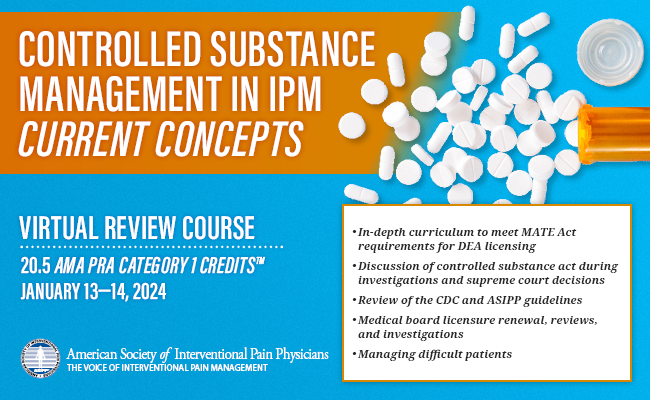
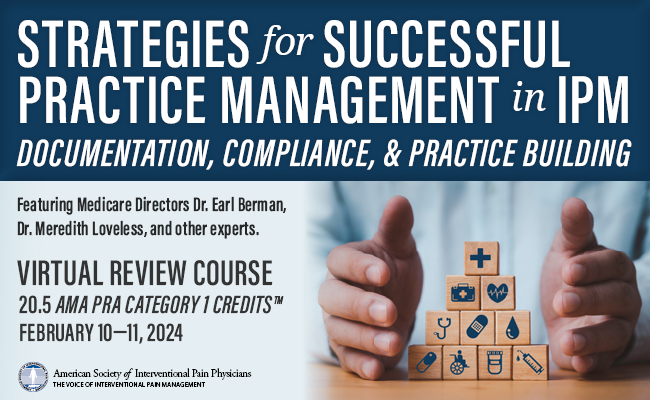
VIRTUAL Controlled Substance Management Review Course
Earn up to 20.5 CMEs!
| |
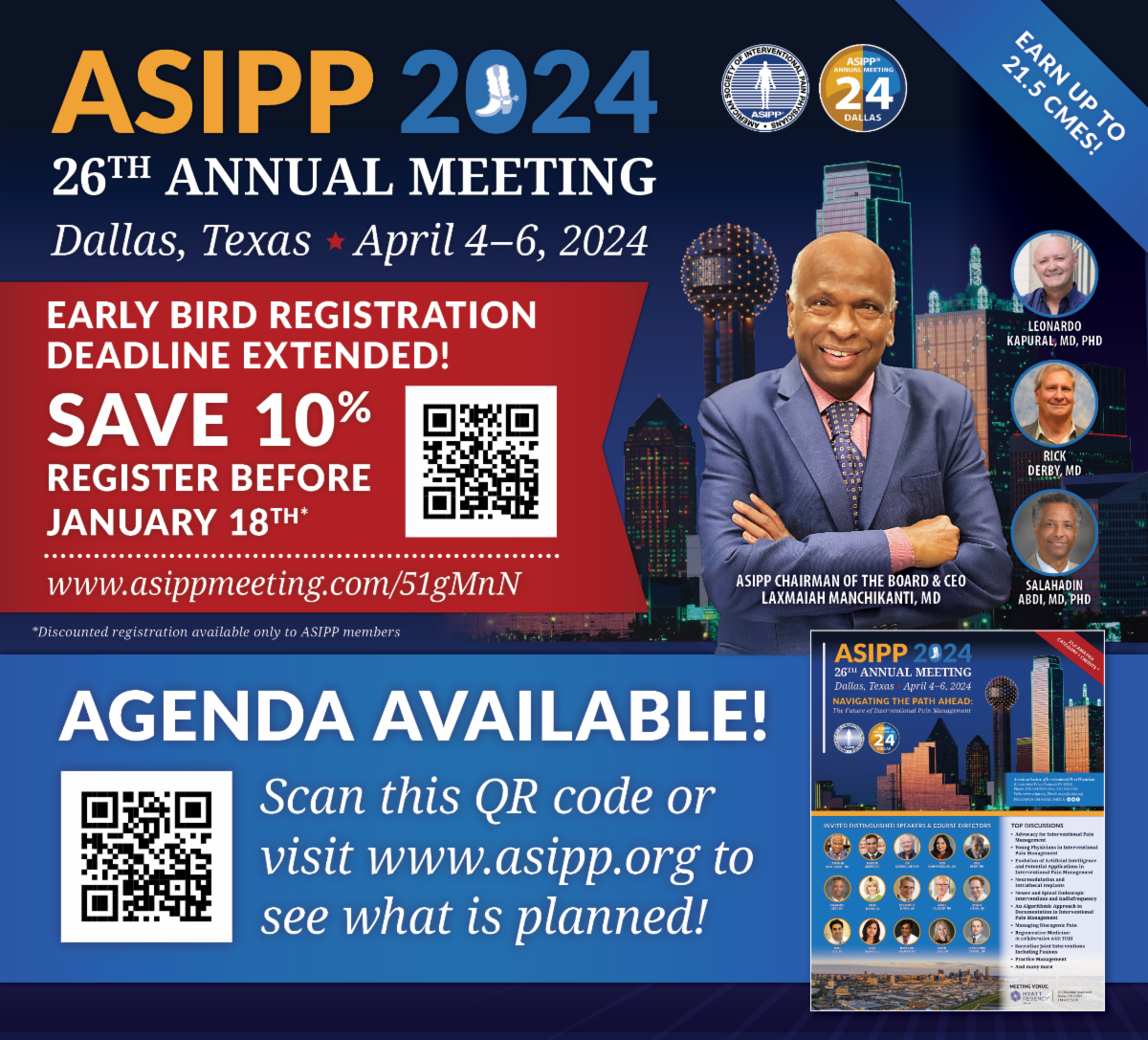
Early Bird Registration Deadline EXTENDED
Register before January 18th for 10% off!
| |
Congratulations to the
2024 ASIPP Award Recipients!
We are honored to present the following recipients:
| |
|
Giants of Pain Management
Richard Derby, MD and
David Schultz, MD
Lifetime Achievement Award
Ramsin Benyamin, MD, Aaron Calodney, MD, and Allan Parr, MD
Raj/Racz Excellence Award
Laxmaiah Manchikanti, MD
Manchikanti Excellence Award
Sheri Albers, DO
| |
|
Falco Excellence Award
Obi Onyewu, MD
Distinguished Research Award
Ramsin Benyamin, MD, Leo Kapural, MD, PhD, Konstantin Slavin, MD, Amol Soin, MD, and Ricardo Vallejo, MD, PhD
Distinguished Young Physician
Allan Parr, III, MD
League of Presidents
Sal Abdi, MD, PhD
| |
On January 2nd, 2024, an ASIPP member from Texas brought to our attention a concerning issue, a 46.1% reduction in all ASC payments. This unexpected news prompted immediate action on our part. Acting swiftly, ASIPP and SIPMS reached out to CMS through the office of Cathy McMorris Rodgers, Chairman of the Energy and Commerce Committee, and CGS MAC Directors by ASIPP and SIPMS, seeking a resolution.
CGS, led by Earl Berman, MD, promptly addressed the matter, successfully rectifying and adjusting the rates within 24 hours. All other MACs are still correcting.
Additionally, we want to inform you that a sample table has been generated for Kentucky’s McCracken County. Click here to view.
Read More
| |
|
Bromazolam, a street drug that has been detected with increasing frequency in the United States, has reportedly caused protracted seizures, myocardial injury, comas, and multiday intensive care stays in three individuals, new data from the US Centers for Disease Control and Prevention (CDC) showed.
The substance is one of at least a dozen designer benzodiazepines, created in the lab, but not approved for any therapeutic use. The Center for Forensic Science Research and Education (CFSRE) reported that bromazolam was first detected in 2016 in recreational drugs in Europe and subsequently appeared in the United States.
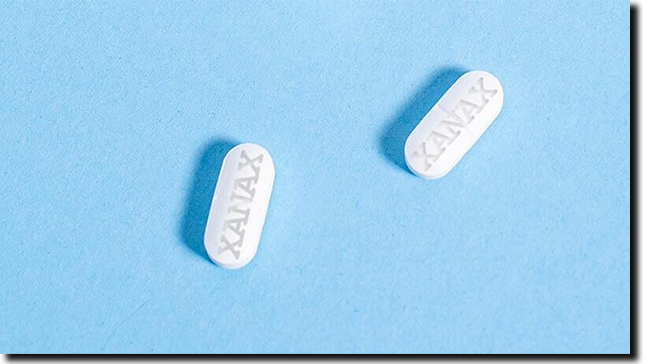
It is sold under names such as "XLI-268," "Xanax," "Fake Xanax," and "Dope." Bromazolam may be sold in tablet or powder form, or sometimes as gummies, and is often taken with fentanyl by users.
Read More
| | |
|  |
|
|
More state legislatures consider joining licensure compacts
Efforts to sign up more states for "multistate compacts" that allow out-of-state physicians and other health professionals to practice in another state are continuing into 2024, experts say.
For physicians, the ability to practice in multiple states has been simplified through the Interstate Medical Licensure Compact (IMLC), a project coordinated in part by the Federation of State Medical Boards. A total of 39 states as well as Guam and the District of Columbia currently participate in the compact, which "is an agreement among participating U.S. states and territories to work together to significantly streamline the licensing process for physicians who want to practice in multiple states," according to the IMLC Commission website. "It offers a voluntary, expedited pathway to licensure for physicians who qualify."
Spurred on by Telemedicine
The idea for the compact arose in 2013 when a group of state medical boards realized that more physicians would be practicing in multiple states as a result of the increasing use of telemedicine, according to the commission. Lawyers then drafted a model compact for state legislatures to adopt, and the compact officially went into operation in April 2017. The idea has the support of the American Medical Association, whose policy endorses streamlining the cross-state licensure process for doctors doing telemedicine and reducing the cost for physicians, including through the compact.
Read More
| | |
| |
|
|
Virtual
January 20, 2024
ABIPP Part I; ABIPP Path - Combined DCCPM/CSM virtual exam;
ABIPP Competency Exam in IPM; ABIPP Competency Exam in Regenerative Medicine;
Controlled Substance Management (CSM) Competency Exam
February 17, 2024
ABIPP Part I; ABIPP Path - Combined DCCPM/CSM virtual exam;
ABIPP Competency Exam in IPM; ABIPP Competency Exam in Regenerative Medicine;
CSM Competency Exam; DCCPM Competency Exam
In Person
October 18, 2024
ABIPP Part II - Practical Examination
Lab Venue: MERI, 44 S. Cleveland Street, Memphis, TN 38104
| |
|
Dangerous substitution once again found in tejocote root products
The FDA warned against certain supplements labeled as tejocote root that actually contain toxic yellow oleander.
The warning follows a report in September on several weight-loss supplements that were supposed to contain tejocote root but instead contained yellow oleander. The researchers' testing of a number of products was sparked by the case of a New Jersey toddler who experienced a serious heart complication after consuming the mother's weight-loss supplement pills.
Subsequently, the FDA launched an investigation to sample and test additional tejocote root products, the agency stated in its warning this week. All nine samples tested to date contained yellow oleander. Additional sample analysis is pending, so more products may be added to the warning, the FDA said.
Read More
| |
 | |
Award Specifics:
- Annual Research Grant awarded to two (2) residents in the amount of $2,500 each; and two (2) fellows in the amount of $5,000 each for one-year project in IPM.
- Projects must be IRB approved, submitted or in pending status
- Mentor supervised by an ASIPP member in good standing.
- Must not overlap with current ongoing studies.
Application Requirements:
-
Applicant and mentor curriculum vitae (CV current, and updated within 4 weeks of the application date)
- Project proposal should include: title, abstract, specific aims, research approach (Background, Methods, Statistical Analysis, Timeline)
- Detailed budget
- Detailed mentorship plan by the mentor
- Specify the role of any collaborators/co-investigators that might be involved in the study.
- Applicant must be ASIPP member (in good standing) and Recipients must maintain ASIPP membership for at least 3 years post-award.
Application Deadline: January 31st, 2024
Recipients will be notified at ASIPP's 2024 Annual Meeting in Dallas, Texas.
Program Administration:
Inquiries about the Manchikanti Grant should be directed to: Melinda Martin
For more information, click here.
| |
|
Certain persistent symptoms more likely compared with other COVID patients
Some long COVID symptoms were more likely for persons with multiple sclerosis (MS), traumatic brain injury (TBI), or spinal cord injury (SCI), a retrospective cohort study found.
After having COVID-19, such patients with preexisting neurologic disabling conditions were more likely than matched controls to experience new weakness (OR 1.54, 95% CI 1.19-2.00), mobility difficulties (OR 1.66, 95% CI 1.17-2.35), and cognitive dysfunction (OR 1.79, 95% CI 1.38-2.33).
The associations were despite controlling for co-morbidities, risk factors, and presence of those symptoms before infection, Liliana Pezzin, PhD, JD, of the Medical College of Wisconsin in Milwaukee, and co-authors reported in PM&R.
Read More
| |
|
A new study reveals a vital brain-fat tissue feedback loop that plays a pivotal role in aging. The research identifies specific neurons in the hypothalamus that, when activated, signal the body’s fat tissue to release energy, facilitating physical activity and brain function. As this feedback loop deteriorates with age, health problems associated with aging become more prevalent.
Mice with a constantly active feedback loop displayed delayed aging, increased physical activity, and longer lifespans. This groundbreaking research offers potential insights for future interventions in aging and longevity.
Key Facts:
- The study unveils a critical brain-fat tissue feedback loop that influences aging and health.
- Activation of specific neurons in the hypothalamus triggers the release of fatty acids and enzymes that fuel the body and brain.
- Mice with a sustained feedback loop lived longer, were more physically active, and displayed signs of delayed aging.
Read More
| |
|
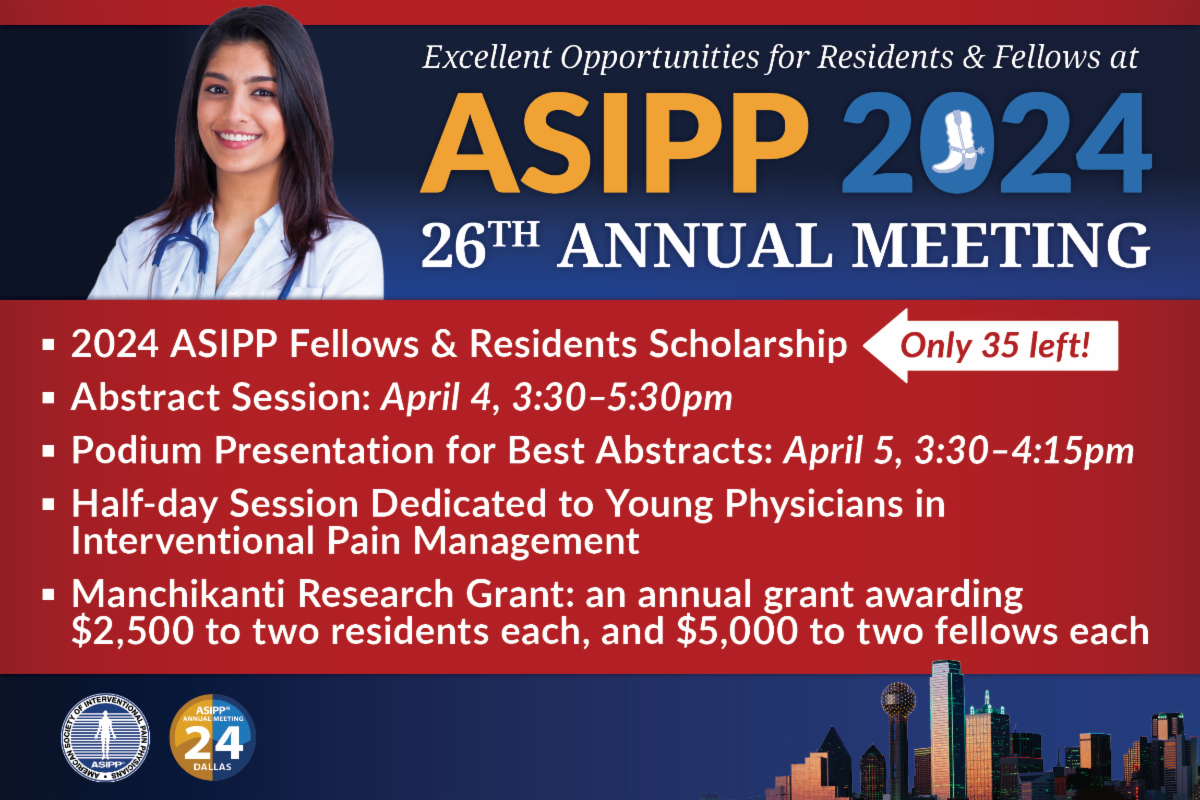
Excellent opportunities for Residents & Fellows
at ASIPP's 2024 Annual Meeting:
-
Resident & Fellow Scholarship — Limited to 100 - only 35 left!
- Abstract Session (April 4, 3:30–5:30pm) and Podium Presentation for Best Abstracts during General Session (April 5, 3:30–4:15pm)
- Half-Day Session dedicated to Young Physicians in Interventional Pain Management
-
Manchikanti Research Grant, awarding $2,500 to two residents each, and $5,000 to two fellows each
| |
|
RADARS system's ties to Purdue Pharma undermine the reliability of its data, they say
Several advocacy groups urged the FDA to not rely on a drug surveillance system that reportedly has ties to embattled opioid maker Purdue Pharma and other drug companies.
Public Citizen, Physicians for Responsible Opioid Prescribing (PROP), PharmedOut, the National Center for Health Research, and others submitted comments to a docket on Regulations.gov proposing that FDA will use data from the Research, Abuse, Diversion, and Addiction-Related Surveillance (RADARS) system to help monitor opioid abuse in the U.S.
The groups charged that the RADARS system was created by Purdue Pharma and still has close ties to that company and to other pharmaceutical manufacturers, raising concerns about FDA's use of its data.
Read More
| |
Abstract submissions are open for
ASIPP's 2024 Annual Meeting!
The submission deadline is January 22, 2024.
Don't miss your chance to be part of an exceptional event,
sharing insights and discoveries that shape the future of pain management.
| |
|
We must put an end to gun violence in healthcare facilities
One morning last summer, when I was seeing patients in a Bronx clinic, a nurse told me to lock myself in an exam room. A patient's father was looking for me, angered about my report to child protective services. Even though he eventually left, my chest cramped when I learned that he planned to return. Just weeks before, a doctor in another state had been shot dead by a patient; and very recently, there had been three shootings near the clinic where I was working. I relayed my safety concerns to a clinic administrator and was handed a small silver plastic whistle.
Not long after, I decided to resign.
A year ago, Surgeon General Vivek Murthy, MD, MBA, sounded the alarm on workplace violence in healthcare as a contributor to skyrocketing health worker burnout and resignation. Despite his national advisory calling for zero-tolerance violence policies, the issue of gun violence in healthcare remains underreported and unchecked, particularly in clinics and other non-hospital settings.
From 2010 to 2020, the Joint Commission, the largest standards-setting and accrediting body in healthcare, received 39 reports of hospital shootings. Most were staff shot by patients. While the commission issued updated healthcare workplace violence prevention standards in 2022, they are mostly directed towards hospitals, leaving health workers in many outpatient facilities unprotected.
Read More
| |
|
Introduction
Age-related cognitive decline has been linked to distinct patterns of cellular dysfunction in the prelimbic cortex (PL) and the CA3 subregion of the hippocampus. Because higher cognitive functions require both structures, selectively targeting a neurobiological change in one region, at the expense of the other, is not likely to restore normal behavior in older animals. One change with age that both the PL and CA3 share, however, is a reduced ability to utilize glucose, which can produce aberrant neural activity patterns.
Methods
The current study used a ketogenic diet (KD) intervention, which reduces the brain’s reliance on glucose, and has been shown to improve cognition, as a metabolic treatment for restoring neural ensemble dynamics in aged rats. Expression of the immediate-early genes Arc and Homer1a were used to quantify the neural ensembles that were active in the home cage prior to behavior, during a working memory/biconditional association task, and a continuous spatial alternation task.
Results
Aged rats on the control diet had increased activity in CA3 and less ensemble overlap in PL between different task conditions than did the young animals. In the PL, the KD was associated with increased activation of neurons in the superficial cortical layers, establishing a clear link between dietary macronutrient content and frontal cortical activity. The KD did not lead to any significant changes in CA3 activity.
Read More
| |
|
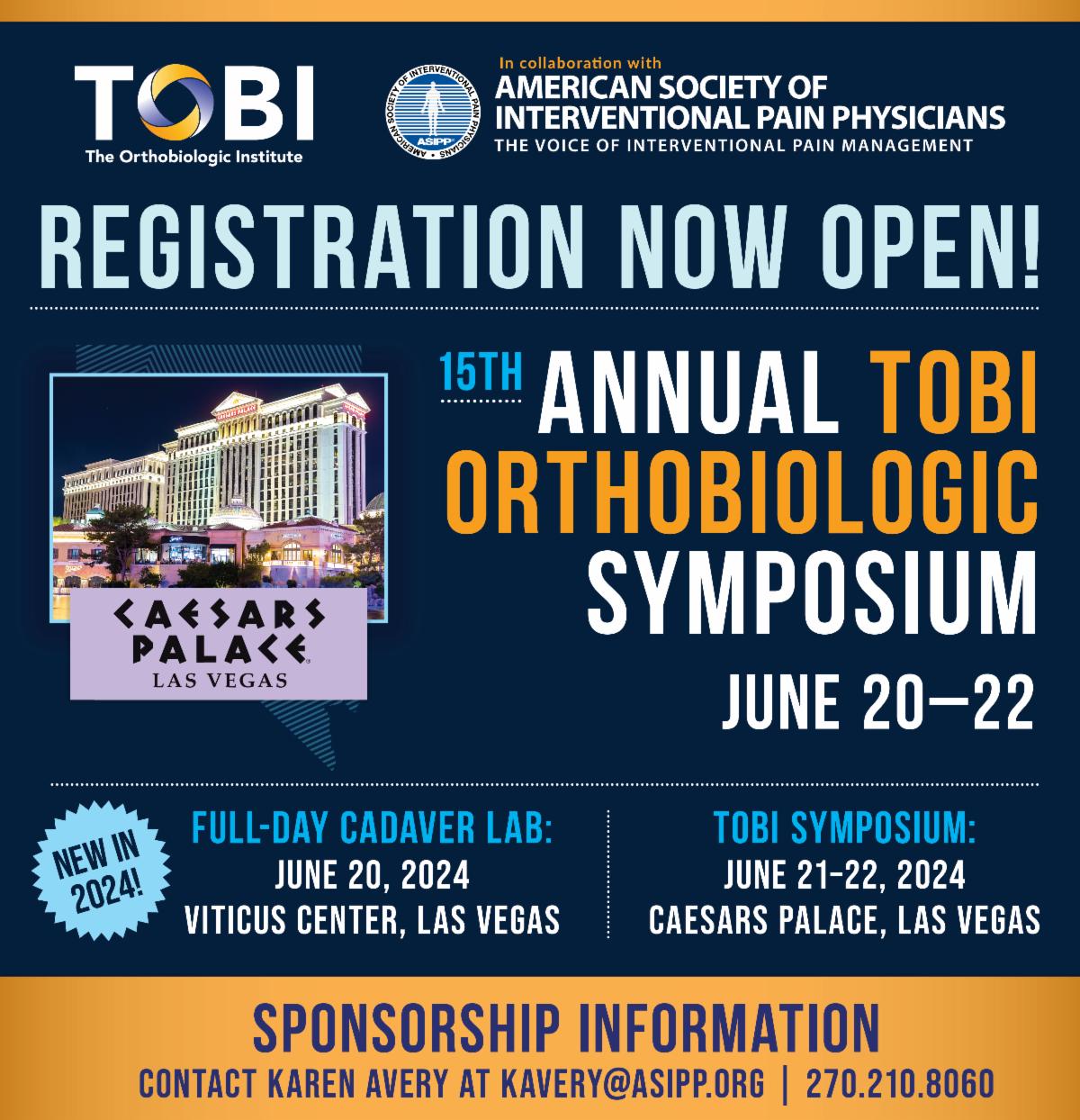
Save $250 on Your TOBI Conference Registration
by Completing Our Quick Survey
| | |
|
|
TOBI is dedicated to providing the best possible experience for our conference attendees—we ask that you complete this 60-second survey for us to better understand your preferences.
Those who complete the survey will receive a $250 discount on their TOBI Conference registration as our thanks!
*Discount unavailable for fellows, residents, and medical students
| |
- ASIPP Members Only Site Information - | |
-
To log in for the first time you will need to click “forgot password” at the bottom of the login window.
- Check your email and then log in as directed.
-
If you have problems logging into your account, click here.
| |
Pain Medicine Case Reports (PMCR) and Editor-in-Chief Alaa Abd-Elsayed, MD, PhD would like to invite you to submit case reports and case series to the PMCR journal. Your article will be published free of charge.
Open access journals are freely available online for immediate worldwide open access to the full text of published articles. There is no subscription fee for open access journals. Open access journals are no different from traditional subscription-based journals: they undergo the same peer-review and quality control as any other scholarly journal.
Interested in becoming a member of the PMCR Editorial Board?
Editorial board members are asked to review 2-6 manuscripts per year. Please submit your most up-to-date CV to sgold@asipp.org for consideration.
For more information or to submit your articles, click here.
| |
|
| CASE REPORT |
Wilson Almonte, MD, Ted Lin, MD, and Alaa Abd-Elsayed, MD
Abstract
BACKGROUND: Complex regional pain syndrome (CRPS) type 1 is a debilitating condition that is notoriously difficult to treat due to its various manifestations. Peripheral nerve stimulation (PNS) is generally recommended when a patient’s symptoms are refractory to conservative measures, as CRPS often is. We present one case of CRPS with intractable lower extremity pain managed effectively with PNS.
CASE REPORT: A 32-year-old man developed CRPS after a work-related accident that resulted in multiple injuries, including a crushed pelvis, injured left lower extremity, and a fractured face and skull. After pelvic and hip reconstruction, the patient was left with numbness, tingling, and pain in the left foot affecting functional activities and sleep. Previous therapies, including nerve blocks, physical therapy, narcotics, opioids, anticonvulsants, antidepressants, and nonsteroidal anti-inflammatory drugs, did not alleviate symptoms. The placement of a PNS device, however, led to significant improvement.
RESULTS: Pain scores at baseline compared to 12-month follow-up decreased from 6/10 to 2/10 at rest and from 8/10 to 4/10 with activity. Average hours of sleep per night increased from 4 to 8 hours (an improvement of 100%). Antidepressants have been discontinued and opioids reduced to an as-needed basis (once every few days). The patient reports decreased sensitivity to cold, reduced swelling, and improved color changes in the foot. In addition, the patient has been able to increase activity, such as walking, standing, and wearing closed-toed shoes, from 20 minutes to now 4 hours at a time with pain levels maintained at a 4/10.
CONCLUSIONS: Subthreshold PNS utilizing high-frequency electromagnetic coupling at the posterior tibial and sural nerves successfully relieved the patient’s chronic, debilitating pain in the lower extremity as a result of CRPS.
KEY WORDS: Peripheral nerve stimulation, chronic pain, posterior tibial, sural, CRPS, lower extremity, foot
Read More
| |
|
| OBSERVATIONAL STUDY |
Leili Shahgholi, MD, Nicole Ortiz, MD, Tahereh Naeimi, MD, Raymon Dhall, MD, Mohammad Zaidi, MD, Bryce Liu, BS, Chong Kim, MD, Timothy Deer, MD, Alan D. Kaye, MD, PhD, and Sayed E. Wahezi, MD
Abstract
BACKGROUND: Radiofrequency ablation (RFA) is a common treatment in which radiofrequency (RF) is used to heat neural tissue and reduce pain. The impact of adipose content in tissue on the lesion size may impact efficacy, and to date, there is little, if any, data comparing its influence on RFA.
OBJECTIVES: We evaluated the influence of adipose tissue on RF lesion size.
STUDY DESIGN: Controlled, ex vivo study.
SETTING: Academic institution in a procedural setting.
METHODS: RF lesions were created using 20-G 10-mm protruding electrode (PE) needles inserted into unbrined chicken breasts and thighs at 21°C. RF current was applied for 90 seconds at 80°C. Chicken breasts were used as the control group and chicken thighs were used as the high adipose variant. Four different groups were examined: 1- Standard 20 g RFA needle, 2- 20 g RFA PE needle, 3- Standard RFA needle with lidocaine 2% injectate, and 4- Standard RFA needle with iohexol 240 mg injectate. There were 12 lesions performed in each group; length, width, and depth were measured.
RESULTS: The control group had significantly deeper lesions in all 4 cohorts. Lesions’ lengths were smaller in the fat-rich group. The control and PE cohorts showed a significant difference in width between the 2 fat-rich and nonfatty groups.
LIMITATIONS: Radiofrequency ablation was performed at room temperature and not heated to physiological temperature. This was an ex vivo study, thus factors of human anatomy and physiology could not be evaluated.
CONCLUSIONS: Adipose tissue content was inversely related to lesion size in all samples. This factor should be considered when assessing methods of enhancing lesion size in human models.
KEY WORDS: Radiofrequency, ablation, lesion size, injection, adipose tissue, tissue modeling, interventional pain, education
Read More
| |
|
| PROSPECTIVE STUDY |
Mehul J. Desai, MD, Tejal Raju, MD, Chheany Ung, MD, Sailesh Arulkumar, MD, Leo Kapural, MD, PhD, Mayank Gupta, MD, Kasra Amirdelfan, MD, David Rosenfeld, MD, Aaron Calodney, MD, Dawood Sayed, MD, Ajay Antony, MD, Sean Li, MD, Ramana Naidu, MD, Joel Ackerman, MD, Robert Ball, DO, Michael Fishman, MD, Peter Staats, MD, Gary Heit, MD, PhD, Shilpa Kottalgi, BDS, MAS, and James Makous, PhD
Abstract
BACKGROUND: Chronic, intractable, neuropathic pain is readily treatable with spinal cord stimulation (SCS). Technological advancements, including device miniaturization, are advancing the field of neuromodulation.
OBJECTIVES: We report here the results of an SCS clinical trial to treat chronic, low back and leg pain, with a micro-implantable pulse generator (micro-IPG).
STUDY DESIGN: This was a single-arm, prospective, multicenter, postmarket, observational study.
SETTING: Patients were recruited from 15 US-based comprehensive pain centers.
METHODS: This open-label clinical trial was designed to evaluate the performance of the Nalu™ Neurostimulation System (Nalu Medical, Inc., Carlsbad, CA) in the treatment of low back and leg pain. Patients, who provided informed consent and were successfully screened for study entry, were implanted with temporary trial leads. Patients went on to receive a permanent implant of the leads and micro-IPG if they demonstrated a >= 50% reduction in pain during the temporary trial period. Patient-reported outcomes (PROs), such as pain scores, functional disability, mood, patient impression of change, comfort, therapy use profile, and device ease of use, were captured.
RESULTS: At baseline, the average pain Visual Analog Scale (VAS) score was 72.1 ± 17.9 in the leg and 78.0 ± 15.4 in the low back. At 90 days following permanent implant (end of study), pain scores improved by 76% (VAS 18.5 ± 18.8) in the leg and 75% (VAS 19.7 ± 20.8) in the low back. Eighty-six percent of both leg pain and low back pain patients demonstrated a >= 50% reduction in pain at 90 days following implant. The comfort of the external wearable (Therapy Disc and Adhesive Clip) was rated 1.16 ± 1.53, on average, at 90 days on an 11-point rating scale (0 = very comfortable, 10 = very uncomfortable). All PROs demonstrated statistically significant symptomatic improvement at 90 days following implant of the micro-IPG.
LIMITATIONS: Limitations of this study include the lack of long-term results (beyond 90 days) and a relatively small sample size of 35 patients who were part of the analysis; additionally, there was no control arm or randomization as this was a single-arm study, without a comparator, designed to document the efficacy and safety of the device. Therefore, no direct comparisons to other SCS systems were possible.
CONCLUSIONS: This clinical study demonstrated profound leg and low back pain relief in terms of overall pain reduction, as well as the proportion of therapy responders. The study patients reported the wearable aspects of the system to be very comfortable.
KEY WORDS: Spinal cord stimulation, chronic pain, radiculopathy, micro-IPG, battery-free, persistent spinal pain syndrome, failed back surgery syndrome, low back pain, leg pain
Read More
| |
|
ASIPP is now in collaboration with Curi Medical Liability Program
| |
|
Since this malpractice insurance program officially launched in November 2018, ASIPP has signed up hundreds of providers with an average savings of 30%. This is professional liability insurance tailored to our specialty and will stand up for us and defend our practices.
Curi is a full-service advisory firm that serves physicians and their practices. Their valued advice is grounded in your priorities and elevated in your outcomes. They are driven by a deep understanding of your specific circumstances in medicine, business, and life. To read a few important points to keep in mind about the program, including discounts, administrative defense, cyber coverage, aggressive claims handling, and complimentary risk management CME activities, visit our website.
| | |
|
Group Purchasing Organization Offer Better Pricing and Creates Added Value
ASIPP has formed a partnership with Henry Schein and PedsPal, a national GPO that has a successful history of negotiating better prices on medical supplies and creating value-added services for independent physicians. Working with MedAssets, PedsPal provides excellent pricing on products like contrast media that alleviate some of the financial pressures you experience today.
Learn More
| | |
|
ASIPP, Fedora Billing,
and Revenue Cycle Management Partnership
ASIPP is now offering our members the benefit of a unique revenue cycle management/ billing service.
We have received a tremendous amount of interest in the ASIPP® billing and coding program.
Click here to learn more about the negotiated rate for practices and more!
| |
|
Like and follow ASIPP® on Facebook, X, and LinkedIn for the most
up-to-date news related to you, your practice, and your patients!
| | | | |