A powerful lobbyist convinced a federal agency that doctors can be forced to pay fees on money that health insurers owe them. Big companies rake in profits while doctors are saddled with yet another cost in a burdensome health care system.
It was a multibillion-dollar strike, so stealthy and precise that the only visible sign was a notice that suddenly vanished from a government website.
In August 2017, a federal agency with sweeping powers over the health care industry posted a notice informing insurance companies that they weren’t allowed to charge physicians a fee when the companies paid the doctors for their work. Six months later, that statement disappeared without explanation.
The vanishing notice was the result of a behind-the-scenes campaign by the insurance industry and its middlemen that has largely escaped public notice — but that has had massive financial consequences that have rippled through the health care universe.
|
|
The newest version of the COVID-19 vaccine will be available by the end of September, according to the CDC.
The updated vaccine still needs final sign-offs from the FDA and the CDC.
"We anticipate that they are going to be available for most folks by the third or fourth week of September," Director Mandy Cohen, MD, MPH, said on a podcast last week hosted by former White House COVID adviser Andy Slavitt. "We are likely to see this as a recommendation as an annual COVID shot, just as we have an annual flu shot. I think that will give folks more clarity on whether they should get one or not."
|
|
Join us August 18-20 for the 2023 OHSIPP-KYSIPP Annual Meeting in Cincinnati, OH, where cutting-edge advancements in interventional pain management will take center stage.
Don't miss this unique opportunity to network, learn, and collaborate with industry leaders. Secure your spot now and be part of shaping the future of IPM!
|
|
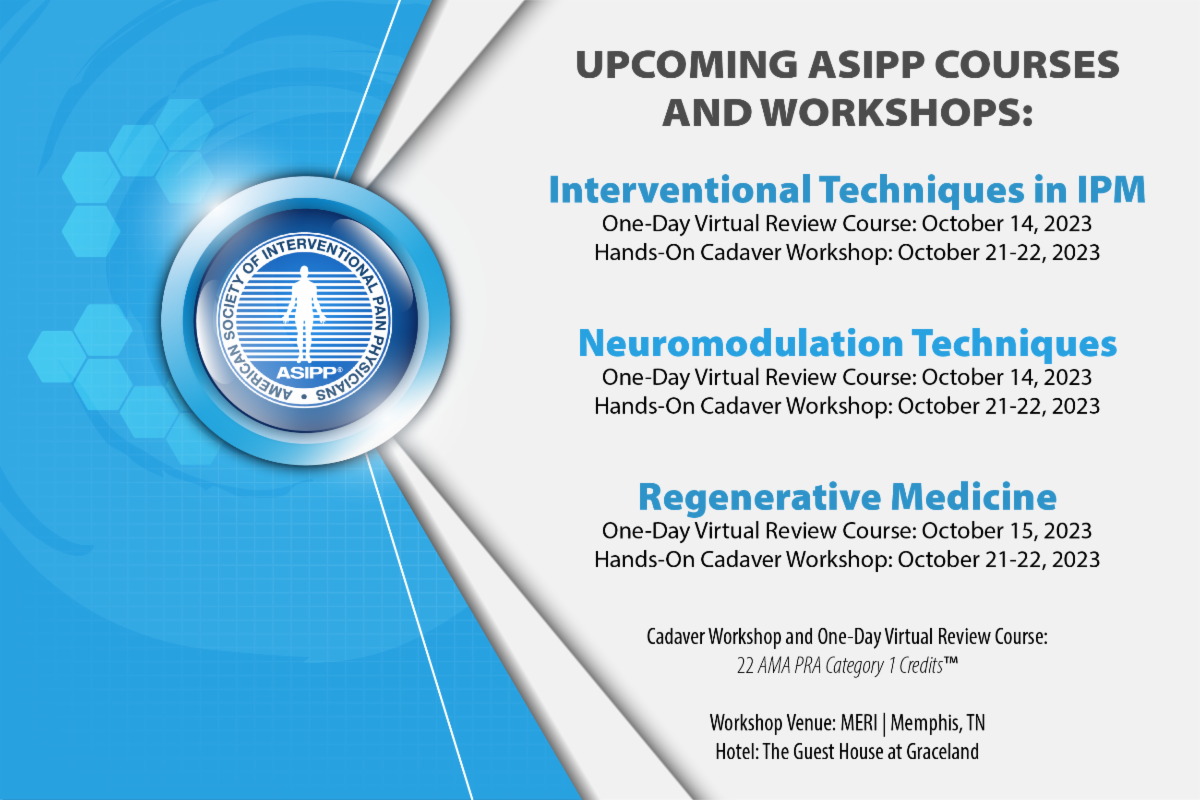
Interventional Techniques in IPM
Review Course & Cadaver Workshop
|
|
Regenerative Medicine
Review Course & Cadaver Workshop
|
|
This week there was news on Long COVID in two very different directions: emergence of strong data to support mitochondrial dysfunction as the basis for the condition in some people, and learning how the $1.15 billion allocation to the NIH RECOVER initiative has largely been wasted. In this edition of Ground Truths, I'll review this news and offer a plan to get clinical trials testing treatments into high gear.
Sick Mitochondria as a Root Cause
When we published our review of Long COVID earlier this year, we highlighted the key established underpinnings as shown in the figure below. As you'll note, mitochondria was not one of them. There was a body of data emerging to support the role of mitochondria, as we asserted: "Long COVID research has found mitochondrial dysfunction including loss of mitochondrial membrane potential and possible dysfunctional mitochondrial metabolism, altered fatty acid metabolism…" and that this had also been seen in myalgic encephalomyelitis (ME/CFS).
A new paper in Science Translational Medicine by leaders in mitochondria biology has advanced the case for direct interactions between SARS-CoV-2 and critical mitochondrial proteins for the potential basis of Long COVID — at least in some people.
|
|
Primary care practitioners have an important role to play in helping to diagnose people with axial spondyloarthritis (axSpA) much sooner than is currently being achieved, according to several experts who are championing the need for the earlier diagnosis of the condition.
AxSpA is an inflammatory condition of the spine and joints that often goes undiagnosed for many years. Worldwide, the average time to diagnosis was found to be up to 6 years in a recent systematic review. But patient advocacy groups in both the UK and US say that the delay can be much longer, possibly up to 10 years or more.
Being Aware Is Key
|
|
Virtual
ABIPP Part I; ABIPP Path - Combined DCCPM/CSM virtual exam; ABIPP Competency Exam in IPM; ABIPP Competency Exam in Regenerative Medicine
Memphis, TN
ABIPP Part II - Practical Portion; ABIPP Competency Exam - Practical Portion; ABIPP Regenerative Medicine Competency Exam - Practical Portion
|
|
When OpenAI released ChatGPT-3 publicly last November, some doctors decided to try out the free AI tool that learns language and writes human-like text. Some physicians found the chatbot made mistakes and stopped using it, while others were happy with the results and plan to use it more often.
"We've played around with it. It was very early on in AI and we noticed it gave us incorrect information with regards to clinical guidance," said Monalisa Tailor, MD, an internal medicine physician at Norton Health Care in Louisville, Kentucky. "We decided not to pursue it further," she said.
Orthopedic spine surgeon Daniel Choi, MD, who owns a small medical/surgical practice in Long Island, New York, tested the chatbot's performance with a few administrative tasks, including writing a job listing for an administrator and prior authorization letters.
|
|
Researchers call for more awareness of all types of dysautonomia in long COVID
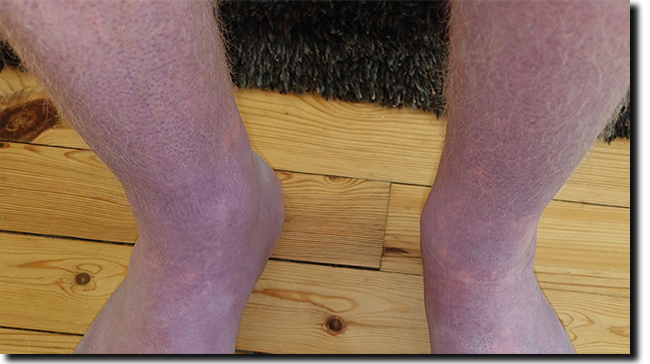
This week, media attention turned to a case report in The Lancet detailing how a man's legs would turn blue after standing for about 10 minutes, which researchers said is likely related to his long COVID.
The 33-year-old man told doctors that for the past 6 months, his legs would feel progressively heavy, tingly, and itchy, and then would become "dusky" in color, according to medical student Nafi Iftekhar and Manoj Sivan, MD, of the Leeds Institute of Rheumatic and Musculoskeletal Medicine at the University of Leeds in England.
In addition, a petechial rash would occasionally appear on his feet, they reported. His legs would return to a normal color and the symptoms would go away when he would lay down.
|
|
Abstract submissions are open for
ASIPP's April 4-6, 2024 Annual Meeting!
The submission deadline is January 22, 2024.
Don't miss your chance to be part of an exceptional event,
sharing insights and discoveries that shape the future of pain management.
|
|
Aging population, rise of 'market disruptors' usher in double-digit jumps for some docs
Average starting salary offers for specialists zoomed up year-over-year, in some cases by double-digit percentages, a new report found.
"We definitely saw some higher salaries for specialists," Leah Grant, MBA, president of AMN Healthcare, told MedPage Today. Some of the largest year-over-year salary increases included:
- Psychiatry: $299,000 to $355,000, up 19%
- Dermatology: $350,000 to $427,000, up 16%
- Anesthesiology: $400,000 to $450,000, up 12.5%
- Orthopedic surgery: $565,000 to $633,000, up 12%
- Ob/gyn: $321,000 to $367,000, up 10.5%
|
|
Investigational sodium channel blocker shows benefit in two trials
A novel, investigational NaV1.8 sodium channel blocker known as VX-548 reduced acute pain after abdominoplasty or bunionectomy at the highest dose, but not at lower doses, two phase II trials showed.
The primary endpoint was the time-weighted sum of the pain-intensity difference (SPID) over 48 hours (SPID48), calculated from Numeric Pain Rating Scale (NPRS) scores (which range from 0 to 10, with higher scores indicating greater pain) at 19 time points after the first dose of VX-548 or placebo.
In the abdominoplasty trial, the mean difference in time-weighted SPID48 between high-dose VX-548 and placebo was 37.8 (95% CI 9.2-66.4), said Jim Jones, MD, PharmD, of Vertex Pharmaceuticals in Boston, and co-authors.
|
|
Cutting physical therapy reimbursement is bad for patients and bad for spending
Falls among seniors pose a significant public health challenge, leading to 3 million emergency room visits and more than 36,000 deaths each year. By prioritizing physical therapy as a preventive measure, we can address this issue proactively and promote healthier aging for our senior population.
Helping seniors build strength and balance is not only good for patients, but also, it is cost-effective and helps save the Medicare system money. So, it is alarming that Medicare has proposed yet another round of cuts to physical, occupational, and speech therapy. These cuts, if implemented, would have severe consequences for seniors' access to vital care and threaten the effectiveness and affordability of treatment.
Congress must take immediate action to prevent these cuts and protect the well-being of our aging population as we tackle the immense problem of senior falls.
|
|
- ASIPP Members Only Site Information - |
|
-
To log in for the first time you will need to click “forgot password” at the bottom of the login window.
- Check your email and then log in as directed.
-
If you have problems logging into your account, click here.
|
|
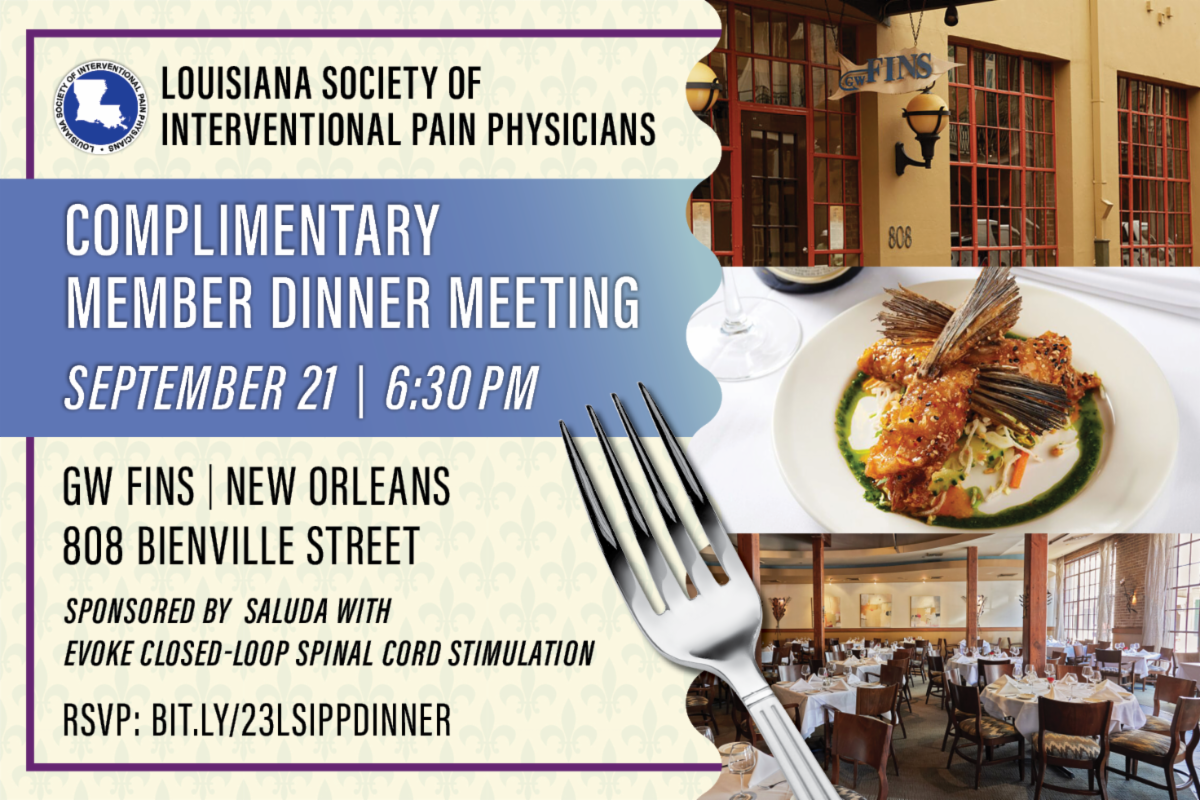
Attention LSIPP Members
You are invited to a complimentary member dinner at GW Fins,
September 21, 6:30 PM
|
|
Pain Medicine Case Reports (PMCR) and Editor-in-Chief Alaa Abd-Elsayed, MD, PhD would like to invite you to submit case reports and case series to the PMCR journal. Your article will be published free of charge.
Open access journals are freely available online for immediate worldwide open access to the full text of published articles. There is no subscription fee for open access journals. Open access journals are no different from traditional subscription-based journals: they undergo the same peer-review and quality control as any other scholarly journal.
Interested in becoming a member of the PMCR Editorial Board?
Editorial board members are asked to review 2-6 manuscripts per year. Please submit your most up-to-date CV to sgold@asipp.org for consideration.
For more information or to submit your articles, click here.
|
|
| CASE REPORT |
Silky Patel, MD, and Alaa Abd-Elsayed, MD
Abstract
Background: Over 20% of adults are affected by chronic shoulder pain that can limit the use of the upper extremity and decrease the overall quality of life. Peripheral nerve stimulation (PNS) is an emerging treatment for refractory cases of chronic pain that has been receiving heightened attention in recent years with growing documentation of favorable results. This report discusses a case of chronic shoulder pain effectively managed with PNS.
Case Report: A 58-year-old man, with a history of cervical laminectomy presented with persistent pain of the left shoulder, radiating down the medial aspect of the left upper arm to the elbow, and pain along the upper trapezius between the neck and shoulder that did not ease after successful shoulder joint replacement. The pain averaged 8/10 and escalated to 10/10 with arm movement or lifting over 5 pounds. Once agitated, the pain would stay elevated for several hours. The patient eventually withdrew completely from social activities and stopped leaving his home except when absolutely necessary to avoid additional pain brought on by activity. Previous treatments, including physical therapy, opioids, nonsteroidal anti-inflammatory drugs (NSAIDS), and cervical epidural steroid injection, were unsuccessful in managing pain. The patient did, however, achieve relief with peripheral nerve stimulation. Pain scores at 3-month follow-up decreased from 8/10 without and 10/10 with activity to an average of 1/10 with increased activity, complete cessation of pain medication, and reported improvement in quality of life. These results have been maintained at 12 months post-implant.
Conclusion: Sub-threshold peripheral nerve stimulation with an externally powered system at the suprascapular and supraclavicular nerves was an effective treatment for a patient suffering from debilitating pain in the shoulder, upper arm, and upper trapezius after a successful, structurally sound shoulder replacement did not reduce persistent chronic pain.
Key words: Peripheral nerve stimulation (PNS), chronic pain, suprascapular nerve, supraclavicular nerve, mononeuropathy, upper limb pain, brachial plexus, disorder, shoulder replacement
|
|
| META-ANALYSIS |
Yidan Liu, MD, Shufang Xiao, MD, Jiamin Li, MD, Xia Long, MD, Yuqing Zhang, MD, PhD, and Xiaofeng Li, MD, PhD
Abstract
BACKGROUND: The most refractory symptom of herpes zoster (HZ) is pain. Approximately 90% of people who have HZ suffer from pain. Early use of antiviral medications has been found to reduce pain across all stages of the disease. Although many antiviral agents via oral or intravenous administration were recommended by clinical practice, the best approach to prevent HZ-associated pain remains uncertain.
OBJECTIVES: The purpose of this study was to compare the efficacy and adverse events of various antiviral agents used for the treatment of HZ-associated pain through a network meta-analysis.
STUDY DESIGN: A systematic review and meta-analysis.
SETTING: The Cochrane Register of Controlled Trials, Embase, and PubMed were searched from inception to Feb 2020.
METHODS: Randomized clinical trials evaluating antiviral agents currently available for treating HZ-associated pain were included. We extracted data in accordance with the Preferred Reporting Items for Systematic Reviews and Meta-Analyses (PRISMA) guidelines and conducted network meta-analyses with random-effects models. The primary outcome was the presence of acute pain at the end of anti-virus treatment, and the secondary outcomes included the presence of pain at 28-30 days after the onset of the acute herpetic rash, the presence of postherpetic neuralgia (PHN), and any other adverse events.
RESULTS: A total of 17 randomized control trials with 5,579 participants were included in this study. According to the results of the network meta-analysis, for the treatment of acute pain, there was no significant difference between oral acyclovir and intravenous acyclovir. Furthermore, oral famciclovir was the most effective treatment concerning both the odds ratio (OR) (superior to placebo OR = 0.25; 95% CI: 0.13~0.48) and the surface under the cumulative ranking curve (SUCRA) values of 0.84 for the treatment of acute pain among all the oral antiviral agents. For the presence of pain at 28-30 days, no significant difference was observed in efficacy between all antiviral treatments and placebo concerning the OR; however, oral valaciclovir ranked first (SUCRA values of 0.96). For the presence of NPH, oral famciclovir was determined to be the most effective (SUCRA values of 0.77) treatment with an efficacy of 0.42 (95% CI: 0.18~0.99) versus placebo. For adverse events, there was no significant difference between oral antivirals and placebo; however, intravenous acyclovir ranked last with a score of OR 4.31 (95% CI: 1.26~14.75) versus placebo.
LIMITATIONS: The distribution of severity of pain was different in various studies; then, the lack of availability of individual data prevented us from analyzing the effects of the risk factors.
CONCLUSIONS: For the treatment of acute pain and PHN, oral famciclovir was the most effective treatment among all the oral antiviral agents. For alleviating pain after 28-30 days, oral valaciclovir appeared to be the most effective among all antiviral agents. Additionally, all oral antiviral agents were well tolerated.
Clinical Trial Registration Information: PROSPERO under the identification CRD42020212834
KEY WORDS: Herpes zoster, antiviral agents, acyclovir, famciclovir, valaciclovir, efficacy, pain, network meta-analysis
Given the intrinsic nature of the secondary literature analysis in this study, the Ethics Committee of Chongqing Medical University’s Second Hospital waived the ethical approval.
|
|
| RETROSPECTIVE STUDY |
Maoying Wang, MD, Hua Ling, MD, Bixin Zheng, PhD, and Li Song, MD
Abstract
BACKGROUND: The efficacy and its associated predictors of transforaminal epidural steroid injection (TFESI) in elderly patients with lumbar radiculopathy are unknown.
OBJECTIVE: The purpose of this retrospective study was to identify the efficacy of TFESI in elderly patients with lumbar radiculopathy and its associated predictors of long-term outcomes.
STUDY DESIGN: Retrospective study.
SETTING: Interventional pain clinics in West China Hospital of Sichuan University.
METHODS: In total, 294 elderly patients who were diagnosed with lumbar radiculopathy and underwent transforaminal epidural steroid injections from January 2019 through January 2022 were retrospectively analyzed. Demographic, clinical, magnetic resonance imaging, and TFESI-related information was collected to assess the predictive factors of long-term outcomes of the TFESI. Pain scores were assessed using the Numeric Rating Scale. Treatment success was defined as a >= 50% reduction in pain scores at 6 months.
RESULTS: Multivariate logistic regression analysis revealed that the duration of symptoms, immediate postoperative response, and neutrophilic granulocyte percentage were independently associated with a favorable response to TFESI. In addition, the level of pain at the initial visit and the number of TFESI performed were also associated with a good response in the multivariate regression analysis, even though the association was not statistically significant.
LIMITATIONS: Approximately 6% of the patients were lost to follow-up; therefore, selection bias may have slightly influenced our findings. In addition, our patients were not compared with a control population, and consequently, a placebo effect could not be assessed.
CONCLUSION: This study revealed that a short duration of symptoms, good immediate postoperative response and high neutrophilic granulocyte percentage were long-term predictors of a good response to TFESI in elderly patients with lumbar radiculopathy.
KEY WORDS: Elderly, radiculopathy, epidural injection, predictors, neutrophil
|
|
ASIPP is now in collaboration with Curi Medical Liability Program
Since this malpractice insurance program officially launched in November 2018, ASIPP has signed up hundreds of providers with an average savings of 30%. This is professional liability insurance tailored to our specialty and will stand up for us and defend our practices.
Curi is a full-service advisory firm that serves physicians and their practices. Their valued advice is grounded in your priorities and elevated in your outcomes. They are driven by a deep understanding of your specific circumstances in medicine, business, and life. To read a few important points to keep in mind about the program, including discounts, administrative defense, cyber coverage, aggressive claims handling, and complimentary risk management CME activities, visit our website.
|
|
ASIPP® has formed a partnership with Henry Schein and PedsPal, a national GPO that has a successful history of negotiating better prices on medical supplies and creating value-added services for independent physicians. Working with MedAssets, PedsPal provides excellent pricing on products like contrast media that alleviate some of the financial pressures you experience today.
|
|
ASIPP® is now offering our members the benefit of a unique revenue cycle management/ billing service.
We have received a tremendous amount of interest in the ASIPP® billing and coding program.
Click here to learn more about the negotiated rate for practices and more!
|
|
|
up-to-date news related to you, your practice, and your patients!
|
|
|
|
|
|
|