We know historic preservation is celebrated in your hearts every month, but May is national Preservation Month for the whole country to join in our fun! Montgomery Planning is celebrating by digging out some fun historical stories and sharing tips on how to keep your historic properties in tip-top shape. We will also be sharing some of our library of archival photos throughout the month on Facebook (Montgomery County, Md., Planning Department) and X (@montgomeryplans). | |
Historic Preservation Success by the Numbers | |
|
In 2023, Montgomery County’s Historic Preservation Tax Credit program (25% of eligible expenses for properties on the Master Plan of Historic Preservation) approved 144 applications for a total of $6,232,592.68 in eligible expenditures for historic properties that undertook eligible renovations in 2022. Our regulatory team reviewed 288 HAWPs - Historic Area Work Permits - applications for exterior work on properties listed on the Montgomery County Master Plan for Historic Preservation.
Also in 2023, the Maryland Department of Planning announced that the Maryland Historical Trust awarded more than $20 million in historic revitalization tax credits, leveraging more than $84 million in additional investment. The Maryland State Historic Preservation Tax Credit provides a 20% tax rebate for eligible expenses on commercial and residential buildings that qualify. The Maryland Historical Trust also administers the Historic Revitalization Tax Credit, which has invested more than $489 million in rehabilitation projects across Maryland since 1996 – helping to make improvements to 5,484 homeowner and 849 commercial historic structures.
The National Park Service announced that for fiscal year 2022 there were certified historic rehabilitation projects totaling $7.3 billion of private investments as part of the Federal Historic Preservation Tax Incentives Program (20% of eligible expenses for income-producing properties that qualify). The program contributed more than $13.7 billion of output in goods and services to the United States economy, generating approximately 122,000 jobs, and $7 billion in gross domestic product. You can read the 2023 annual report here.
| |
May also Celebrates the Heritages of Jewish Americans, Asian Americans, Native Hawaiians, and Pacific Islanders | |
|
The Potomac Overlook Historic District was added to the Master Plan for Historic Preservation in July 2022. Read about the efforts of early Potomac Overlook neighbors to create a welcoming community for Jewish and Asian American residents during a time of discriminatory housing practices. The nomination form highlights the stories and homes of six homeowners who advocated for opportunities in the neighborhood and beyond: Pao-Chi and Yu Ming Pien (7205 MacArthur Boulevard); Dorothy Gilford (6602 Rivercrest Court); Helen Wilson Nies (6604 Rivercrest Court); and Abraham M. and Helen W. Sirkin (6252 Wiscasset Road).
The Historic Preservation Office received a Maryland Historical Trust grant in 2021 to collect oral histories and identify themes related to Asian American and Pacific Islander (AAPI) heritage. Our work is ongoing, and we are looking forward to sharing everything we have learned soon. The community conversation has included the development of a crowd-sourced map of countywide AAPI sites of meaning. You can see the map of AAPI heritage sites and add locations, photos, and information about places near and dear to your heart.
See some of the Jewish American heritage sites celebrated on the National Register of Historic Places and follow the work of the American Jewish Historical Society which holds more than 30 million documents, photographs, art, and artifacts related to the Jewish presence in the United States since 1654.
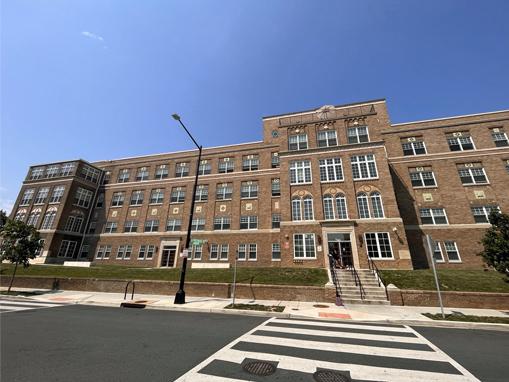
Speaking of preserving local Jewish historic sites, read about the adaptive reuse of the 1925 Hebrew Home for the Aged in Washington, DC into 88 affordable, age-restricted apartments, including 14 units for those who experienced homelessness. The building was abandoned in 2009 and underwent an exterior and interior restoration in 2021.The design team retained the ornamental Star of David windows, exterior brick, terra cotta bas relief, two original cornerstones, and achieved LEED Gold certification.
The project won the 2022 ACHP/HUD Secretary’s Award for Excellence in Historic Preservation with HUD Secretary Marcia Fudge stating, “Everyone deserves to live in a community they feel connected to. Preserving pre-existing homes is one way to ensure families of all incomes, particularly people with low incomes, can access housing of their choice.”
|  | Photo credit: Advisory Council on Historic Preservation | |
Two New Historic Markers Installed | |
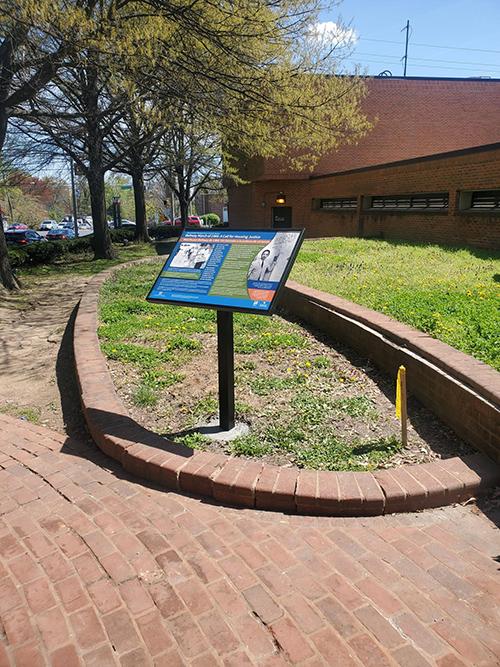
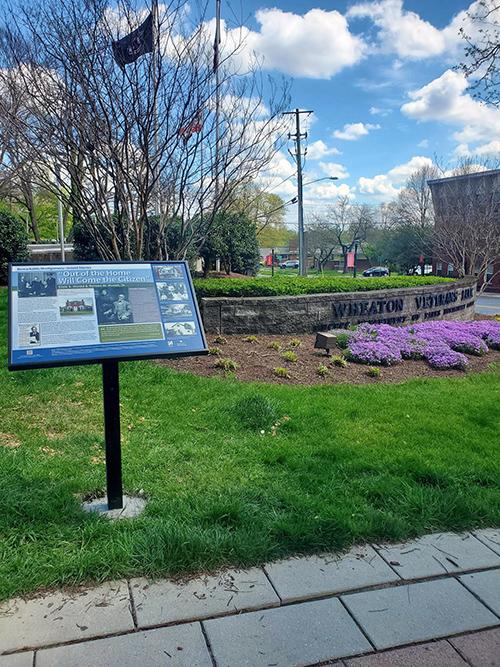
The Montgomery County Planning Board will host a dedication ceremony on May 30 for two NEW markers that are part of the Remarkable Montgomery: Untold Stories partnership between Montgomery Planning and Montgomery Parks. The event starts at 9.30 a.m. and will be at Wheaton Veterans Park on Fern Street. The markers honor the trailblazing fair-housing efforts of Elsie and Romeo Horad and the participants of the Beltway March of 1966. The Horad family marker is at Wheaton Veterans Park while the Beltway March marker is at the Forest Glen Metro Station. The markers are the third and fourth installations in our nascent marker program and you can visit them anytime. | |
History We Are Working On | |
Montgomery Planning’s Eastern Silver Spring Communities Master Plan goes before the Planning Board on May 16 to present the plan’s boundary and staff’s analysis of the plan area. This is the earliest phase of a master plan. Once the Planning Board reviews and approves the plan’s boundary, staff will begin the “visioning phase” of the plan process, so we would love to hear your recommendations for heritage sites to look out for and architecture to keep in mind. We also encourage you to subscribe to the plan’s e-newsletter to stay informed and download the plan’s boundary explainer (English; Spanish; Korean; Amharic). Pass this information along to your community! | Montgomery Planning’s University Boulevard Corridor Plan team is hosting a series of community meetings in May to discuss emerging ideas as the plan’s preliminary recommendations start to shape. There is a proposed historic designation in the plan for the Romeo and Elsie Horad House at 2118 University Boulevard West. | |
Keep Your Historic Property in Tip Top Shape: Maintenance Tips for Spring!
A change in season is a great time to look at your home with an analytical eye and make sure it’s in top shape to keep you and your family comfortable and protected for another year. Spring’s unpredictable weather is a double-edged sword for historic homes. On the one hand, our homes often look their prettiest in the spring with light flooding in, flowers blooming, and storm windows coming down to be replaced with screens to let in fresh air. However, spring can also mean water flooding in, mold blooming, and roof shingles coming down. Let’s take this seasonal change as a useful reminder to go through our home exterior checklist:
-
Drainage: After a rainstorm, walk around your house to see where the water pools. Is it sitting near your home for a long time? Is it draining away from it or toward it? Small tweaks can encourage water to flow away from your home, protecting your foundation.
-
Gutters: Are your gutters or drains full of leaves or those climbing vines you’ve been wrestling with that hit growth spurts in spring? Make sure everything is clear, so you don’t get blockages that seep into your home or cause your gutters to sag and strain your eaves.
-
Roofing and flashing: Wind about to blow your socks off? Go outside and check your roof! You don’t need a ladder if you don’t have one. Use binoculars and check from the street level. Are the shingles looking even and sturdy? Are you seeing any flashing, separating or flapping?
-
Windows: Old-growth wooden windows are made of high-quality wood that hardens over time to become very durable and pest resistant. A little maintenance can keep old windows going for decades, if not centuries! Check the exterior of your windows. Wipe down the wood and putty glazing with a wet cloth. This will help protect everything in the long run and make you aware if any glazing needs replacing or if a spot of paint is coming up and needs a quick sanding and a repaint. Consider keeping a quart of window paint handy to do touch-ups as you inspect your home. (Pro tip: Whenever you paint anything in your house, take a photo of the paint can and the paint code, or write a post-it note and post it on the wall of the utility space or closet where you keep your paint or tools. It will save you, your tenants, or the next owners from clumsily trying to match the paint in the future.) If your sills look damp or soggy, ask yourself why water is sitting there. See if you can redirect it, and if the sill isn’t salvageable, replace it! It’ll protect the rest of your window frame and the insulation below it from getting wet. Wet insulation isn’t doing you or your home energy bill any good.
-
Drafts: Speaking of energy efficiency- did you notice a few drafts during the winter? Maybe coming under your door or from your outlets? Windows are often accused of being energy hogs, but poorly sealed doors and utility penetrations can be high-speed tunnels welcoming cold air into our homes. Spring is a good time to check seals on our doors. Doors will shrink in the cold of winter and swell with the heat and humidity of spring and summer. If you weatherstrip your doors in winter, you may not be able to close them when they swell in summer! Take advantage of the spring middle ground and see if your doors could do with some weather sealing around the edges or a new sweep to keep air and debris out of the house.
-
Energy Audits: Now that it’s not too cold, it’s a great time for an energy audit. These can be extremely useful for learning about whether your home is properly insulated and sealed, and to see if you’re losing energy in unexpected places. A member of our Historic Preservation Office realized that when the rear sunroom of their historic home was enclosed from a screened porch into an interior room in the 1970s, it wasn’t insulated! It was a heat sink in the corner of the house. Insulation was easily added between the studs above and beneath the windows, and adding honeycomb blinds and curtains to the historic windows increased their R-value so the house is cozy in winter and easier to keep cool in summer.
| |
What the HP Staff is Reading
-
Set in California but reflective of a story seen across the nation, “Trespassers? Asian Americans and the Battle for Suburbia,” by Willow S Lung-Amam follows the story of Asian families making space for themselves and seeking equity and inclusion in suburban America.
-
In “Bengali Harlem and the Lost Histories of South Asian America,” Vivek Bald brings to life generations of South Asians who immigrated to the United States and made lives for themselves and their families in some of America’s most iconic neighborhoods.
-
Lawrence Goodman at Brandeis University discusses the ongoing work to save European synagogues, including the mapping of over 3,300 historic Jewish sites across the continent.
-
Not ‘reading’ per se, but for those who love learning through listening (which we do), the National Park Service has a podcast exploring themes in historic preservation including national monuments and contested land, the cultural history impacts of the Apollo space program, discussions on the memoir of a Japanese Draft Resister of Conscience during World War II and challenging histories at the Dallas Holocaust and Human Rights Museum.
| |
|
Where Am I?
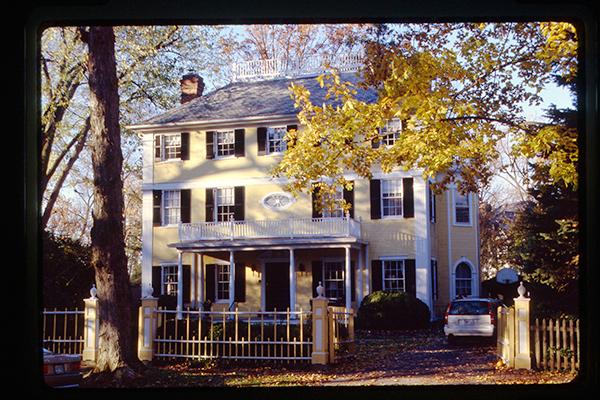
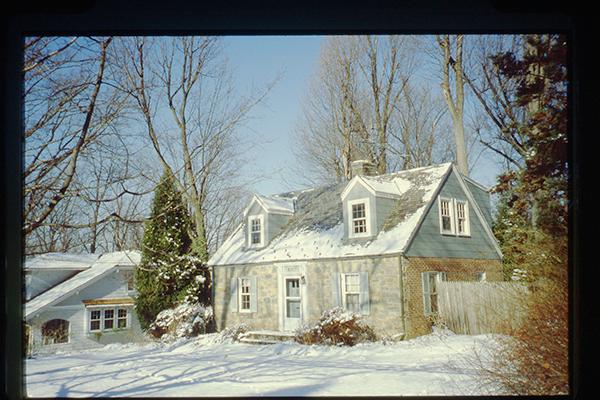
Our program has a collection of decades-old photographs of places from around Montgomery County, but sometimes we are unable to trace their location. When we are able to identify these photos, we add them to our public map, MCAtlas. Below are a few examples of unknown sites. If you recognize them, help us fill in the blanks! Email us at serena.bolliger@montgomeryplanning.org with any suggestions.
| |
Historic Preservation Tax Credits
If you’re planning to do some exterior renovation in 2024 and live in a historic home, don’t forget to keep your receipts! You may be eligible for the Montgomery County Historic Preservation Tax Credit, a 25% property tax credit for owners of historic homes who repair, restore, or preserve the exteriors of their historic structures. The property must be listed in the Montgomery County Master Plan for Historic Preservation. Determine if your property is listed. New additions and interior work are ineligible. You can submit 2024 expenses until April 1, 2025. Head to our website to learn more about the tax credit and eligibility. For more information about filing a tax credit application, please contact: 301-563-3400 or MCP-Historic@mncppc-mc.org.
| | | | |