Our clients sue Pennsylvania for rejecting thousands of mail-in ballots due to inconsequential handwritten date mistakes | |
|
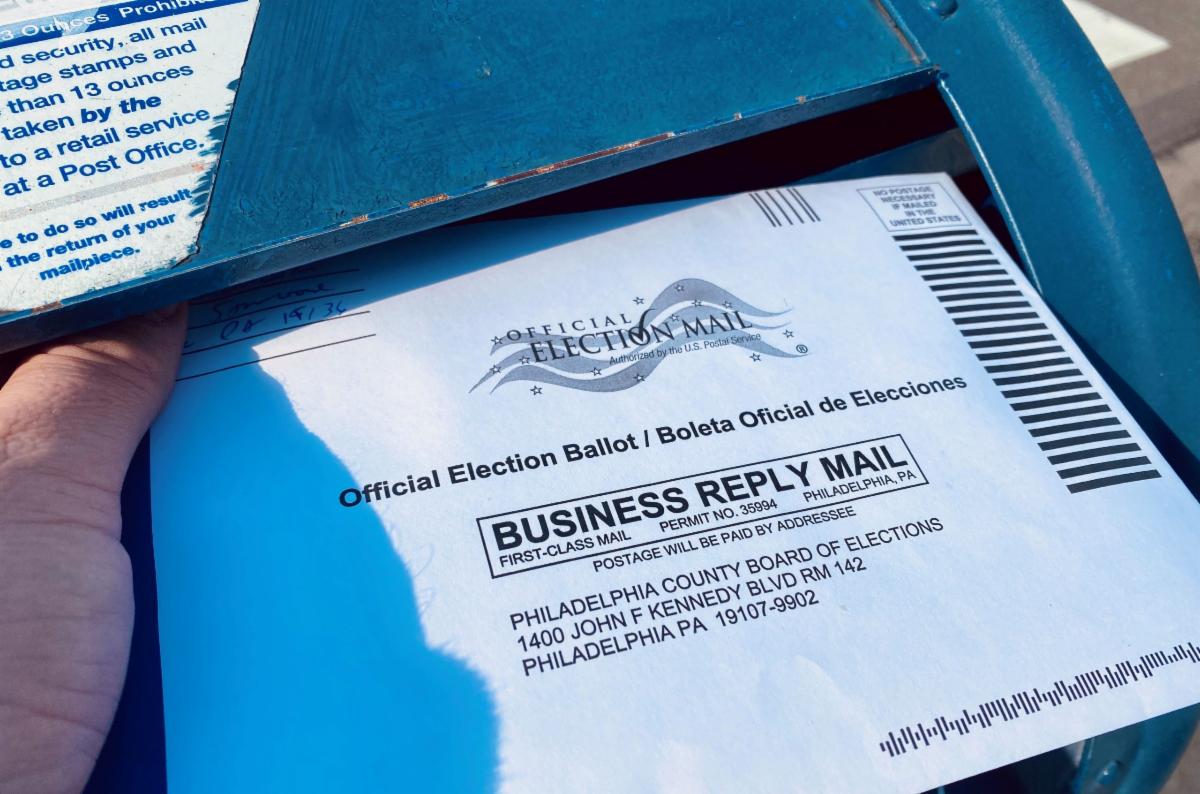
In Pennsylvania, thousands of voters have their mail-in ballots rejected each year solely because of a common trivial mistake: writing an incorrect date, or no date at all, on their ballot envelope. Election officials do not use the date to determine whether the ballot was returned on time—ballots must be received by county boards of election by 8 p.m. on Election Day—and the date is not used to determine voter eligibility.
On May 28, our clients, nine nonpartisan community organizations from across Pennsylvania, sued Pennsylvania Secretary of State Al Schmidt and election officials in Philadelphia and Allegheny County, demanding an end to the disqualification of mail-in ballots for inconsequential date errors. This practice violates the fundamental right to vote in free and equal elections guaranteed by the Pennsylvania Constitution by needlessly blocking eligible voters from exercising their fundamental right to make their voice heard. Read more and view court documents here.
We were joined by the ACLU of Pennsylvania and pro bono counsel from Arnold & Porter to represent the petitioners: Black Political Empowerment Project, POWER Interfaith, Make the Road Pennsylvania, OnePA Activists United, New PA Project Education Fund, Casa San José, Pittsburgh United, League of Women Voters of Pennsylvania, and Common Cause Pennsylvania.
Our senior attorney Ben Geffen was interviewed by WESA and Votebeat about the case.
“There are thousands of voters whose ballots are at stake,” Geffen told Votebeat reporter Carter Walker. “People just really don’t like to think they followed the rules and, for some reason of red tape or some technicality, their vote doesn’t get counted. When that happens to you, it’s very upsetting.”
| |
We stand up for students' right to receive special education until age 22, after a disappointing Commonwealth Court decision | |
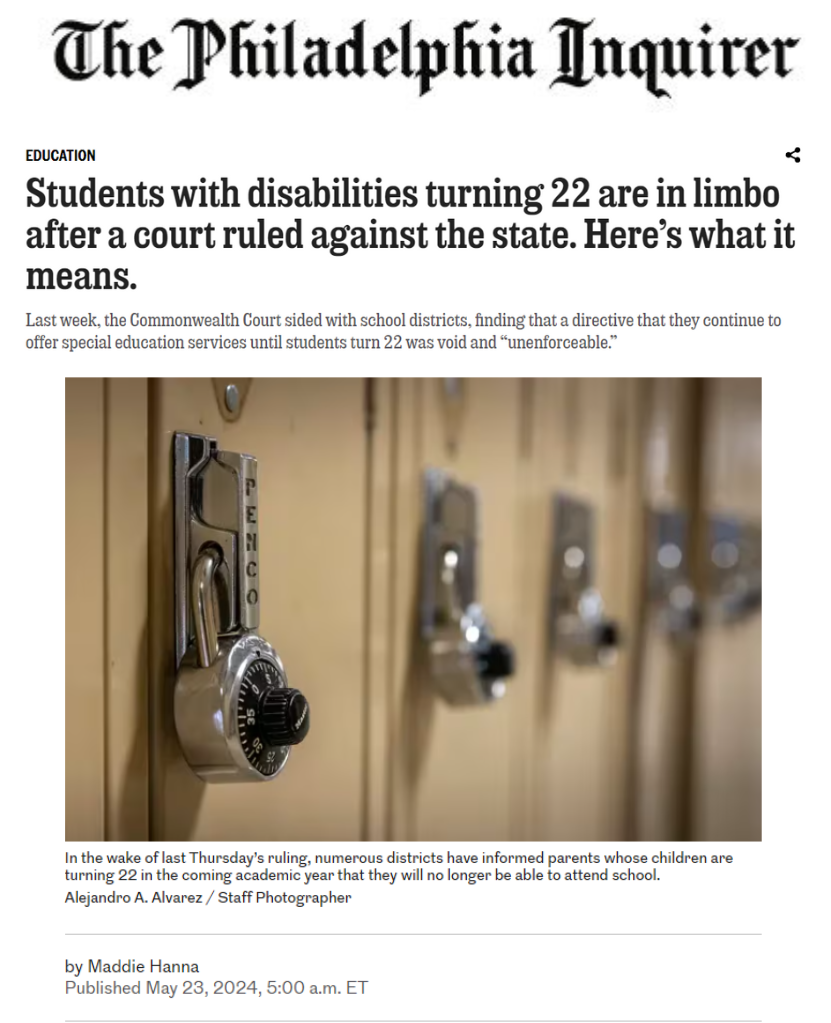
Federal law is clear: students with disabilities have the right to receive a free and appropriate education in public schools until they turn 22. Responding to a federal lawsuit we filed last summer, the Pennsylvania Department of Education (PDE) revised their statewide eligibility policy for special education students at the start of this school year to conform with federal law, requiring that eligible students continue receiving services until their 22nd birthday, rather than prematurely aging students out at the end of the school year in which they turn 21.
The status of families relying on this new policy was thrown into uncertainty on May 16, 2024, when the Commonwealth Court ruled that the policy was not valid because PDE did not follow required regulatory procedures under state law in making the policy change. Importantly, the court did not consider the question of what federal law requires and the decision does not change students' rights under IDEA. On May 20, PDE filed an appeal of the Commonwealth Court decision to the Pennsylvania Supreme Court, which automatically stayed the Commonwealth Court decision. As of now, PDE’s policy requiring that eligible students with disabilities receive services until they turn 22 remains in effect while litigation continues. Learn more about the policy and the rights of students with disabilities under federal law on our website.
“We feel like the rug was just pulled out from underneath us,” parent Carolyn Kelly, whose daughter is 21, told the Philadelphia Inquirer.
“We have parents telling us how much their children love being in school and now they’re left completely in limbo and not knowing what to tell them,” our staff attorney Caroline Ramsey told Philly Burbs.
If your child turns 22 at some point during the 2024-25 school year, and you have questions about their right to continue receiving special education services next year, please contact our attorneys to learn more.
| |
Finish the job: A plan to transform public school funding could become law this year | |
|
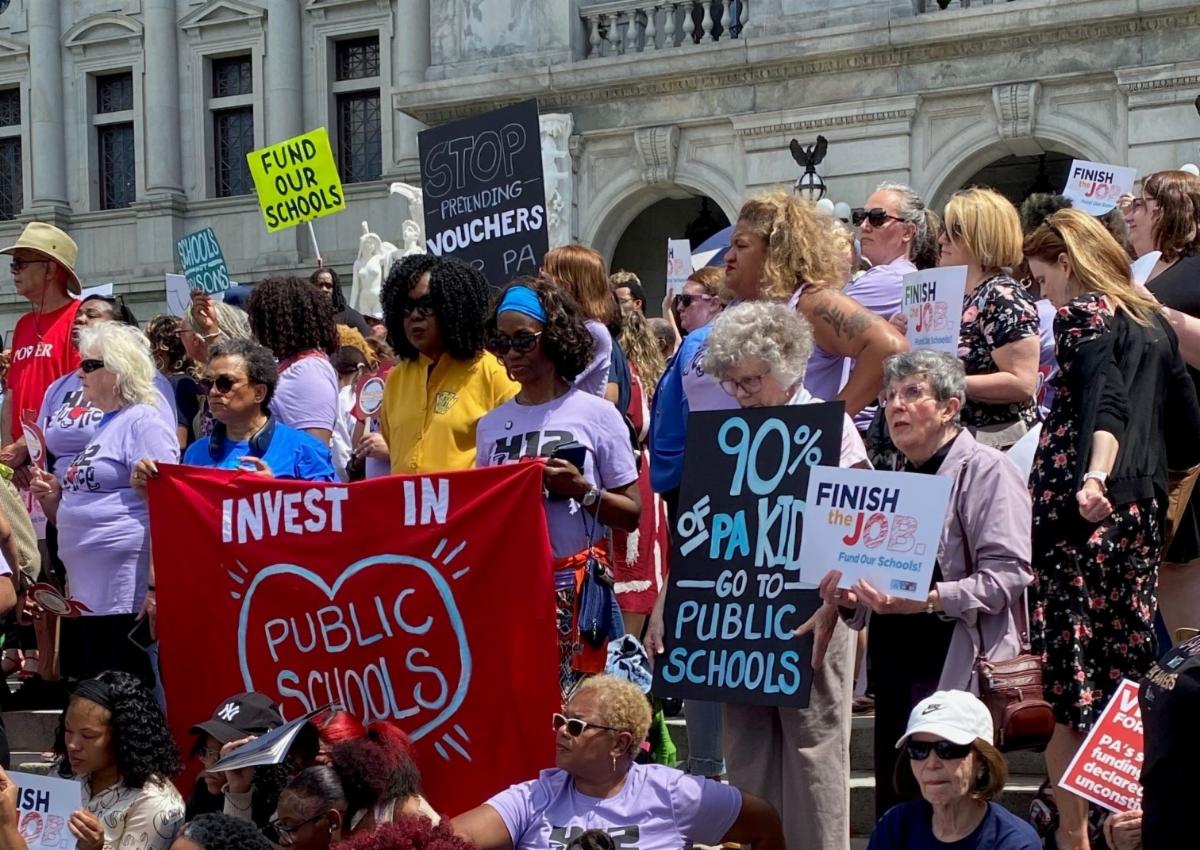
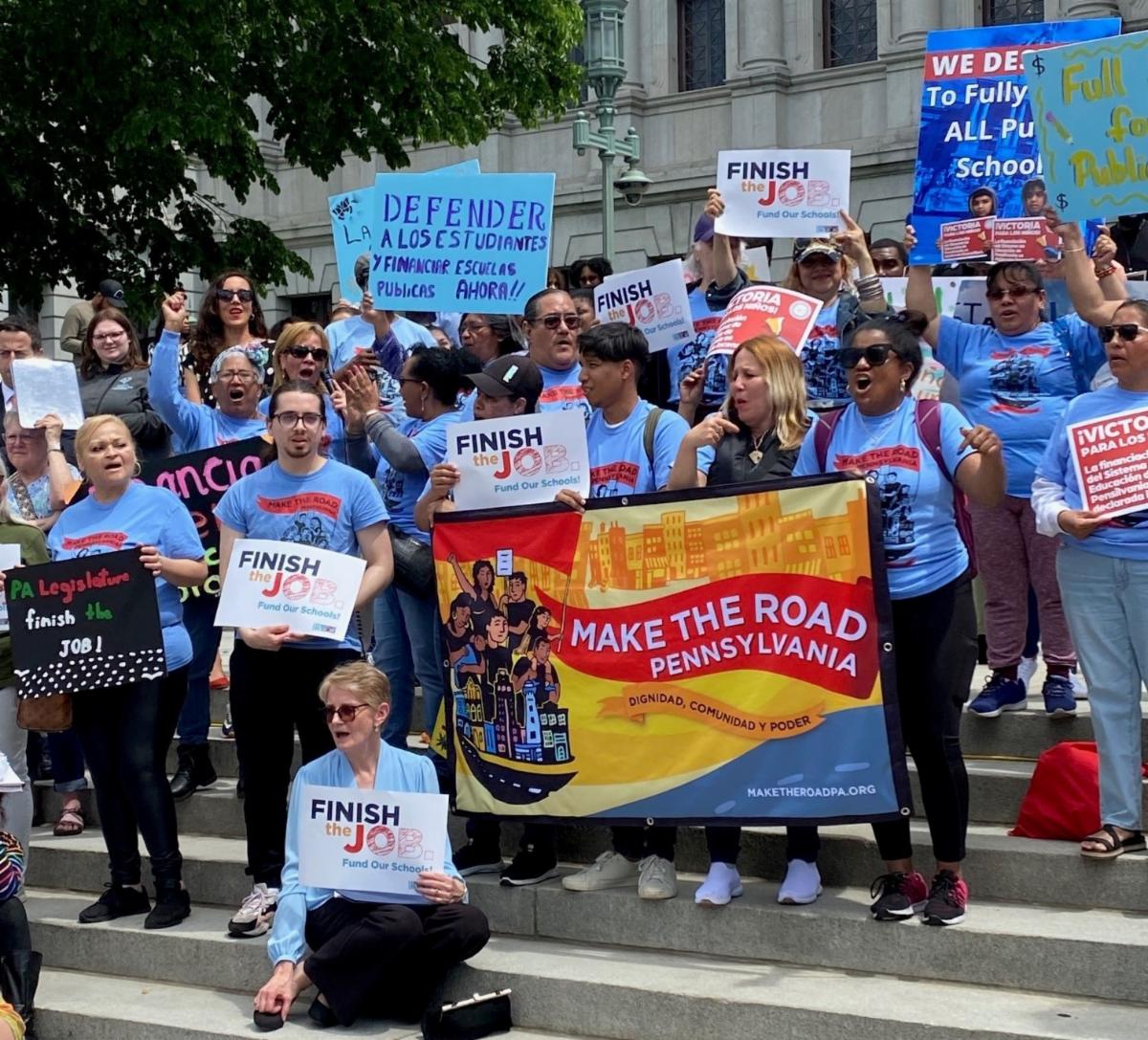
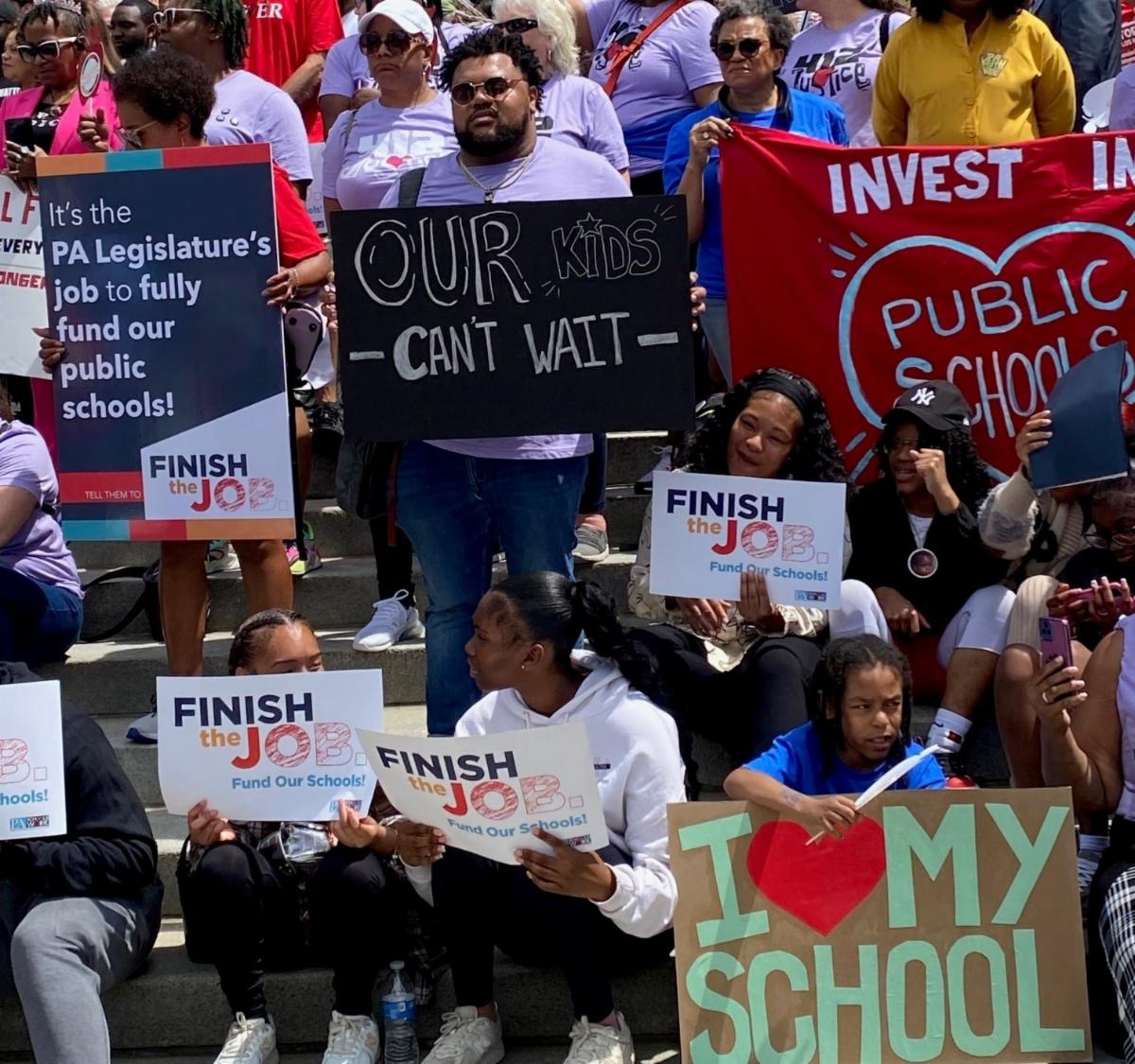
Above: Parents, teachers and advocates gather at the state capitol May 8 to demand that our leaders in Harrisburg finish the job and fund our public schools.
This winter, the Basic Education Funding Commission responded to the clear charge from Commonwealth Court's decision in our school funding lawsuit: our public school funding system, which unconstitutionally shortchanges thousands of students, must change.
The majority of the commission put forward a transformational long-term plan to close school funding gaps in Pennsylvania. In his budget address, Governor Shapiro endorsed this plan, and put the first year in his budget proposal. Now, there is a bill in Harrisburg to set out the entire seven-year plan to fully and fairly fund our public schools into law--a groundbreaking step to live up to the constitution's promise and change the lives of children in every corner of Pennsylvania.
On June 3, Representative Mike Sturla, co-chair of the Basic Education Funding Commission, sent legislation to the House Education Committee that will increase state funding levels to 371 underfunded Pennsylvania school districts by $5.1 billion through a seven-year plan targeted to the students that need it most. The legislation will also phase in over seven years an additional $1 billion funding increase as a supplement for 169 districts with the highest local tax rates, reform Pennsylvania's cyber charter school funding system, and help ensure stability and predictability in funding for every district.
Find your legislator here, and urge them to support this plan when it comes to a vote.
The General Assembly must finish the job and pass legislation guaranteeing that the resources students need and deserve will be delivered, and that school funding gaps that have grown for years will finally be closed. That work has begun.
On May 8, we joined hundreds of parents, students, educators and supporters of public education at the State Capitol for a rally and advocacy day organized by PA Schools Work, demanding that our leaders fund strong public schools in every community. Jasmine Alexander, a student representative from Chester-Upland School District advocating for herself and her peers, said it best: "in America, we invest in things we believe in."
| |
Now is the time: take action for constitutional public school funding this budget season | |
|
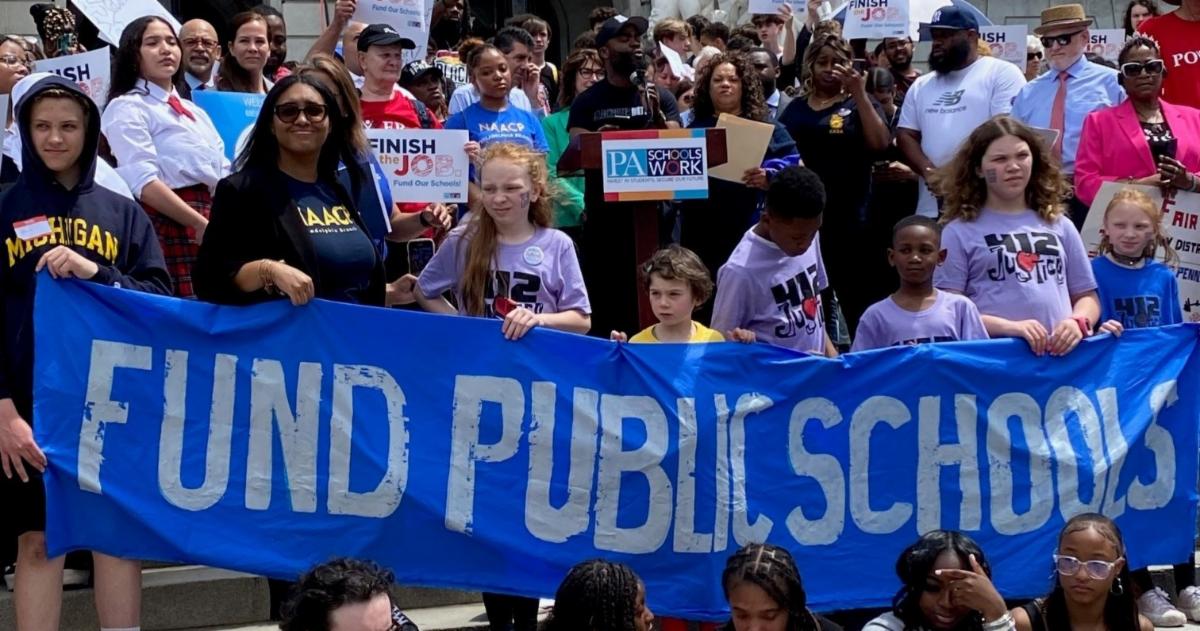
More than a year after the historic win in our school funding lawsuit, it's time to tell our leaders in Harrisburg to finish the job and fund our public schools.
Use this online tool to send a letter to your representatives in the General Assembly, urging them to pass Governor Shapiro's game-changing budget proposal for public education.
Advocates can help mobilize school boards and community organizations to come out in public support of this game-changing plan by passing resolutions sent to lawmakers in Harrisburg. Learn more and view a sample resolution from our friends at Education Voters PA.
Learn more about what the 7-year plan for public school funding would mean for your community with fact sheets for each district and summaries of state data from PA Schools Work.
Every Monday from 4-6 PM, the PA Schools Work campaign will host virtual phonebanks, talking to our neighbors across Pennsylvania about the importance of funding public schools--not just this year, but every year. Sign up here. All volunteers will receive training and be connected with an easy-to-use automatic dialer, and you can make calls from your home! Other times will likely be available soon as well.
| |
Seniors gather at City Hall for a Mother's Day rally, asking Philadelphia to save Brith Sholom House | |
|
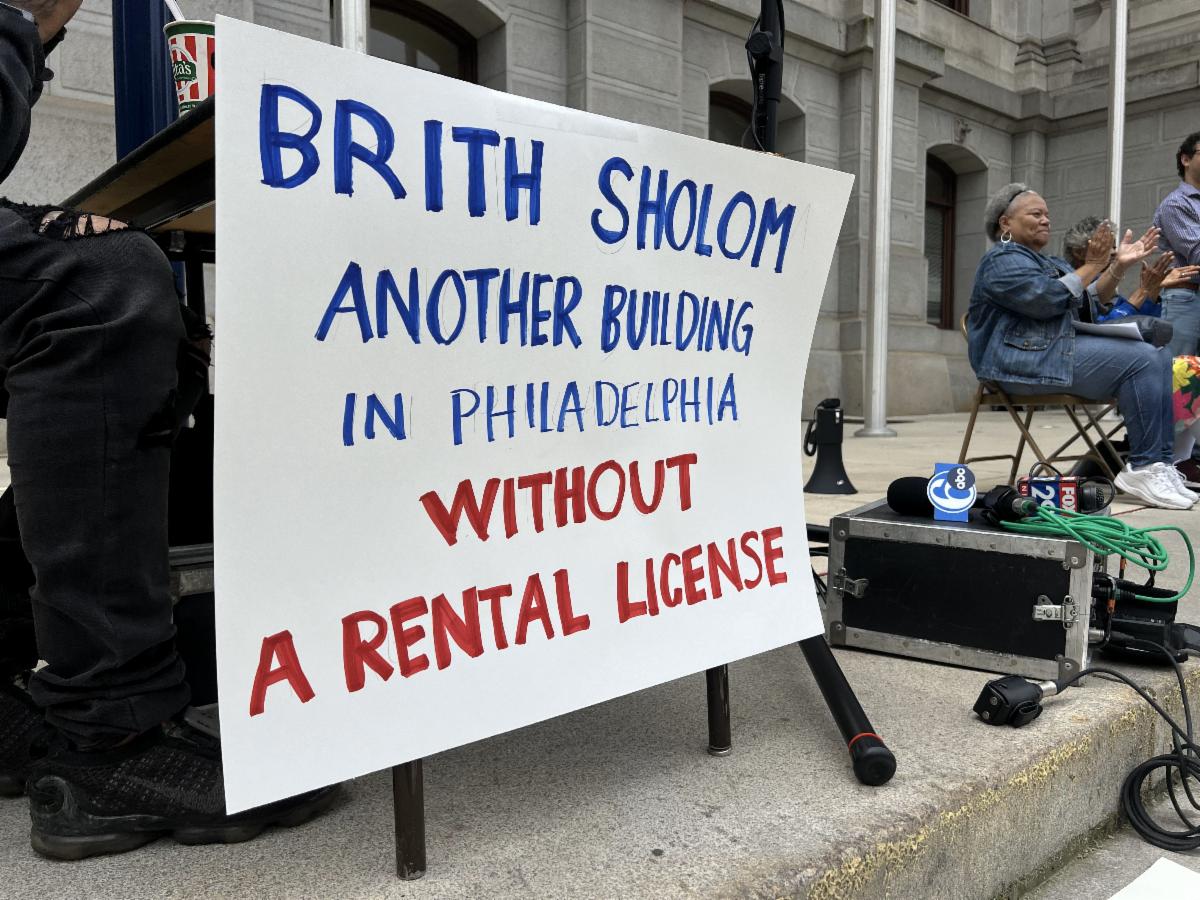
Left: Brith Sholom residents rally at City Hall.
More than 150 senior residents of Brith Sholom House apartments are at risk of displacement, and they’re demanding action from the City of Philadelphia to save their homes.
On May 14, tenants and supporters gathered at City Hall for a Mother’s Day rally, calling for the city to task the Department of Licenses & Inspections with making needed repairs and to support the Philadelphia Housing Authority—or another owner who can be held accountable—in buying the building from their neglectful landlord. We represent the buildings' elected tenants' council in efforts to preserve their community and secure their right to quality housing.
The rally was covered by Fox 29. Residents, at risk of displacement through a gas utility shutoff after their landlord failed to pay bills for over two years, described inconsistent repairs and a loss of community spaces.
"Why can’t we have church services anymore? Why can’t we use our lobbies? Why are our mail rooms locked at 5 o’clock? You’re taking the dignity away from the citizens," said Marlene, a 75-year-old tenant. "How do you do this to these people? We have veterans who have gone to war and this is how you treat them?"
In a statement, city officials told Fox 29 that “The City is working with partners such as PHA to explore the possibility of maintaining the property for affordable housing.” We are encouraged by the City's efforts and continue to work closely with them. Affordable housing for older Philadelphians is in short supply, and tenants should not be the ones paying the price for their landlords' neglect.
Thanks to medically vulnerable tenants asserting their rights under state law, the earliest possible date for PGW shutoff has been pushed back to June 30, 2024. The building is set to put up for sheriff's sale on July 2, 2024.
| |
Remembering Gillian R. Gilhool | |
|
Left: Gillian R. Gilhool at our 50th anniversary celebration in 2019.
It is with heavy hearts that we share the news of Gillian R. Gilhool's passing. Gillian, though not formally affiliated with the Law Center, was an integral part of our family as the wife of our esteemed former co-director, Thomas Gilhool. Her journey as a 1964 Yale Law School graduate led her through significant roles, including serving under District Attorney Arlen Specter and Superintendent Mark Shedd at the School District of Philadelphia; as Director of Temple University's Center City Campus; as Executive Director of the YWCA of Philadelphia. Her dedication extended beyond local realms as she represented NGOs at the UN World Conference on Women in Beijing in 1995, and as a Legislative Director for the Women's International League for Peace & Freedom.
Gillian's impact was not solely defined by her professional endeavors; she provided unwavering mentorship to countless individuals from diverse backgrounds, embodying a profound commitment to social justice. Her influence was palpable within the Law Center, where she contributed her insights to numerous briefs, especially those concerning community services for persons with disabilities. And she made sure those briefs got submitted on time!
In addition to being a pillar of strength for Tom, Gillian's warmth and generosity touched the lives of many. She leaves behind a legacy of compassion and advocacy that will continue to inspire us all. Our thoughts are with her daughter Bridget, son Nicholas, their spouses and four grandchildren. We will share information about memorial services in Philadelphia when the time and location are finalized.
| |
We urge Philadelphia to help preserve irreplaceable community green space in City Council testimony | |
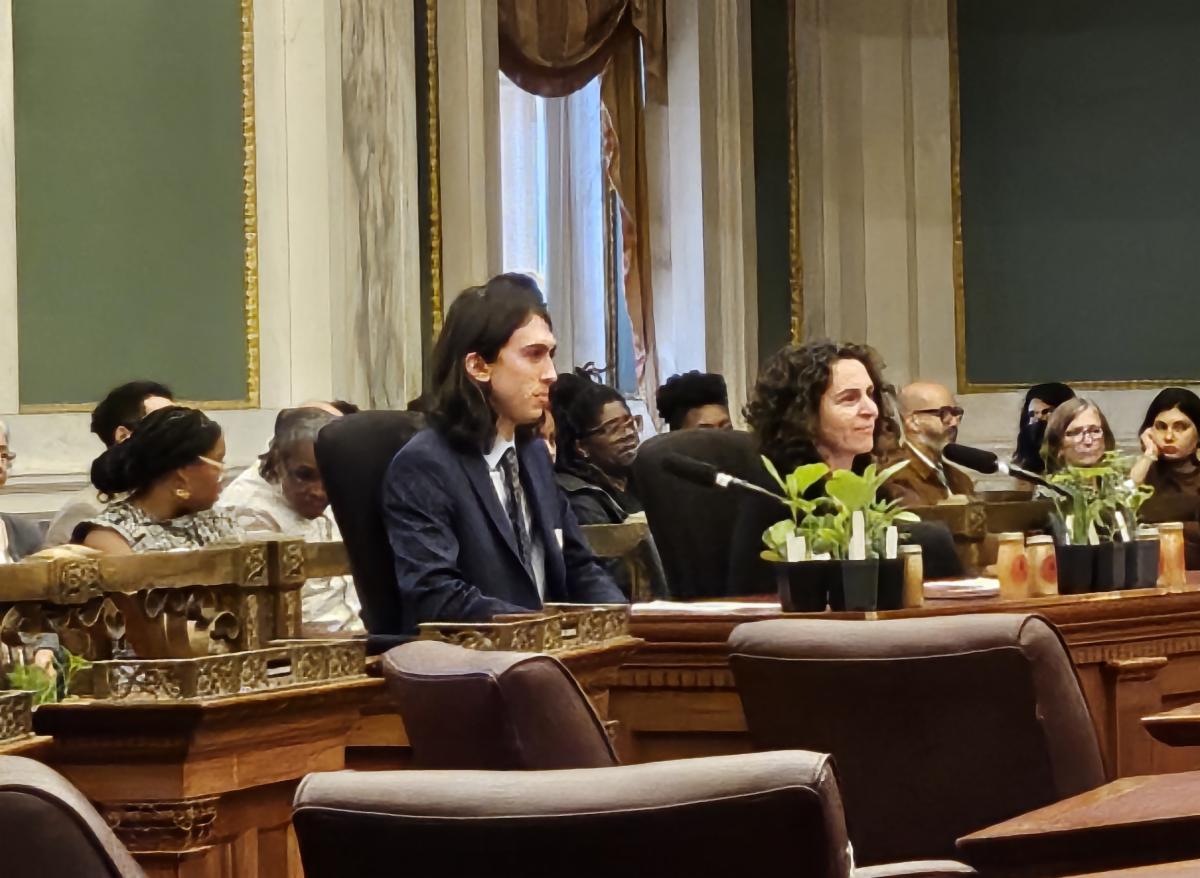
Right: Ryan Gittler-Muñiz testifies at City Council
Despite providing a wealth of benefits to our city, particularly in Black and Brown neighborhoods, most community gardens in Philadelphia are at risk.
In City Council testimony on urban agriculture hosted by councilmembers Kendra Brooks and Jamie Gauthier on May 8, our environmental justice organizer Ryan Gittler-Muñiz urged the city to provide more resources to growers and to ensure cooperation from city agencies like the Land Bank, so that their land can be preserved for years to come. Read their testimony in full here, including an overview of research showing the benefits of community green space to surrounding communities.
“These valuable spaces reflect the work of community members who transformed neglected land around them, using their own labor and resources to make something beautiful for their neighborhood to enjoy," Gittler-Muñiz said. They deserve our admiration and support.”
Many of these irreplaceable green spaces are located on abandoned privately owned parcels that are tax delinquent–and these debts from previous absentee owners can put their land at risk of being lost at sheriff sale, often to low bids from land speculators, even if they’ve cared for the lot for many years.
On May 22, our legal director Mimi McKenzie testified to City Council in support of Bill 240187, which would allow the Land Bank under certain conditions to continue to be the sole bidder at these tax sales in order to ultimately transfer the gardens lots to their long-time stewards for a nominal fee.
"Going forward the City must include the disposition of land for gardens and green space in its land use priorities consistent with the spirit and letter of the Philadelphia Land Bank Law we all worked so hard to enact," McKenzie said. Read her testimony here. On May 30, the bill passed City Council.
| |
Join us for a free Vacant Land 215 program, June 6 | |
|
Want to learn more about community gardening and farming on vacant land in Philadelphia? Join us June 6 at 1 p.m. for a free online Vacant Land 215 to discuss legal land access and preservation for gardens, farms, and other community-managed open spaces. The program will feature presentations from our Garden Justice Legal Initiative, Neighborhood Gardens Trust, and the Pennsylvania Horticultural Society, who will be available to discuss City policies towards preserving community-managed green space.
Date: Thursday, June 6, 2024
Place: Online via Zoom
Time: 1 - 2:30 p.m.
| |
Law Center in the News: Supporting stronger protections against source of income discrimination | |
|
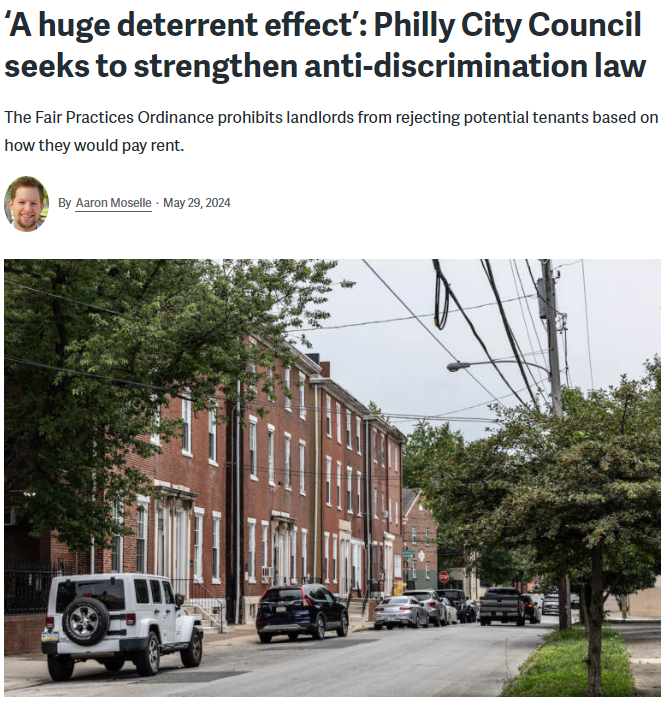
No one should face discrimination in their search for a home. On May 29, our legal director Mimi McKenzie shared testimony with City Council's committee on housing, neighborhood development and the homeless in support of Bill 240060. The bill would give tenants who face discrimination based on their use of housing assistance to pay rent--a widespread practice that is illegal under Philadelphia's Fair Practices Ordinance--the right to sue landlords immediately.
Currently, tenants must first file administrative complaints with the Philadelphia Human Relations Commission, which has a full year of exclusive jurisdiction and lacks the resources to timely respond to and investigate housing discrimination claims.
Our testimony in support of the bill was covered by WHYY. “When landlords understand that there are consequences for ignoring Philadelphia law, that has a huge deterrent effect,” McKenzie said. Read her testimony in full here. The bill was passed out of committee, and we are hopeful that it will become law to give tenants a tool to quickly address complaints of discrimination and secure housing.
| |
Thank you to our departing board members! | |
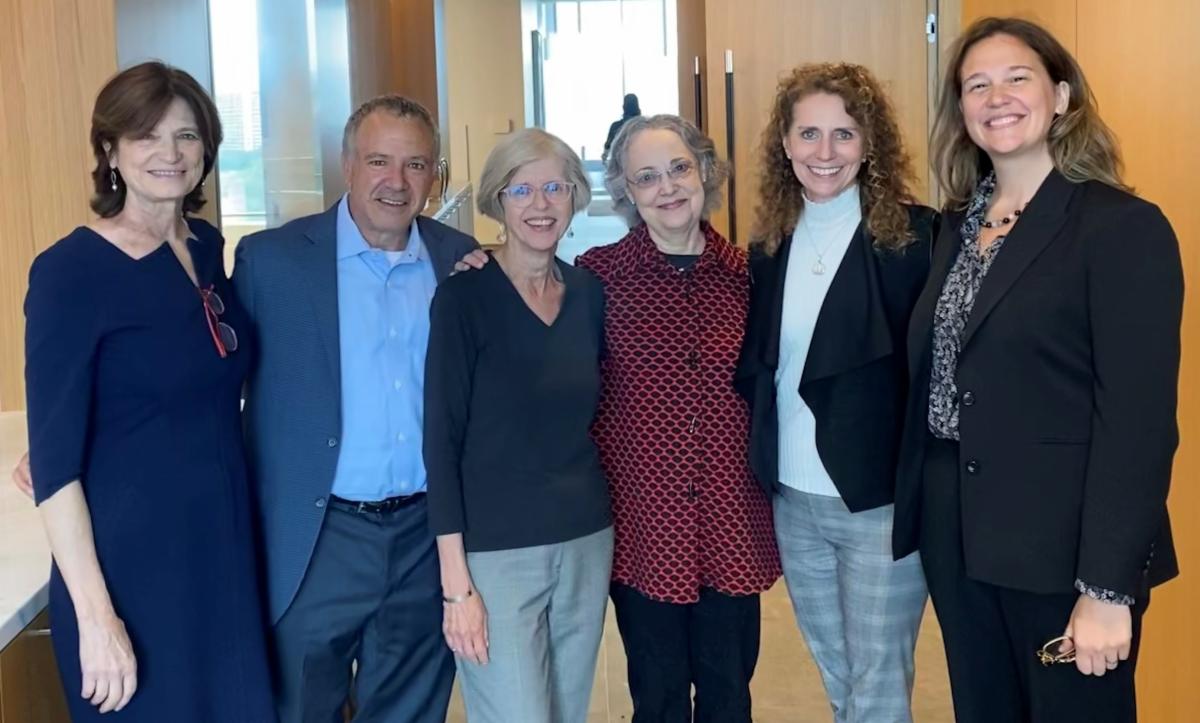
We would like express our sincere thanks to the members of our board of directors who have completed their terms and departed following our 2024 annual meeting. Each contributed years of dedicated and invaluable service to our organization. From left to right: Virginia Gibson, of Hogan Lovells; Marc Topaz, of Kessler Topaz; Katherine Hatton, formerly of the Robert Wood Johnson Foundation; Ellen Friedell, of FFG Law; Dana Trexler, of Stout; and Leigh Ann Buziak, of Blank Rome. Two board members also departed during this years' term prior to the annual meeting: Robin Roberts, of Parents United for Public Education; and Jacqueline Robinson, of Chubb. Thank you! Join us in our gratitude by liking their post on LinkedIn.
We would also like to express our deep appreciation to Ellen Friedell and Marc Topaz for years of exemplary leadership for our organization. Ellen was a member of our board for 14 years and formerly served as chair, vice-chair, and treasurer. Marc was a member of our board for 15 years and served as secretary. You helped make our work possible and left our organization better than you found it--thank you!
| |
The official registration and financial information of the Public Interest Law Center may be obtained from the Pennsylvania Department of State by calling toll-free, within Pennsylvania, 1-800-732-0999. Registration does not imply endorsement. | | | | |