|
ARTICLES
OTHER INFO
- Upcoming Events
- Resources
- Payments Grants and Loans
| |
|
Maine Weather and Climate Update
A low pressure system traveling up the eastern seaboard combined with a stalled low over the Great Lakes region combined to deliver heavy rainfall over about two-thirds of Maine earlier this week, where many areas saw flooding and damaging runoff. Rainfall totals ranging 3–5 inches were focused over the west and southwest, with isolated areas receiving more than 6 inches. Northern and eastern parts of the state generally saw half to 1.5 inches. As a result of this significant rainfall, groundwater, streamflow, and soil moisture indicators are normal or above normal for this time of year. However, a broad high pressure system has developed over Canada and is forecast to affect our weather for the next several days, bringing warm (highs 60s to around 70°F), sunny, low humidity conditions that will diminish soil moisture. As always, be sure to check weather.gov for the latest weather forecast for your area. Precipitation and drought information is available from the Northeast Drought Early Warning System Dashboard.
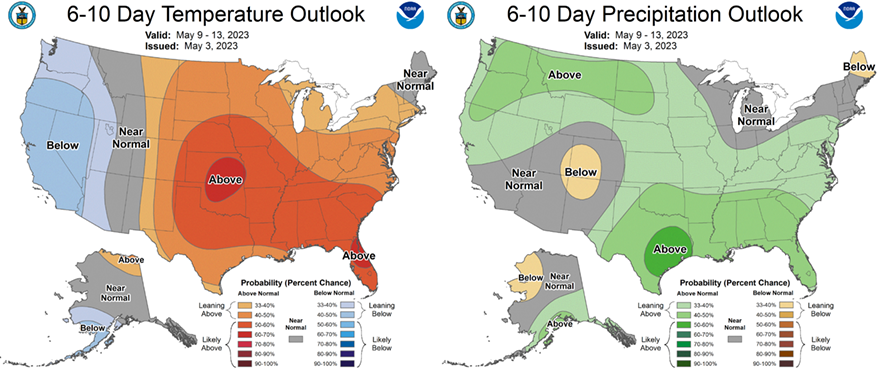
The NWS Climate Prediction Center 6–10 day outlook probability maps for May 9–13 show near normal temperature and below normal precipitation. The 1-month outlook for May (issued April 30) leans toward above normal temperature and equal chance of above or below normal precipitation. Looking further out, the three-month seasonal outlook for May–July (issued April 20) leans toward above normal temperature and equal chance of above or below normal precipitation.
Sean Birkel, Assistant Extension Professor, Maine State Climatologist, Climate Change Institute, Cooperative Extension University of Maine. For questions about climate and weather, please contact the Maine Climate Office.
| | |
|
Climate Corner: Too Much Water- Avoiding the Long Term Impacts of Compaction | |
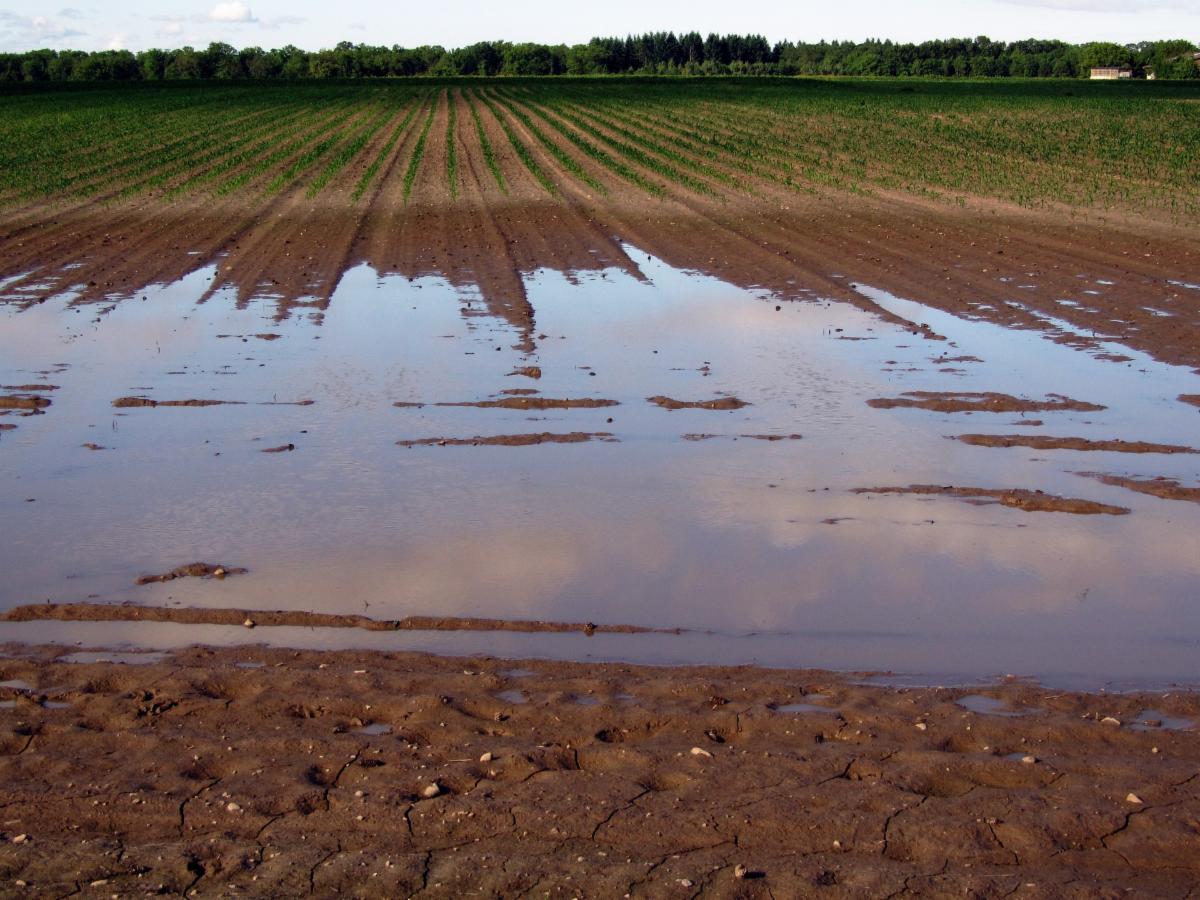
Every Spring after the first few warm sunny days we all experience the itch to get out on the fields early. After an extremely wet week like what we just experienced, it's important to have some patience and let the soil dry out.
Getting equipment stuck is a time consuming spring time ritual with long term negative consequences. It takes years to build up soil structure, which aids in soil drainage, reducing erosion, and holding nutrients and water. It only takes one pass of equipment over wet soils to destroy that long built structure. Compaction reduces water infiltration rates, making it more likely to create further compaction in the future. It also reduces root penetration into the soil, nutrient availability. Here is a detailed overview from the University of Minnesota Extension of the causes, effects, and ways to avoid soil compaction.
Getting in to plant has to happen, and waiting for field to dry out isn't always feasible. In the next edition, Climate Corner will highlight approaches for enhancing soil drainage to reduce the risk of causing compaction, and enhancing overall soil health.
| | |
|
|
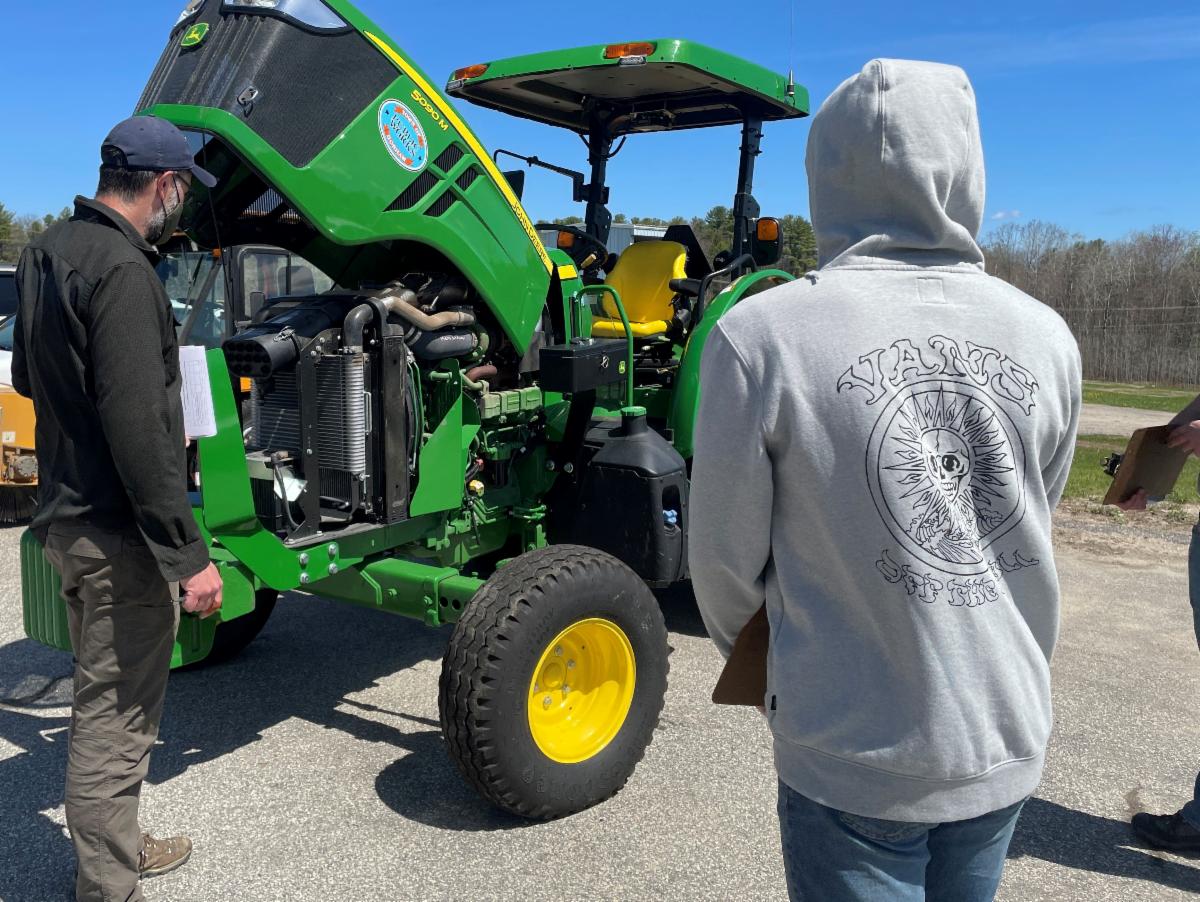
There is always a lot to organize as the season is getting going. On-boarding new employees, finalizing maintenance on equipment, and jumping on weather windows to get into the field. With all of that going on, don't forget to prioritize time for safety training for your whole crew.
Anyone working on or around equipment should receive training on how to avoid accidents. Those accidents can cause bodily harm and trauma to individuals. They can also be costly, damaging infrastructure or the equipment. Spending time with training can avoid injuries and lost time spent responding accidents.
One resource for training your crew on the basics of tractor safety is this UMaine this UMaine Extension Tractor Safety Video Training Series.Tractor Safety Video Training Series. Reach out to your local Extension office if you have questions about further safety training materials for your farm.
| | |
|
|
No-Till Listserv Launched
MOFGA recently created a new email-based Google Group as a place for discussion and resource sharing focused on the topic of no-till and low-till crop production in Maine. Join the group here. Please reach out to Anna Mueller (amueller@mofga.org) if you have any questions or issues joining the group, and she can add you directly.
| | |
|
|
Receive $5,000 in Free Business Consulting
Thanks to grant funding from the Northern Border Regional Commission, free business consults are available for Maine farm and food businesses located in Androscoggin, Aroostook, Franklin, Hancock, Kennebec, Knox, Oxford, Penobscot, Piscataquis, Somerset, Waldo, and Washington counties. Consulting can help with profitability enhancement, generational transfer and estate planning, strategic planning, management coaching, and more.
Businesses can receive up to $5,000 worth of consulting services at no cost. Work must be completed by June 30, 2023, so act now!
For more information, contact chris.laughton@farmcrediteast.com.
| | |
|
|
BIPOC and LGBTQ+ Affinity Farmer and Farmworker Spaces May-November
To better support farmworkers and farmers of marginalized identities, MOFGA is coordinating 2 facilitated peer support groups, one for BIPOC (Black, Indigenous, People of Color) and one for LGBTQ+ (Lesbian, Gay, Bisexual, Transgender, and Queer) farmers and farmworkers. The goal of these spaces is to to find support and solidarity with other farmers of similar identities farming in Maine. These groups are facilitated and designed by farmworkers who identify with the groups of which they are facilitating.
These will initially be on Zoom but may have some in person offerings based on the facilitators capacity. See here for more details.
| | |
|
|
USDA Announces Funding Availability to Expand Meat and Poultry Processing Options for Underserved Producers and Tribal Communities
U.S. Department of Agriculture (USDA) announced the availability of up to $125 million through two new grant programs that will create more options for meat and poultry farmers by investing in independent, local meat and poultry processing projects that increase competition and enhance the resiliency of the food supply chain.
These new grant programs, the Indigenous Animals Harvesting and Meat Processing Grant Program and the Local Meat Capacity Grant Program, are part of the broader $1 billion American Rescue Plan investment by the Biden-Harris Administration to expand processing capacity for small and midsized meat and poultry processors. More information about Indigenous Animals Grants, applications will be accepted through July 19, 2023. More information about the Local Meat Capacity Grant program, applications will be accepted through July 15, 2023.
| | |
|
|
Setting prices for your upcoming market season?
The Maine Farmers Market Price Report provides market specific price data on a range of products including eggs and vegetables. The report is an interactive resource made possible with funding through the Maine Department of Agriculture, Conservation, and Forestry and the support of the Maine Federation of Farmers Markets, Maine Organic Farmers and Gardeners Association, Maine Farmland Trust, and the University of Maine.
| | |
|
|
Myth-Busting FSA’s New Revenue-Based Disaster and Pandemic Assistance Programs
With a June 2, 2023, deadline to apply for both the Emergency Relief Program (ERP) Phase Two and the Pandemic Assistance Revenue Program (PARP), it’s important to clear up confusion
about how to apply, what documents are required for participation, insurance requirements and related misinformation making its way across the countryside. USDA’s Farm Service Agency has debunked some myths and misconceptions surrounding these new revenue-based programs. Learn more.
| |
Meetings - Webinars - Upcoming Events | |
|
Sessions preceded by ** are eligible for Pesticide Re-certification Credits.
-
May 6: Somerset County Open House, Skowhegan
-
May 6: Maple Sugaring Past and Present, Skowhegan
-
May 6: Legumes as Cover Crops, Skowhegan
-
May 9: Farm Equipment Use and Safety, Hinkley
-
**May 10: Hope Spring IPM and Fresh Pack Wild Blueberry Meeting, Hope
-
**May 12: Dresden Organic and Value-Added Marketing Wild Blueberry Meeting, Dresden
-
May 12 – 14: Maine Fungi Fest, Portland
-
May 13 & 14: Maine State 4-H Youth Conference, Windsor Fairgrounds
-
May 17: Intro to Livestock Handling (Albion)
-
May 18: Carbon Capture Seminar for Ag Producers, online
-
May 18 Maine Food Convergence, online
-
May 23: Produce Harvest and Safe Storage for New Farmers, Penobscot
-
May 25: Maine Food Convergence, Winthrop
-
May 31: Safe Labor Movement, Arundle
-
June 1: Wild Blueberry Land Improvement Meeting, Orland
-
**June 5: Fine Leaf Sheep Fescue Management and Rakes!!, Jonesport
-
June 7: Safe Labor Movement, Unity
-
**July 21: Northeast Mechanical Weed Control Field Day, Thorndike
-
July 23: Open Farm Day, MDACF
| |
|
USDA Ag Marketing Service
| |
|
Edited by:
Donna Coffin, Extension Professor, donna.coffin@maine.edu
Jason Lilley, Extension Professional, jason.lilley@maine.edu
Rebecca Long, Extension Professional, rebecca.j.long@maine.edu
Brett Johnson, Extension Professional,
brett.w.johnson@maine.edu
Nick Rowley, Extension Professional,
nicholas.rowley@maine.edu
Chris Howard, Maine New Farmers Project, christina.howard@maine.edu
| |
Information in this publication is provided purely for educational purposes. No responsibility is assumed for any problems associated with the use of products or services mentioned. No endorsement of products or companies is intended, nor is criticism of unnamed products or companies implied.
Photos by Edwin Remsberg and others.
| |
|
University of Maine Cooperative Extension: Penobscot County
307 Maine Ave Bangor, ME 04401 207-942-7396 or 800-287-1485
Visit Our Website
University of Maine Cooperative Extension: Piscataquis County
207-564-3301 or 800-287-1491
Donna Coffin - Voicemail 207-262-7726
Visit Our Website
University of Maine Cooperative Extension: Cumberland County
(207) 781-6099 or 1-800-287-1471
Visit Our Website
University of Maine Cooperative Extension: Oxford County
207.743.6329 or 1.800.287.1482
Visit Our Website
University of Maine Cooperative Extension: Somerset County
207.474.9622 or 1.800.287.1495
Visit Our Website
University of Maine Cooperative Extension: Androscoggin / Sagadahoc Counties
207.353.5550 or 1.800.287.1458
Visit Our Website
| |
In complying with the letter and spirit of applicable laws and pursuing its own goals of diversity, the University of Maine System does not discriminate on the grounds of race, color, religion, sex, sexual orientation, transgender status, gender, gender identity or expression, ethnicity, national origin, citizenship status, familial status, ancestry, age, disability physical or mental, genetic information, or veterans or military status in employment, education, and all other programs and activities. The University provides reasonable accommodations to qualified individuals with disabilities upon request. The following person has been designated to handle inquiries regarding non-discrimination policies: Director of Equal Opportunity, 101 Boudreau Hall, University of Maine, Orono, ME 04469-5754, 207.581.1226, TTY 711 (Maine Relay System). 11/22 | | | | |