Eugene Masonic Cemetery Association eNewsletter |
|
The Eugene Masonic Cemetery continues its traditional open house of Hope Abbey Mausoleum on Sunday, October 25th, from 1 to 4 PM. There will be two hosts to answer questions about the historic building and those interred in the mausoleum. All are welcome!
Because of COVID-19 health restrictions, masks and social distancing within the building are required. There will not be lavatory facilities available.
|
|
Women Who Made a Difference
The EMCA is Commemorating the 100th Anniversary of the 19th Amendment, which gave women the right to vote. This is the seventh in a series about some of the women "who made a difference in our community" and who are interred in the historic Masonic cemetery. The selection of subjects was done by EMCA board member Alex Brokaw.
|
|
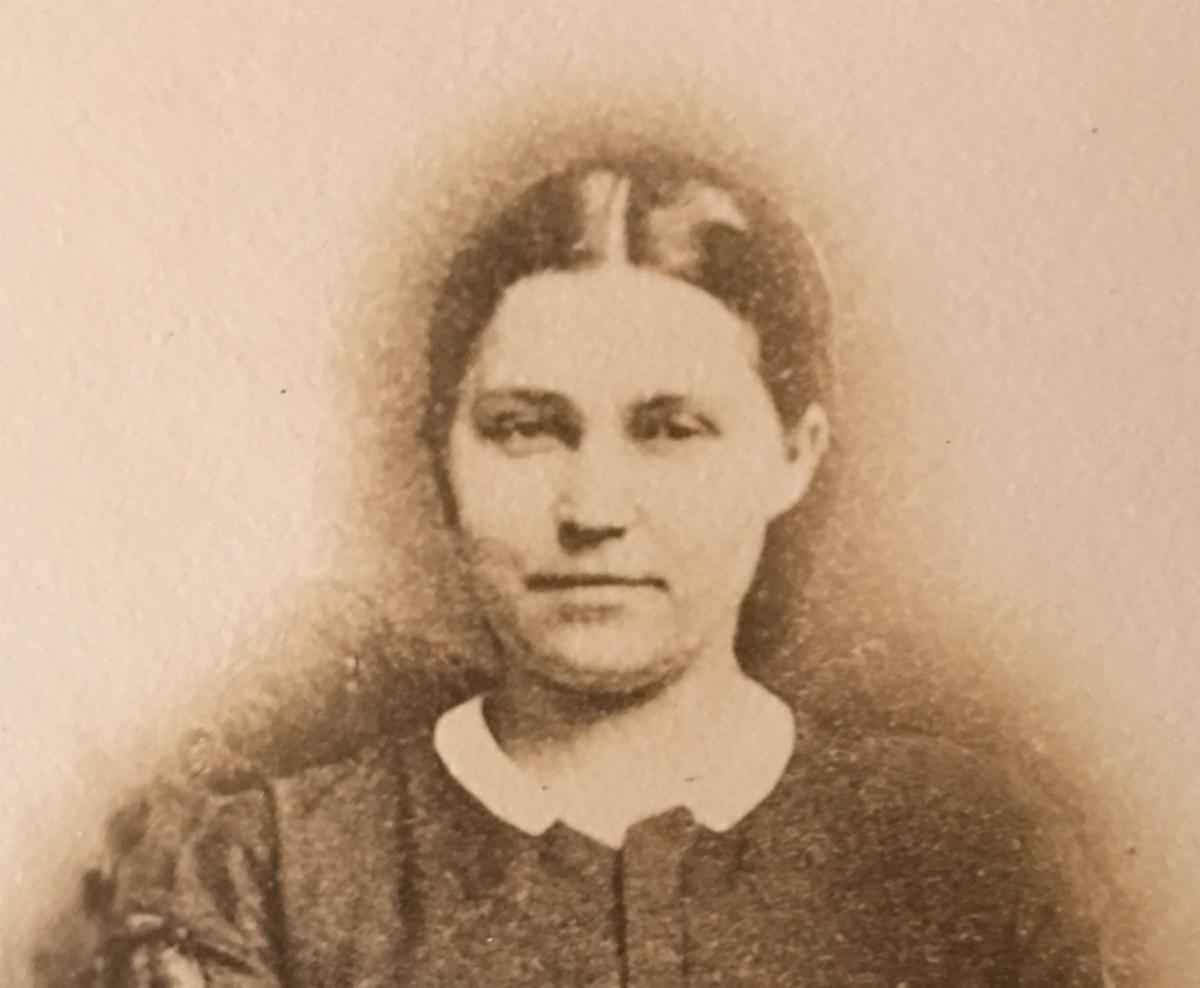
Samantha Cornell McAlister |
|
In 1854, 15-year-old Samantha Cornell (1830–1896), her mother and five siblings, took the circuitous route to Oregon—from their Ohio home to the East Coast, by ship to Panama, by foot or mule ride across Panama, and then by ship to Portland. William Cornell, Samantha’s father, was waiting for them, and took them to his donation land claim northwest of Portland.
Samantha became a pioneer in elementary school education in Oregon. She was the single graduate of the Portland Academy and Female Seminary in 1857, and spent the next eight years teaching school in the Portland area and at Willamette University in Salem. She delivered a paper to the Oregon State Teachers Institute protesting the practice of school children under the age of 12 being forced to sit still in classes for six hours a day. She wrote: We maintain this sadly interferes with the true development of both mind and body. It is physically injurious, because it requires the continuance of one position of the body far too long for the health and growth of the frame and muscles of the child.
In 1866, Samantha married Edward McAlister, an itinerant Universalist minister and a practitioner of homeopathic medicine. They established churches in at least seven different towns in California, Idaho, Oregon, and Washington. In 1886, they settled in Eugene where Edward organized the first Universalist Church. Many of their six children attended the University of Oregon.
The Universalists were one of the first denominations to ordain women. Samantha was listed as a licensed preacher in the national Universalist Register in the 1870s. She may have been the first female minister in the Northwest.
Samantha died of stomach cancer in 1896. Her obituary states: She was a noble woman and one who has accomplished much good in this life for her fellow men.
Note: Samantha’s 500-pound marble monument vanished from the Masonic Cemetery sometime in the last century. In 2012, a Lake Oswego history buff discovered the monument lying on the grounds of an old farm near the city. She contacted EMCA; EMCA contacted Karen Offen, Samantha’s great-granddaughter in California; Karen flew to Portland and, with help from friends, brought the monument back to Eugene; and EMCA had it reinstalled.
|
|
No, RBG is not buried in the Masonic Cemetery, but this shows a tie between Justice Ginsburg, and the series we've been running about "Women Who Have Made a Difference." Recently, our Board President, Caroline Forell, was able to visit the Ginsburg burial site in Arlington National Cemetery in Arlington, Virginia.
Caroline is a taphophile (lover of cemeteries) and a great admirer of the late RBG, whose tireless work as a lawyer and judge made women visible to the Constitution. It was therefore very moving for her to visit America’s great cemetery. RBG and her husband Marty are both buried at this spot.
As a retired law professor, Caroline was especially touched by the fact that RBG is in good judicial company. Nearby are the monuments for Oliver Wendall Holmes, William O. Douglas, William Brennan and Thurgood Marshall, great supreme court justices all. On a beautiful fall afternoon, it was her true honor to spend time reflecting on their accomplishments. Equally inspiring were seeing the eternal flame for JFK and surveying the acres of simple white monuments that inspire awe and reverence.
|
|
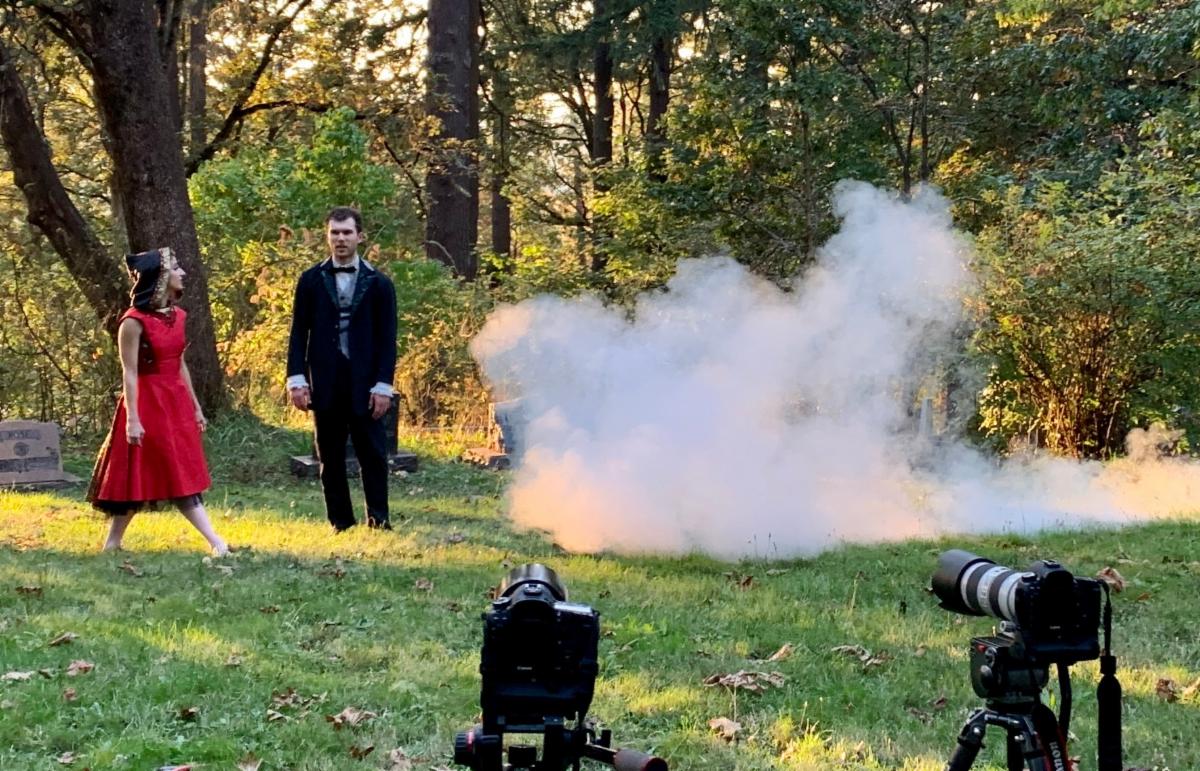
Charles Dickens and the Masonic Cemetery? How does that work? How about a newly produced version of the classic A Christmas Carol?
After receiving prior permission, Ballet Fantastique shot some footage in the cemetery, which will be included in an original ballet interpretation of the classic Christmas tale. The movie will be available online.
Set to a swinging 40’s jazz score by Halie Loren and narrated by Adam Goldthwaite, this all-new version by the dance company is being taped on location at iconic places in Eugene, including the Masonic Cemetery.
|
|
PLEASE VOTE
I'd like to take a moment to personally urge you to vote in the November election. There are important offices and issues at stake. It is crucial that you exercise your right to help determine your future.
- Oregon is a leader in the vote-by-mail movement, and all elections are by mail. By this time you should have received a ballot at your designated mailing address if you are registered to vote. You can return your ballot by mail, or find a drop box location on Oregon's site. Ballot drop box sites are open 18-20 days before Election Day, depending on your area.
- Wednesday, October 28, 2020 is the last day ballots should be mailed. After this date, ballots must be put into a drop box to assure they arrive in time.
- Ballots must be received by 8 p.m. on Election Day.
Your eNewsletter Editor
|
|
John Bredesen, Editor
Eugene Masonic Cemetery Association
|
|
|
Mission Statement
To restore, rehabilitate, maintain, interpret and operate the historic Eugene Masonic Cemetery and Hope Abbey Mausoleum as a cultural and natural resource for the community.
The cemetery is operated for the public benefit,
but it is private property.
(A 501(c)(3) non-profit organization)
|
|
|
|
|
|
|