|
In This Issue:
- Market Update: Farmers Focused on Demand & Carryover Stocks in Today's USDA Report
- Washington, D.C. Update
- RMTC: First 2024 RMTC Speaker Announced
- Photo from Rice Country
| |
Market Update: Farmers Focused on Demand and Carryover Stocks in Today’s USDA Report | |
|
It never ceases to amaze how quickly planting sneaks up each year, but we are officially underway for the new crop growing season. While we don’t have an official Crop Progress report from the USDA, it would show its first percentages in Texas and even Louisiana. On the other hand, California still has weeks to go before its first plantings, and they could be delayed even further if the wet spring weather continues. Ground work is underway where available, and expectations for a large crop are not hampering current price expectations in the long grain market.
Today’s USDA Supply/Demand Report (WASDE) is scheduled to be released at 12:05 pm ET. The February WASDE report lowered the 23-24 carryover stocks 1 million cwt to 23 million. The average price at $16 was unchanged. The main question in today’s report will be about demand and if carryover is lowered significantly. The report can be found here later today.
When looking at prices on the ground, pricing is firm in all markets except California medium grain. It is a truly rare day when we see U.S. #2 long grain milled rice going for the same price as U.S. #1 California medium grain, but here we are; both varieties are priced at $800 pmt. The return to a normal size crop of 500,000 acres in California has doubled the supply in a time when selling to the Middle East was a must. However, the logistical snarl resulting from the Houthi pirates has severely hampered Calrose distribution and therefore pricing. All that to say, we would caution any speculative medium grain plantings in the south this year.
Long grain prices remain firm both on the ground and in the export market. Rice in first hands in Texas is all but gone, while Louisiana remains just north of $18.50/cwt. Mississippi, Arkansas, and Missouri are all trading between $17.75-$18/cwt. To add more context to the situation to the price drop in California, it is difficult to even find a cash bid at $14/cwt over loan. Last year, cash prices were as high as $36/cwt over loan, and with several million cwt still in first hands in California with no current cash market, it will be a long summer for cash sellers.
Prices continue to be strong in Asia, with the most recent Indonesian tender finally finding a partner in Thailand. As a result, Thai prices bounced up about $10 pmt this week to $625 pmt, where Viet pricing is now hovering at $600 pmt. As for India, the elections are set for next month, and the Viet/Thai prices could look much different if it weren’t for the Indonesian purchases that have continued to breathe oxygen into the market. Indian rice export policy post-election has the power to deflate global prices or keep them afloat; we shall see. We would argue, however, that India’s G2G export exceptions actually help bring balance to the market and will be an aid to “breaking the fall” when the export ban is lifted.
The weekly USDA Export Sales report shows net sales of 84,600 MT this week, up 39% from the previous week, but down 4% from the prior 4-week average. Increases were primarily for Japan (17,900 MT), Mexico (15,400 MT), Haiti (13,500 MT), Guatemala (10,000 MT), and Honduras (10,000 MT). Exports of 101,600 MT were up 5% from the previous week and 12% from the prior 4-week average. The destinations were primarily to Panama (33,000 MT), Venezuela (27,500 MT), Japan (15,700 MT), Guatemala (7,200 MT), and Mexico (6,400 MT).
| |
|
Congress Passes First FY2024 Appropriations Package
This week, Congress passed a six-bill appropriations package containing the funding bills for both the Department of Agriculture (USDA) and the Environmental Protection Agency (EPA) for fiscal year (FY) 2024. The bill included about $26.3 billion in discretionary funding for USDA, which is roughly equal to the amount provided in FY2023. The bill also includes $1,000,000 for the Texas A&M AgriLife Extension Service for a project on water-smart rice in Texas. This project was requested by Rep. Michael McCaul (R-TX). For EPA, the bill includes $9.2 billion in funding, a $232 million decrease from the FY2023 level. It also directs EPA to consider the best available science when implementing regulations for pesticide licensing. It directs EPA to brief the Appropriations Committees on potential revisions to its pesticide rule regarding plant-incorporated protectants (PIPs). It also directed the EPA to brief the Appropriations Committees on how the Agency complies with the recent court decision on its chlorpyrifos rule. The bill passed out of the House on Wednesday. The Senate is expected to vote on the bill before a partial government shutdown begins on Saturday, March 9.
The bill text for the appropriations package can be found here. The explanatory report for USDA can be found here, and the explanatory report including EPA can be found here, with the EPA section beginning on page 34.
House Agriculture Committee Releases Report on Labor Policy Recommendations
On Thursday, the House Agriculture Committee’s bipartisan Agricultural Labor Working Group released its final report outlining policy proposals to address the workforce challenges facing the agricultural sector. The report follows the November release of the interim report which outlined the issues in industry the working group identified through stakeholder outreach conducted throughout 2023. Policy proposals recommended in the report include improvements in how the Adverse Effect Wage Rate is calculated, ways to streamline the H-2A temporary agricultural worker program’s application and review process, and a change to the H-2A program to make it available year-round. In addition, the report called for research on the H-2A program to better inform future policymaking.
A copy of the report can be found here and a copy of the interim report can be found here.
| |
RMTC: First 2024 RMTC Speaker Announced | 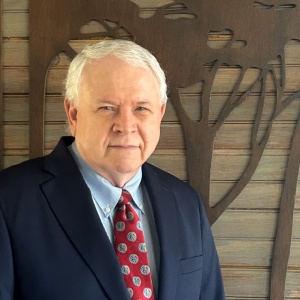 | |
Dennis DeLaughter:
What Could Possibly Go Wrong Now?
At last year’s Rice Market & Technology Convention, we asked the question: What could possibly go wrong? While we were right on many issues outside mainstream expectations, the last 12 months have seen some major changes in the world of rice that were not on anyone’s radar. That brings us to ask the question this year: What could possibly go wrong now?
This year’s presentation will review the past year, look at the present economic conditions facing U.S. rice producers, and check our radar screens once again to see what we may be missing in 2024 in the ever-changing world of rice.
About Dennis DeLaughter
Dennis DeLaughter, a professional farm manager, investment advisor, and commodity broker, operated and managed over 5000 acres of rice, corn, and wheat along the Texas Gulf Coast, southwest of Houston for over 40 years. He was a licensed floor trader on the Chicago Board of Trade and a frequent speaker at agri-business marketing meetings throughout the U.S. rice belt and the Midwest grain growing region. Specializing in commodity hedging and market analysis service for trading strategies, DeLaughter has served by appointment from the U.S. Secretary of Agriculture on the Agricultural Technical Advisory Committee during the Clinton, Bush, Obama, Trump, and Biden administrations. He is vice president of the Texas Rice Council and the former chairman of the US Rice Producers Association. A graduate of Texas A&M University, he holds an MBA from A&M with an undergraduate degree in Agricultural Economics.
| | |
|  |
Food & Agriculture
Regulatory & Policy Roundup
| | |
|
Grain: World Markets
& Trade
| | |
World Agricultural Production
| | |
|
June 4 - 6, 2024
Rice Market & Technology Convention
Cancun, Mexico
Registration
| | |
USRPA does not discriminate in its programs on the basis of race, color, national origin, gender identity, sexual orientation, religion, age, disability, political beliefs, or marital/family status. Persons who require alternative means for communication of information (such as Braille, large print, sign language interpreter or translation) should contact USRPA at 713-974-7423. |
| | | |