SEED & AGRONOMY
Keith Horton
Columbia Grain is happy to announce that a Seed & Agronomy section has been added to our website. This section can be accessed by selecting SEED & AGRONOMY in the main navigation on the Columbia Grain website or directly at https://columbiagrain.com/cgi-seed-agronomy/. This will give growers the opportunity to view what seed types and varieties are available in their area with descriptions of each variety that we offer. The regions are broken down by the Pacific Northwest, Montana, and North Dakota. It also has a Leadership section where the members of the seed team in each region have a short bio. The agronomy section will be evolving throughout the growing season and will provide producers real time information related to crop progress, disease pressures, and videos to help produce a successful crop and provide timely crop information.
|
| |
|
BARLEY
Ryan Statz, Merchant
| |
|
Barley remains extremely slow and lackluster in both the old and new crop. Declining malt demand, poor logistics, and burdensome supply has pressured market prices and demand of any kind. As shown in prior reports, returns for barley point towards being less than favorable and the undefined markets going forward will lead towards cautiousness. Undoubtedly, the increased pessimism will make malting barley acreage forecasting challenging to say the least. The market knows the premiums that the industry is capable of, but we also know the recent challenges the market is facing in regard to sluggish demand and lots of supply stemming from last years near record crop. |
| |
|
DURUM
Ryan Statz, Merchant
| |
|
Rumors of additional non-traditional durum continue to float into the market. Undoubtedly, the non-traditional supply has been the surprise of the market the last 6 months. What started as a trickle that many thought would end, hasn’t. In fact, it’s only poured out in bigger and bigger volumes. This has been extremely negative to North American prices. Simply put, to avoid huge carry-outs in North America, price is in desperation mode to find demand. Again, without surprise demand carry-outs are burdensome heading into a newly competitive landscape next year (thanks to the entrance of big Turkey & Russia volumes). Yes, there are dry pockets that exist in production areas throughout the world, but it is still early and the worry to cover hasn’t set in yet and likely wouldn’t until North American crops are planted, and the growing season sets in. |
| |
|
HARD RED
SPRING & WINTER WHEAT
Justin Beach, Merchant
| |
|
Unfortunately, we don’t have much good news to report. On the macro side global wheat values have been eviscerated as of late with Russia leading the charge lower to reported sub $200/MT levels. The rest of the world is chasing them lower. Unfortunately, Russian FOB vessels are cheaper than wheat delivered to our elevators in MT, ID, and WA. Inverses in KC wheat and the flattening of the Minneapolis carry are making new sales more attractive for commercial elevators if and when they can get barges or rail freight. Current interest rate levels are also further incenting elevators to flood cash markets. BNSF railroad performance has been very poor as of late and secondary rail is extremely expensive. We have been losing spring wheat business off the PNW lately to the Canadians as well. HRW export demand off the PNW has slowed as well. Most business is focused on the May-June windows and homes remain few and far between compared to demand levels seen a few years ago. It feels as if the markets job is to find demand currently as calendar spreads can only do so much to incent new cash sales. We believe this is a market that rallies should be rewarded and advise taking advantage of carries in deferred months when beginning a new crop marketing program however it feels like much of the emphasis will continue to be on big on farm old crop stocks. The market is largely focused on logistics and millers aren’t chomping at the bit to put more coverage on. They have been very patient in putting on additional coverage and largely are citing big on-farm stocks. We are hoping a weather market will provide selling opportunities as we move forward, and row crops continue to lose ability to buoy cash wheat prices. |
|
 |
|
Amending Hedge-To-Arrive (HTA) Contracts
“Inverted Market”
We covered Amending HTA contracts in a “Normal Carry Market in our last edition of the Newsletter, with the promise of discussing amending HTA contracts in an “Inverted Market”
As discussed in the last edition, I do prefer the term “amending” instead of “rolling” because we are changing, or amending, the original contract. We are amending the original contract to have new terms, mostly creating a new delivery period along with a price amendment. With that I wanted to look at some hypothetical Hedge-to-Arrive (HTA) contracts and how amending an original HTA contract would work in an “Inverted Market”
When you initially sell grain using a HTA you are locking in just the futures side of your cash contract, you will set your basis at some date in the future giving you your ultimate cash price. Let say today is March 8, 2024, and we see the below market structure – again this is a “Normal Carry Market” structure we are currently in, meaning the market will pay you more for your grain the further out the calendar you go. With that September 2025 futures are at a premium of 70 cents to September of 2024 in the below chart. Let’s say that you sell 5,000 bushels on a HTA contract using September 2025 futures and lock in $6.25
| |
|
| KWU4 | KWZ4 | KWH5 | KWK5 | KWN5 | KWU5
| | Futures Price | 5.55 | 5.75 | 5.95 | 6.15 | 6.20 | 6.25 | | |
|
Let’s say in 2 months from now the market structure has changed and the futures market is now “Inverted” meaning the nearby futures price is higher than the deferred futures price. If this were to happen, we could amend your original contract backwards from September of 2025 to September of 2024.
Let’s say the market structure now looks like this:
| |
|
| KWU4 | KWZ4 | KWH5 | KWK5 | KWN5 | KWU5
| | Futures Price | 5.55 | 5.30 | 5.10 | 4.95 | 4.90 | 4.85 | | |
|
What we are looking at is September 2024 is price at a 70-cent premium to September of 2025, the exact opposite to how the market was structured when you entered your September 2025 HTA back on March 8th. Looking at the above market structure you could amend you September 2025 HTA back to September of 2024 and add that “Inverted Spread” back to the original value of September 2025 HTA.
So in this example we could amend your September 2025 HTA that originally had a price of $6.25 backwards to September of 2024. The spread in this example of 70 cents will then be added to your original HTA value making your new September 2024 HTA value at $6.95 September 2024.0.
There is a cost to amending contracts, 2 cents per contract month is the costing structure. Given there are 5 contract months in this example we would have a costing of 10 cents to amend this contract under this example. This costing would be a separate line-item cost that would come off at the time of settlement of the contract.
Please be sure to reach out to your local buyer, merchandiser, or manager to go over all the options that we have in our Columbia Producer Solutions marketing platform. In the next issue of the newsletter, we will go over amending BASIS contracts in a “Normal Market Structure”.
| | |
|
SOYBEANS
Joe Foley, Merchant
| |
|
|
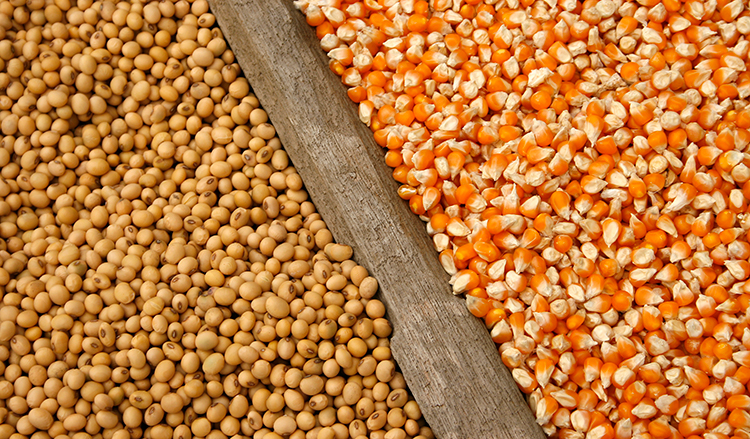
Soybean prices have been rangebound for the past two weeks, following the managed money (funds) increase in sales last week, and then some short covering this week. End of month profit taking and some shoring up of positions likely the main impetus. Fundamentals really haven’t changed all that much with Brazil approaching the 50pct mark in their nu crop harvest, and the Chinese still cautious in forward buying. Brazil cash, although well off their recent lows, still remains some 23.00/mt (63 cnts/bu) cheaper than U.S. soy (on a landed N. China basis) March thru May shipment.
Local observers in Brazil estimate they’ll export 13mmt of soy in March, up from 6.6mmt in February, consistent with the seasonal harvest advances. There does remain a wide range of estimates on the size of their crop this year, with projections anywhere from 141-156mmt. The USDA is on the high side of that range, and as such we are expecting a 2-3mmt lowering of that estimate in the march WASDE report.
Expect more choppy trading as we approach the march 1 stocks and prospective planting report (Thursday, March 28th this year), when the market will turn its attention to the corn vs. soy acreage mix and the ensuing U.S. planting weather conditions.
| |
|
CBOT corn futures have been rallying off their recent lows, up some 25cnts. Fund buying last week of 46,000 contracts was certainly the main driver as their record short has been trimmed down a bit. Both the farmer in the U.S. and in S. America have been understandably unimpressed with current prices so hedge pressure overall has been minimal. Export sales have been decent of late, with today’s weekly report showing 1.1mmt of new commitments.
Japan, Korea, Mexico and some Central American demand remain our primary customers. Notably absent from the mix is China, with only 1.8mmt of total purchases this year, down from 4.5mmt at this time last year, as they have been buying Ukraine corn of late. Their year on year buying deficit stands in sharp contrast to total U.S. export commitments which are up 8.5mmt or 28pct. Weather in Brazil and Argentina has been mostly favorable, allowing Brazil’s winter crop to get planted, and Argentina looks to start harvest in a few weeks. Their crop by most estimates is 20mmt larger than last year.
Argentina export premiums are very close to U.S. PNW values (landed to Korea) thru May but are discounted June forward. The market is still expecting a U.S. carryout this year (aug31 ending stocks) of nearly 2.2 billion bushels, followed by an even larger carryout the following year. Of course, the latter requires acres and yield with a lot of weather in between, but today’s current projections probably suggest at least some selling of rally opportunities.
|
| |
|
WHITE WHEAT
Steve Yorke, Merchant
| |
|
Another couple of weeks of continued bearish news has pushed white wheat prices below the six-dollar level for the first time in over a year. As we have mentioned in past newsletters the demand side has not picked up and with the size of crop, we have had the last two years we still have plenty of wheat to move before next harvest. Stocks are currently forecast to be over 50MBU and if exports remain strictly routine business, we will see that number grow which is not a bullish scenario. The exporter has been short and remains that way but all the business is for April and May, so they have time to buy in their short and the grower has plenty left to sell before another harvest arrives. Look for continued weakness across the wheat sector unless we see a major shift in demand or the weather changes for the worst. We usually see a few weather rallies in the months ahead but this year it will have to be major to make a significant difference in prices. As always have your orders in place and ask our buyers for advice on using the different marketing tools we offer. The next USDA report comes out on Friday so look on the CGI website for a full recap. |
| |
|
BEANS & PULSES
Matt Searcy, Merchant
| |
|
|
FIELD PEAS
Pea markets continue soft tones as domestic demand remains lackluster. India opening for import of yellow peas allowed for increased exports out of Canada, but USA logistics and railroad performance has prohibited much trade and not allowed upward movement in the grower price. Government tenders have been minimal and pet food buyer find themselves mainly covered through the 2023 crop year.
CHICKPEAS
Chickpeas seeing some spring demand as Mexico and India begin harvest. Information out of either region is tough to come by, but early reports show both areas heavily affected by drought and hot weather. Bean size expected to be smaller in both regions with a larger percentage of 8mm expected.
LENTILS
Lentil market remains rather confused on how to finalize 2023 crop, demand is very high, and many destinations remained uncovered from typical import numbers. High prices have slowed many buyers from putting additional summer demand on, but market remains unsure if that will change and if any stocks will be available in the circumstance they decide to check to buy. India continues to be very in tune to the market as appears they have a lot of uncovered demand for both current and new crop that they will look to fulfill.
DRY BEANS
Edible Bean markets have been mixed as of late with current crop USDA package and canning tenders buying sizeable volumes of Pintos, Navy bean and Kidney Beans. Export markets have largely been quiet as previously contracted shipments are received and Mexico winter harvest brings moderate relief to an otherwise extremely tight supply environment. New Crop grower contract prices have fallen as processor programs are filling up. A warm + dry start to spring in the northern plains should result in earlier planting, reducing risk of acres not getting in the ground.
|
| |
|
CANOLA
Sean Ferguson, Merchant
| |
|
|
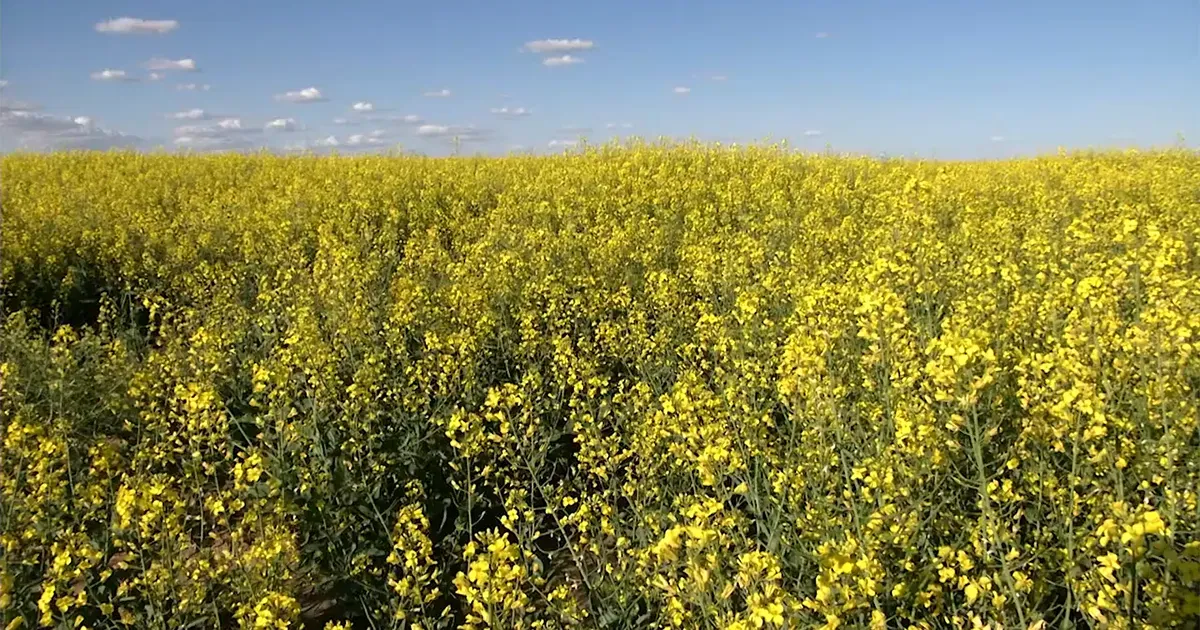
The canola market found a trace of support in the past couple days. Futures values broke past the $600 CAD/MT mark and continue to trade above that level of support. Talks of Chinese boats trading off the coast of Canada mixed with support from outside markets continue to fuel the uptrend in canola prices. Chicago oil is trading up roughly 1.7% in the May contract as of the morning of 3/7. Malaysian palm oil has also seen an uptick in prices, which has supported seed values globally. Despite lackluster export values, North American crush continues to crush record quantities – this will likely continue with new crush capacity coming online over the next few years.
StatsCan planted area estimates will be released next Monday, March 11. The trade is estimating a slight decrease compared to the 22.1 million acres seeding last year.
CAD/USD has been firmed over the past few days. The Bank of Canada kept its policy rate at 5%, whereas the USD has stayed strong over bets that the FED will keep rates the same as the US economy continues to exhibit strength.
|
| |
|
INTERNATIONAL
Wiley Wang, Merchant
| |
| |
|
We continue to see much aggressive pricings of black sea mid to low protein wheat, most of them now are at or under FOB USD 200 per mt. these directly compete against our HRW and SWW into SE Asian destinations. High protein high color spring wheat market are seeing heavy competition from Canadian CWRS; in some cases, they are USD 6 to 9/mt lower on FOB basis that get enhanced with a cheaper ocean freight to Asia as well.
There’re some continued corn demand coming to PNW for April and May as good alternatives to hedge against logistics risks. But the volume falls quick for June and July with Argentina productions begin to cut prices to get volume. Demand thus movement could be real challenge for these months if our prices are not adjusted accordingly.
Demand for oilseeds off PNW is low when crushers in far east are focusing on hi-pro Brazilian soybeans. Overall feed demands and prices are stabilized in China; China domestic corn prices rebounded from later Jan to end of Feb and now is fading. We need to see longer term improvement before we see now buying interests from there.
Lastly, ocean freight from North Pacific to Asia has been on the rise, driven by stronger demand of other bulk commodities such as coal. This has been cut into our prices by another 3 to 4/mt lately.
|
| | | |