|
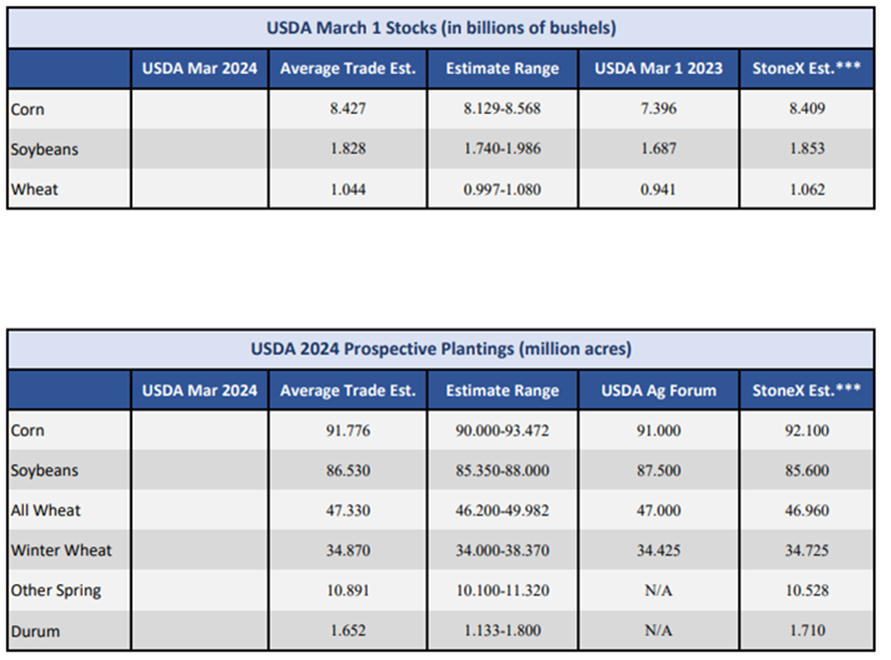
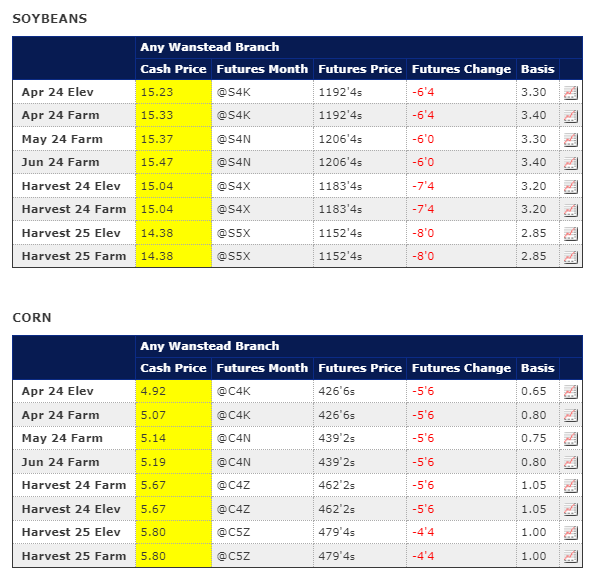
The fear is real today with the USDA data dump tomorrow looming. The trade has priced in increases in old crop stocks of corn, beans, and wheat (as of March 1, 2024) versus stock levels reported a year earlier. The big wild card in stocks numbers are always the USDA “projections” of how much grain has been fed in the last quarter, as exports, soybean crushing, and corn for ethanol numbers are well known from a year to date perspective. On yesterdays and todays price action the grains did take out some downside support, especially in corn. Karen Braun summarized the corn situation saying, "CBOT corn futures have not reacted poorly to the March stocks & acres report since 2019. March 1 corn stocks are on a 4-year streak of coming in lighter than expectations, and that followed 5 years of heavier stocks. Trade bias is mixed on acreage, but misses have been large". Although we have taken out almost 2.6% of the spot corn price in two days, we have unfortunately tested the water lower than this before, and may do so again depending on the data that does come out. We are still almost 70 cents off of our lows on spot soybeans, so the loss potential is there for sure, as is the potential for gains. The trouble with predicting the USDA reports is that we only have access to what information the trade expects, but the USDA is known to throw some surprises into the mix.
Private consultancy AgroConsult increased their 2023/24 Brazilian soybean production estimate from 152.2 to 156.5 MMT today following a crop tour; they have planted acreage at 46.4 million hectares (114.65 mln acres), 1.2 mln ha (almost three million ac) more than the current Conab projection.
The EIA Report released this morning showed that commercial crude oil stocks are up 3.2 million barrels to 448.2 million, while ethanol stocks are up 0.1 million barrels to 26.1 million. Ethanol production is up 7 thousand barrels per day to 1,054 thousand. Estimated marketing year to date corn use for ethanol totals 3.030 billion bushels, up 143 million bushels or 4.9% from the previous year's pace, and exceeding the seasonal pace needed to hit USDA's target by 95 million bushels.
El Nino near its end according to the Australia Weather Bureau as the month from Feb. 21 to March 20, 2024 featured sea surface temperatures in the equatorial Pacific cool down by a notable 0.5 to 1.5 degrees Celsius. "Climate models indicate sea surface temperatures in the central tropical Pacific are expected to return to ENSO-neutral later in autumn 2024." (A reminder that autumn in Australia comprises the months of March, April and May -- which are spring months in the Northern Hemisphere.) "While three out of seven international models are predicting a La Nina by late (southern hemisphere) winter, El Nino and La Nina predictions made in early (Southern Hemisphere) autumn tend to have lower accuracy than predictions made at other times of the year," the agency comment noted. "This means that current forecasts of the ENSO state beyond May should be used with caution. ENSO forecasts have historically had their lowest skill for forecasts issued in April, with skill increasing from May."
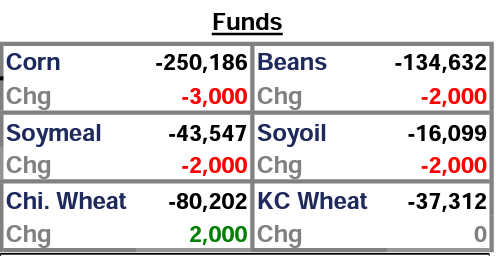
Funds were thought to have been mixed today with corn and beans sellers and wheat a buyer.
|