|
Sexual Abuse: Healing the Victim, Helping the Offender
Dear Subscriber,
In the aftermath of sexual abuse, there are countless parties that need healing and guidance. The victim and family members are individuals that instantly come to mind, and there is no dispute they require all due attention and care to heal. However, rehabilitating the offender is also an important piece of the process. Rehabilitating the offender should be given the same careful consideration as the other involved parties, because rehabilitating the offender acts as
prevention for future incidents. This month's newsletter focuses on the prevention of sexual abuse instances, and how to heal all individuals involved in the aftermath of abuse. We have
interviewed esteemed clinical professor and forensic psychologist, Dr. Apryl Alexander, as well as
interviewed the president of MASOC, a coalition which treats and intervenes in the lives of sexually abusive youth. Lastly, we have included an excerpt from our newest publication-
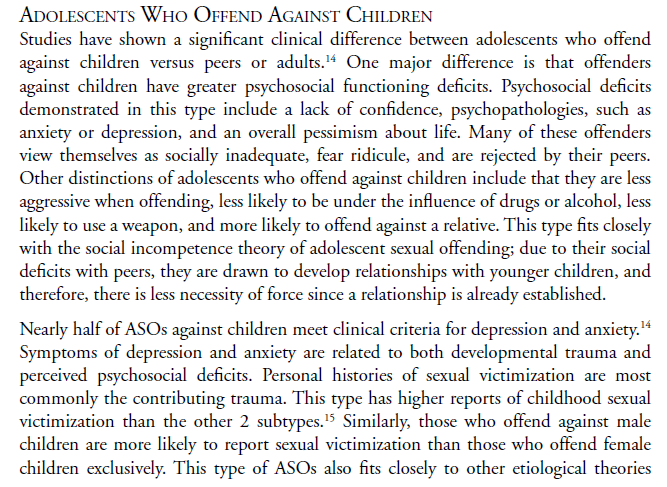
Mental Health Issues of Child Maltreatment. We hope this edition of the newsletter lends enlightenment to these complex issues.
Warm regards,
Shaila Naughton
and the STM Learning staff
|
|
Interview with:
Apryl A. Alexander, Psy.D.
Assistant Clinical Professor, Auburn University
Apryl Alexander received a B.S. in Psychology from Virginia Tech in 2005 and a M.S. from Radford University in 2007. She also received her M.S. and Psy.D. in Clinical Psychology from the Florida Institute of Technology, with specializations in forensic psychology and child and family therapy.
- Are there any common trends you see among sexual abuse victims/survivors?
Although it may appear to be avoiding the question-The most common trend among sexual abuse survivors is that each victim reacts differently to abuse. Victims of sexual abuse may experience a range of symptoms following their disclosure of abuse. While some victims appear to be asymptomatic, others exhibit severe, long-lasting psychological and behavioral difficulties. Victims may experience a wide range of symptoms and disorders which may include depression, anxiety, oppositional behaviors and anger, sexualized behaviors, post-traumatic stress, and suicidal ideation. Sexual abuse victims also differ in their disclosure of their abuse. Researchers have estimated that approximately 1 in 4 women and 1 in 8 males have been sexually abused-and those are likely underestimates due to non-disclosure of their abuse to authorities. Fear, embarrassment, shame, guilt, and societal stigma are often reasons why victims I've worked with have been reluctant to discuss their abuse. They are often worried that individuals would not believe them or would blame them for the abuse-both which have been visible in the mainstream media with victims of sexual assault.
- In treating sex offenders themselves, what are some vital skills to teach to ensure their success?
Treatment is the essential element in ensuring successful re-integration into the community. Sex offenders who undergo treatment re-offend at a much lower rate than those who go untreated. There are evidence-based treatment models for sex offenders, including Cognitive-Behavioral Therapy and the Good Lives Model. Cognitive-Behavioral Therapy focuses on having the offender deconstruct their offense to minor details surrounding the offense and examining the thoughts, feelings, and behaviors that led to the offense, in order to find ways to prevent themselves from acting out sexually when experiencing those same thoughts and feelings in the future. The Good Lives Model is a strength-based approach to offender rehabilitation, and is therefore premised on the idea that we need to build capabilities and strengths in people, in order to reduce their risk of reoffending. Furthermore, most sex offender treatment programs have the offender develop a detailed safety plan based on the material learned through those two treatment models to reduce their likelihood of re-offending.
- Sexual abuse has been linked to far-reaching mental and emotional problems later in the victim's life- can these be halted and prevented? How?
Early assessment and treatment following sexual abuse is critical. Many agencies offer services for child victims and their families, including Child Advocacy Centers (CAC) located throughout the United States. As discussed previously, symptoms can vary from person to person, and symptom presentation can vary by age. However, early treatment can help target these symptoms and develop healthy coping skills for dealing with trauma-related symptoms. For adult victims of childhood sexual abuse who have not received treatment, it is never too late. Many agencies have mental health practitioners who can work with adult survivors or offer adult survivor groups to discuss residual problems related to sexual abuse including relationship and work difficulties, post-traumatic stress symptoms, and even parenting problems. Sexual abuse treatment, including a model called Trauma-Focused Cognitive Behavioral Therapy (TF-CBT), has shown great results in reducing psychological and emotional problems related to sexual abuse.
- Do you have any standard tips for parents in keeping their children safe from sexual abuse?
Sex education should be provided to children throughout their childhood and adolescence. As soon as children begin daycare, school or other activities, they should learn about appropriate boundaries (e.g., "good touch/bad touch," surprises vs. secrets, etc.) and learn to discuss inappropriate actions by other children and adults with a trusted caregiver or adult. Additionally, I also believe it is important for children to know appropriate terminology for body parts, in case they do have to report an incident. I love this Off Limits worksheet for children as a guideline for what parents should discuss with their young children. As children become older, more traditional sex education should be provided by caregivers. Parents should also know who is around their children and adolescents. A common myth is that perpetrators of sexual abuse are strangers. However, most sexual assaults are committed by individuals we know-family members, acquaintances, and other adult figures (e.g., coaches, teachers). Lastly, internet/technology safety has increasingly become a concern for parents within the last decade. Please discuss appropriate internet safety with your teens and monitor their use of chatrooms, instant messenger, social media (Facebook, Twitter, Snapchat), and text messages. Creating a safe, non-judgmental environment for your children to talk to you about difficult topics will increase their likelihood of bringing their concerns to you. |
|
Interview with:
MASOC: Massachusetts Adolescent Sex Offender Coalition
(Contributed by: Steven Bengis, MASOC President)
- Can you tell us the primary mission of MASOC?
Founded in 1988, MASOC is an organization of professionals dedicated to stopping sexual violence through early intervention with children and youth with problematic and/or abusing/offending sexual behaviors. MASOC provides education for professionals (including an annual national conference that attracts over 1400 participants during a three-day event). as well as advocacy with both the Executive and Legislative branches to support public policy that is: evidence and research-based; will truly make the community safer; and allow the vast majority of young people who can learn to live abuse-free lives to receive appropriate management and treatment.
- Can you outline some general 'early warning signs' of a youth who may need some intervention and help?
While there isn't any reliable research that can predict youth who have never offended and will do so, from those with the same behaviors who will not, there are both universal and individual interventions that can help protect children/youth from crossing the line to problematic/abusive behaviors. All youth require educational opportunities that include, but are not limited to, topics like: consent, beliefs and thinking errors about sex, and how to manage fantasies, feelings, and impulses (of all kinds). Including these topics as part of victim-treatment for male victims of sexual abuse (in therapy at the appropriate time) as a preventive measure may in many cases prove helpful. Further, youth who are overly engaged with pornography, engage in a lot of sexual talk, have an anti-social peer group and/or are isolated, and/or are having difficulty in school would also benefit from counseling support that is not solely directed at sexual issues but can also address them. But these behaviors are only risk factors and not predictors of future behavior, therefore, early intervention falls more in the category of initiating protective factors as prevention.
- What, if any, are some general misconceptions about sexually abusive youth and children?
Children and adolescents are not little adults. The myth that "once an offender, always an offender" (while not even true for adults) is entirely inappropriate for children with problematic and/or abusive/offending sexual behavior. Recidivism rates for youth who have abused range from 7-16% and those receiving proper management/treatment are far more likely to live abuse-free lives than they are to re-engage in sexually problematic/abusive behavior. Crafting interventions that are developmentally appropriate, recognize that risk for children/youth is contextual (i.e., risk resides both in the environment as well as in the individual child/youth), and focus management resources on the most dangerous youth who require more containment and intense supervision rather than relying on registration and public notice to keep the community safe, provides safety for the community and hope for the families and the children/youth whose behaviors must be stopped. The good news is that far more children and youth will not re-offend sexually than those who will and most male victims who have been abused will not become abusers themselves.
- How can families, teachers, and guardians prevent sexually abusive behavior?
First and foremost, it is important for adult surrounding children to be comfortable talking about this subject. It means educating ourselves and each other about healthy sexual development in children and youth. We should know what is normative for each age group so that as a child develops, we can see where something is of concern or problematic. Children and teens need to be able to explore their own bodies and will be curious about the bodies of others. So talking to your child and teen and letting them know that you are available to them is critical. Be "askable"! Then if they have questions or they are concerned about what is happening in their lives or if they have been harmed sexually, the "askable" adult is someone they can turn to. There are also policies and procedures that organizations can take on to make organizations safer for children. Guardians and families can take the opportunity to ask about child safety policies when considering sports programs, summer camps or other child centered activities.
- Is this type of behavior more often a result from the child's environment, or is it typically a mental or psychiatric problem from birth?
Sexually problematic/abusive behaviors are always a function of the interface between the individual and the environment. Children/youth are not born to exhibit any behavior albeit they may be born with a range of disabilities, i.e., neurological deficits, learning disabilities, risk factors for mental health, etc. Over time, everyone learns to address inner "states" through a variety of behaviors. Children who are traumatized (physically, sexually or emotionally abused), who are exposed to pornography at an early age, who are chronologically teens but developmentally children (and therefore may see children as their peers), may engage in problematic/abusive behaviors as a way of coping with their lives. Most importantly, regardless with what vulnerabilities a child is born or what horrible life events they have experienced, there are no direct causal connections to any behaviors. These experiences are risk factors not behavioral predictors. Some children/youth with the exact same profiles go on to abuse/offend, others do not. The different trajectories are complex, but it is clear that supportive adults, early intervention, and/or appropriate treatment can certainly help to prevent a sexually abusive trajectory from taking place.
|
|
|
|
|
Featured Publication
Mental Health Issues of Child Maltreatment
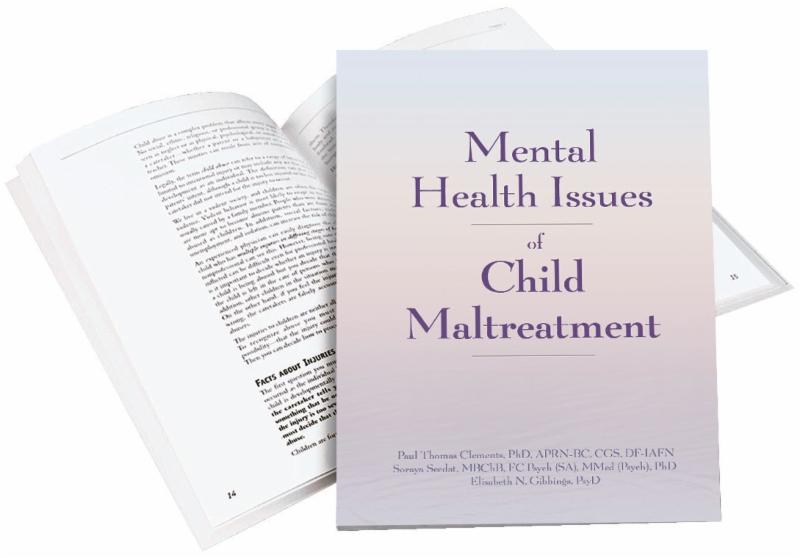
Mental Health Issues of Child Maltreatment offers a wealth of contemporary knowledge on the complex manifestations of developmental trauma and child maltreatment. Examining these issues from a multidisciplinary viewpoint, this text provides the most up-to-date knowledge on the causes and consequences of childhood trauma. The developmental perspective of this volume provides insight into the frequently confusing clinical manifestations of trauma in children exposed to violence. Practical discussions of assessment and intervention for children of different ages and in various systems (eg, school, child welfare, juvenile justice) are included.
|
|