MAP Introduces

Zoning Reform Stories and Studies:

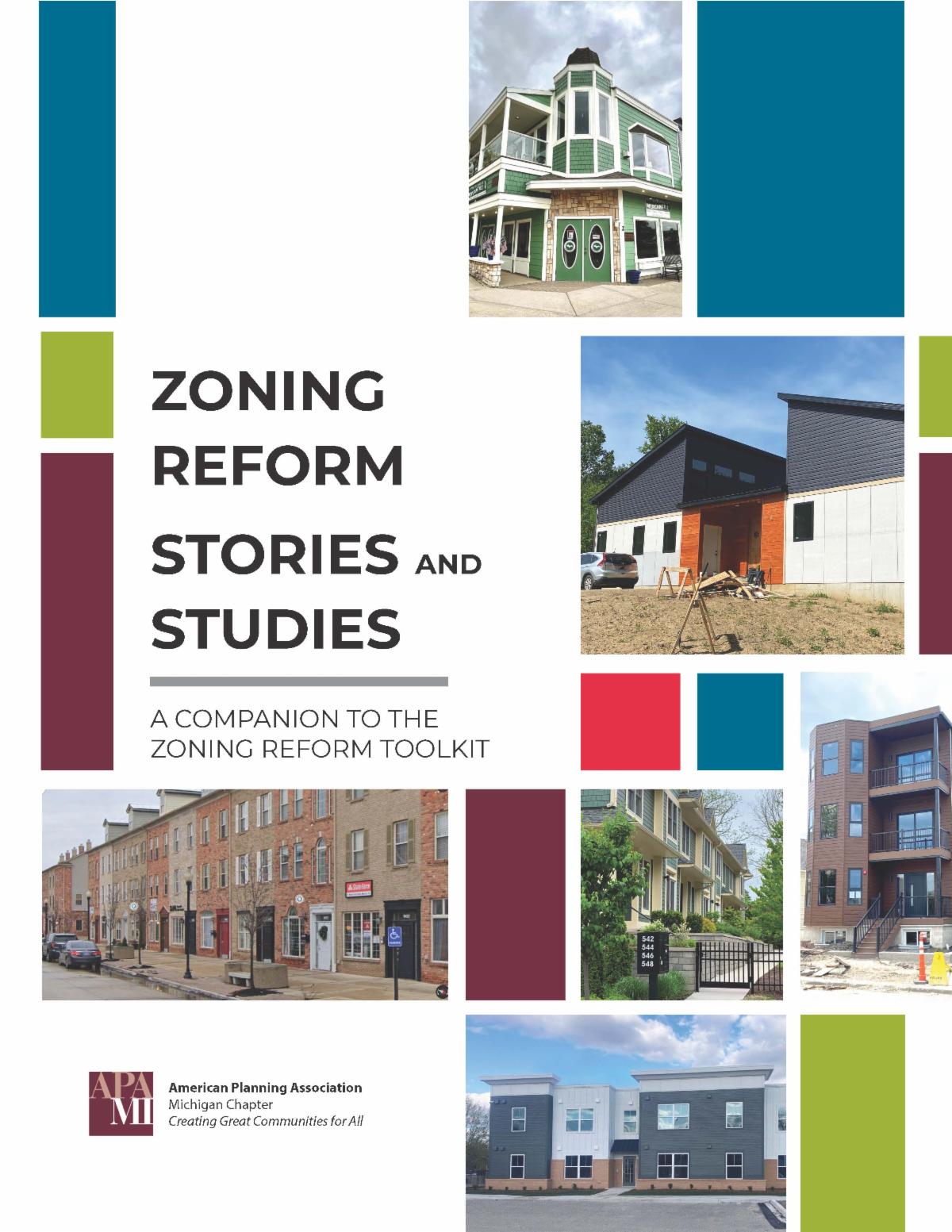
A Companion to the Zoning Reform Toolkit

“Best practices are great, and this Toolkit has awesome ideas in it. But my Commission / Board / Council needs to know: who has done this, and how did it go?


This was the question MAP heard from all over Michigan when we asked communities how we could support them in using our 2022 Zoning Reform Toolkit: 15 Tools to Increase Housing Choice and Supply. And we get it: every community IS different, and theory DOESN’T always translate directly to application. Honestly, we really wanted to know the answer to the question, too. 


As the organization for planning and planners, we are uniquely positioned to find out, and we decided to do it in the most straightforward way possible: By asking. Planners’ voices are at the heart of Zoning Reform Stories and Studies: planning staff, planning commissioners, municipal managers, zoning administrators, and even an elected official or two from 22 communities sat down with MAP and talked frankly, seriously, and technically about housing in their communities. We asked them all the same basic questions: Is housing getting built in your community? What does your planning and zoning say about housing? What’s the public conversation like? What other resources are needed? We followed those basic questions with a deep  conversation with each city, village, or township.

The result is a rich tapestry of the “housing stories” of communities across the state. We worked hard to include examples that every community in Michigan could relate to, across geographic regions, municipality types, growth benchmarks, and engagement in reform activity. Together, they illustrate common challenges: public and private development capacity are both well short of what’s needed; costs were bad before and now are nearly insurmountable; both formal and informal deference to the force of NIMBY is stunningly pervasive. Collectively they also paint a vibrant and intricate picture of tailored solutions to those challenges, each grown from their own confluence of land and history and people. Our deepest hope for this document is for our Michigan planners to know and feel that we are in the company of each other as we do this work. 


But we’re planners, so there’s data too. 


The report includes a thematic analysis of the interview responses, which were coded to pull key findings like those mentioned above out of the qualitative data. We conducted a survey at the start of the project to find out which of the 15 tools in the Toolkit were being used and by whom, and we took a deep dive into the responses from over 100 communities.  


Zoning Reform Stories and Studies: A Companion to the Zoning Reform Toolkit is available in pdf at MAP’s website. It’s the latest in our collection of housing resources that includes the Toolkit itself; APA’s Housing Accelerator Playbook; and our Housing in Four Parts webinar series. Print orders are available by visiting MAP's bookstore.


The Zoning Reform Toolkit: 15 Tools for Housing Choice and Supply and Zoning Reform Stories and Studies: A Companion Guide were created with funding from the Michigan State Housing and Development Authority to address the state’s housing needs through local regulatory and process reform. Both projects are intended to support the goals of Michigan’s first-ever Statewide Housing Plan, published by MSHDA in 2022. MAP recognizes and celebrates MSDHA’s forward-thinking approach planning for housing. 


Among the Next Steps section for action items included in the Toolkit is a Zoning Atlas, a compiled interactive map showing the housing-related zoning regulations of each community in a consistent and accessible format. MAP just completed a pilot Atlas in three West Michigan counties with funding from the Michigan Economic Development Corporation, the University of Michigan Taubman Pressing Matters program, and Kent County American Rescue Plan Act funds. We are currently seeking opportunities to expand its coverage, and one goal of the Stories and Studies project was to identify the ways an Atlas could help serve the needs named in the interview series. It certainly did! Stay tuned to learn more as MAP launches the West Michigan Zoning Atlas in the coming weeks.