Lyme Disease Mimics Alzheimer's by Dr. Murray Susser

A story of one man's victory over leukemia only to face a more challenging disease  
 

Lyme Disease Mimics Alzheimer's

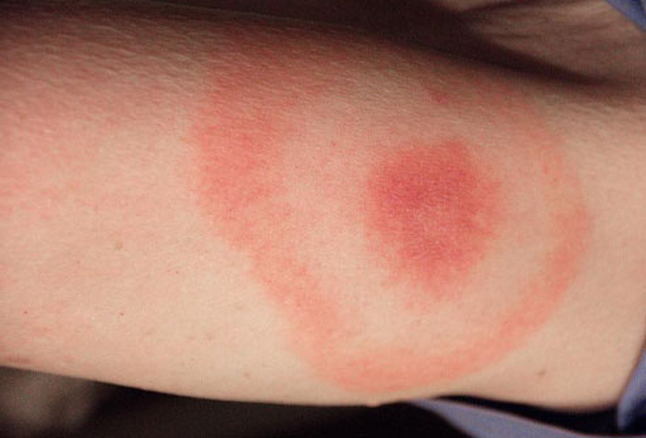
Lyme Disease Bullseye Rash courtesy CDC
Bullseye rash from Lyme Disease-infected tick
Courtesy CDC


Dear Friends, 
 
 
Sandra G. Boodman of The Washington Post recently reported about Richard McGhee. It was his time to celebrate. A retired case officer for the Defense Intelligence Agency, he had spent six months in a clinical trial at MD Anderson Cancer Center in Houston battling leukemia with experimental chemotherapy. The results were phenomenal. The leukemia had completely disappeared!
 
But nine months later his body was failing. Now moodiness and delusion ruled his mind. He had difficulty walking, developed tremors, and became incontinent. A particularly aggressive form of Alzheimer's was suspected, and if so, he would not have long to live.
 
McGhee felt totally exhausted and just wanted to sleep all of the time.
 
Unable to walk without assistance, he went to his internist who sent him to the emergency room. An MRI and a CT revealed nothing. Normal pressure hydrocephalus (an accumulation of fluid in the brain) was suggested. After an examination, Dr. Williams, director of the hydrocephalus center at Sinai Hospital, concluded that McGhee lacked certain telltale signs of the condition. However, there remained the possibility, though quite remote, of Creutzfeldt-Jakob disease - rapid mental decline and death within a year.
 
Dr. Williams ordered new blood tests and a spinal tap to see if there was evidence of the suspected Creutzfeldt-Jakob disease or if the cancer had returned. Results were negative for Creutzfeldt-Jakob disease. However, some infection and inflammation appeared in the spinal fluid. He applied the differential diagnosis process in which doctors systematically weigh the possibility of one disease against others based upon symptoms and test results. This led to the discovery.


Richard McGhee courtesy Richard McGhee
Richard McGhee
Courtesy Richard McGhee

McGhee had elevated antibodies to Borrelia burgdorferi, the bacteria that causes Lyme disease. While something else might also be wrong, the presence of Lyme meningoencephalitis, a bacterial infection of the nervous system occurring after Lyme exposure, required immediate aggressive treatment with antibiotics.
 
In spring and summer the tiny ticks that carry Lyme disease appear. While most people will see a bullseye rash at the point of the tick's bite, 20% do not. McGhee cannot remember any indication of a tick bite.
 
He is now 81 and has made a full recovery. What might have happened to McGhee if no one had diagnosed the Lyme disease? Thankfully there is no need to ponder.
 
         Dr. Susser is acutely aware of Lyme disease and the conditions it can mimic. He specializes in attentive, personal care of his patient. He makes his diagnosis, whatever the condition,
based upon listening to his patient's description of health concerns, interpreting the specific lab test results, and applying his many years of experience.
 
Make an appointment to see Dr. Susser today.

 
                   With your good health in mind,
                   Murray Susser M.D.


If you would like to make an appointment or to just ask Dr. Susser a question, please ...


Murray Susser, MD - (310) 479-8909 - E-mail -  Website

Copyright © 2016. All Rights Reserved.