|
Missouri State Capitol Building
201 W. Capitol Ave., Room 329
Jefferson City, Missouri 65101
(573) 751-6607
Contact: Tom Hoppe, Chief of Staff
Zac Sweets, Legislative Director
Zac.Sweets@senate.mo.gov
District Office
P.O. Box 480572
Kansas City, Missouri 64114
(816) 942-2767
|
|
Truly Agreed and Finally Passed Legislation
|
|
When a piece of legislation passes through both the Missouri House of Representatives and the Missouri Senate it is termed "truly agreed and finally passed". The bill is then sent to the Governor's desk for one of several options.
Options by the
Missouri Governor on
Pending Legislation
1. The bill is signed into law
2. The bill is vetoed and sent back to the chamber of origination with the Governor's objections. The General Assembly has an opportunity to override the Governor's objections during session if it is still in or in "Veto Session" in September. Overriding the Governor's objections takes a vote of 2/3 of both chambers, 109 House members and 23 Senators.
3. The bill sits on the Governor's desk with no action, and becomes law. In some systems of government inaction on measures before the chief executive during some periods results in a "pocket veto" where the measure fails to become law. In Missouri, the Governor has until 45 days following the official adjournment day of the legislature, to take action on bills. If the Governor takes no action, the pending measure becomes law as if it had been signed.
Effective Dates of
New Legislation
Following the adjournment of the General Assembly bill that were passed go into effect after 90 days, or August 28th.
Legislation has the ability to take effect prior to the August 28th effective date, in some instances immediately after having been signed into law. However, such effective dates require a clause (emergency clause) written into the legislation and a separate vote by lawmakers to adopt such clause.
To view a complete listing of all measures which have been Truly Agreed and Finally Passed
Additionally, to see a listing of bills that the Governor has already taken action on,
visit this link.
A handful of bills that have already received actions from the Governor are highlighted below:
- SB 12 - Modifies provisions relating to agriculture [Signed]
- SB 19 - Creates a new method of allocating corporate income between states for tax purposes [Signed]
- SB 24 - Modifies provisions of law relating to the TANF program and SNAP
- Legislature voted to override Governor's veto
- SB 149 - Creates state and local sales and use tax exemptions for data storage centers [Signed]
- SB 239 - Creates a statutory cause of action for damages against health care providers [Signed]
- HB 150 - Modifies the duration of unemployment compensation, the method to pay federal advances, and raises the fund trigger causing contribution rate reduction
- House adopted motion to override Governor's veto
A complete list of bills that have already received a veto or signature from the Governor can be found
here.
|
|
Energy Policy Sees Little Movement in 2015 Session
|
This session I had filed
Senate Bill 47
which set out to prohibit planned communities, like homeowner associations, from outright barring Missouri citizens from installing solar energy systems.
Despite receiving a hearing in the Senate committee on Commerce, Consumer Protection, Energy and the Environment in late March, SB 47 never made its way to the Senate floor.
Senate Bill 47 would have established a balance between the rights of citizens to become energy independent while allowing the Home Owners Association to establish reasonable regulations for installed systems.
Solar energy system installation disputes have found their way into court rooms around the state. This session my office has received numerous phone calls and emails from people all across Missouri requesting immediate action.
I intend to re-introduce SB47 next legislative session.
The continuing saga at the Public Service Comission between electricity consumers and producers has once again bottled up any movement of energy policy.
|
|
Cutting Unemployment Benefits
|
In 2013 Missouri was in the company of states with the shortest amount of time one could receive unemployment benefits. Unless the Governor's veto is sustained, the state's unemployment benefits eligibility will be reduced to exactly half of the national average.
House Bill 150 changes the maximum length of time unemployment benefits are offered whenever the state's unemployment rate is below 6%. The maximum length was reduced from 20 weeks of unemployment to 13 weeks.
In his veto letter Governor Nixon held that the legislation sought to "solve a nonexistent problem" as proponents boasted large savings to the state despite only having a third of Missourians applying and receiving unemployment benefits.
Despite the Governor's objections the bill was overridden in the House but no further action was taken up by the Senate.
Legal opinions are now being offered as to whether the veto override vote can be taken in September veto session since the veto was not issued in the last week of session. |
The Temporary Assistance for Needy Families program, or TANF, provides federal cash benefits to low-income parents with children under 18 years old. A little over 73,000 Missourians receive TANF.
Under TANF, families are able to receive a lifetime amount of $320 per month for a maximum of 60 months. Senate Bill 24 has now reduced both of those to $292 per month for a maximum of 45 months.
The two chambers were able to come to a compromise on the reduction as the Senate fought for 48 months while the House sought 30 months.
Along with cuts the bill also establishes new requirement for those receiving benefits.
Recipients will now be required to sign a "personal responsibility plan" to demonstrate that they are participating in work activity. Senate Bill 24 will also utilize 2% of its savings from the above cuts to fund alternatives to abortion programs and programs that encourage "healthy marriages" and "responsible fatherhood".
This legislation will end benefits for an estimated 6,310 children in the state. About 2/3 of all TANF recipients are children.
Senate Bill 24 reinstates work requirements for those relying on SNAP (Supplemental Nutrition Assistance Program) benefits.
Governor Nixon issued a veto and called the bill "mean-spirited and just plain wrong" but the veto was overridden by the General Assembly during the regular session. |
|
General Assembly Passes Tort Reform
|

The Senate overwhelmingly passed Senate Bill 239, an act that sets medical malpractice limits in the state.
In a 28 to 2 vote the Senate sent the House of Representatives SB 239 which would also receive their approval in a 125 to 27 vote.
The bill creates cause of action for damages against health care providers for personal injury or death resulting from the rendering of or failure to render health services.
The limits are now set at $400,000 in noneconomic damages for personal injury, $700,000 in noneconomic damages for a catastrophic personal injury or death. A COLA provision was added that would increase the limitations by 1.7% each year.
Senate Bill 239's new limits are $50,000 more than those set in 2005. However, the constitutionality of this bill remains in question as the Missouri Supreme Court overturned the previous limits just three years prior.
In 2012 the Missouri Supreme Court overturned the $350,000 limits holding that restrictions on damages were a violation of the sixth amendment, the right to a jury trial.
|
| Transportation Funding Shortfall Comming in 2017 |
Failure to pass the gas tax increase of 2 cents will lead to a transportation funding shortfall which will cost Missouri federal Highway dollars in 2017 totaling $140 million.

|
|
Plan on Taking a Trip to Jefferson City?
|
If you plan on making a visit to Jefferson City in the coming months please consider taking a tour of your state capitol building, the Governor's Mansion, or the Supreme Court of our state. Reservations for any of these tours should be made in advance as spots tend to fill up quickly especially in the months January through May while the legislature is in session.
Missouri State Parks maintains an online platform and excellent resource for Missouri residents and tourists to visit prior to their trip to our state capital.
For tours of the Missouri State Capitol, Governor's Mansion or the Historic Jefferson Landing
please visit this site.
|
|
 |
|
The end of every session plays out like a Shake-speare sonnet. There exists the proposition of a problem, the turn and ultimate resolution.

By its very nature, the formation of law is the management of conflict. Conflict is, and has always been, an inherent component of the legislative process.
In rare instances, this struggle is existential and holds no resolution. The minority members of each legislative chamber must cautiously determine which issues fall into this category. Failing to do, paralysis creeps into the legislative process; look no further than Washington D.C.
The Missouri General Assembly faced such an existential conflict the last week of session when Senate Republicans forced a vote on HB 116, commonly referred to by conservative special interests as "Right to Work".
Right-to-work laws prohibit payment of union dues or fees as a condition of employment. These laws create a "free-rider" problem, in which non-union employees benefit from collective bargaining without paying union dues. Right-to-work laws cripple labor unions and, in the process, damage middle class workers. Right-To-Work laws are wrong for working families and wrong for Missouri.
The House passed Right-To-Work with 92 yes votes, 17 votes short of the necessary number to override the Governor's veto. The final senate vote was 21-13, with four Republicans joining Democrats in opposition, 2 votes short of an override.
When the Republicans brought Right-To-Work to the Senate floor, they didn't allow any Senator, other than the bill sponsor, to offer amendments. We weren't given the chance to make the bill better; no chance for negotiation in a legislative body expressly designed to foster compromise. Then, after a few hours of debate, the Republicans used the "nuclear option."
A previous question (PQ) motion, referred to as the "nuclear option", cuts off debate by a majority vote. The PQ is a tactic often used in the House but has been exercised very rarely in the Senate.

Historically, using a PQ to end debate on legislation has had disastrous results for the decorum of the Senate.
From 1973 until the Democrats lost control of the Missouri Senate in 2001, no bill became law by utilization of the Previous Question. During that time, the motion was twice used when a Senator offered an amendment and subsequently left the building.
The other instance, SB 820 (Busing, 1982) was passed by means of a PQ only to be withdrawn two weeks after that PQ motion carried. In all three cases, the PQ was not the mechanism used to pass the legislation.
By comparison, over the course of 28 years (from 1973 until 2001) the Democratic Majority never used the PQ as a means to truly agree and finally pass legislation. However, over the last 14 years, the Republican majority has used the PQ to ultimately pass 9 highly controversial, partisan bills.
George Washington once told Thomas Jefferson that the Senate was the saucer to cool the hot tea from the House. Free and fair debate is the foundation of a Senator's equality. No issue should rise above the institution.
After the Republicans didn't allow amendments to be offered on Right-To-Work, they used the nuclear option to abruptly end debate, the immediate result was a functional shutdown of the Missouri Senate. In the end, the forced passage of Right-To-Work killed 24 conference committee reports and 148 house bills. Both Democrats and Republicans lost priorities due to the leadership decision to
use the nuclear option.
|
|
| Catherine Schuyler sets fire to her fields |
During the American Revolution, Catherine Schuyler, wife of Major General Phillip Schuyler, set fire to the wheat fields of the Schuyler estate to keep the British from feeding their army. We set fire to our own legislation in order to preserve the senate as an institution. Sometimes drastic measures are necessary to defend our Republic.
What does this mean going forward?
The answer is still uncertain. The resistance will continue until we come to an understanding as a body. In my opinion, only a change in Senate rules or leadership has the potential to thaw this nuclear winter.
###
During the interim, our office will continue to provide world-class constituent services for citizens of the 7th district. If you have any questions or would like more information on these or any other bill summaries please do not hesitate to contact us.
It is an honor to serve you in Jefferson City.
Thank you for reading.
|
|
State Appropriations to the
Kansas City Area
|
The only constitutional obligation performed by the Missouri General Assembly each
 year is the appropriation of state funds to various state expenditures.
Below you will find all state appropriations for the Kansas City area outlined for the 2016 fiscal year.
| Operating Budget |
Amount |
| Foundation Formula |
$1,205,010,365 |
| KC Tutoring Program |
$100,000 |
| Lakeview Woods State Schools for Severely Handicapped |
$1,677,541 |
| Dale M. Thompson/Trails West State Schools for Severely Handicapped |
$1,806,582 |
| Maple Valley State Schools for Severely Handicapped |
$2,150,693 |
| Metropolitan Community Colleges |
$33,154,694 |
| University of Missouri System |
$434,261,572 |
| University of Missouri - Kansas City Neighborhood Initiative |
$500,000 |
| |
|
| Bartle Hall Convention Center |
$2,000,000 |
| Jackson County Sports Authority (Arrowhead & Kauffman) |
$3,000,000 |
| Tourism Welcome Center |
$89,700 |
| Kansas City Port Authority |
$3,597,600 |
| Qualified Biodiesel Producer Incentive Payments |
$1,843,812 |
| Thomas Hart Benton Home and Studio State Historic Site |
$99,584 |
| Watkins Woolin Mill State Park and State Historic Site |
$605,254 |
| American Jazz Redevelopment Authority |
$100,000 |
| Buck O'Neil Community Center |
$100,000 |
| Negro Leagues Museum |
$150,000 |
| State Highway Patrol - Independence Crime Lab |
$1,300,000 |
| Kansas City Community Release Center |
$2,627,281 |
| Kansas City Re-entry Program |
$218,000 |
| Center for Behavioral Medicine |
$16,904,378 |
| Kansas City Regional Center |
$4,383,486 |
| Division of Youth Services Facilities |
$2,541,651 |
| Juvenile Court Personnel Reimbursement - Platt County |
$68,837 |
| Juvenile Court Personnel Reimbursement - Clay County |
$345,434 |
| Juvenile Court Personnel Reimbursement - Jackson County |
$2,488,121 |
| Total |
$1,721,224,585 |
| Capital Improvements - New Construction |
| Construction of a Free Enterprise Center on UMKC Campus |
$7,400,000 |
| Metropolitan Community College - Maintenance and Repair University of Missouri System - Maintenance and Repair |
$4,002,094
$56,517,740 |
| |
|
|
|
The FACTS on Right To Work Legislation
|
|
Legislation dubbed "Right to Work" by national conservative special interests aims to prohibit and punish employers from entering into a contractual agreements requiring a worker to become a member of a labor organization as a condition or continuation of employment.
|
|
|
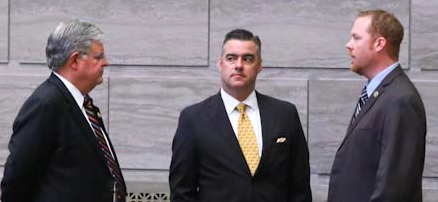
Sen. Holsman talks with Majority Leader Ron Richards and President Pro Tem Tom Dempsey about the rules of the Senate following a point of order
|
Conservative proponents across the nation have failed to tell whole truth about "Right to Work" in hopes of misleading legislators.
Here are a few facts about "Right to Work":
- Because unions are weakened by right-to-work laws, wages are lowered and worker safety and health is endangered. Statistics from the United States Department of Labor show that the rate of workplace fatalities are higher in right-to-work states than non-right-to-work states.
- The average worker in a right-to-work state makes $1500 less than workers in non-right-to-work states. States without right-to-work laws have higher wages which lead to a healthier tax base and higher state revenue that improve quality of life through education, transportation and socail service funding.
- The rate of workplace deaths is 51% higher in right-to-work states than non-right-to-work states.
- Health Care: 21 percent more people lack health insurance in right-to-work states compared to non-right-to-work states. In non-right-to-work states less citizens are on government assistance.
- Right-to-work states have higher poverty and infant mortality rates than non-right-to-work states
- Union women have higher wages than nonunion women.
- Right-to-work laws hurt minority workers, who benefit most from belonging to a union. Latino union members earn 45 percent more than nonunion Latinos. African Americans earn 30 percent more if they are union members.
- Union dues pay for professional training and safety instruction. Workers who are less trained in Right to Work states are less productive and perform a lower quality of craftsmanship leading to higher constuction costs.
|
|
Innovative Funding Makes
UMKC Project Possible
|
|

On May 12
th
Governor Jay Nixon visited the University of Missouri- Kansas City to announce funding for the Robert W. Plaster Free Enterprise Center at UMKC's Volker Campus. The innovative funding project is a 50/50 match program utilized by the state as a mechanism to advance university priorities while simultaneously saving Missouri money.
"The Free Enterprise Center at UMKC will provide greater opportunities for creativity and collaboration among students, faculty and businesses, and strengthen the Kansas City region's position as a hub for innovation and entrepreneurship" Governor Nixon said.
Once 50% of the funding necessary for the capital project has been raised from private sources the state is then able to appropriate a match to the university to complete the building.
During the 2014 budget process the Kansas City legislative delegation worked to get the 50/50 match appropriations approved for UMKC to receive $7.4 million. Private donations were made by the Kauffman Foundation and the Robert W. Plaster Foundation.
UMKC Chancellor Leo Morton has been leading the charge to see the Free Enterprise Center grow from a concept to reality.
"This is a great example of not just a public-private partnership," Morton said. "But the partnership between Kansas City and Kansas City's university, UMKC."
The $14.8 million multi-disciplinary center will offer an array of resources for area artists, entrepreneurs, industries, as well as K-12 programs. Programs like the KC STEM (Science, Technology, Engineering and Mathematics) Alliance that reaches over 13,000 area middle and high school students will be able to use the center to work on projects involving advanced manufacturing, engineering, robotics and science. |
|
General Assembly Sends Student Transfer Bill To Governor's Desk
|
|
For the second year in a row the General Assembly took up the issue of student transfers. Due to the situation on the east side of the state with the unaccredited status of Normandy and Riverview Gardens legislators agree that action should be taken to help students find better educational opportunities.

Unfortunately, the radical education reformers used the circumstances to leverage policy changes that expanded Charter and Virtual Schools into school district's in Jackson and Saint Louis Counties that have been accredited with distinction.
House Bill 42
seeks to create avenues for students in unaccredited districts to transfer to accredited buildings or districts. After exhausting their intra-district options students may become eligible for transfer to neighboring school districts or even virtual schools of choice.
One sticking point for some unaccredited districts is the cost of tuition they are obligated to pay for each student transferring. Prior to House Bill 42 districts sending students to other districts would be obligated to pay a tuition amount set by the receiving district regardless of feasibility. If this bill
were to be signed into law sending districts may be able to negotiate a tuition rate with the receiving districts as to not exhaust their budget.
Even though changes were made to House Bill 42 to make a more equitable piece of legislation for unaccredited districts there still remained the issue of charter and virtual school expansion.
Currently, charter schools are only allowed within the Kansas City and St. Louis school districts as well as in unaccredited districts and some
provisionally accredited districts. This bill would broaden those provisions and allow for charter schools to operate throughout Jackson and St. Louis Counties.
While charter schools maintain a level of benefit to the areas they presently serve by providing an alternative choice in a failed district, further
|
|
| Senator Holsman visits with an elementary class at Red Bridge Elementary |
expansion into successful districts could stretch scarce resources even thinner.
Charter schools in these areas have the potential to compete for resources generated from local levy's passed by communities for the purpose of the public school district. When a district is high performing and scores a 90 or better on the Missouri School Improvement Plan it is awarded accreditation with distinction. In Jackson County districts accredited with distrinction include Grandview, Center, Lee's Summit and Blue Springs.
Another complication of Charter expansion deals with economy of scale. Smaller districts do not have the number of students necessary to survive the duplication of administration and services to support both the public and charter buildings. To address this problem small districts of 3000 students or less in rural areas and Jackson County are exempt from the expansion. Small districts in Jackson County include Center, Lone Jack and Oak Grove.
During the perfection debate Senator Holsman added an amendment which sets a time frame to identify vacant school buildings for repurpose, auction or demolition in the Kansas City and Saint Louis School Districts.
Despite the legislation provides many positive policy changes, the charter school expansion in Jackson County kept several Kansas City area legislators and others around the state from supporting House Bill 42. The bill is now on Governor Nixon's desk. It remains unclear if the bill will receive the approval of the Governor, he has a constitutional 45 days to take action.
|
|
|
Senate Bill 5 -
Macks Creek Law - Ending Taxation by Citation
|
In 1995 the General Assembly passed what would be known as the Macks Creek Law. At the time Macks Creek, a village near the Lake of the Ozarks, was widely known as a speed trap for those driving down and around the Ozarks. Seventy-five percent of Macks Creek's overall operating budget was generated by speeding tickets and other traffic citations.
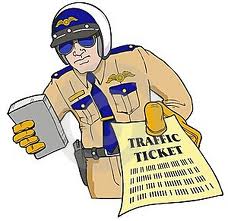
In an effort to curb such tactics employed by various municipalities the Macks Creek law set limits on traffic revenue.
Senate Bill 5 was filed in the 98th General Assembly by Senator Eric Schmitt of St. Louis County to update some provisions of the '95 Macks Creek law.
Senate Bill 5 establishes caps for traffic revenue used by local governments at 20 percent of their general operating revenue statewide. By comparison, Kansas City only recieves 2% of its revenue from traffic violations.
Taking it one step further Senate Bill 5 also creates caps for court costs and fines for minor traffic violations. If SB5 receives the Governor's signature court costs and fines would not be able to exceed $300 and people would no longer be able to be sentenced to jail for failure to pay their fines or failure to appear charges dealing with minor traffic violations.
"When you have a system where it becomes about revenue generation and rights of individuals take a back seat, people are in jail for minor infractions, that's an injustice" Senator Schmitt said.
Senate Bill 5 passed both chambers with a 31 to 3 vote in the Senate and a 134 to 25 vote in the House of Representatives.
|
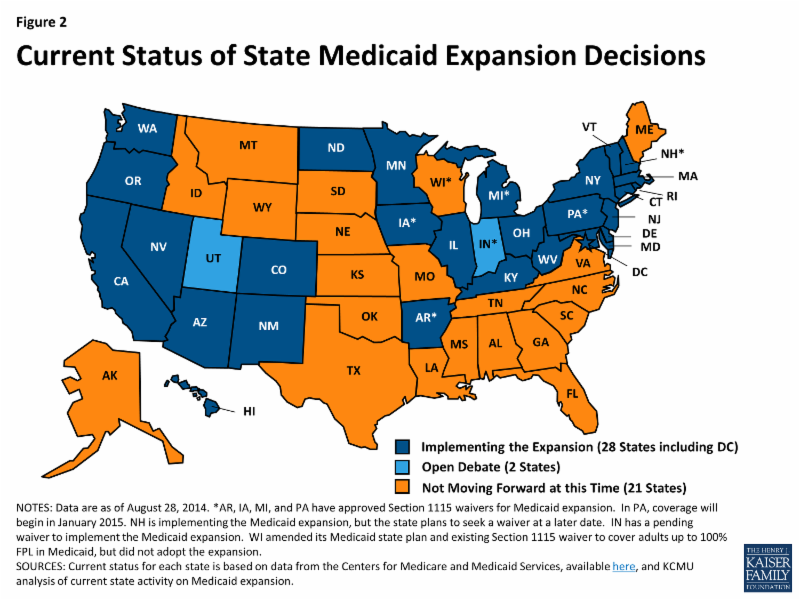
| Medicaid Expansion Defeated for Another Session |
|
For the third year in a row the General Assembly failed to draw down our citizens' federal tax dollars to help those workers who fall into the wage gap gain healthcare coverage.
|
|
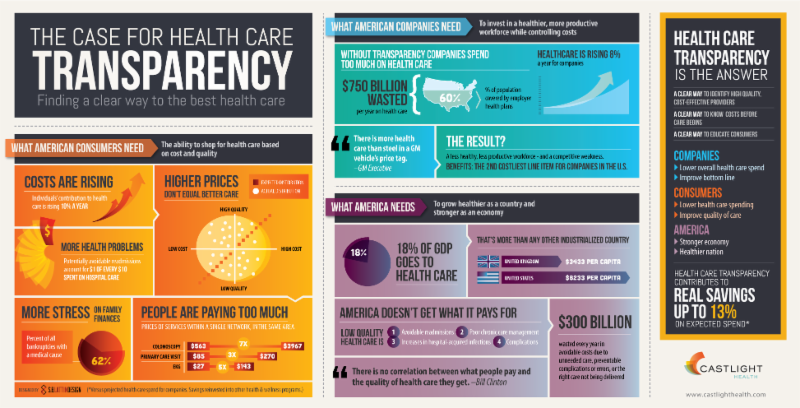
Healthcare Transparency Stalls on Senate Calendar
|
Senate Bill 46, Healthcare Transparency, was voted out of the Veterans and Health Committee and reported to the Senate Calendar. Unfortunately, time ran out of session before meaningful debate could be had on the issue. It is not enough to provide additional coverage we must also attempt to lower costs to consumers by providing necessary information which can help drive competition in the marketplace.
|
STAY CONNECTED


| Paid for by Holsman for Missouri, Judith Giannini, Treasurer. |
|
|
|
|
|