LEARN MORE ABOUT

BREAST CANCER WITH

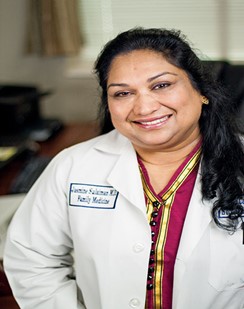
DR. JASMINE SULAIMAN MD

Dr. Jasmine Sulaiman MD, FAAFP

Family Physician and Medical Director for all HCSET clinic locations.


Dr. Sulaiman is a board-certified family physician who serves as medical director for all HCSET clinic locations since 2006.  She completed her residency at Columbia University in 1999 where she was the chief resident. She completed a post-graduate training in Health Leadership and Community Medicine from Duke University and in Faculty Development from The University of North Carolina.


She is the recipient of Texas Family Physician of the year 2013 and Country Doctor of the Year 2016. She also received the congressional recognition of Cleveland citizen of the year 2017.

October is “Breast Cancer Awareness Month”


October is Breast Cancer Awareness Month, a time of year when women are reminded of the importance of taking care of themselves by getting their regular checkups and screenings for early detection of breast cancer.


According to the CDC (1), each year in the United States, about 264,000 women get breast cancer and 42,000 die from it. Men can also get breast cancer, but to a lesser extent. About 1 in 100 breast cancers diagnosed in the United States are found in a man.


In this article, we talk with Dr. Jasmine Sulaiman M.D., FAAFP about breast cancer. Dr. Sulaiman is a board-certified family physician who serves as medical director for all Health Center of Southeast Texas (HCSET) a Federally qualified Health center (FQHC). She has worked in the Cleveland area in Texas for over 17 years and can be reached at: 281 592 2224

How common is breast cancer and what are the main risk factors for contracting this disease?


Breast cancer is a serious and common disease that has a great chance of being treated and cured if detected at an early stage. It is also the most common form of cancer affecting women in the US (besides skin cancer). According to the CDC, breast cancer is the second leading cause of cancer death among women and the leading cause of cancer death among Hispanic women.


Being a woman and getting older are the primary main factors for getting breast cancer. Studies show that there are other factors that could contribute to raise the risk of getting the disease. According to the CDC, these factors include: 


  • Aging. Most breast cancers are found in women over 50 years of age, although it can also occur in younger women.
  • Genetic Mutations
  • Exposure to hormones longer- such as starting menstrual periods before age 12 and starting menopause after age 55.
  • Having dense breasts.
  • Women who have had breast cancer in the past.
  • Having a mother, sister, or daughter or other family members who have had breast or ovarian cancer.
  • Women who had radiation therapy to the chest or breasts (such in cancer treatments)


However, women can get breast cancer without having any of these risk factors. In the same way, having a risk factor does not mean that a woman necessarily will get the disease. Each case is different.

What are the first symptoms of breast cancer? What should you do if you have any signs?


Symptoms can vary from person to person. Some may not show any signs. This is why it is so important for women to see a doctor for an annual breast cancer screening checkup.

According to the CDC, warning signs include:


  • A lump in the breast or armpit.
  • Swelling or irritation in the breast
  • Nipple discharge other than breast milk, including blood.
  • Any change in the size or shape of the breast.
  • Pain in any area of the breast.


If you have any of these signs or see any kind of changes in your breasts, you should see a health care provider right away.

How to detect breast cancer early?


Breast cancer screening and exams are intended to detect breast cancer before signs or symptoms appear. A breast exam will not prevent the development of breast cancer; however, it can help detect cancer early. The most effective way to detect breast cancer early is with a mammogram. 

When and how often do women should have a mammogram?


Overall, it is recommended that for women who have an average risk of getting cancer start having mammograms once a year starting at age 40. For women over the age of 55, it is recommended to have a mammogram once a year or every two years. Talk to a health care provider about when to start and how often to have a mammogram.

Younger women should also get annual exams and mammograms?


If the young woman has a close relative who has had breast cancer, then she should begin screening for breast cancer at an earlier age. Each case is different and both family history and genetic risk play a role. She must discuss her case with a doctor.

Can a women lower the risk for getting breast cancer?


Studies suggest that there are ways to lower the risk for getting breast cancer. CDC lists the following:


  • Keeping a healthy weight.
  • Being physically active.
  •  Limiting the amount of alcohol
  • Ask your doctor about the risks of taking hormone replacement therapy or birth control pills (some of these could rise the risk for breast cancer).
  • Breastfeeding your children, if possible.


(1) Content Source: Centers for Disease Control and Prevention, CDC. Breast Cancer.

The Health Center of Southeast Texas in Cleveland has been partnering with The Rose mammogram program since 2007 to provide mobile mammograms to all women in need. Exams are held twice a month at 307, North William Barnett in Cleveland, Texas. Rose provides services to all women. Uninsured women get the service free of charge. Interested women can contact for details at 281 592 2224

Our Locations

Texas Emergency Hospital
300 E. Crockett St.
Cleveland, TX 77327


Emergency Hospital Systems - Deerbrook
8901 FM 1960 Bypass Rd. W. Suite 105, Humble, TX 77338

Emergency Hospital Systems -
The Woodlands
26226 Interstate 45 N.
Spring, TX 77386

Emergency Hospital Systems -
Porter
24540 FM 1314
Porter, TX 77365

Follow us on Facebook