|
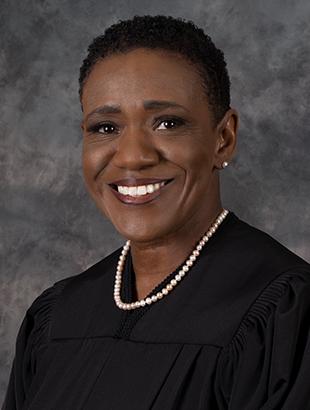
Thanks, in large part, to the stable foundation her parents established for her, Judge Latimore excelled in school. She earned her undergraduate degree in psychology from Duke University. Still, Judge Latimore lacked clarity on her future profession. Her parents “nudged” her in the direction of law with a classic slight of hand trick. “They gave me this beautifully wrapped present after college graduation. It had a perfectly tied bow that matched the package. I thought I was getting jewelry or a purse!” Judge Latimore recalled. Instead, she found the world’s most beautifully wrapped LSAT Study Preparation Guide.
Judge Latimore recalled that moment as a cornerstone in her life, and in the life of her parents. They wanted their daughter and the community to rise and rise she did.
Judge Latimore practiced family and juvenile law for over a decade before she turned her sights on the bench. In 2005, Judge Latimore shattered yet another barrier, ascending to the bench as the first African American female judge in the Ninth Judicial Circuit’s history. This historic appointment was not merely a testament to her legal acumen, but also set into motion a fundamental improvement in the bench. Upon ascending to the bench Judge Latimore quickly distinguished herself as a formidable advocate for justice for all. Noting a lack of effective resources for families on the brink of permanent separation, Judge Latimore established the Ninth Circuit’s B.A.B.Y. "Building a Better You" program, and also served as a contributing author to the Florida Early Child Court Best Practice Standards, the authority for practitioners.
“If you have ever had the benefit of practicing before Judge Latimore, you immediately note her flawless professionalism, clarity, and absolute intolerance of incivility,” says Bethanie Barber, Legal Aid Society of the O.C.B.A. Executive Director.
“She is paving the way for future generations of black lawyers and judges. She is paving the way for future generations of female lawyers and judges. She is paving the way for anyone interested in using the law as a tool to make one’s community better.”
Yet, perhaps Judge Latimore's most enduring gift lies not in the precedents she sets or the cases she adjudicated, but in the lives she inspires. Her journey from humble beginnings to judicial prominence serves as a powerful reminder that with confidence, perseverance, and genuine empathy, anything is possible.
In the words of Judge Latimore herself, " When I think of my legacy, I want to know I changed something for those who came behind me so that other black and brown skinned people would have someone to ask, someone to emulate. I want somehow, someway, to make life better for everyone. That’s all I’ve got.”
And in that noble pursuit, we find the true essence of her enduring contributions.
Black History Month is more than a reflection on the past; it is also a time to celebrate the vibrancy, diversity, and cultural richness of the black experience in the present day. From art, music, and literature to science, technology, and entrepreneurship, black individuals continue to shape and enrich every facet of society with creativity, innovation, and ingenuity. In these last days of Black History Month, may you find the power of hope, resilience, and the relentless pursuit of justice, as we do from Judge Latimore.
|