|
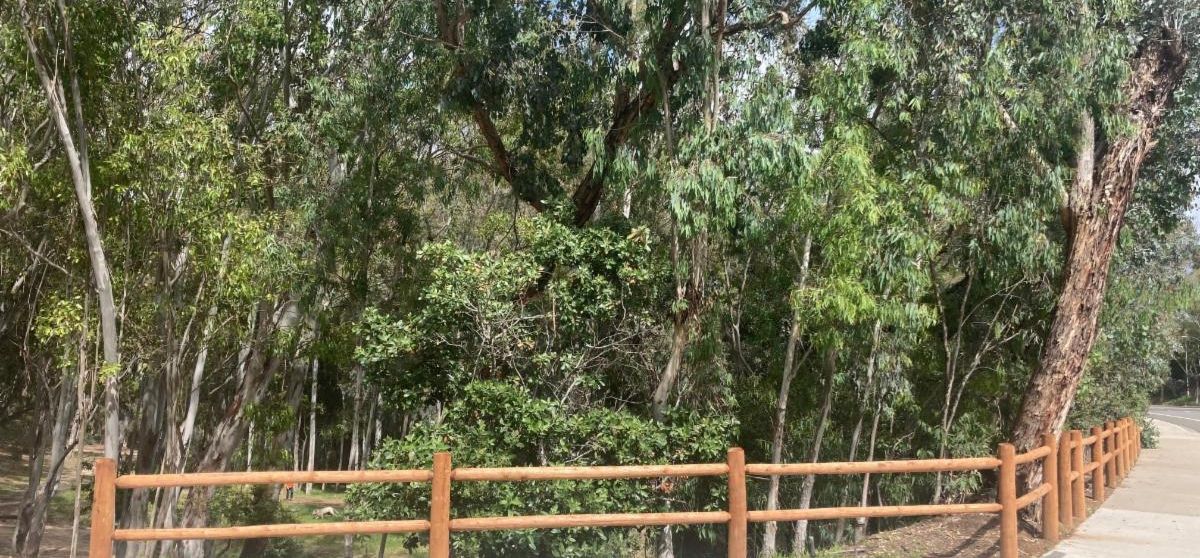
During the last Board meeting, a committee to study the impact of Lerp Psyllid on Association eucalyptus trees was appointed. They were tasked with gathering information on the current status of the trees and meeting with experts to review options available to mitigate the effects of the pest.
The committee has been working on this since the last Board meeting, and has reached a decision. The committee approved a contract for consultation services for monitoring and development of an Integrated Pest Management Program for Lerp Psyllid from Dudek. This plan includes monitoring the numbers of psyllids and the parasitic wasp (more about this below) through the use of sticky traps at various locations in the Association. Monthly monitoring allows the Urban Forest Arborists to determine the prevalence of these insects in the Association and develop a plan for various scenarios. The plan also includes preventative steps to protect the trees from future damage, and a holistic approach to help the trees withstand the current conditions.
The psyllids in our area are red gum lerp psyllids, an insect native to Australia. They attack primarily red gum eucalyptus, which is why we are not seeing infestations on some eucalyptus, while others are heavily affected. In 2000, UC Riverside released a large number of the parasitic wasp, also native to Australia, that feeds on the red gum lerp psyllids. These wasps are credited with reducing the number of these psyllids to a manageable level within a few years. You can read more about these efforts in an archived article from UC Riverside by clicking here. However, a perfect storm of weather and environmental conditions led to a spike in the numbers of psyllids this summer.
Now for some good news. These non-stinging, small wasps are still present and there is evidence they are at work in our association. They slow down in the summer, but as the weather cools their activity increases. Some homeowners have noticed fewer leaves are falling and the psyllid numbers appear to have decreased in the last few weeks. The psyllids are more active in warmer weather and prefer new foliage growth, which predominantly occurs in late spring and early summer. Tracking the insects will give more insight into these patterns to better understand the activity cycles for the future. It should be noted that these wasps are not commercially available, so at the present time we cannot obtain more.
It takes significant and prolonged infestation over many years to cause a eucalyptus to die. We were warned we will see cycles of die back and defoliation and subsequent regrowth. The Association is not considering lerp psyllid infestation an acceptable reason to remove eucalyptus trees at this time. If you have trees on your property that are infected, there are some things you can do to bolster their immunity, although it is recommended you confirm with a certified arborist to get professional advice targeted to your situation:
- Irrigate, but do not overwater.
- Ants can be harmful to infected trees, so eliminating them can be beneficial.
- Fertilizing infected trees is not recommended.
- After the moratorium, consult with an arborist about pruning the trees to remove any deadfall and bolster health.
Find more information specific to Forest Health on the Woods Neighborhood section of the website - this can be helpful even if you don't live in the Woods. Stay tuned as we are developing additional information to be posted on the website, including a preferred tree vendor list.
|