|
LATCH scoring - are you using this tool to its full capacity?
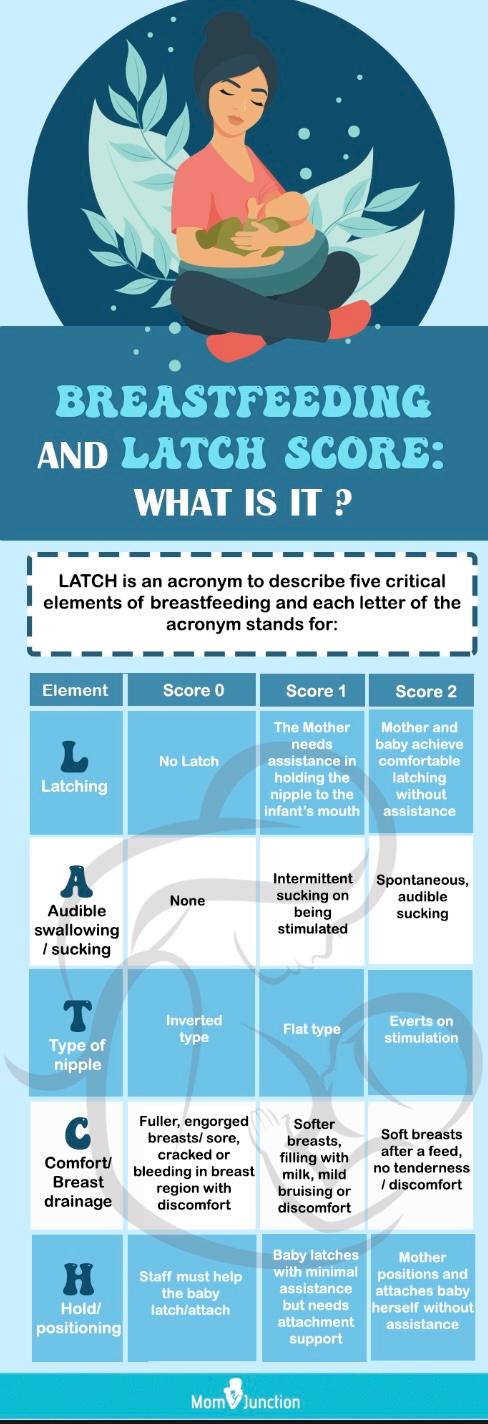
The LATCH score was developed in the early 1990s as a method to provide more objectivity to assessment and evaluation of breastfeeding attempts. One of the original articles introducing the LATCH score was published in the early 1990s and explained that the LATCH score was modeled after Apgar scoring. The LATCH score is not a judgement of breastfeeding skill, rather, it is meant to aid in identifying interventions needed to assist mother and infant to successfully breastfeed.
Vernekar et al. (2023) conducted a prospective cohort study looking at low LATCH scores and interventions to correct low scores and promote exclusive breastfeeding. LATCH scores were obtained with the first feed immediately after delivery, at 24 hours and again at 48 hours. For infants who became hypoglycemic, median LATCH scores of 4 at 24 hours and 6 at 48 hours were noted. A LATCH score of less than 6 at 48 hours was an indicator for intervention by the healthcare provider/lactation consultant.
While the LATCH score is currently obtained largely by either or both RN and Lactation consultants in many facilities, educating the mother on the elements of the LATCH score can be beneficial in her own assessment of feeding, as well as, applying learned interventions to support her infant to successfully feed. In addition to LATCH scoring by the healthcare provider or lactation consultant, Vernekar et al. (2023) also measured the level of confidence of the mothers with breastfeeding at the same time points. Following the first feeding after delivery, mothers were educated on LATCH scoring and some basic interventions to improve feeding success. The confidence of the mothers to breastfeed was statistically greater at 24 hours and 48 hours after being educated on LATCH scoring and interventions to improve feeding.
The infographic above is available at no cost on the website Momjunction.com as an educational tool for mothers to teach about LATCH scoring.
|