Final Report Published from KDIGO Controversies Conference on the Role of Complement in Kidney Disease | |
|
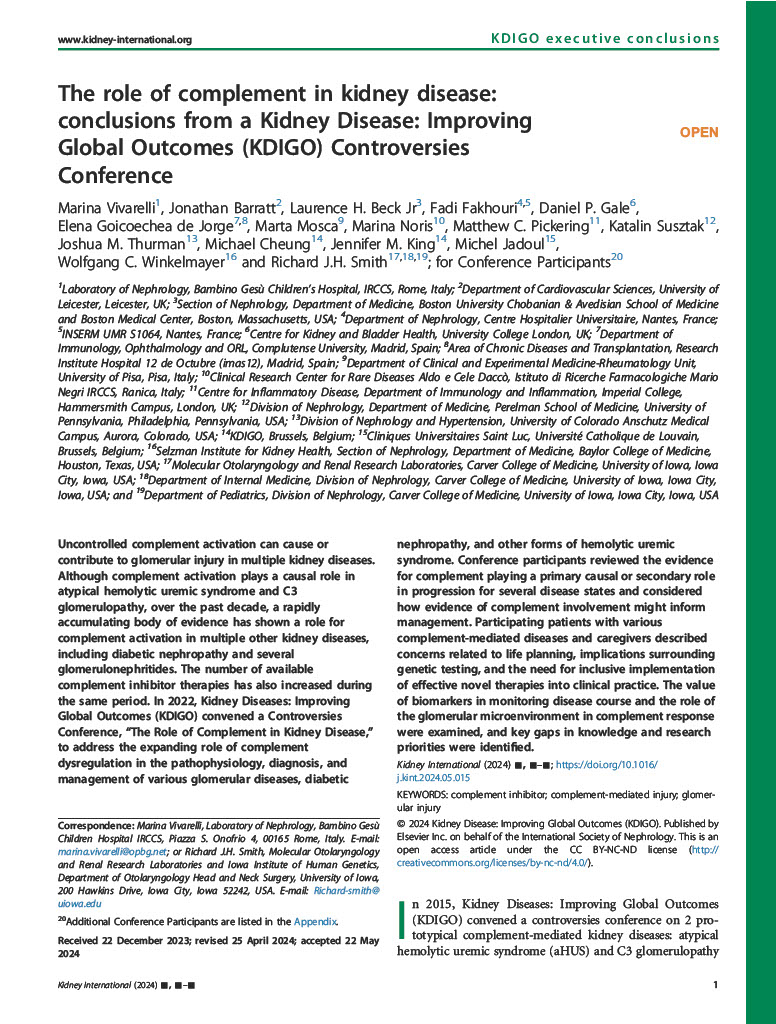
KDIGO recently announced the publication of The Role of Complement in Kidney Disease: conclusions from a Kidney Disease: Improving Global Outcomes (KDIGO) Controversies Conference in Kidney International. The final version of the conference report was released digitally in July and will be published in the September issue of the journal. Co-chaired by Marina Vivarelli, MD (Italy) and Richard Smith, MD (United States) in Florence, Italy, in 2022, the conference gathered leading nephrologists, researchers, patients, and caregivers to discuss the latest evidence and future directions for managing complement-mediated kidney diseases.
"The discussions at this conference were incredibly enlightening,” said Dr. Vivarelli. “We delved into the roles of complement in both rare and common kidney diseases, identifying knowledge gaps and setting research priorities. The evidence clearly shows that activation or dysregulation of complement plays a role in the pathogenesis of an increasing array of kidney diseases. While alternative pathway dysregulation is a main driver in aHUS and C3G, in other conditions like membranous nephropathy, diabetic kidney disease, and FSGS, complement plays a more nuanced role in perpetuating glomerular injury or contributing to chronic damage. With more therapeutic agents becoming available that target different parts of the complement cascade, it is vital that we improve our ability to identify the relevant pathway or protein involved in each patient, characterize its role, and determine the best course in ceasing the aberrant complement activity."
The conference also underscored the importance of a global, coordinated, and collaborative approach to improving patient treatment options and outcomes. "It is clear that we need a concerted, multinational effort to make meaningful progress in our understanding and treatment of these mostly rare and heterogeneous kidney diseases," said Dr. Smith. "We need to identify biomarkers of complement activation and dysregulation, standardize their measurement, and promote their global implementation. Data on complement biomarkers should be widely disseminated, and all stakeholders, including patient and caregiver associations, medical societies, health authorities, and pharmaceutical companies, must synergize to promote registries, biobanks, data sharing, and open access to trial results. This collaborative approach will enable us to offer early, accurate diagnosis and safe, effective, and affordable treatment tailored to individual patients."
The patient voice was an essential aspect of the conference, with a patient and caregiver panel providing firsthand insights into living with complement-mediated kidney diseases. "The presence of patients and their caregivers was invaluable,” said Dr. Vivarelli. “Their stories and experiences brought a profound human element to our discussions by reminding us of the real-world implications of our research and the importance of patient-centered care. Their contributions emphasized the need for therapies that address the medical aspects of these diseases and improve the quality of life for those affected."
| |
|
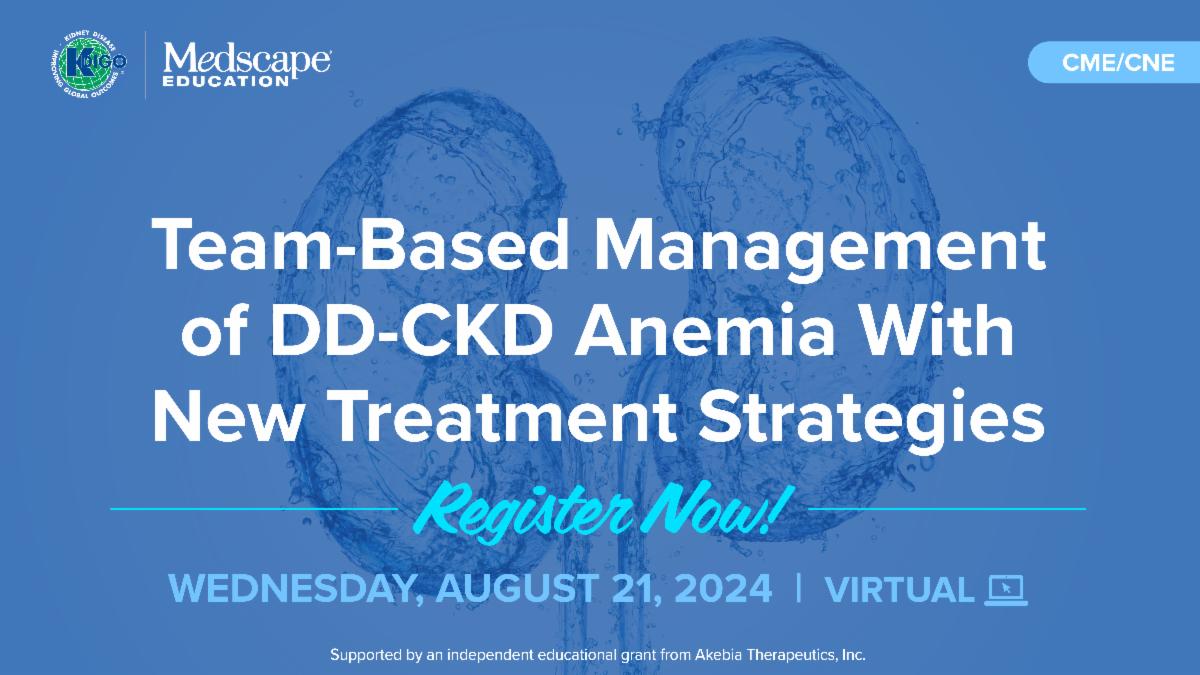
Team-Based Management of DD-CKD Anemia with New Treatment Strategies
Virtual CME Webinar
Wednesday, August 21, 12:00 PM ET
Join us for a symposium on dialysis-dependent (DD) chronic kidney disease (CKD) anemia designed to encourage the exchange of ideas between leaders in the field and attendees. This webinar, led by Kirsten Johansen, MD (United) States), addresses clinical data for hypoxia-inducible factor prolyl-hydroxylase inhibitors (HIF PHIs) for the treatment of DD-CKD anemia, the role of HIF PHIs in managing DD-CKD anemia, and the importance of a team-based approach to patient treatment and monitoring. Register.
| |
|
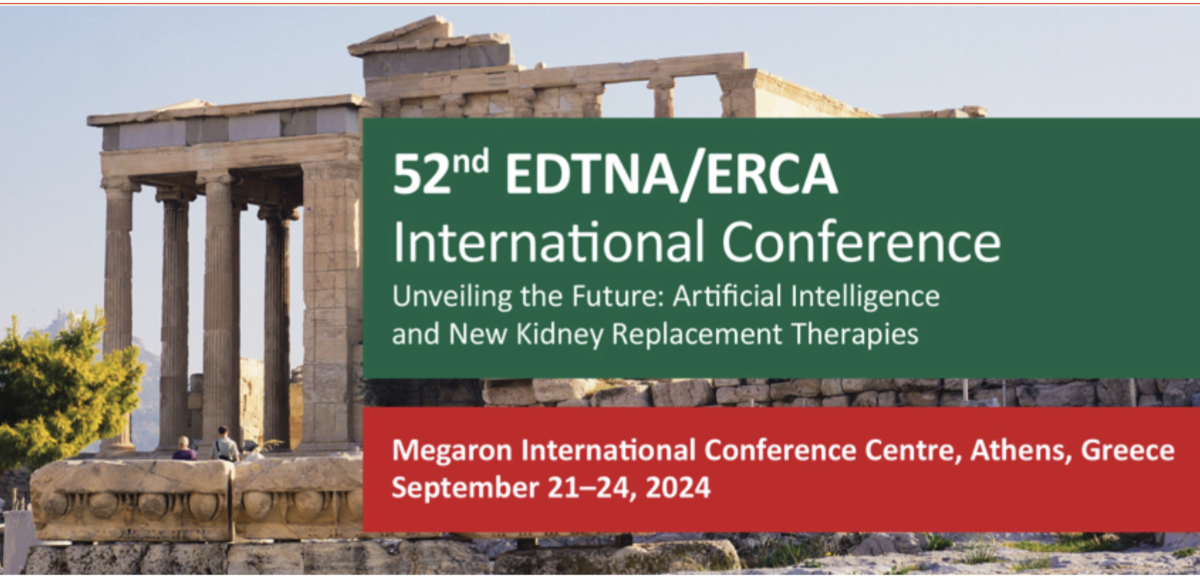
KDIGO at the 2024 EDTNA/ERCA International Conference
Athens, Greece
Monday, September 23, 11:00 AM CET
Are you attending the 52nd EDTNA/ERCA International Conference in Athens, Greece? Don't miss the KDIGO session on Monday, September 23, at 11:00 AM. The session focuses on the pivotal role played by nurses in managing dialysis symptoms. It will address how to identify the burden of dialysis symptoms for people and caregivers of people receiving dialysis and how to improve the management of dialysis symptoms. Learn more.
| |
KDIGO at the XXII Congresso Brasileiro de Nefologia
Salvador, Brazil
September 25 - 28
Are you attending the 2024 Brazilian Congress of Nephrology in Salvador, Brazil? Don't miss the full-day event, "KDIGO-ISN-BSN Workshop: Advancing CKD Management with Evidence-Based Guidelines," on September 25, 9:00 AM - 6:00 PM. The workshop features an impressive panel of local and global experts covering topics related to the latest science and guidance from the KDIGO 2024 CKD Guideline.
KDIGO will also have two sessions at the congress, including "KDIGO Updates on the Management of Glomerular Disease" on September 26, from 4:50 PM to 6:20 PM, and "KDIGO Clinical Practice Guideline for Acute Kidney Injury (AKI) and Acute Kidney Disease (AKD) – Update 2024," on September 27, from 10:30 AM to 12:00 PM. Learn more.
| |
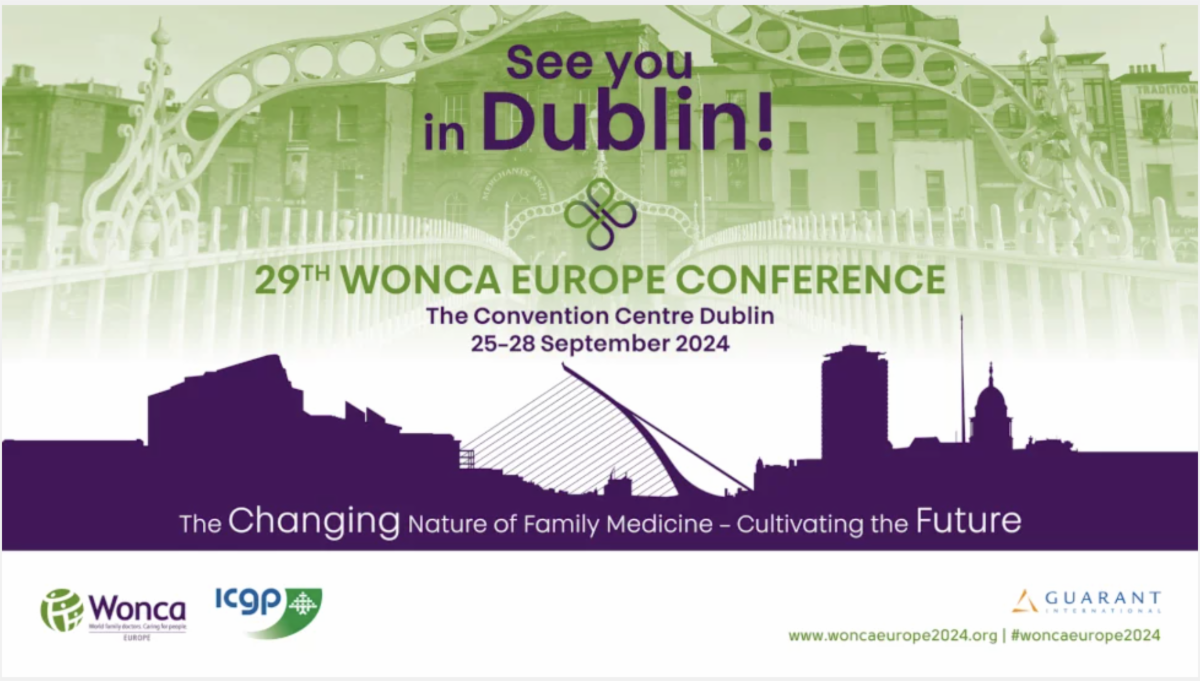
29th Wonca Europe Conference
Dublin, Ireland
September 25 - 28
Are you attending the 29th Wonca Europe Conference in Dublin, Ireland? Make sure to swing by the KDIGO booth to say hello and pick up new nephrology resources for primary care physicians. Learn more.
| |
IPNA-ISN-KDIGO Webinar - Contemporary Management of SSNS and SRNS: Latest Guidance from IPNA & KDIGO
Webinar Recording
This webinar is designed to enhance the knowledge and clinical skills of healthcare professionals in managing steroid-sensitive nephrotic syndrome (SSNS) and steroid-resistant nephrotic syndrome (SRNS). Viewers will gain a thorough understanding of the guideline recommendations from the ISN, IPNA, and KDIGO.
The session delves into the interpretation and practical application of these guidelines through detailed case vignettes, highlighting challenging clinical scenarios to ensure a comprehensive grasp of both SSNS and SRNS management. By comparing and contrasting ISN, IPNA, and KDIGO recommendations, viewers will identify similarities and learn about significant updates anticipated in the forthcoming KDIGO 2025 update. Watch the recording.
| |
KDIGO 2024 Lupus Nephritis Guideline Russian and Ukrainian Translations
Translations
The KDIGO 2024 Lupus Nephritis Guideline and the Guideline Top Ten Takeaways are now available in Russian. The KDIGO 2024 Lupus Nephritis Guideline Summary of Recommendations and Practice Points is now available in Ukrainian. Check out the latest translations and additional resources on the Lupus Nephritis Guideline Website.
| |
Getting to the Root of CKD-Associated Pruritus: Questions From the Field
On-Demand CME Webinar
How can you optimize the management of your patients with CKD-associated pruritus (CKD-aP)? Hear experts Joel Topf, MD (United States) and James Burton, MD (United Kingdom) address clinical questions directly from the field and provide valuable insights to enhance your treatment strategies and improve patient outcomes. Watch the webinar.
| |
I Just Need to Sleep! Improving Itch in Patients With CKD-aP
On-Demand CME Webinar
Did you know that CKD-aP is often underdiagnosed in patients on hemodialysis, significantly impacting their sleep and quality of life? Check out this free CME activity to explore effective strategies for improving the sleep and overall well-being of patients and to learn the latest research and management options for patients with CKD-aP. Watch the webinar.
| |
An Expert Approach to Cardio-Renal Protection in CKD: A Case-Based Discussion Parts 1 and 2
On-Demand Webinar Series
This two-part program, produced with Radcliffe Cardiology, considers the guideline-directed approach to chronic kidney disease (CKD) and how SGLT-2 inhibitors can be used to maximize effect. The webinars are chaired by Professor James Burton, MD (United Kingdom), with expert insight from world-renowned faculty Professor David Wheeler, MD (United Kingdom), Professor Navdeep Tangri, MD (Canada), and Professor Carol Pollock, MD (Australia).
In Part 1 of this dynamic series, the expert panel unravels the complexities of CKD care in the context of a real-world patient case. Part 2 offers a forensic analysis of current practices, revisiting the patient case from Part 1 in reflection of expected guideline updates. The panel provides evidence-based strategies for initiating pharmacological therapies that transcend the theoretical and become actionable in everyday practice.
Watch the webinar series.
| |
|
About KDIGO
KDIGO is a Belgian foundation committed to developing and implementing nephrology guidelines that improve outcomes for people with kidney disease on a global basis. KDIGO is independent, volunteer-led, self-managed, and accountable to the public and the people it serves. Learn more.
| | | | |