June 2024
NBGA Newsletter Vol. 3, #6
| |
|
Hello and welcome to the June 2024 NBGA e-newsletter!
Even though many of our growers have seen a lot of rain here in the Northarvest region, a healthy portion of this year's bean acres have already "bean" planted. NBGA would like to thank all of our growers for their tremendous hard work. For those who still have planting ahead, we wish you the best of luck.
NBGA appreciates your support and efforts in the field, and we hope you are all looking forward to a safe and productive growing season!
| |
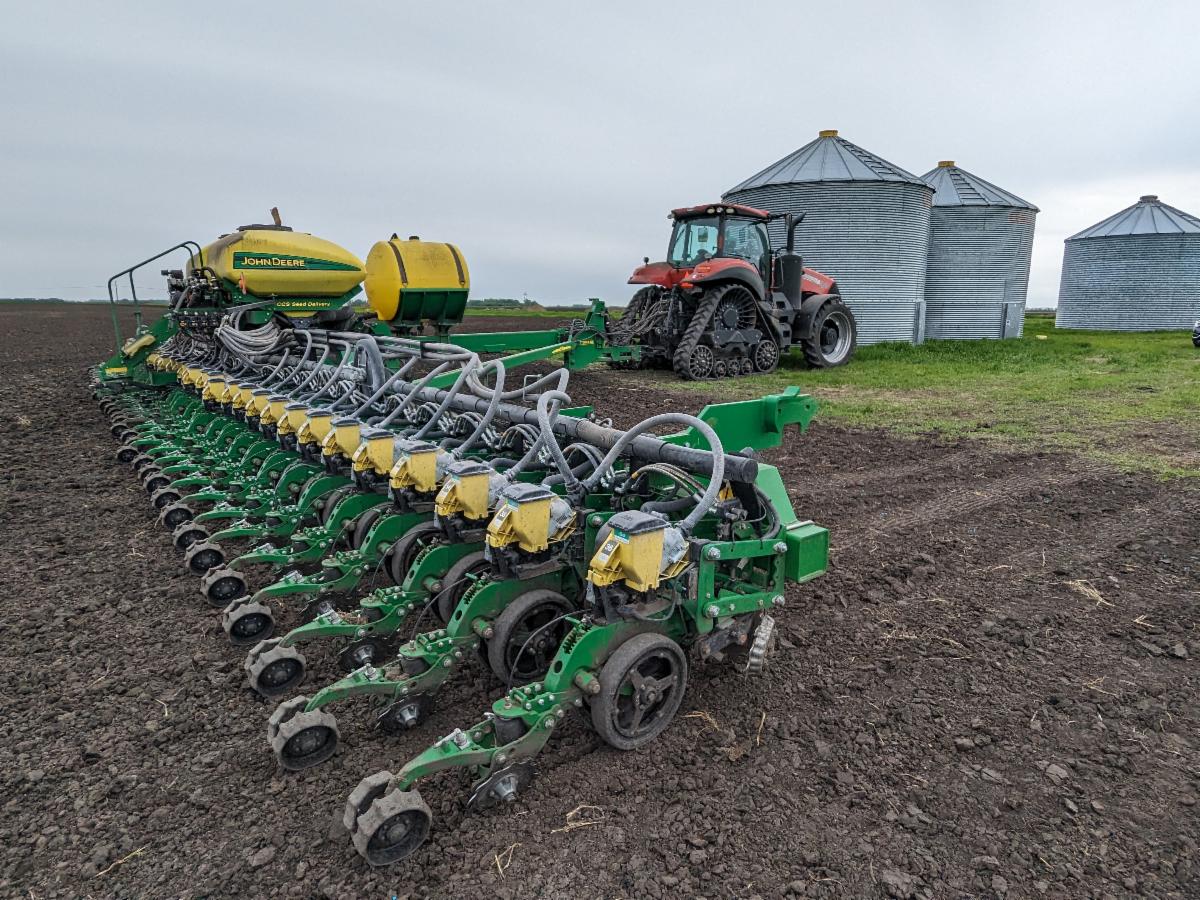
Planting navy beans in Drayton, ND - 2024 - Photo credit: Chelsea Didinger | |
|
June 2024 Newsletter Table of Contents:
- Bean Poll
- NBGA Explainer Video
- NBGA Member Profile
- Collaborating with That Midwestern Mom
- USDA Weekly Dry Bean Market Review
- NBGA Partners with a Chef
- Bean Institute: Celebrating July 4th with Beans
- Bean Nutrition Corner
- Northarvest in the News and on the Move
- US Dry Bean Council Updates
- The Dry Bean Scene
| |
|
In our May 2024 newsletter poll, we asked you what types of beans you will planting. Response options were: pinto, black, dark red kidney, light red kidney, white kidney, navy, cranberry, small red, great northern, and other. Multiple options could be selected.
Based on the limited number of responses we received, results were as follows:
- Over half of respondents are growing more than one market class of bean.
- Black beans was the most common response, followed by dark red kidney beans.
- Cranberry and small red beans were tied for the least common response.
| |
For our June 2024 poll, please click below to indicate approximately how many acres of beans you are planting this year. We will reveal the response breakdown in next month's newsletter. | |
Approximately how many total acres of dry edible beans are you planting this year? | |
| Choose the best option below. | | | |
|
REMINDER: Please share your photos from 2024's bean planting season!
This will help us better share the full story of beans grown in the Northarvest region, as seen through the eyes of growers. Northarvest would love to share the images taken by our growers via LinkedIn and social media platforms, as well as right here in this newsletter; photo credit and shout-outs will happily be provided.
Please email photos to jed@northarvestbean.org - and don't forget to tell us who is sending them and where they are farming.
Thank you for contributing and helping NBGA shine a little more spotlight on bean growers!
| |
|
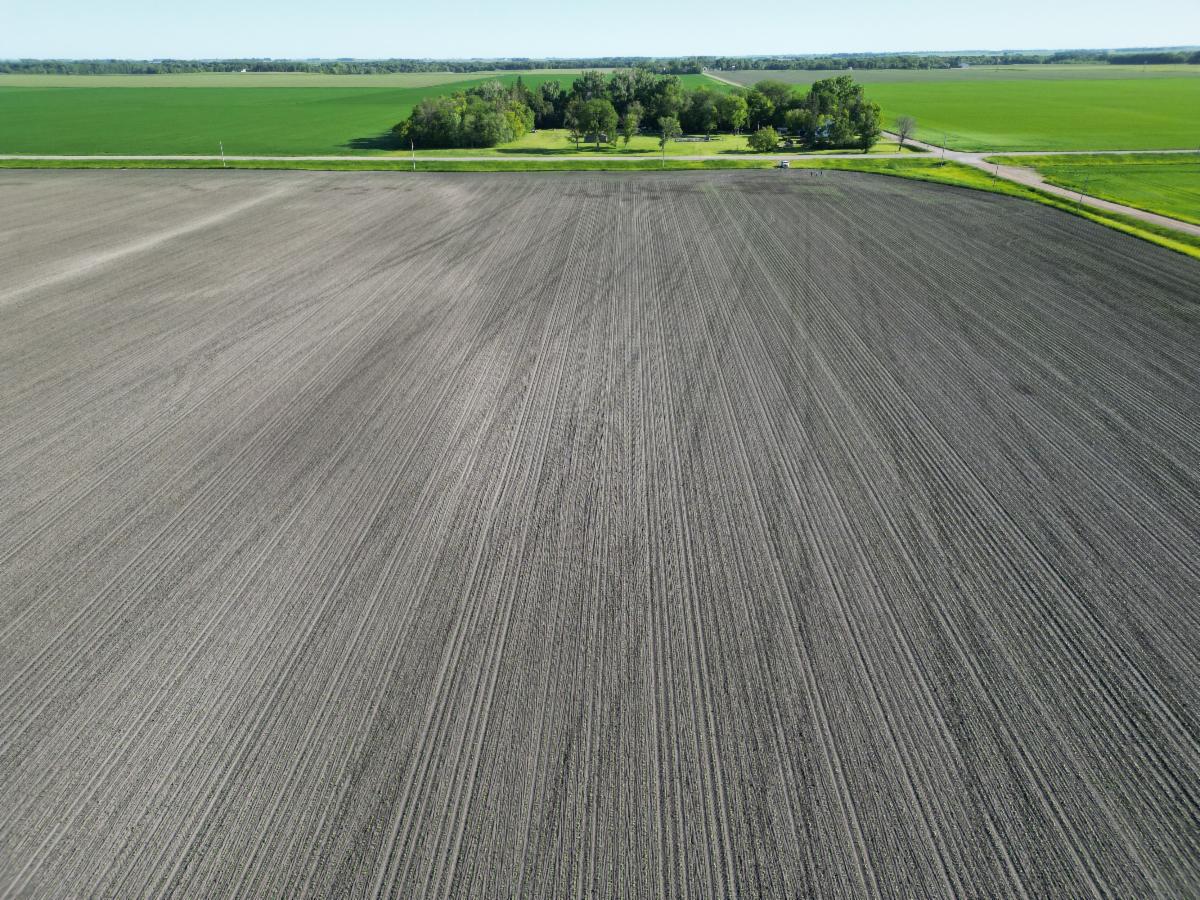
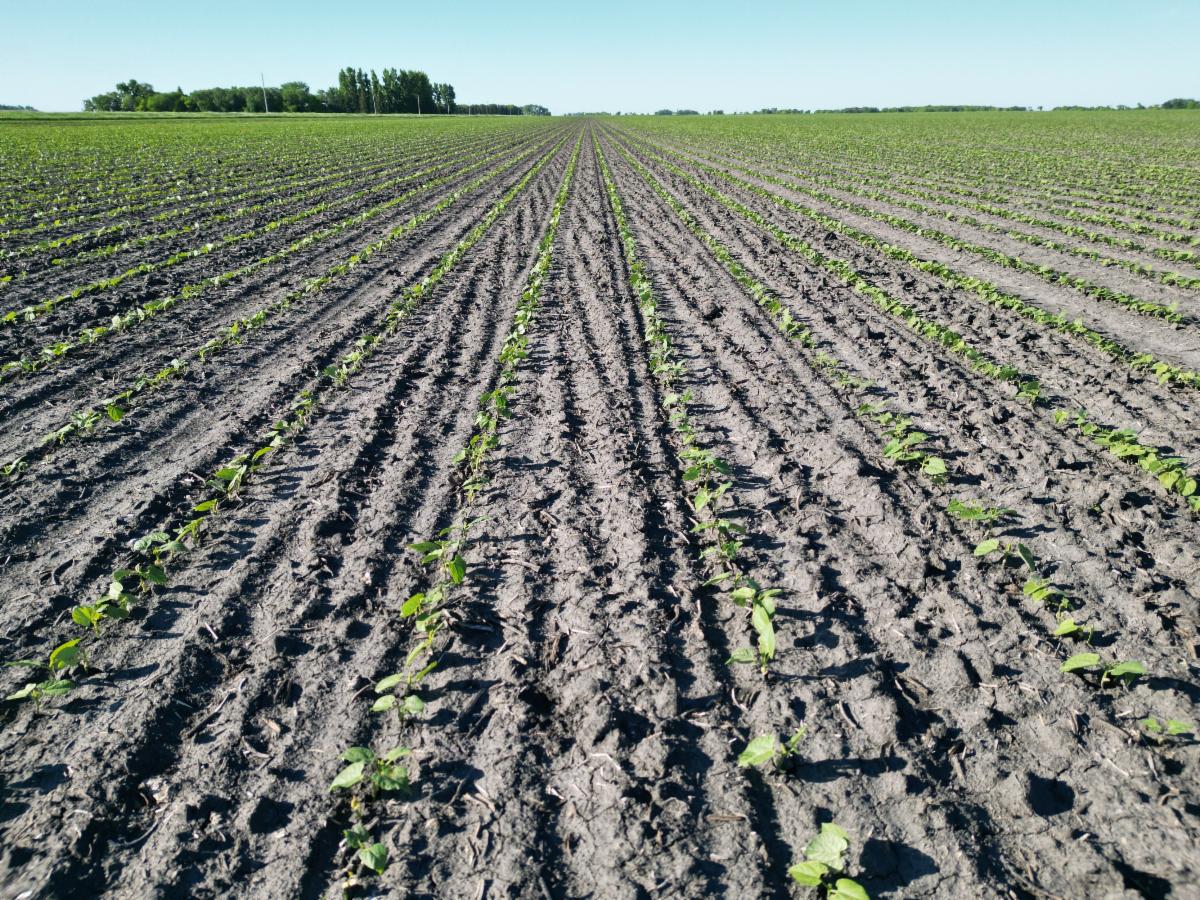
Below you'll see some excellent shots from a drone recently shared with NBGA by Eric Samuelson, taken with the help of some agronomy students.
That very field was the one @thatmidwesternmom recently visited to meet Eric and learn about dry beans (keep reading to find out more about our collaboration with her!). As you scroll down you'll see that field is already on its way to producing beans for our plates.
Thank you for the photo shares, Eric - and thank those students for us, too!
| |
|
We were pleasantly surprised to see some Farmer-submitted video field updates shared with us, and we're sharing those on a brand new playlist.
Click the photo below to hop over to YouTube to see ND Dry Bean Council Member and NBGA grower Rudy Dotzenrod share some updates as his spring plant happens over in District 4. (NOTE: the volume is a little on the loud side due to being near equipment while running)
Shout out to Rudy for taking time out of a busy (and limited) planting window to share some insights with viewers.
| |
NBGA Member Profile
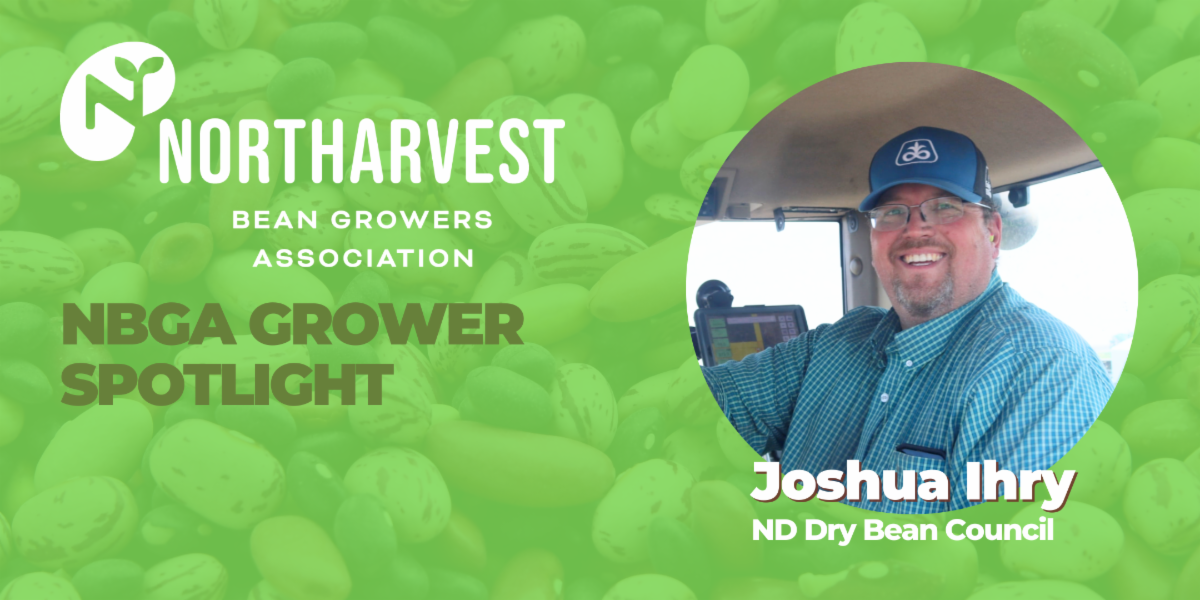
June's NBGA Member profile is Josh Ihry. Josh is an ND Dry Bean Council representative (District 4). He's been in ag for nearly a quarter century and currently farms 4,500 acres with his father-in-law in Hope, ND.
In addition to his duties for the North Dakota Dry Bean Council, he sits on the marketing & communication committee as well as serving as Chair for the Crop insurance committee.
NBGA would like to thank Josh for taking the time to sit down with us and share more about his dry bean production operation.
| |
Collaborating with That Midwestern Mom | |
|
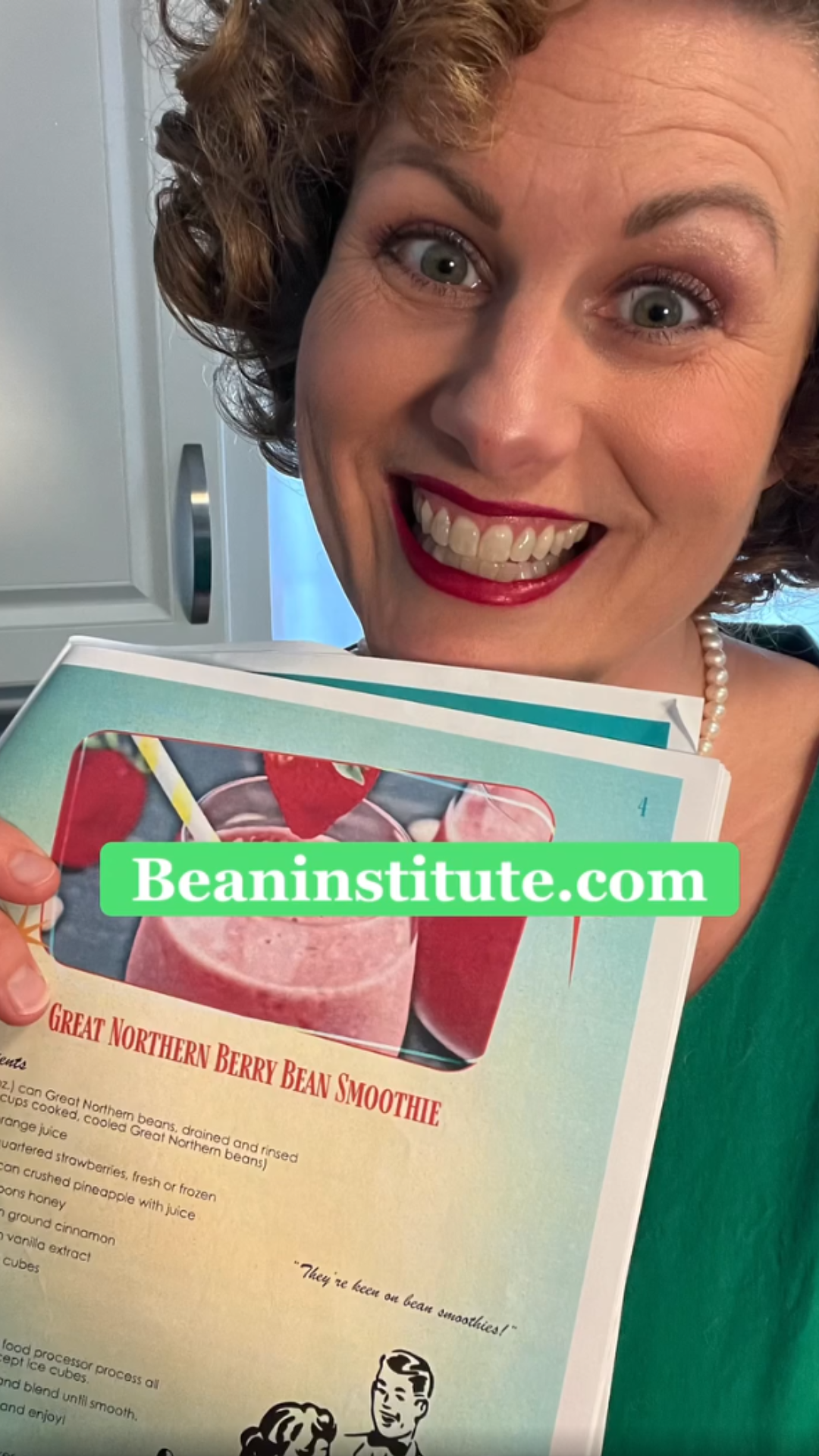
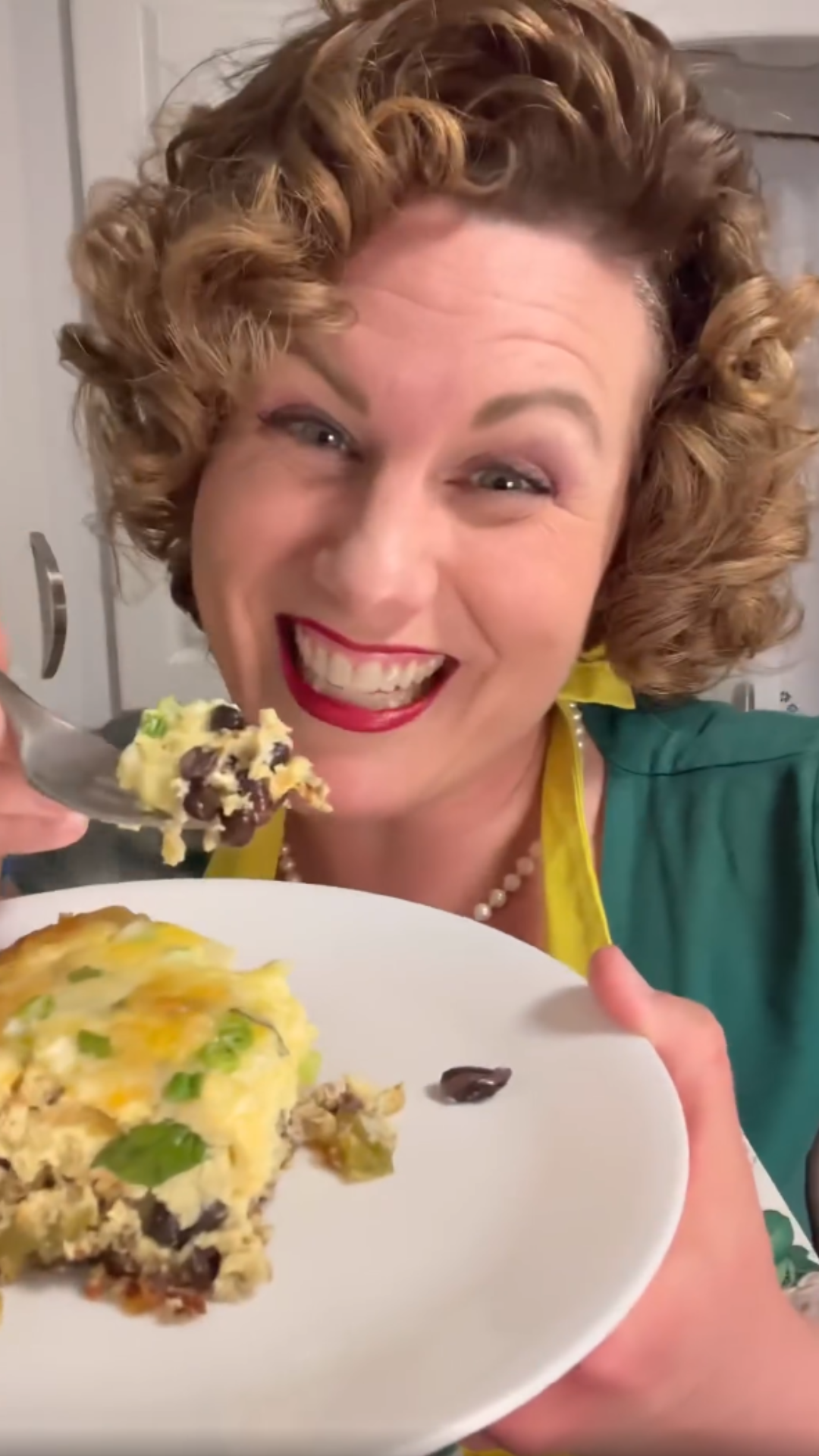
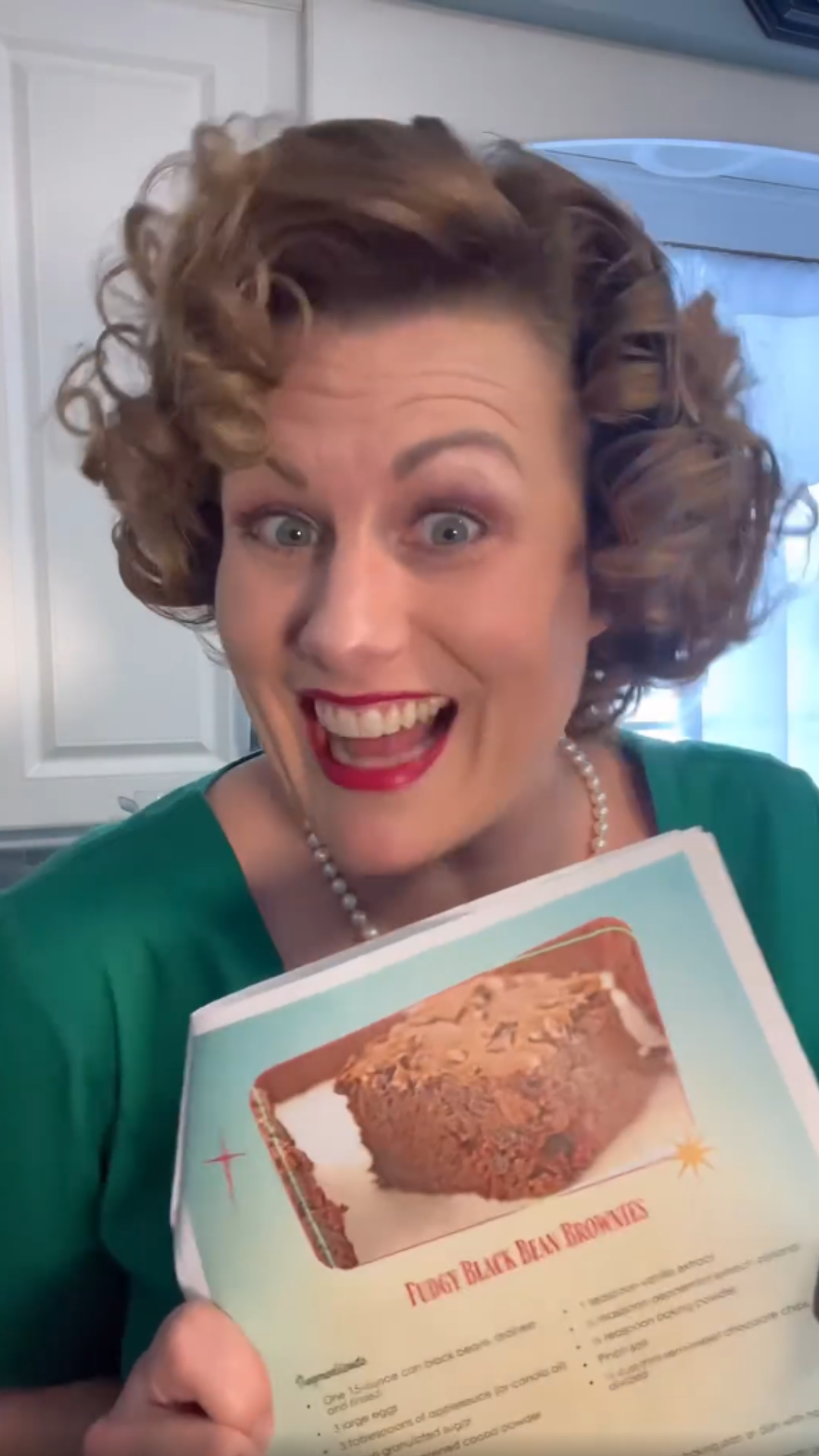
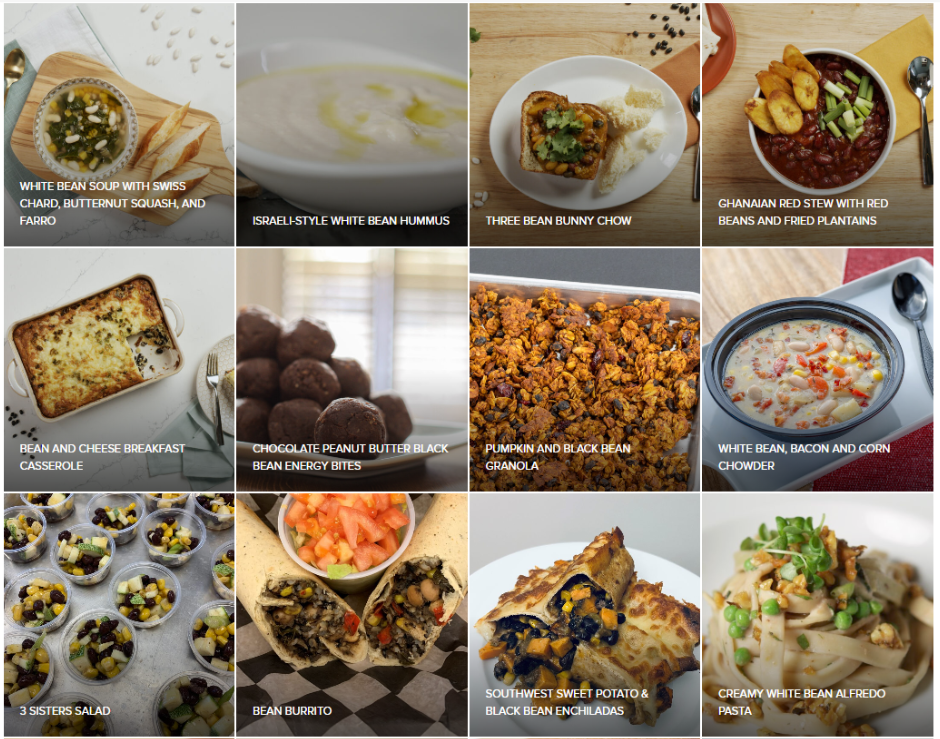
Last year, the Northarvest Bean Growers Association partnered with Amber Estenson, also known as That Midwestern Mom, to share several bean recipes with her extensive network of over 1 million followers on Facebook, Instagram, and TikTok. We shared about this project in the Spring 2023 BeanGrower - read more on page 26.
Her videos garnered much positive attention, with followers often expressing how good the recipes looked and making comments like this one: "I downloaded that bean recipe booklet and I love it!"
Click on the images or links below to watch the videos.
| |
|
All three of these recipes can be found in the Nifty Little Bean Cookbook, a cookbook sponsored by NBGA and being made available and promoted by the Bean Institute.
What else will you find in this free bean cookbook?
- Additional tasty recipes, including White Bean Pancakes and Mexican Bean Pizza
-
Fun facts about beans, like: "In ancient Greece, public officials were elected randomly using black and white beans! They put a number of beans into a ‘bean machine” with only one being white - the winner would be whoever drew the white bean!"
- Fun, retro graphics
- Recipe photos
You can download the Nifty Little Bean Cookbook by clicking here or on the image below.
| |
That Midwestern Mom Talks Beans | |
|
NBGA is excited to continue our partnership with That Midwestern Mom! This year, she is joining us for multiple site visits to dive into the story of beans in our region.
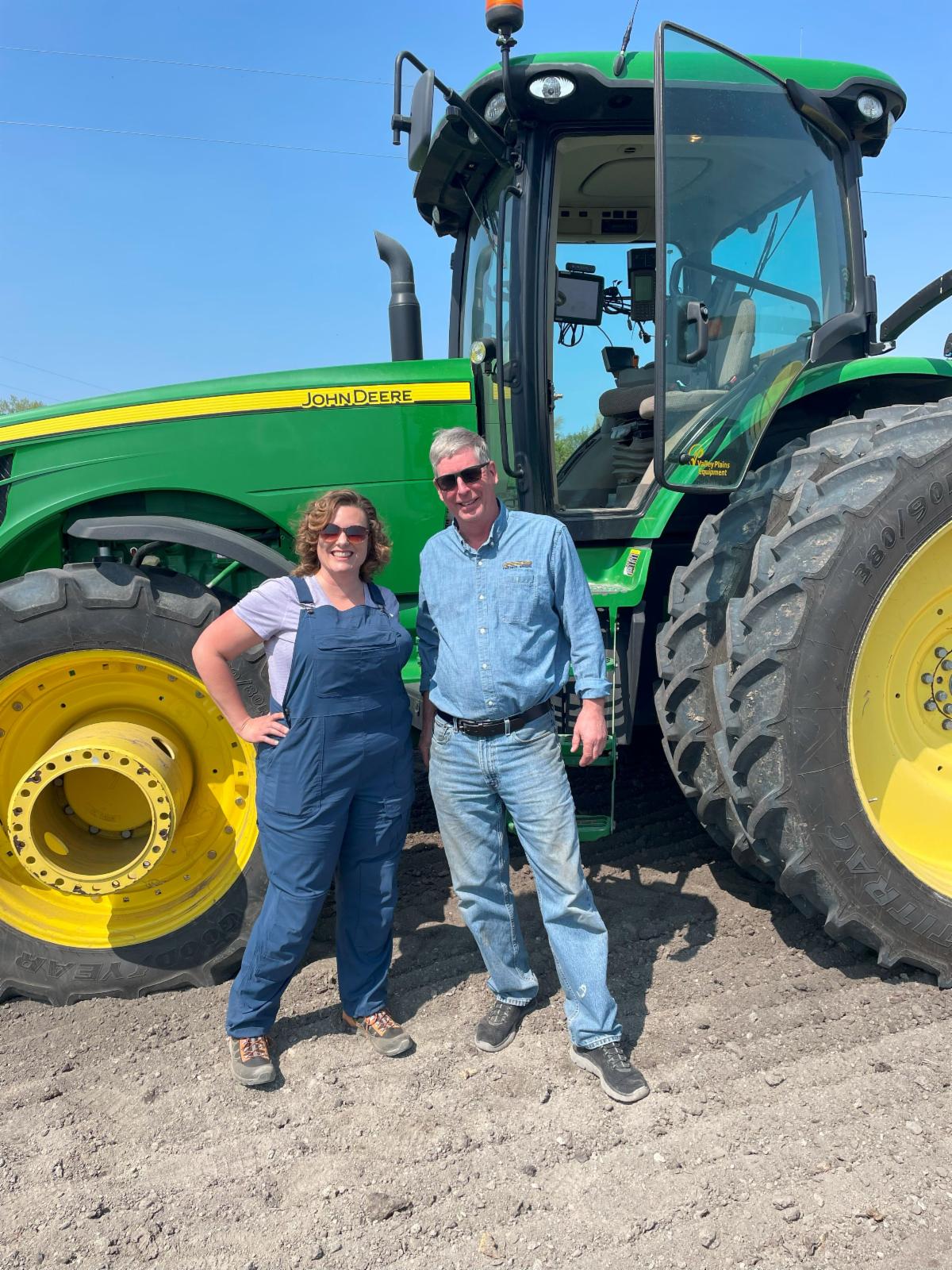
Amber and our crew have already interviewed several people, including Eric Samuelson (NBGA Director District 7) and Juan Osorno (NDSU Bean Breeder), with more interviews on the books.
We look forward to sharing more about this project with you soon! But first, in this newsletter we wanted to share Amber's answers to a few questions about her experiences with beans, and how her followers have been responding to her bean posts. You can read her responses below.
| |
|
What is the first word or phrase that comes to mind when you hear the word "beans"?
"Gas 😂"
| |
Why do beans have a special place in your heart?
Amber is happy to have learned a lot about beans since becoming an adult. Growing up, there were only a few bean dishes that she ate often, like chili and baked beans. That all changed when she moved to Costa Rica as an exchange student. While there, she ate beans three times a day. Chuckling, she said, "While I was there, I didn't necessarily enjoy it because I wasn't used to it. But now I miss it." Beans now bring back memories of this positive, independent time of her life. "Now, I have taken a part of that culture from my family in Costa Rica and implemented it in my own life with my own children, in that we eat beans a lot more than I think I ever would have, had I not been a foreign exchange student in Costa Rica."
Amber also expressed her appreciation of the fact that North Dakota and Minnesota are such a prominent bean growing region. "To know that 60% of the beans in the United States are grown in Minnesota and North Dakota just makes it that much more special. Especially because my platform deals with my home life and culture, in Minnesota and North Dakota."
| |
|
Why are you excited to partner with Northarvest?
Amber feels excited about the partnership with NBGA, saying that it felt serendipitous and natural. She had connected with Cordell and Kris Huebsch because they have a strawberry and pumpkin farm close to where she lives. Then, Jed Brazier reached out to her after talking about That Midwestern Mom at a conference, to inquire about a partnership. "It just fell into place so easily," she said.
Amber reports, "Everybody on my platform is really excited to know more about farming and how our food gets to the table. And they just really like seeing this side of Midwestern Mom supporting agriculture because it is so much part of our culture."
| |
|
What is one of your favorite bean recipes, and why?
Amber likes pickled bean salad, like the canned one they sell at Costco with kidney beans, garbanzo beans, and wax beans. She recognizes that the garbanzos and wax beans are not dry edible beans, but she says that this dish is always very well received at potlucks, seemingly striking a nostalgic chord with people.
"To appeal to the younger crowd, I love doing black bean brownies because they're gluten free and I'm gluten free. And everybody is always so impressed with how they can't tell that it's beans. And then of course chili. Chili is always my award-winning, favorite recipe."
| |
|
What is one thing that has surprised you about beans so far, during your site visits with Northarvest?
Amber was impressed with what a large percentage of the total beans grown in the US are grown right here in North Dakota and Minnesota. "It doesn't surprise me, because my mom is from a farming family. I've just never really put two and two together. I haven't really thought about where my food comes from. It's just been so part of my life, that I just knew this was farming area." She has really enjoyed meeting NBGA members, including Eric Samuelson and Cordell Huebsch and his family. She also is happy to realize now just how close to home so much of the bean production is.
| |
|
What have your followers enjoyed about your bean posts to date?
"I think the biggest thing that my followers have enjoyed seeing is a new facet of That Midwestern Mom, supporting agriculture and visiting farms... and just getting out and getting to know the community around me that supports me, and supports our food chain, and supports our livelihood."
She says her followers also really enjoy recipes, and that bean recipes have been well received. For example, she just recently posted a video of Calico Bean Hot Dish, which was very popular on all of her platforms.
| |
|
Amber visiting Eric Samuelson's farm
Thank you for helping us share about the incredible beans we grow right here in the Northarvest region, Amber!
| |
|
Below, you can find links to the most recent USDA Weekly Dry Bean Market Reviews. Click on the date to see the report.
-
The next USDA Weekly Dry Bean Market report will be released soon. You will be able to find that report here.
-
June 11, 2024: "Compared to last week: Trade remained light with mostly steady bid prices. According to the Crop Progress Report June 10, 2024, Dry Edible Beans are 81% planted in Minnesota, 86% in Idaho, 23% in Michigan, 93% in Montana, 80% in North Dakota, 60% in Wyoming, 42% in Colorado, and 77% in Nebraska. Dry Edible Peas are 97% planted in North Dakota."
-
June 4, 2024: "Compared to last week: Trade remained light with mostly steady bid prices. According to the Crop Progress Report May 28, 2024, Dry Edible Beans are 65% planted in Minnesota, 82% in Idaho, 13% in Michigan, 92% in Montana, 55% in North Dakota, 51% in Wyoming, 25% in Colorado, and 30% in Nebraska. Dry Edible Peas are 94% planted in North Dakota and 96% in Montana."
-
May 28, 2024: "Compared to last week: Trade remained light with mostly steady bid prices. According to the Crop Progress Report May 28, 2024, Dry Edible Beans are 39% planted in Minnesota, 73% in Montana, 36% in North Dakota, 32% in Wyoming, 11% in Colorado, and 10% in Nebraska. Dry Edible Peas are 87% planted in North Dakota and 90% in Montana."
-
May 21, 2024: "Compared to last week: Trade remained light with mostly steady bid prices. According to the Crop Progress Report May 19, 2024, Dry Edible Beans are 20% planted in Minnesota, 58% in Montana, 95% in Washington, 14% in North Dakota, 23% in Wyoming, 5% in Colorado, and 69% in Idaho. Dry Edible Peas are 71% planted in North Dakota, 80% in Montana, 95% in Washington, and 96% in Idaho."
-
May 14, 2024: "Compared to last week: Trade remained light with mostly steady bid prices. According to the Crop Progress Report May 12, 2024, Dry Edible Beans are 12% planted in Minnesota, 35% in Montana, 83% in Washington, 5% in North Dakota, 6% in Wyoming, and 60% in Idaho. Dry Edible Peas are 48% planted in North Dakota, 62% in Montana, 91% in Washington, and 91% in Idaho."
| |
NBGA Partners with a Chef | |
|
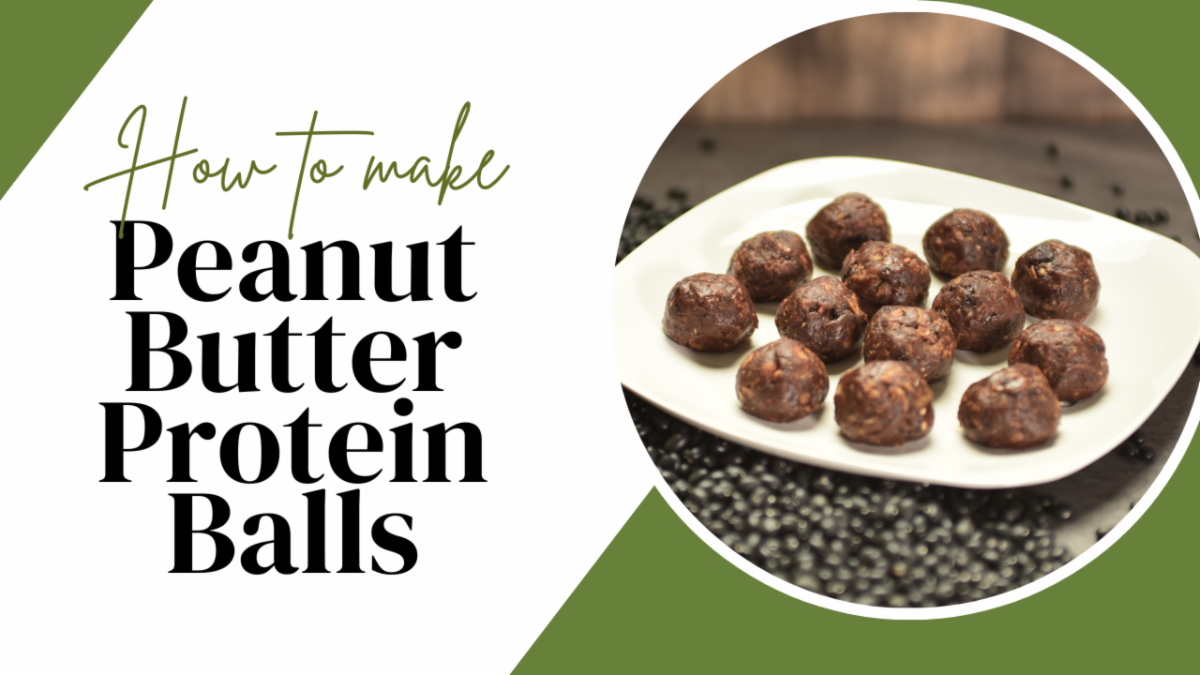
This month, NBGA is excited to release the next recipe video in this series: Black Bean Peanut Butter Protein Balls, courtesy once again of Chef Lauren Zobac!
We hope recipes like these bean protein-packed snacks will help encourage people to think outside of the box and realize the many, MANY ways in which we can use beans. These videos are an ongoing project for the NBGA, and the Bean Institute will continue to promote these videos to a wide audience of consumers, registered dietitians, and others.
This fourth video in our recipe series is scheduled to premiere on Thursday, June 13th at 7 pm central time. Recipe ingredients and cooking instructions are ready and waiting in the video description for when it goes live. The video tutorial will be available on our YouTube channel page, linked by clicking the photo below. NBGA appreciates the efforts of all involved and we hope you enjoy it!
And remember - if you make this or any of the recipes we share, please send us photos and let us know how you like them!
|  | |
Bean Institute: Celebrating July 4th with Beans | In a few weeks, it will be the 4th of July. Incorporating beans into holiday festivities - on July 4th and also other holidays throughout the year - can be a great way to celebrate beans, a food that plays such an important role in health, sustainability, and local agriculture. Below is a screenshot from the Bean Institute's post about beans and Independence Day, which provides some historical perspective about Boston baked beans. |  | |
Jamaican Jerk BBQ Baked Beans
In previous years, NBGA has worked with the Culinary Institute of America to have chefs develop delicious and innovative bean dishes. One recipe they made was for Jamaican Jerk BBQ Baked Beans. This twist on the baked bean classic is boldly flavored with Jamaican jerk spices, including paprika, allspice, nutmeg, cinnamon, black pepper, and cayenne. Your taste buds will not be bored!
You can find the recipe ingredients, instructions, and video here: https://beaninstitute.com/recipes/jamaican-jerk-bbq-baked-beans/. Or, click on the video image below to watch Chef Rebecca Peizer make this recipe.
| | |
|
Are you looking for more helpful and fun bean information and some bean recipe inspiration? Subscribe to the Bean Institute's newsletter: The Bean Bulletin.
➡️ Sign up by clicking here!
| | |
Positive Health Outcomes of Bean Intake | |
|
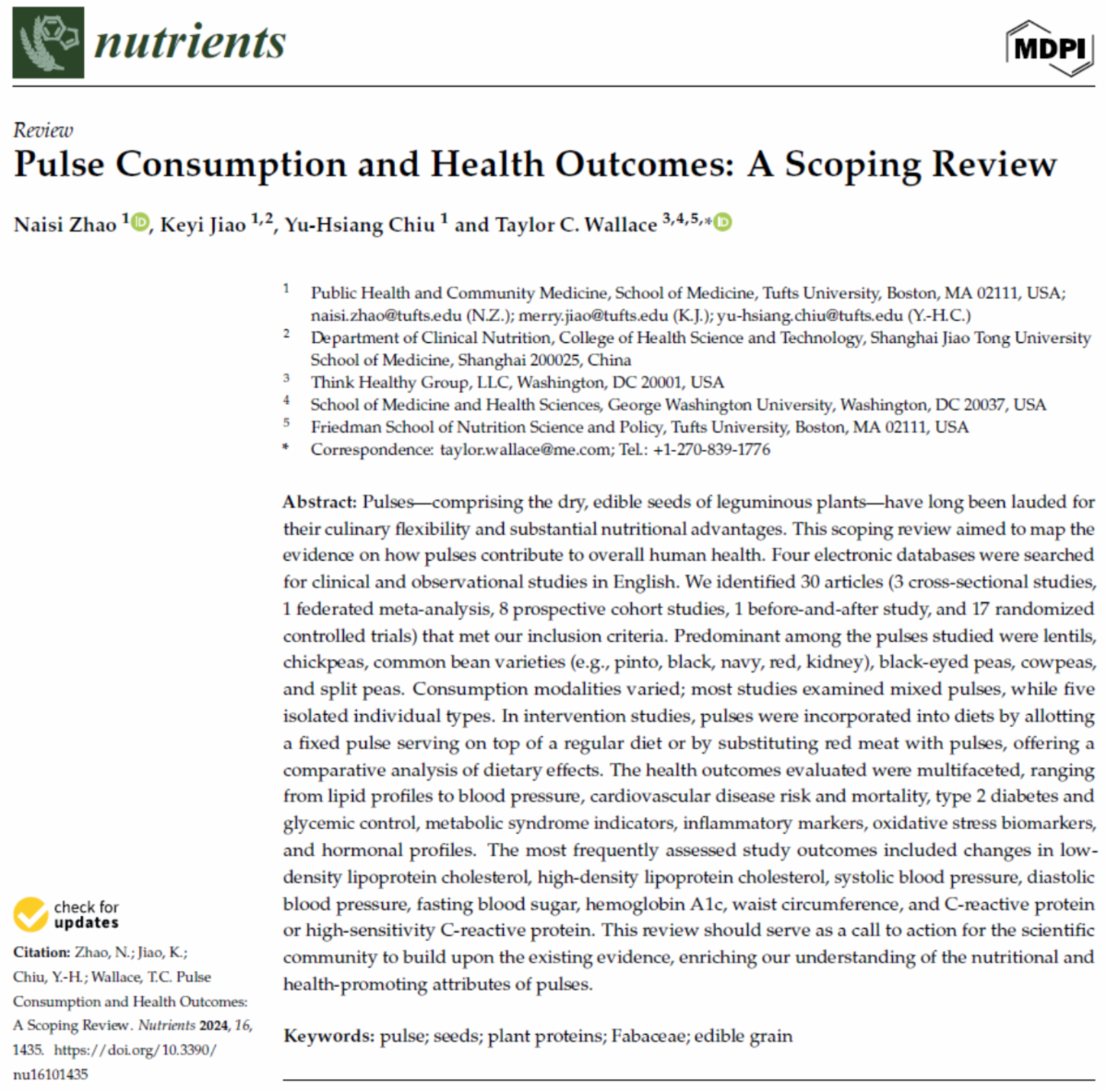
Just last month (May 2024), a review paper titled Pulse Consumption and Health Outcomes: A Scoping Review was published in the scientific journal Nutrients. This article provides further evidence of the numerous health benefits of pulses (e.g., beans, chickpeas, dry peas, lentils), as well as helping identify key areas to focus on in future research. This is another of the studies that contributes to the mission of the Coalition for the Advancement of Pulses (CAP), which is supported by NBGA and the US Dry Bean Council.
Authors Zhao, Jiao, Chiu, and Wallace conducted a detailed review of the scientific literature. In their own words, the "review aims to synthesize the current scientific evidence to elucidate the relationships between whole pulse consumption and health outcomes related to chronic disease prevention and management" and "to map the evidence on how pulses contribute to overall human health." The article abstract is shown below.
| |
|
What did the researchers do?
The researchers established inclusion criteria to help ensure they were reviewing relevant articles. For example, to be included in the review, previous research articles needed to involve the consumption of whole pulses for a period longer than 2 weeks. After applying their criteria, the researchers identified 30 peer-reviewed articles. Data was extracted from these articles to investigate the effect that pulse consumption has on health outcomes. Some of the monitored health outcomes included cholesterol levels, blood pressure, the risk of heart disease, type 2 diabetes and blood sugar control, and waist circumference.
They created several helpful tables, such as one that summarizes the characteristics (e.g., sample size, type of pulse studies, main findings) of these 30 studies. The researchers also worked to identify research gaps, thereby highlighting areas that future research could address to help fill these knowledge gaps and improve our understanding of the health outcomes associated with eating beans and other pulses.
| |
|
What did the review find?
The researchers found that pulses are supportive of positive health outcomes. "The studies reviewed here, with diverse designs and populations spanning several countries, consistently illustrated pulses as beneficial for health, aligning with dietary guidelines that advocate for plant-based diets," the researchers assert.
For example, pulse intake was associated with a reduced risk for type 2 diabetes in several of the 30 peer-reviewed studies. Pulses were also determined to have beneficial effects on cholesterol levels. For instance, pulse intake is associated with reduced LDL (bad) cholesterol levels in numerous studies.
The authors state that "evidence suggests that pulses are valuable in dietary strategies for diabetes management and cardiovascular health." However, some of the studies found no association between pulse intake and their health outcome of interest. The authors say this could be attributed to factors such as "regional variations in diet or pulse preparation methods."
Ultimately, "the review findings affirm the health benefits of pulses and highlight the need for further investigation to fully elucidate their role in health outcomes." As scientists continue to research the role that pulses play in human health, we will gain a better understanding of answers to important questions, such as the ideal amount of beans to eat in order to achieve the desired positive effects for public health.
| |
Moral of the story? Eating beans and other pulses is associated with a variety of beneficial health outcomes, and it is important to support additional research to better understand how to optimize these positive effects. | |
|
In addition to all the work that goes along with bean planting season, Northarvest members have been busy engaging with various audiences to promote beans.
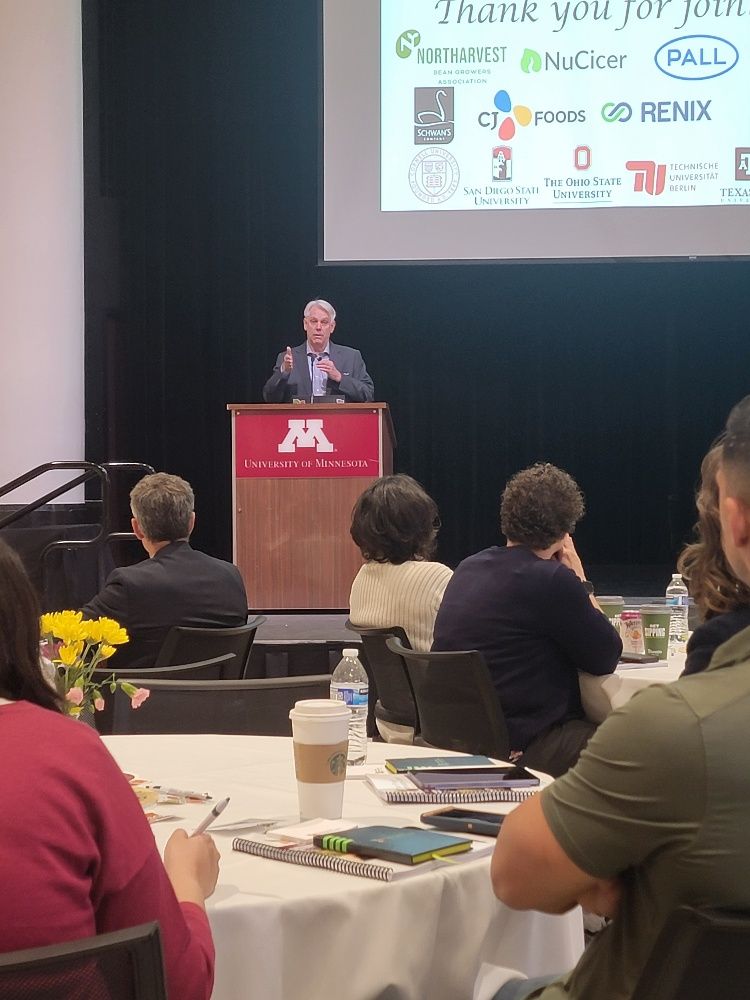
University of Minnesota - Plant Protein Innovation Research Meeting
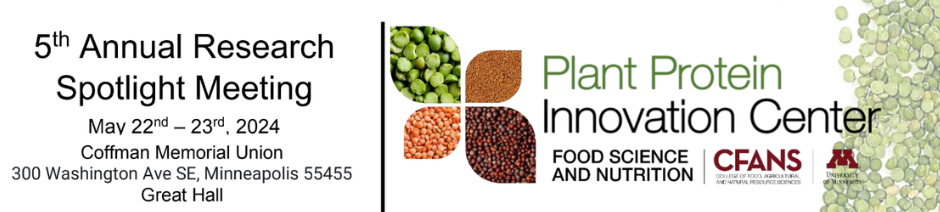
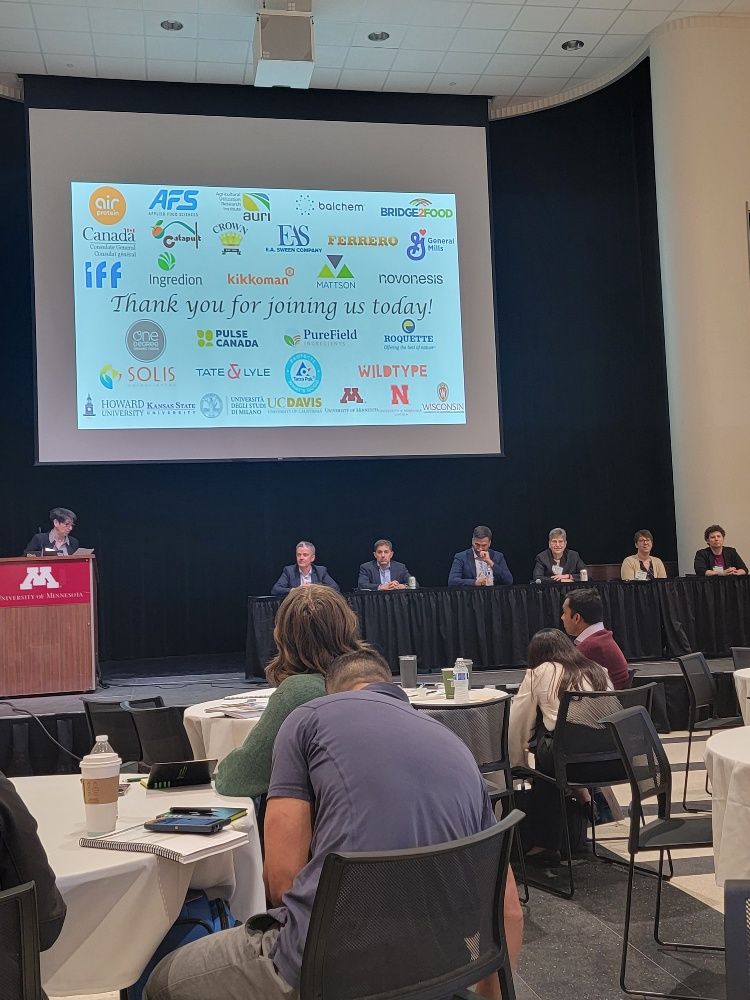
Mitch Coulter, NBGA Executive Director, attended the University of Minnesota Plant Protein Innovation Center 5th Annual Research Spotlight Meeting. The meeting was well attended by representatives from companies like Cargill, General Mills, Danone, Conagra, and Buhler, researchers from numerous universities and institutions, and others.
| |
|
Image from meeting agenda
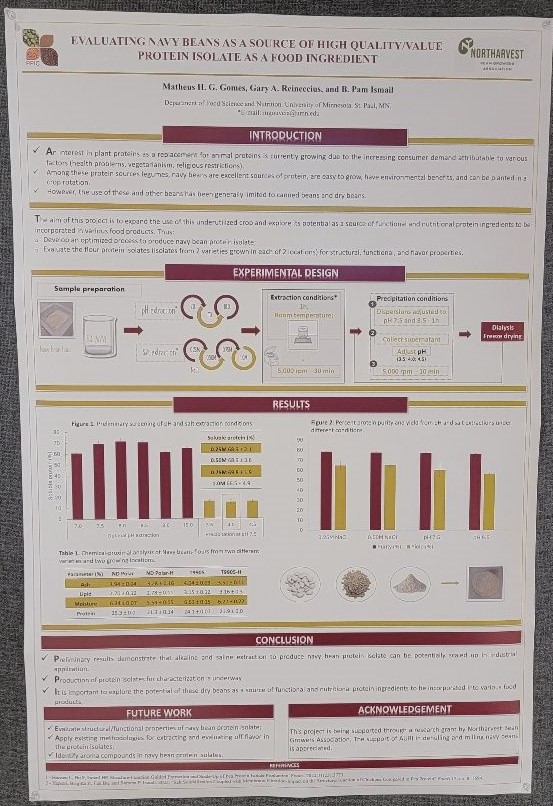
NBGA currently has two working projects with the Center, to evaluate both navy beans and kidney beans as a source of high quality/value protein isolate as a food ingredient. NBGA has also worked with the Center's staff to get a project funded through the Minnesota Department of Agriculture Specialty Crops Block Grant. The project is investigating the development of high-quality protein ingredients from dry beans for food applications. NBGA appreciates the efforts of the Center to advance innovation in dry edible beans.
| |
A research poster on "Evaluating Navy Beans as a Source of High Quality/Value Protein Isolate as a Food ingredient" | |
One of the many informative panels at this annual meeting | |
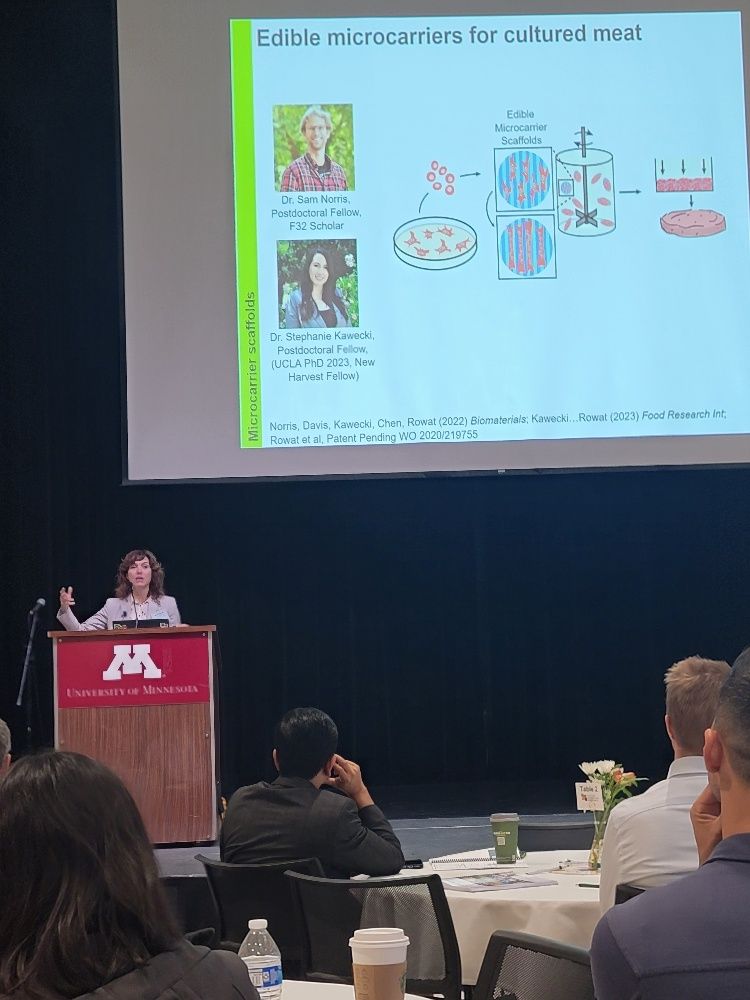
Amy Rowat, Professor at University of California, Los Angeles | |
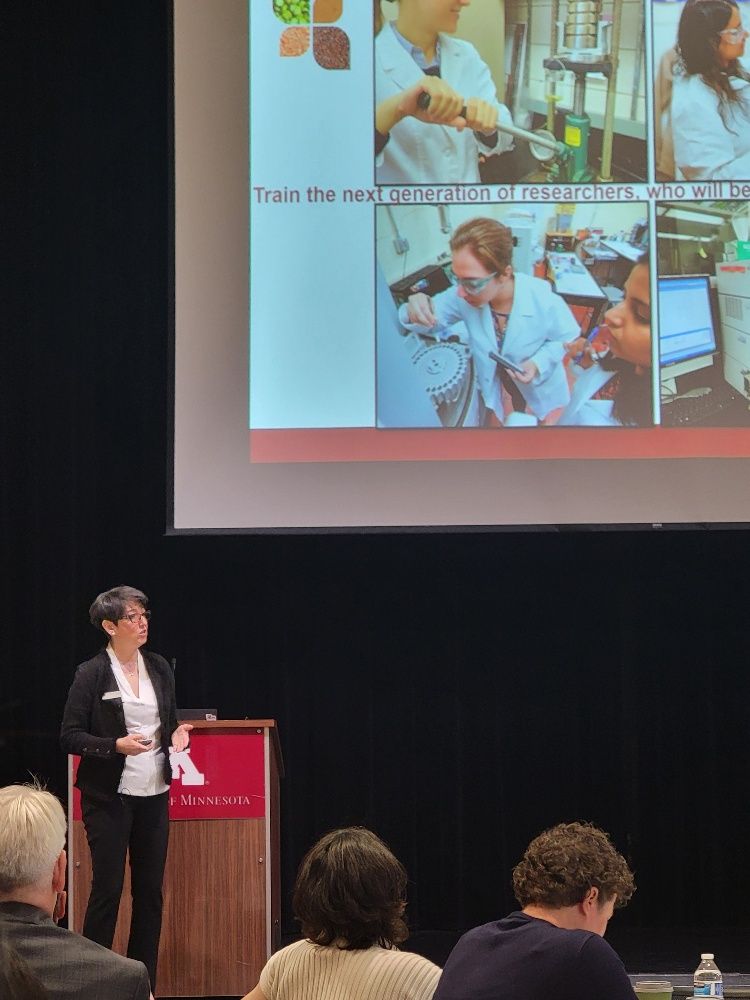
Baream Pam Ismail, Director at Plant Protein Innovation Center | |
Brian Buhr, Dean and Director College of Food, Agricultural and Natural Resource Science | |
|
Telling the Story of Northarvest Beans
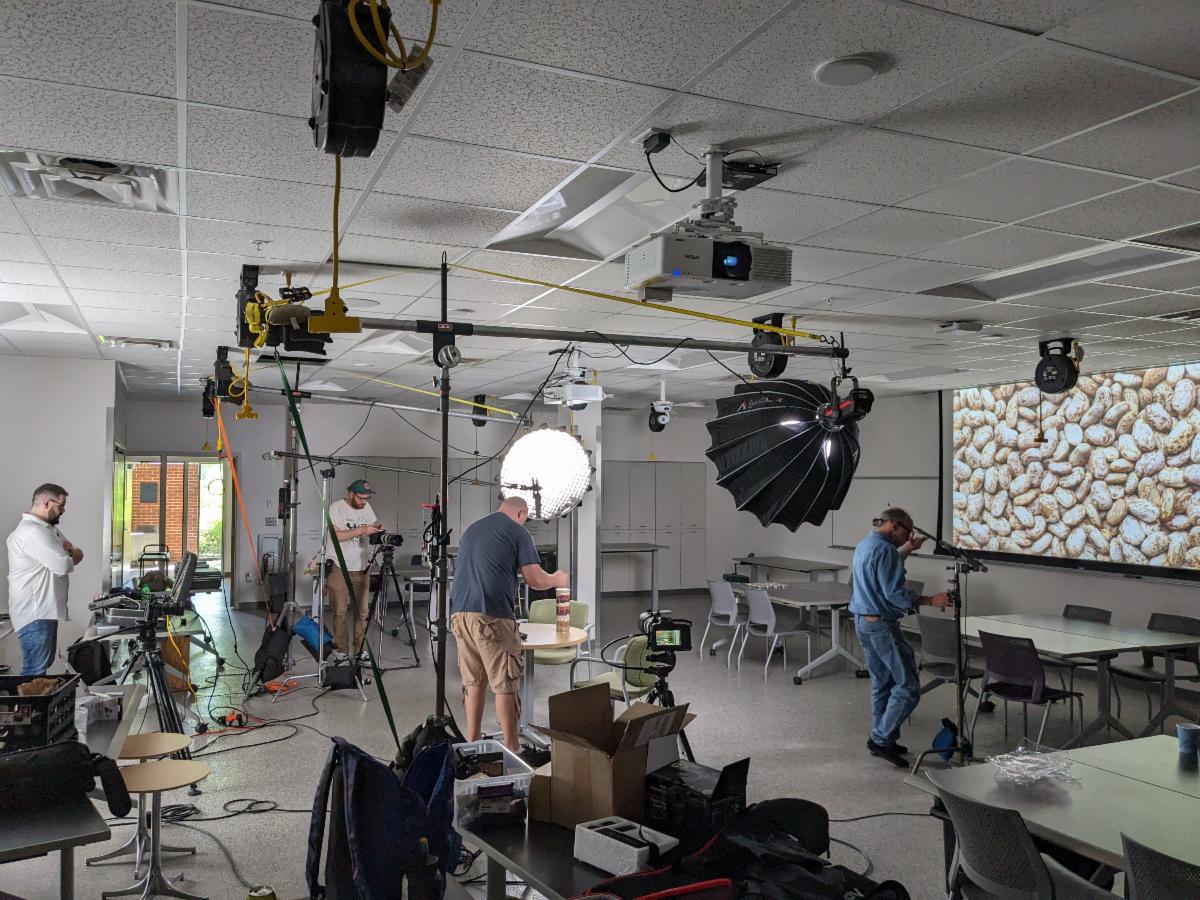
Jed Brazier, NBGA Marketing & Communications Director, has been visiting growers across the Northarvest region to tell the "seed-to-stovetop" story of our region's beans. Working with Dead Horse Productions, he has interviewed growers and captured footage of them on their farms across North Dakota & Minnesota, as well as spent time following Dr. Juan Osorno's research plots and winter nursery.
With consumers expressing an avid desire to know more about where their food comes from, highlighting the work of growers will resonate with the public. Many people are not familiar with Northarvest Bean Growers Association, nor with how beans are produced and all the work that goes into farming. Video narratives are a powerful way to tell NBGA's story - which is the stories of our growers and the efforts gone through to get beans into stores and onto tables around the world. As previously shared, NBGA is working once again with That Midwestern Mom - this time on a much larger project - who shares updates with her 1 million plus combined social media followers to help further broaden the reach of this project.
| |
Behind the scenes during Eric Samuelson's interview with That Midwestern Mom | |
NBGA Communication & Marketing Director Jed Brazier (left) oversees crew setting up for interviews in a classroom at the NDSU Department of Plant Sciences building. | |
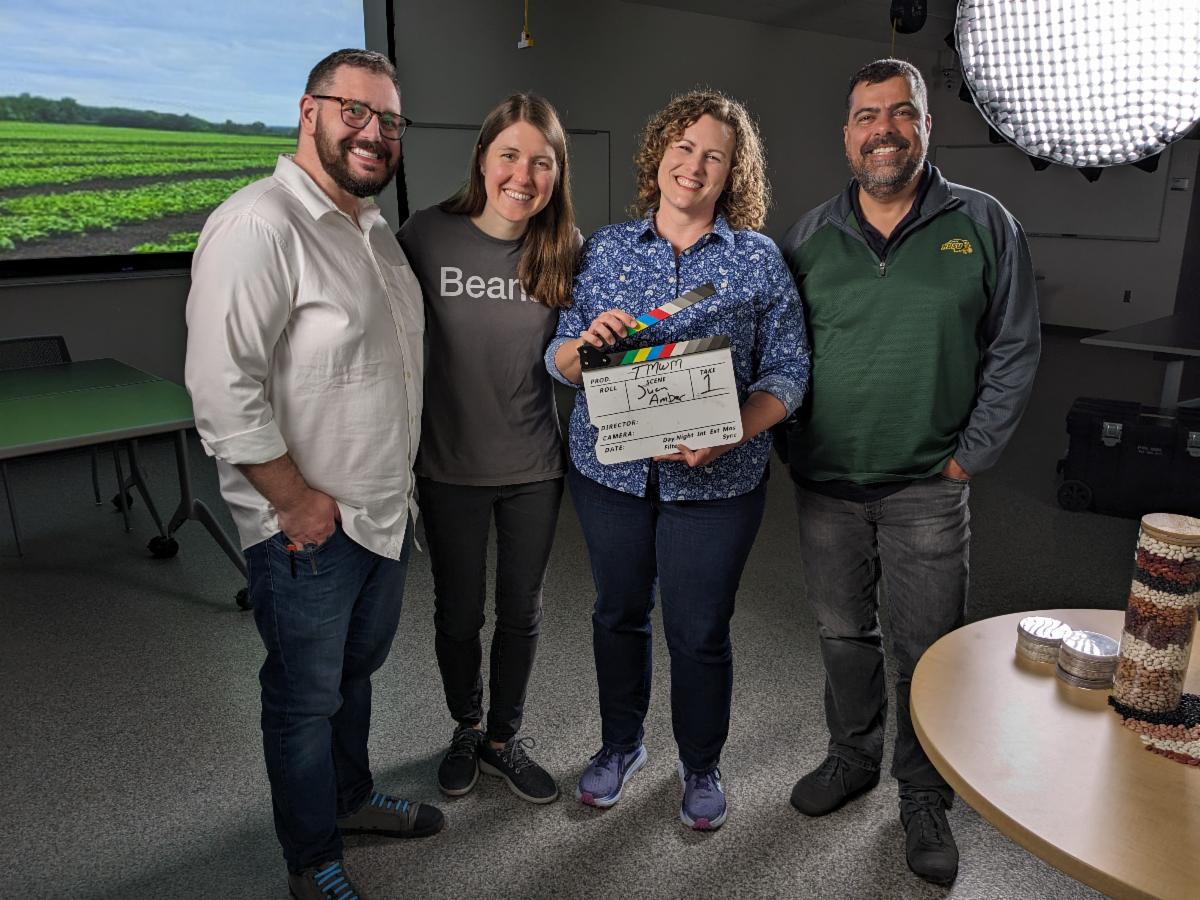
L to R: Jed Brazier, Chelsea Didinger (A Legume a Day), Amber Estenson (That Midwestern Mom), Juan Osorno | |
Jed Brazier leaving a thank you note to NDSU for allowing NBGA to film there | |
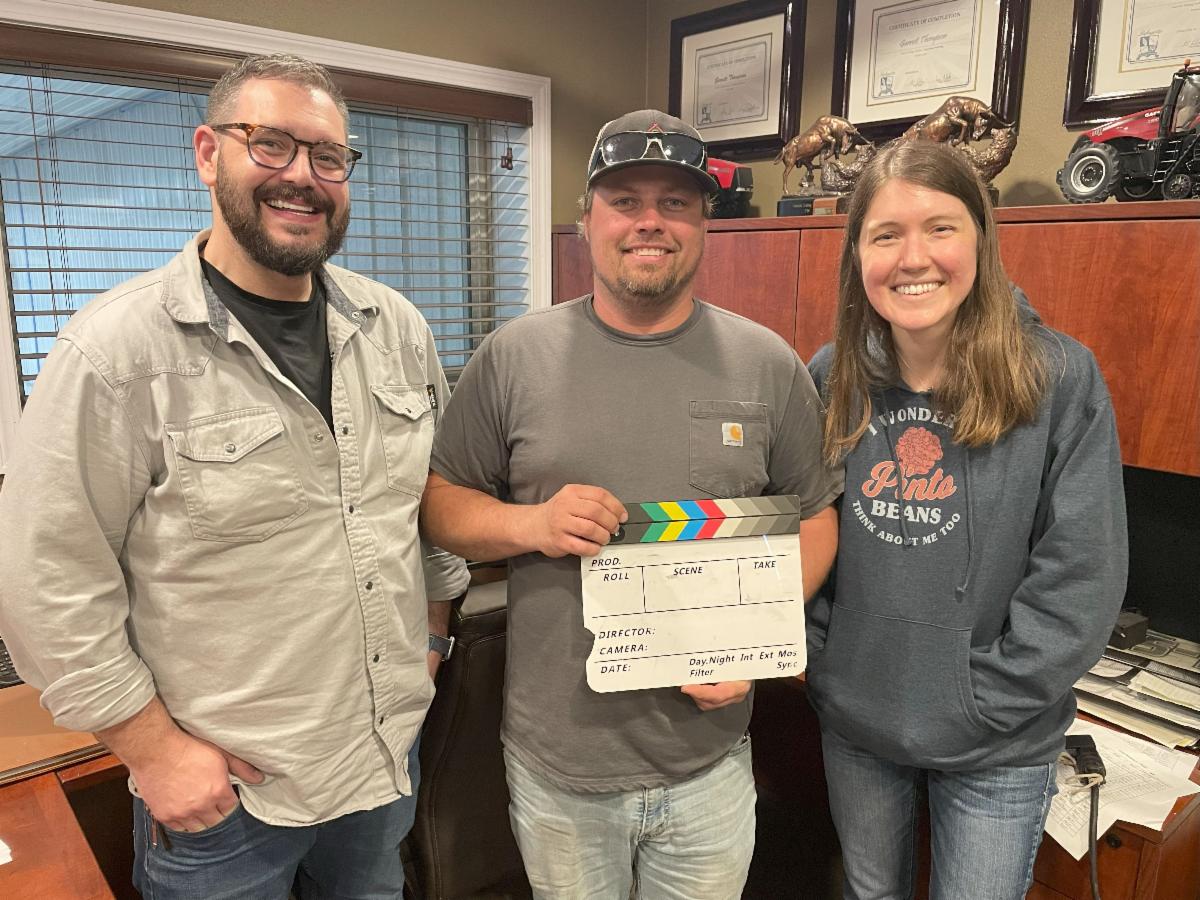
L to R: Jed Brazier, Garrett Thompson (NBGA Director, District 1), Chelsea Didinger | |
|
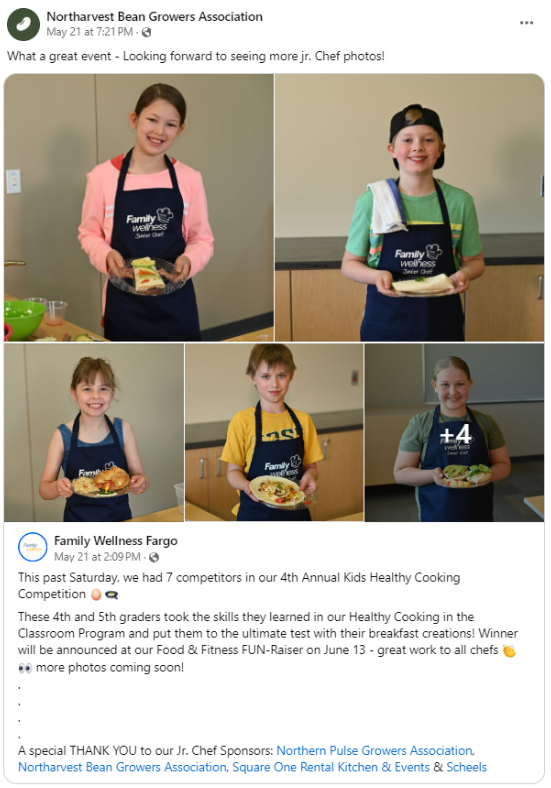
Kids Healthy Cooking Competition
As we shared in last month's newsletter, NBGA was a proud sponsor of the 4th Annual Kids Healthy Cooking Competition, hosted by Family Wellness in Fargo. The winner will be announced on June 13th, so look for the announcement in our July newsletter!
| | | |
|
New Study Shows Eating Beans and Chickpeas is Linked to Better Diet Quality in American Adults
Another study linking beans to nutritional benefits was recently published in the peer-reviewed journal Maturitas. This research was funded by the Coalition for the Advancement of Pulses (CAP) - supported by USDBC and NBGA - and cannedbeans.org.
Essentially, the study found that eating beans (including canned and/or dry) can improve nutrient intake and significantly increase diet quality. For example, by adding more beans to the typical American diet, the authors saw higher intake of what they called shortfall nutrients (i.e., nutrients that are typically under-consumed), including dietary fiber, potassium, magnesium, iron, folate, and choline.
The EIN Presswire press release about this research shared a statement from author Yanni Papanikolaou, “We know that the majority of adults are not meeting established recommendations for beans, peas, and pulses. All it takes is the addition of one or two servings of canned pulses like dry beans and/or chickpeas to help close nutrient gaps and improve diet quality.”
The press release goes on to explain the importance of eating beans to support overall health: "In both younger and older adults, this evaluation showed that pulses like beans contributed to a substantial increase in daily dietary fiber intake.iv This is critical since fewer than one in 10 US adults meet fiber recommendations to maintain optimal digestive health and prevent chronic diseases, including cardiovascular disease, diabetes, obesity and certain cancers.viii"
You can read the press release here.
| |
Graphic from the Coalition for the Advancement of Pulses | |
|
The Dry Bean Scene is sponsored, in part, by NBGA. Click on the links below to listen to the most recent episodes.
-
➡️ June 10, 2024: NBGA Vice President Joe Mauch talks about how wet conditions and wind have affected planting and crop development.
-
➡️ June 3, 2024: Johnstown Bean Company General Manager Dylan Karley discusses planting progress this year, addressing how the wet weather in the early part of the season delayed planting a bit. With the weather warming up, he expects to see a lot of progress. Dylan also explains for which market classes he anticipates seeing increased acreage.
-
➡️ May 23, 2024: Michigan State University Dry Bean Specialist Scott Bales offers a perspective on crop conditions in his home state, sharing that they expect a modest increase in acreage. Dry bean planting progress in other states is also discussed.
-
➡️ May 20, 2024: NBGA Executive Director Mitch Coulter discusses the Farm Bill process and what it means for dry edible bean growers. He touches on crop insurance, looking at a dry edible bean purchase program that would fit in with food aid, and more.
| |
Do you know someone who would enjoy Northarvest News? Forward to a fellow bean grower, family, and friends so they can sign up and be in the NBGA know, too! | | |
Thank you for reading. We'll see you next month - and the 2nd Tuesday of every month - with more news and updates. NBGA wishes you a good rest of June, and we look forward to sharing more information in July. | | |
|
4844 Rocking Horse Circle S, Suite 2
Fargo, ND 58103 • info@northarvestbean.org
www.northarvestbean.org
| | | | | |