July Tips & Events for Santa Clara County |
|
|
|
“Gardening is the work of a lifetime: you never finish.”
~Oscar de la Renta
|
|
|
|
Quiz: What’s eating my fruit? |
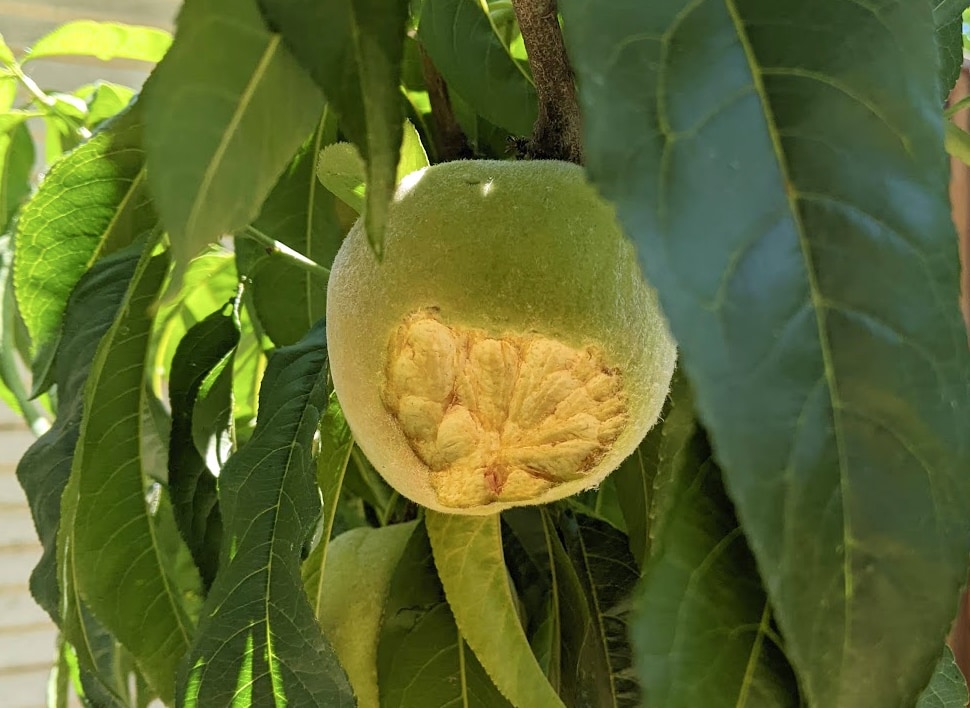
Your fruit is finally getting larger, and you can’t wait until it is ready to be picked! One day, you notice that part of the fruit has been chewed up. What ate your fruit? Was it a squirrel, a rat, a bird, or something else? How can you tell? |
Photo: Damaged peach fruit, Ying Chen
|
|
|
|
|
|
|
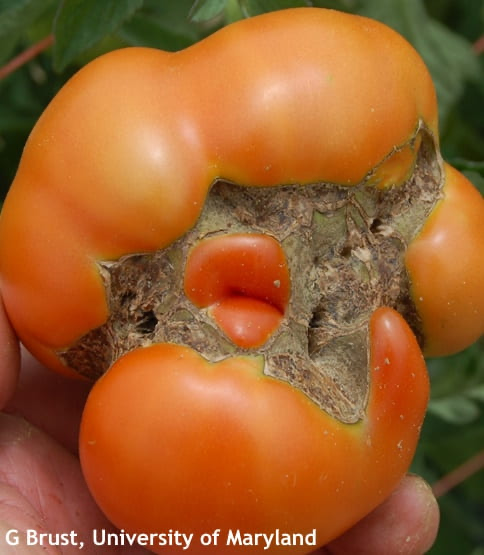
Catfacing refers to misshapen puckering and scarring on the blossom end of tomatoes. It’s an environmental problem, not a disease, and can be caused by unusually high or low temperatures or cool, cloudy conditions at the time the flowers are setting fruit. Some varieties, especially large beefsteak types, are more susceptible to it. There’s little a gardener can do to avoid it, other than planting varieties that are less likely to catface. The good news is that catfaced tomatoes are generally still fine for eating once the damaged tissue is cut off, as long as no rot-causing organisms gained entry.
Photo: Catfacing on a tomato, Gerald Brust, University of Maryland
|
|
|
|
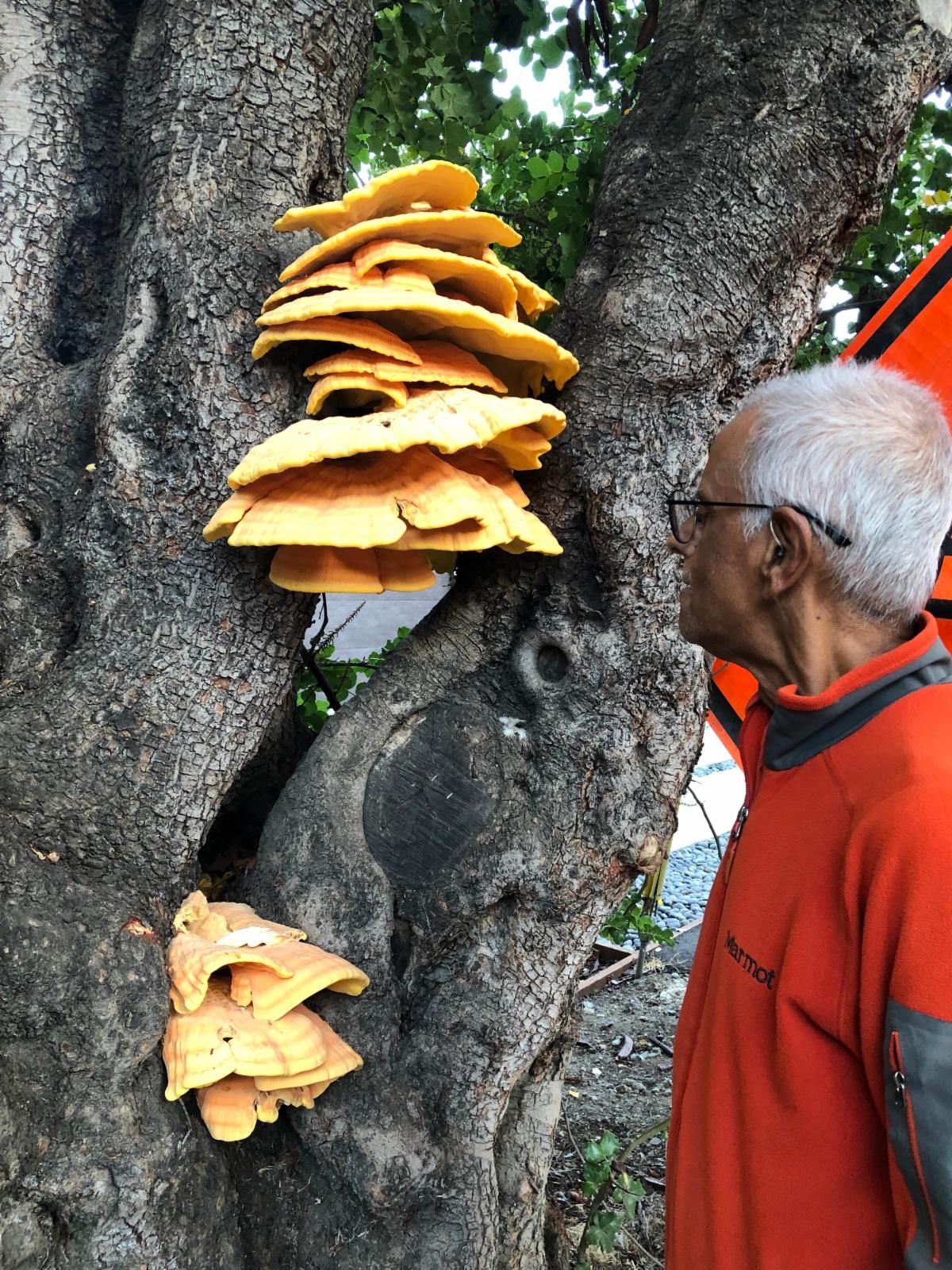
Shelf-like fungus or mushrooms growing on trees indicates advanced internal decay. Once these external fruiting structures appear, the infection is likely widespread inside the tree. To reduce the chance of infection, protect trees from injury, provide adequate water and fertilization, and prune trees correctly when young to avoid significant pruning cuts when they’re older. Regularly inspect trees and consult an arborist if you spot fungal growths or other signs of decay. The arborist can assess the extent of rot and the structural integrity and make recommendations.
|
Photo: Shelf fungus on tree trunk, Candace Simpson |
|
|
|
|
|
|
Pest Update:
There’s Good News and Bad News
|
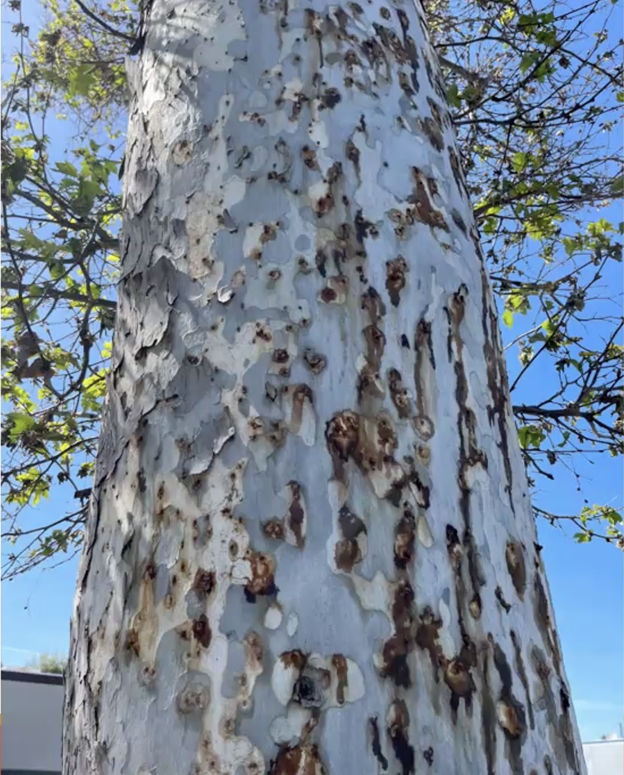
The bad news: The highly destructive shothole borer has arrived, posing an imminent threat to trees commonly found in urban landscapes and natural forests. No bigger than a sesame seed, the beetles tunnel into trees and introduce a fungus that they use as their food source. As the fungus grows, it causes a disease that kills branches or entire trees. This sobering video describes the problem and how to mitigate the threat.
Photo: This sycamore tree, a preferred host of the polyphagous shothole borer, shows signs of a severe infection, Drew Raymond, Santa Clara Department of Agriculture
|
|
|
|
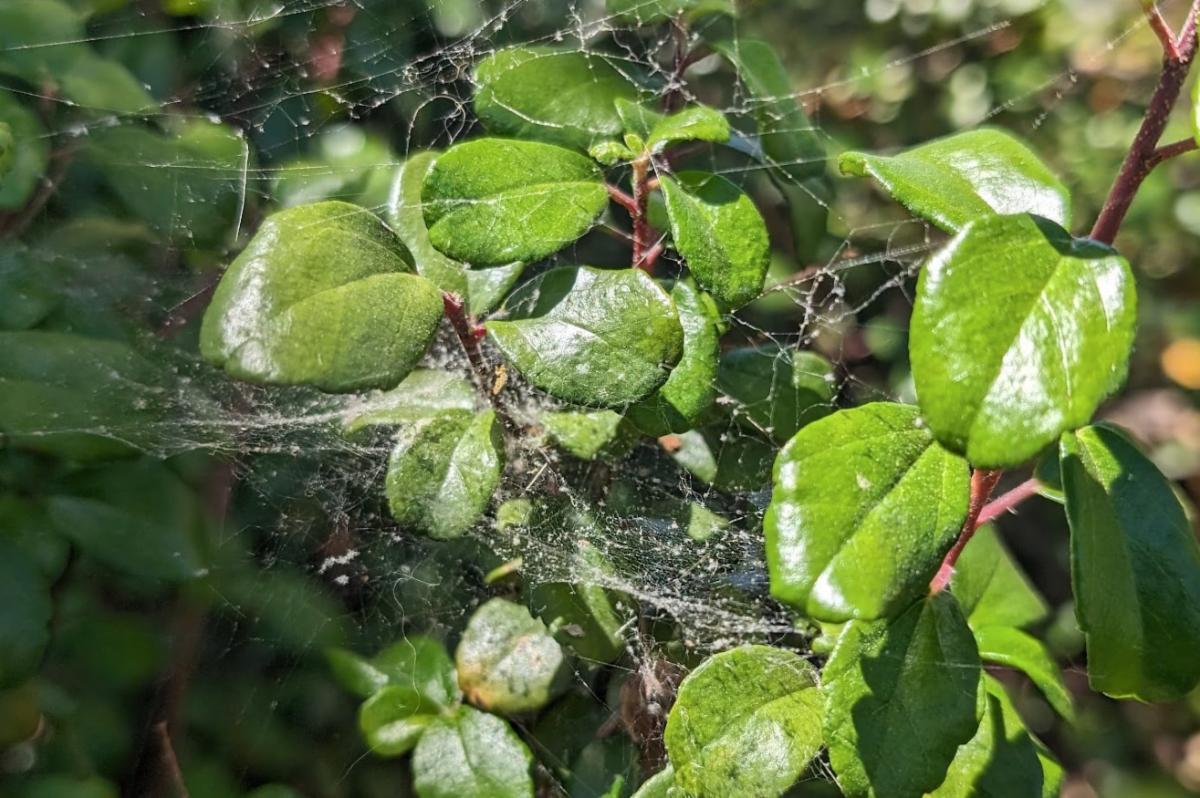
As the days get hotter and drier, you might notice a large amount of webbing covering your plants. This is likely caused by spider mites. These tiny pests, less than 1/20 inch long, are closely related to spiders. They attack a wide variety of plants by sucking plant juices from leaves and flowers. At first, the damage shows up as stippling—light-colored dots on leaves. Eventually, leaves may turn yellow/reddish and drop. Damage is usually worse when plants are water-stressed. When managing spider mites, make sure to water the plants sufficiently and spray the leaves daily to wash off dust and mites.
Photo: Spider mite webbing on a plant, Ying Chen
|
|
Some Soil Just Wants to Stay Dry |
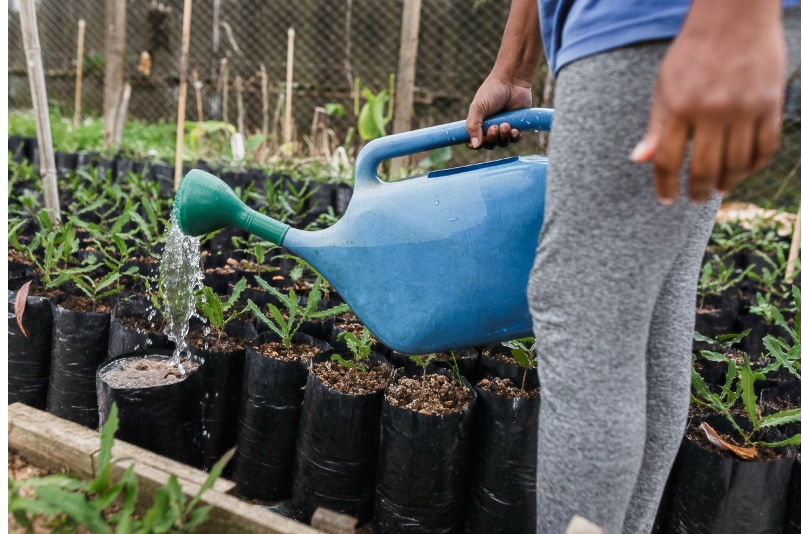
If you water your potted plants and see water drain quickly from the bottom, you may assume the soil is saturated. Not so fast. Many soils become hydrophobic—meaning they repel water—when they dry out. The water simply runs down the inside of the pot, and the root ball stays completely dry. To rehydrate small container plants, submerge the pot in a bucket of water. You’ll see air bubbles escape as water fully penetrates the soil. You can also set the pot in a shallow water container for about an hour to rewet the soil. With large containers, trickle water slowly so it has time to be absorbed.
Photo credit: Unsplash
|
|
|
|
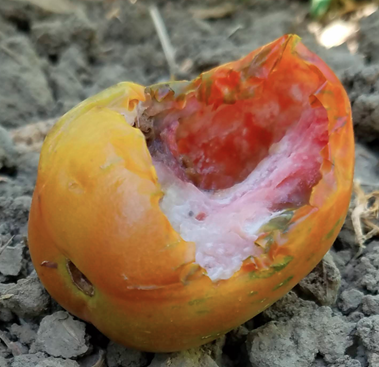
To figure out what’s eating your fruit, start by narrowing down the list of possible pests in your area. Observe whether the damage is likely caused by insects, birds, or rodents. Birds tend to peck at ripe fruits, and rodents take bites. Also observe what time of day the damage happens. Squirrels are active during the daytime, and rats are mainly active at night. Look for other signs, such as placement of the damaged fruits, tracks, and possibly droppings, and compare that to the habits of the pest you suspect. When you are sure what the pest is, you can take appropriate action to protect your fruits.
|
|
Photo: Rat damage on tomato, B. Messenger-Sikes |
|
|
|
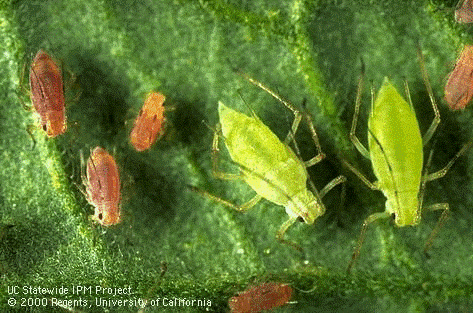
Photo: Aphid images, by Jack Kelly Clark, UC
|
|
In the June issue of Tips and Events, we stated that neem or canola oil wouldn’t harm natural enemies. While horticultural oils leave no toxic residue and won’t kill insects that arrive after the oil is applied, natural enemies can still be killed if they are directly sprayed. Use Integrated Pest Management practices, including applying pesticides only when needed, to minimize risks to people and the environment.
|
|
|
|
Our monthly Plant Clinic Online is an opportunity to chat with a Master Gardener via Zoom to diagnose a plant problem. You can also listen and learn while other people ask questions. It takes place on the second Tuesday of the month (July 9), from 7–8:30 pm. Priority will be given to questions that are emailed in advance; instructions are in the Zoom registration confirmation. Registration required.
Container Gardening, Tuesday, July 9, 6:30–7:30 pm, First Floor, Mountain View Public Library, 585 Franklin Street, Mountain View
STDG Ask a Master Gardener, Saturday, July 13, 10 am–noon, Sunnyvale Teaching and Demonstration Garden, Charles Street Gardens, 433 Charles Street, Sunnyvale
Container Gardening!, Wednesday, July 17, 7–8:30 pm, Los Altos Library, 13 S. San Antonio Road, Los Altos
STDG Garden Structures, Saturday, July 20, 1–3 pm, Sunnyvale Teaching and Demonstration Garden, Charles Street Gardens, 433 Charles Street, Sunnyvale
|
Check our calendar for the latest schedule of events. Videos of many past presentations are also available.
|
|
|
|
University of California Master Gardener volunteers promote sustainable gardening practices and provide research-based horticultural information to home gardeners. Visit our website for more information including:
Have a gardening question? Ask us. We’re here to help!
|
|
|
|
|
|