|
I
n the early morning of July 2nd a CSX train derailed in Maryville carrying A
crylonitrile, a hazardous substance used as a plasticizer. The train subsequently caught fire as a result of the derailment. Officials evacuated 5,000 people in a 1.5 mile radius and several first responders were taken to hospital. EPA was notified and sent response teams for air and water quality monitoring.
The fire was extinguished on Friday July 3rd.
Initial ground water testing taken from Denso and Macamber monitoring wells on July 2nd showed no detectable levels of Acrylonitrile. The results were sent to TestAmerica Laboratories in Nashville. The lab results showed that both well water samples had less than 0.5 micrograms/Liter of Acrylonitrile, which is the minimum detectable limit of the test. The validity of these results was confirmed via a positive control, where a known amount of Acrylonitrile was added to clean water. In these initial results there were no indication of Acrylonitrile in well water in the affected area.
In a July 4th joint government and agency press release posted on the Town of Maryville Facebook Page, it was reported that a new set of lab results analyzed at an independent lab showed well samples tested for Acrylonitrile contaminants also "came back clear." No lab data were shared in this release but the release stated that, "In an ongoing environmental monitoring effort, regulatory agencies, local governments, and CSX will continue to measure air, water, and soil samples to ensure that the community's inhabitants are safe and that progress is being made to ensure there are no future impacts."
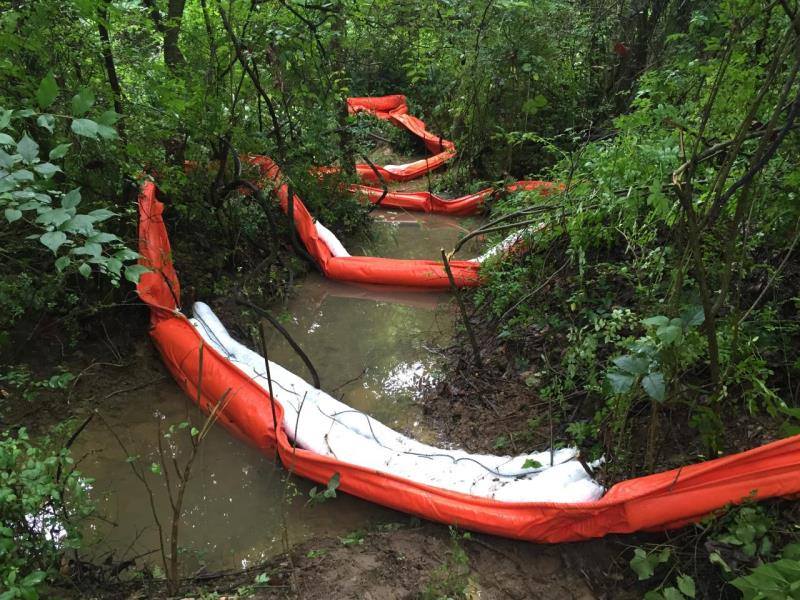
On Sunday July 5th officials issued an advisory against activity in Culton Creek after biologists found dead fish in the creek. TDEC, EPA, and officials from Blount County, Alcoa and Maryville issued the advisory statement. According to EPA, "the highest concentrations were found in the surface water interface nearest to the derailment site and decrease to non-detect 2-miles downstream". Monitoring was expanded to include surface water protection/sampling operations from the derailment site to the Tennessee River, with 8 ground monitoring wells installed around the derailment site. Well sampling has continued in the 1-mile radius with one well within 300 feet of the spill detecting Acrylonitrile levels. No other detections have been observed. We should emphasize that public drinking water intakes are up river/upstream from the derailment site. According to EPA, approximately 4,000 tons of contaminated or compromised soil was removed from the site. Acrylonitrile levels decreased in Culton Creek and the advisory was lifted. According to The Environmental Protection Agency bulletin on the site, oversight has been transferred to the Tennessee Department of Environment and Conservation. The Little River Watershed Association will continue to track the cleanup progress and will look forward to a complete report regarding the extent of the spill and the short and long-term plans for monitoring surface water, groundwater, well water, soil and air quality. |