See Past Issues

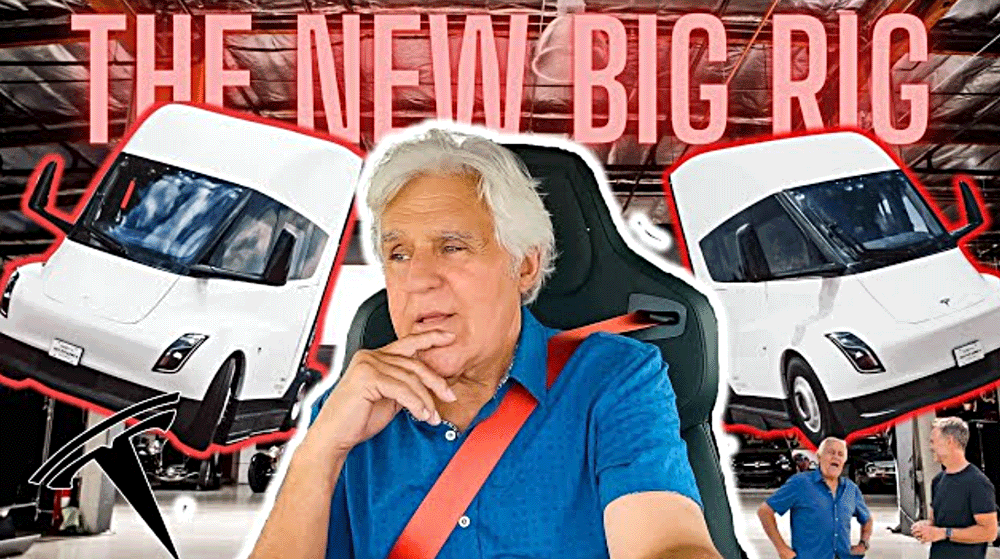
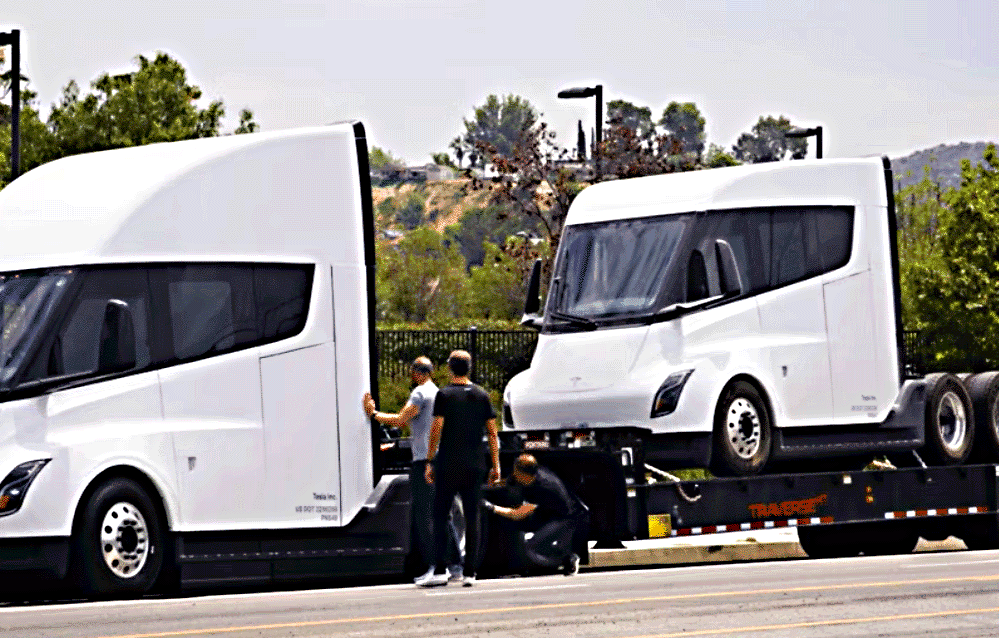
Former late night kingpin and longtime car guru Jay Leno got to do what so many in trucking have been dying to do - drive Tesla's Semi truck.


The Semi offers up to 1,500 horsepower. The Tesla Semi is built 20 miles East of Sparks at the Nevada Gigafactory.


The idea for an EV Semi came from then - CTO JB Straubel (who later left Tesla to start battery-recycling firm Redwood Materials).


Straubel felt that shipping battery packs from Tesla's Gigafactory plant in Reno, Nevada, to its vehicle plant in Fremont, California, in diesel trucks was contrary to the company's mission of zero-emission transportation.


With encouragement from another Tesla executive who previously worked at truck maker Freightliner, the idea eventually "snowballed" into a production-bound project.


While Tesla has no previous experience with commercial vehicles, and the Semi has some unorthodox design features like a central driver's seat that came from conversations with truck drivers.

Leno hops into the Semi’s cab with Semi’s cab with Dan Priestley, Tesla’s senior manager of semi-truck engineering and Tesla design boss Franz von Holzhausen.

Throughout the drive, Leno notes how smooth and quick the Semi feels compared to other large trucks.


Priestley talks about several themes related to the Semi’s design, including Tesla’s hopes to woo younger truck drivers with the vehicle. He also says a main goal of Tesla’s was to increase safety by making the Semi powerful enough to keep up with traffic easily compared to normal semi-trucks.

The Tesla Semi has been making waves as an all-electric heavy-duty hauling vehicle from America’s most famous EV company.


We already knew that powering an EV is cheaper than fueling a traditional gas-powered engine. Plus, electric engines are quieter, smell better, and don’t produce toxic fumes or heat-trapping gases that warm up the planet.

Leno interviewed Dan Priestley, Tesla’s senior manager of semi-truck engineering, during an episode of the Emmy-winning “Jay Leno’s Garage.”


In a clip from that encounter, Leno asks, “I can’t imagine, what is it with something like this versus a diesel truck?”


“Yeah, the first three years of operation, you’re looking at nearly $200,000 in fuel savings,” replies Priestley. “That’s massive for a fleet, particularly when you look at ones that have thousands of trucks. So that’s what really attracts a lot of our customers, is the economics of the total cost of ownership.”

The benefits for a company are obvious. A $200,000 savings for one truck means that a company with a modest five-truck fleet can save $1 million in those first three years of operation - and then keep saving.


Even factoring in the cost of the upgrade, it’s a good deal. A basic Tesla Semi with a 300-mile range is expected to start at $150,000, and the long-range version that travels 500 miles on a single charge comes in at $180,000, according to Business Insider. That means each truck is paying for itself in fuel savings alone in less than three years.


One company that has begun to make the switch is snack and beverage giant PepsiCo, which started using some Tesla Semis in late 2022.

Visit My Website
Call or Text  775-219-6413
Kelly Richmond REALTOR®  License #S.63483