It's National Pollinator Week! | |
|
Hello Jaime,
Natureworks is pollinator paradise. We sell and grow so many wonderful flowers in our gardens that our precious pollinators need. It is National Pollinator Week and The Pollinator Partnership's theme for this year is Vision 2024: Thriving ecosystems, economies, and agriculture. That is a tall order, but we KNOW it is possible. It is so wonderful when the rest of the country gets on board with what we teach and model all year long. Even the U.S.D.A is recognizing National Pollinator Week this year!
We welcome the SUMMER SOLSTICE, the first day of summer, on Thursday, June 20th. Right on cue, Mother Nature got the memo and said "I think I will turn up the heat!" I will share with you some of my tips and tricks for dealing with heat waves, for you, your gardens, and all of the creatures that you share your happy habitat with.
| |
When the temperature rises, we have a SCORCHING HOT SALE! | |
|
We have taken the veggies and herbs out of the tent and are stuffing it full of deeply discounted shrubs, trees, and perennials through the end of the weekend. We will add more daily!
50% off lilacs, magnolias, peonies, select Viburnums, pepper plants, and a lot of perennials (many past bloom, some just not up to our quality standards, all great plants! Including Hellebores!!!)
We have a FEW tomato plants left. We put them on a cart on the parking lot and are offering them to you for free, and some free zinnias that need a home fast. I bet you can find room for just 1 more!
Heat wave bonus: free popsicles and ice water when you come and shop!
| |
Nancy's Tips and Tricks for Dealing with Hot Weather | |
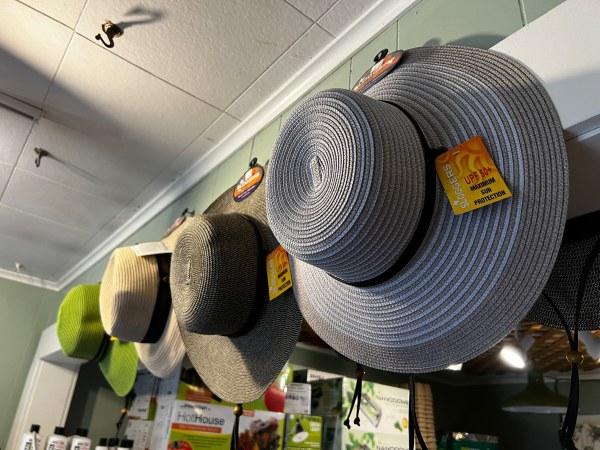
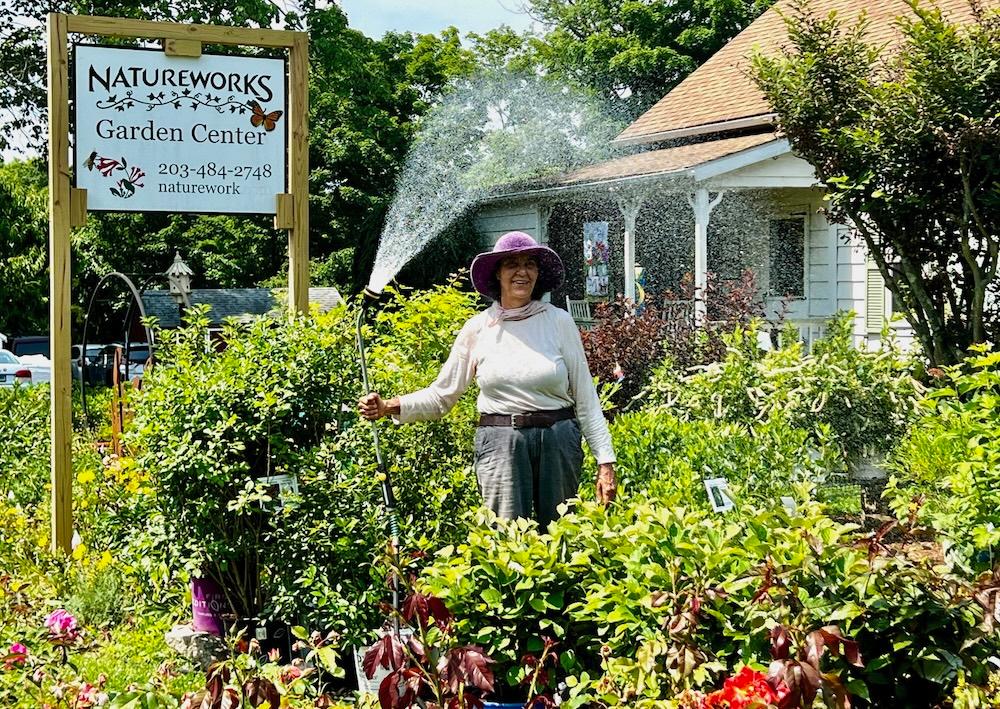
Treat yourself to a new, wide brimmed sun hat. I won't garden without one. I put a kerchief under the hat and use it to wipe my brow. If it is really hot, I moisten a kerchief in ice cold water and tie it around my neck. | |
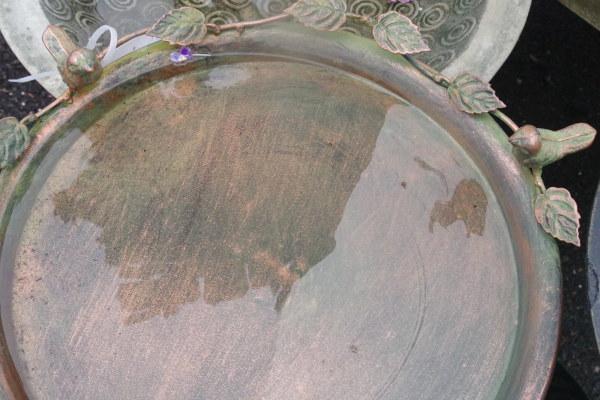
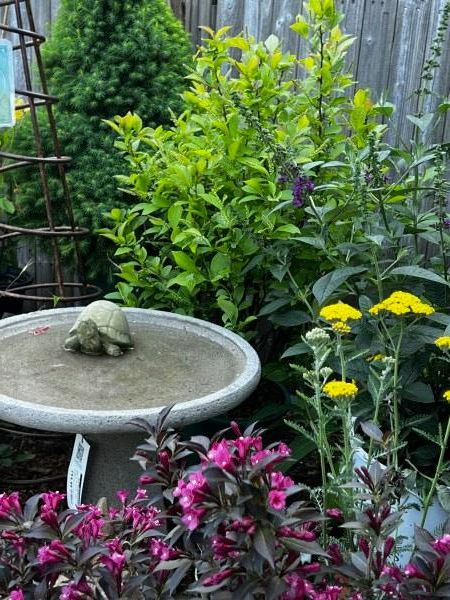
Keep your birdbaths filled. I add fresh water during hot days, washing out the warmer water from time to time. It is astounding how many birds use my birdbaths. I have NINE of them, all different sizes and types, in many spots in my yard. | |
|
I am a very early riser at this time of year. The solstice means we are experiencing this week the longest day and the shortest night of the year. The birdsong starts outside my bedroom window at 4:30 am and sometimes, I just can't stay in bed. That is one of my secrets to gardening in a heat wave. Go outside as early as you possibly can and get whatever you need to get done DONE! Even if I have to go to work, I still get up extra early to check on everything, water as needed, etc. Dusk is another excellent time to do garden tasks when the temps soar.
| |
|
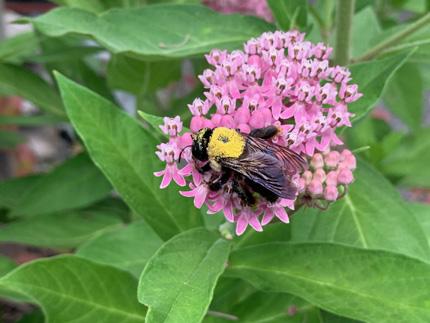
Bees need water too!
To create a BEE WATERER, fill a shallow bowl or birdbath with water. Add rocks of different shapes and levels so bees can perch safely and drink water without tumbling in or drowning in deep water. We have a bee waterer in our children's garden along the path.
| |
POLLINATORS NEED NATIVE PLANTS...and we've got them! | |
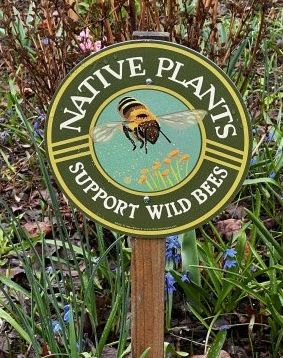
One of the best ways to help your neighbors understand why your garden may look a little bit different is to put a sign in your garden stating your intention. This sets an example and may even start conversations that could encourage others to plant natives and support pollinators. | |
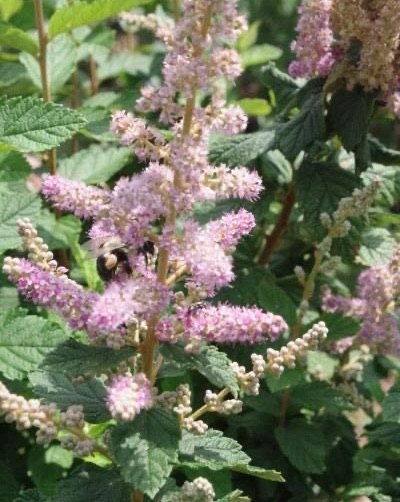
Last week we got in some big, beautiful native steeplebush shrubs (Spirea tomentosa). This is a wonderful plant for sun, and it will even grow in poorly drained soil. It forms thickets 2-4' tall. This plant is a larval food plant for the beautiful blue spring azure butterflies. The blossoms feed all types of butterflies when they are in bloom in the summer. | |
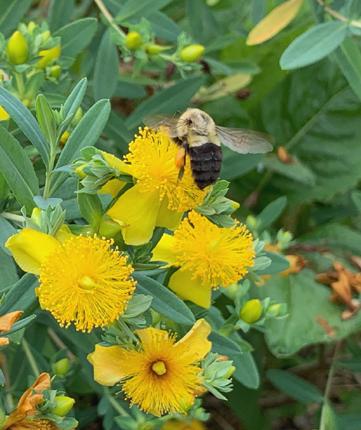
If you want to plant a shrub that will be such a pollinator magnet that you will want to take videos of the action, plant Hypericum kalmianum 'Gemo'. Its common name is St. Johnswort and it is such a great plant for summer flowers. It thrives in hot sun and is never bothered by the deer. | |
|
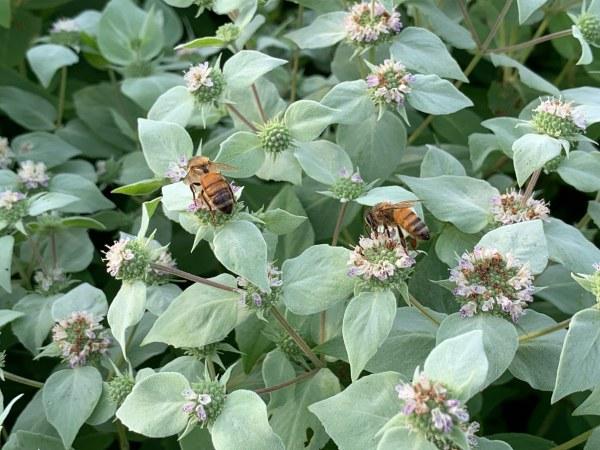
Speaking of taking videos of pollinators on native plants, I am mesmerized by the action on my smooth mountain mint flowers (Pycnanthemum muticum) when they bloom from July through the end of August. In fact, I have surrounded one side of my veggie beds with this wonderful and aromatic perennial. Bees, wasps, and butterflies all visit on a regular basis. This is one of my top 5 choices for pollinator gardens.
We also have in stock Pycnanthemum tenuifolium (narrow leaf mountain mint) and Pycnanthemum flexuosa (Appalachian mountain mint).
| |
|
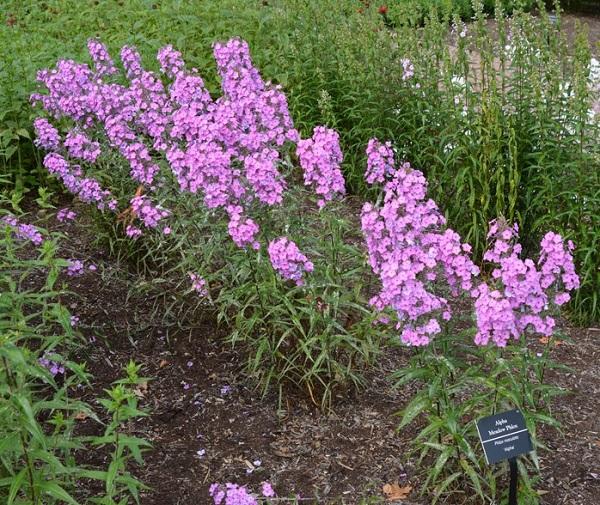
Phlox maculata
(photo courtesy of Mt. Cuba Center)
Are you going to listen to Sam Hoadley speak to the CT Horticultural Society in Middletown this Thursday night, June 20th? He is the Manager of Horticultural Research at Mt. Cuba Center. The link is below.
Sam Hoadley Mt Cuba talk
| |
I need to mention a few NEW straight species natives that I have just found on our benches.
I am THRILLED to see Phlox maculata, also called "wild sweet William" and "meadow phlox" or "spotted phlox". This is a plant I used to sell all the time, for decades, and then it went out of fashion. What makes it special? It has pointed, glossy foliage which is extremely mildew resistant. The flower panicles are conical. And it blooms earlier than Phlox paniculata, in late June.
We also have two new straight species natives in stock. I had to research them as I have never grown them before:
-
Aster linarifolius is called the stiff-leafed aster. It thrives in well drained, sandy, poor soils and has leaves that are needle-like and linear. It blooms in September and October with blue, lilac, or white flowers and grows 12-20" tall.
-
Aster patens is called the clasping aster as the leaves clasp the stem. It has blue flowers from August into October and grows 2-3' tall. It also tolerates dry soil.
| |
Nancy's Garden Tips of the Week | |
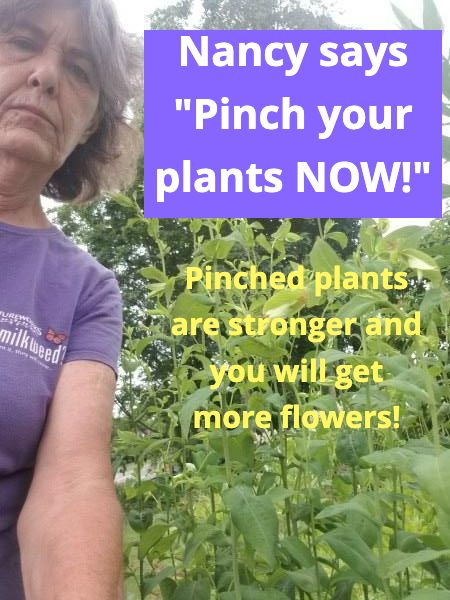
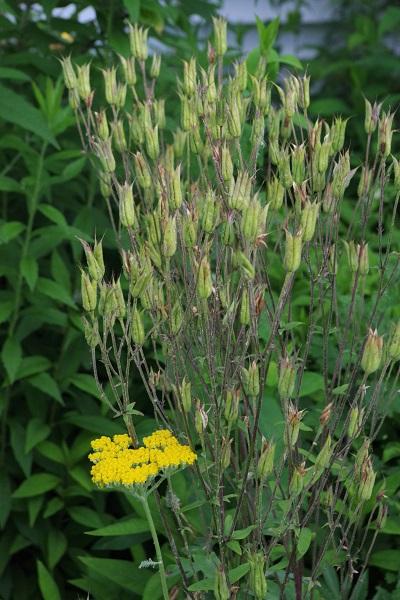
You have until the end of June (July 4th at the latest) to pinch your late summer and fall blooming perennials. Trust me, it is worth it! | Leave your columbine seed pods on your plants. Don't deadhead them! You want them to ripen and turn brown. Only when you shake them and you can hear the seeds rattling inside should you cut them off. Then sprinkle the seeds wherever you want columbine in years to come. | |
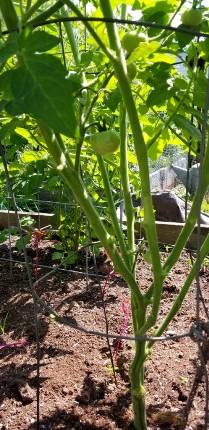
Keep removing the lower leaves on your tomato plants. This makes a huge difference so that fungus spores don't splash up on the plants. | |
WATER DEEPLY.
WATER THOROUGHLY.
ALWAYS!
If you see your plants drooping in the middle of a very hot day, don't panic. Feel the soil. If it is wet, wait. Once the sun goes down, if the leaves don't perk back up, water deeply. NEVER spritz or shallow water your plants. It forces the roots up to the surface to find water, making them much less drought tolerant. After you water, mulch thickly if you haven't already done so. This keeps the moisture in.
| |
Want a summer 'How To Water' refresher? CLICK HERE for a video I shot with Diane today! And with today's heat I am trying a long sleeve cotton shirt to protect my skin from the summer sun rays. So far so good! | |
|
Do you love hydrangeas? So many gardeners do, but, when I teach classes, hydrangea questions are constant. They may be one of the most misunderstood genuses of shrubs that we sell.
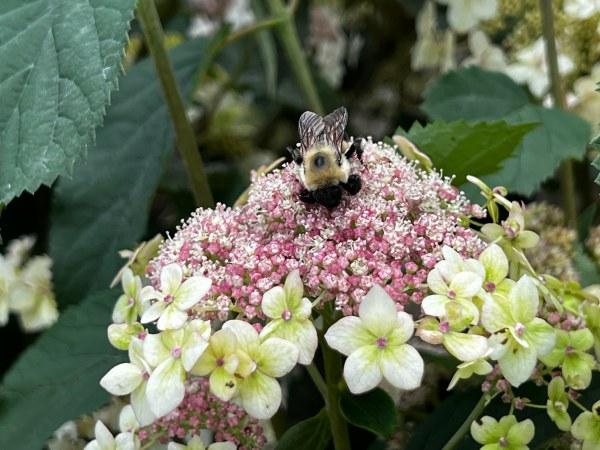
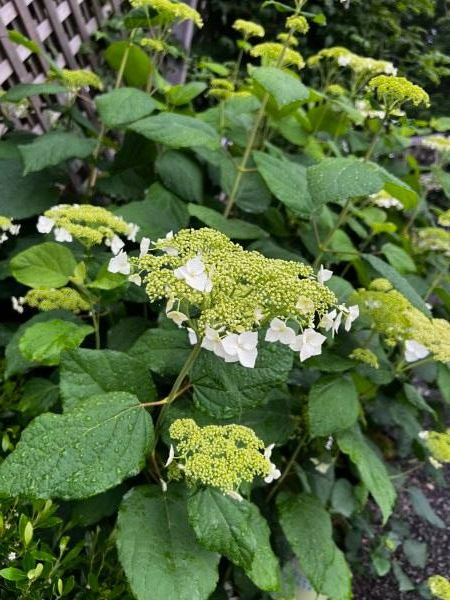
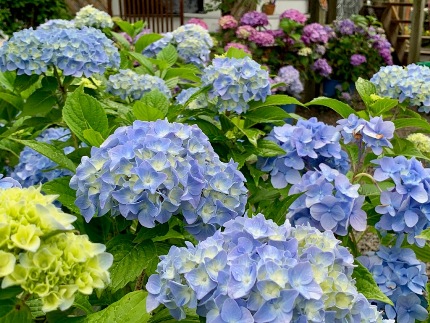
Above is Hydrangea arborescens 'Haas Halo'. The species arborescens means that this plant is native. Its common name is smooth hydrangea. Hydrangea arborescens is totally hardy to zone 5 and blooms reliably every year. The flowers are usually white, but pink forms are available, such as the variety 'Pinky Pollen Ring' shown at the top of this email. 'Haas Halo' has won for attracting the most pollinators in the Mt. Cuba trials, surpassing even the straight species! We love this plant!
Mt. Cuba Hydrangea Trials
| |
|
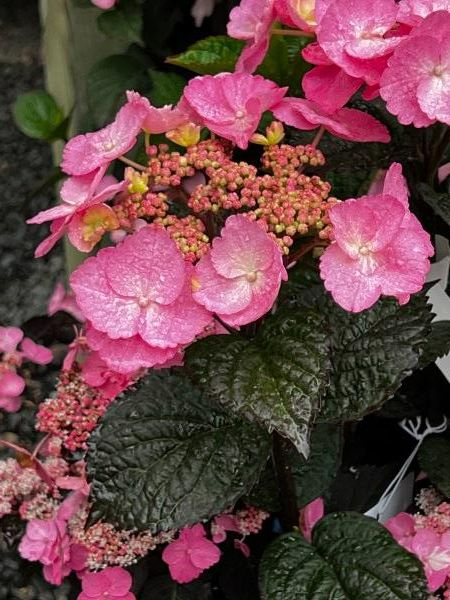
This stunner just arrived last week. It is Hydrangea serrata 'Pink Domino'. The species serrata means its common name is mountain hydrangea. I seek out mountain hydrangeas for my yard as they are one zone hardier than bigleaf hydrangeas (the common pink and blue Hydrangea macrophylla types). The tops are hardy to zone 5, as are the roots. That means if we have a deep freeze to 10 below zero in the winter (which we had in 2023, don't forget), the old wood lives and the plant flowers.
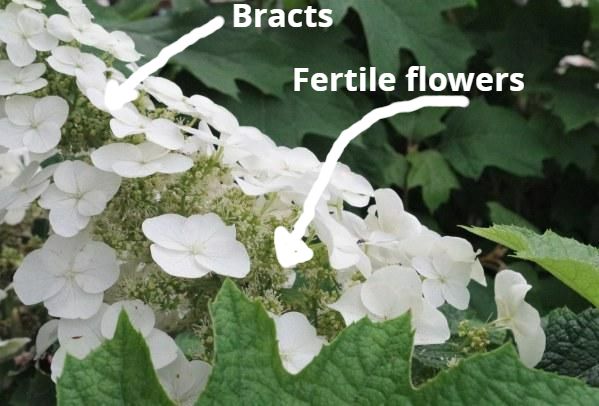
This is also a lacecap form of flower, meaning the center flowers are fertile and feed pollinators. The outer ring of colorful pink "flowers" are actually colored bracts and offer nothing to the pollinators.
| |
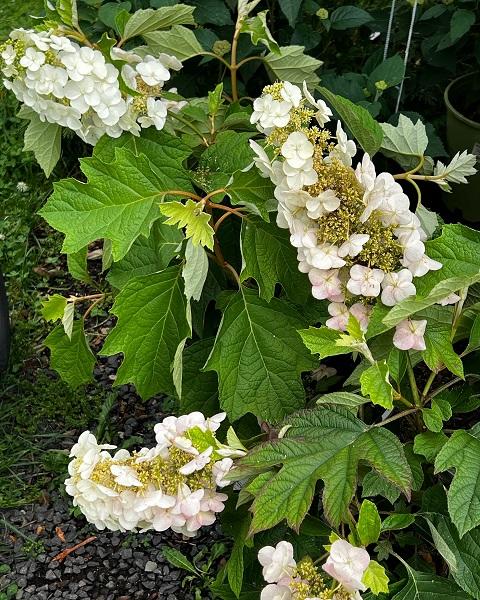
Hydrangea quercifolia (oakleaf hydrangea) a great native shrub that takes a lot of shade. The species quercifolia means "leaves like an oak" (Quercus). These leaves turn bright red in the fall! The huge white flowers grow on the tips of all the branches. | Have you noticed that the pink and blue Hydrangea macrophylla varieties are having a banner year? I haven't seen this many flowers on them in a long, long time. That is because we had a very mild winter and all of the old wood survived. Their June flowers bloom on old wood. The newer varieties also bloom on new wood later in the summer. Select reblooming varieties of Hydrangea macrophylla to assure flowers every year. | |
|
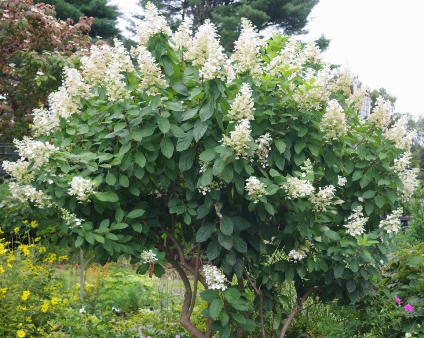
Hydrangea paniculata is called the panicle hydrangea (also called tree hydrangea). The species paniculata means this plant is solidly hardy in very cold temperatures, all the way down to Zone 4. It flowers on new wood and is pruned in the spring to encourage new growth. Above is a very old, massive tree hydrangea growing at Natureworks.
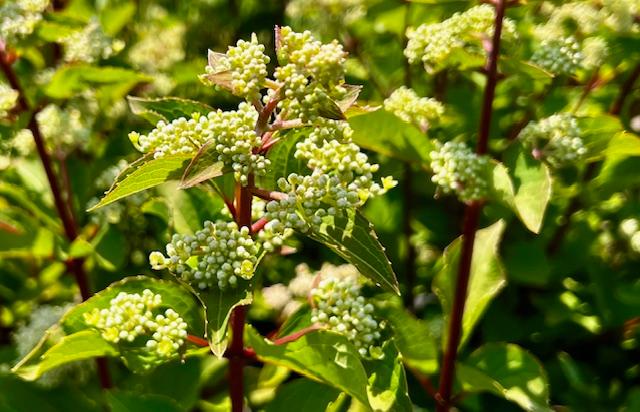
These days, panicle hydrangeas can be dwarf, compact, and even earlier blooming. I have been eying Hydrangea paniculata 'Torch' in our nursery yard. The new growth has red stems and is very upright. It is the earliest blooming panicle hydrangea available in the trade, starting out with large white flowers in early July that quickly turn dark pink. This flower has both fertile flowers (for the pollinators) and sterile flowers that form the colorful bracts. It only grows 4-5' tall and will fit in just about any landscape.
| |
ANNUALS SUPPORT OUR POLLINATORS TOO! | |
Once again, I succumbed to the unsurpassed beauty of annuals while working at Natureworks last Saturday! Annuals make supporting pollinators fun and easy, especially if you don't have a large garden. I plant up lots of pots and I add annuals to my vegetable gardens to attract pollinators and beneficial insects. | |
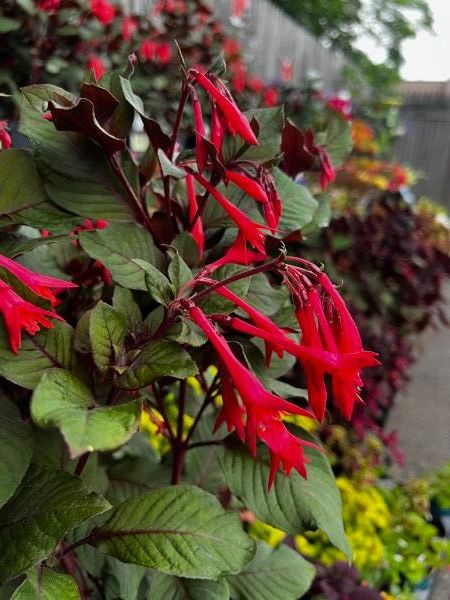
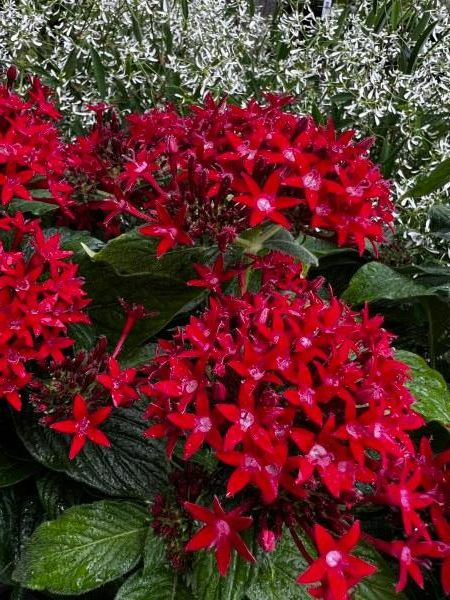
Hummingbirds are one of my favorite pollinators! I plant tons of annuals in containers all around my deck so my husband and I can sit in the evening before dinner and watch them. I just brought home Fuchsia 'Gartenmeister' for that purpose. This is an UPRIGHT fuchsia and it is really easy to grow. It will grow in sun or partial shade. My secret trick to keeping fuchsias happy is to repot them immediately into larger pots, using an organic soil rich in compost. This applies to fuchsia hanging baskets too, which I immediately move up into big moss baskets. Then, just like all of my annuals in containers, I feed them every 2 weeks with Neptune's Harvest Rose and Flower Food which keeps them blooming until frost. | 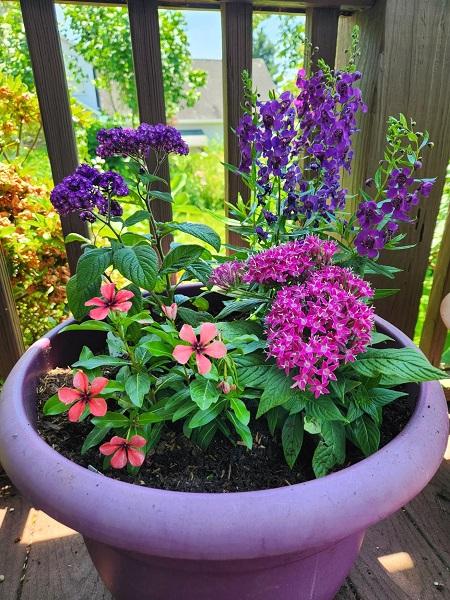 | Look what I did yesterday! Like many of you, I am still replacing pansies and cool season annuals with fresh plants that will thrive in the heat. Saturday, I brought home a purple Pentas and a purple Angelonia to add to this pot that I started last week. I love the way it came out! Calling all hummingbirds, my deck awaits. Plus, this is next to a chair I sit in after supper and the Heliotrope has a heavenly vanilla fragrance. | |
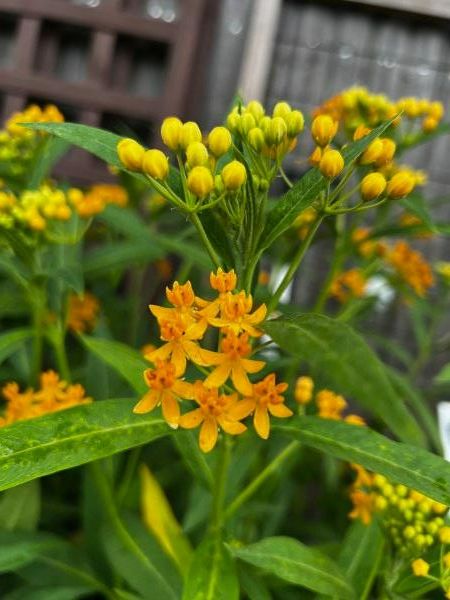
Once again, as I started typing the word Asclepias, I looked out the window and saw a monarch butterfly in my garden! Magical. If you want to provide nectar for monarchs but simply do not have the room for a spreading stand of milkweed, consider filling a container with Asclepias 'Silky Gold'. This annual milkweed blooms from now until frost. That is very different from the perennial species of Asclepias that only bloom for about 3 weeks. It also attracts all sorts of other butterflies and bees. | What IS Pentas, you ask? Well, it is a tropical plant, often found in Florida landscapes and native to East Africa. I first met it when visiting a butterfly pavilion in MA decades ago. But for us, it is a fabulous and easy to grow annual for hot sun. The large clusters of flowers (it is also called Egyptian starflower) attract butterflies galore. They are available in red, purple, pink, and white and are the perfect addition to your summer containers. | |
Plants I am Obsessing about this Week... | |
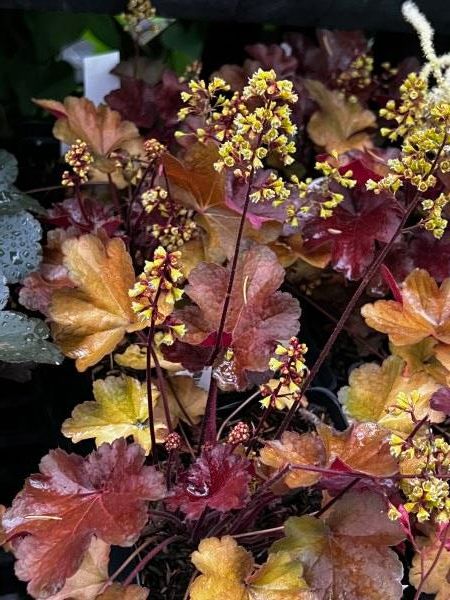
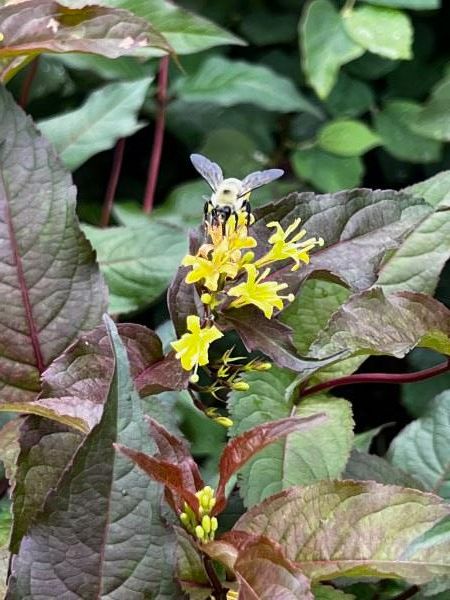
Heuchera 'Blondie' is one of my very favorite Heucheras (and also a fave of Leslie, one of our Natureworks garden designers). I just love the creamy flowers against the ginger foliage. | Do you grow Diervilla? This genus was overlooked for years, probably because its common name is bush honeysuckle and folks thought it might be invasive. Nothing could be farther from the truth! Diervilla is a small group of North American native shrubs. The one that caught my eye on Saturday was Diervilla x splendens 'Nightglow'. It has beautiful burgundy foliage and clusters of yellow flowers that attract pollinators galore. This beauty only grows 2-3' tall. | |
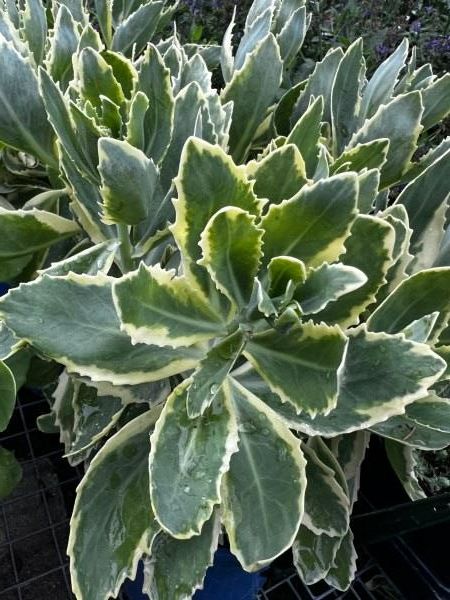
Sedum 'Frosty Fire' a variegated, upright Sedum with gorgeous variegated leaves. I love to use this in sunny garden designs as it looks good from spring until late fall and has big, rosy pink flowers in the autumn. Foliage structure is key to a low maintenance garden and flowers are the frosting on the cake! | |
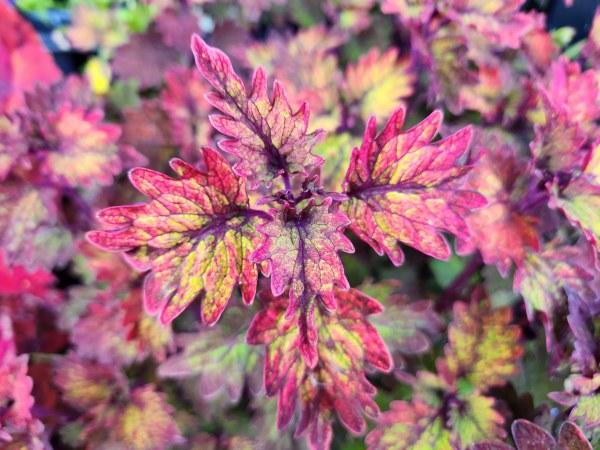
While wandering the shady annual benches, I was thrilled to see an old favorite of mine: Coleus 'Smallwood's Driveway'. Coleus was one of the first plants I ever grew (from a cuttings rooted in water as a houseplant in the 70's) so it has a special place in my heart. But this is not your grandmother's coleus! Rippled leaves of orange, coral, yellow, and red are just so fun to combine with 'Gartenmeister' Fuchsias and all sorts of begonias and ferns.
Once again, I must say,
FOLIAGE is your FRIEND!
| |
It's SUMMER and our thoughts turn to SHADE GARDENS... | |
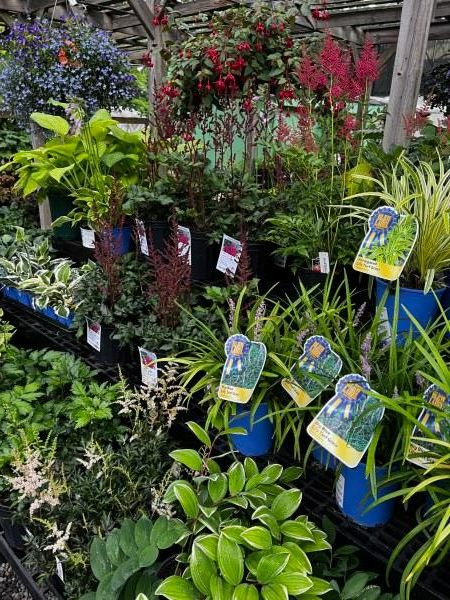
Astilbes, Hostas, Solomon's seals, Liriope, Aruncus, Gillenia, Packera, oh my! When summer arrives and the temperatures rise, I work in my shade garden. There are so many wonderful shade plants to play with at this time of year. | |
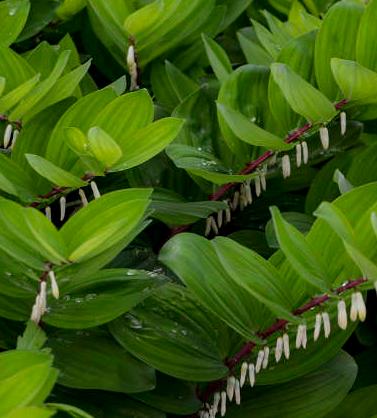
Polygonatum biflorum is our native GIANT Solomon's seal. It flowers in the spring, but the 3 foot tall arching foliage is a standout in the summer shade garden. I love to use it as a foliage filler in fresh flower arrangements. | |
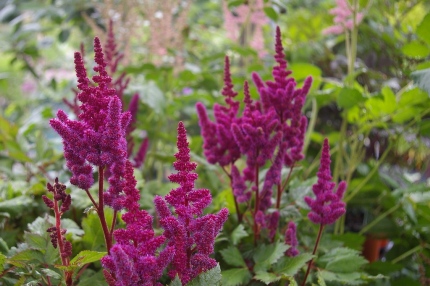
Astilbe chinensis 'Visions in Red' is a startling color. The species chinensis means that it spreads easily and is a bit more drought tolerant and later blooming than Astilbe arendsii varieties. Expect July blossoms and lots of them. | Shade garden newsflash! We just got in a few Lilium superbum, our native Turk's cap lily. This is a gem for shade gardens and we haven't had it in a very long time. | |
|
So welcome summer! I made a note in my garden journal that I saw my first orange roadside daylily flowering on Father's Day.
It's time for a brand new palette of plants. It's time to sip iced tea and watch the butterflies, hummingbirds, and all of our precious pollinators enjoy the fruits of our garden labors. As we always say: "If you plant it, they will come!"
Our OPEN DAYS are:
Wednesday-Saturday 10-5
Sunday 10-4
We are closed on Monday & Tuesday
each week to restock.
Our benches are overflowing and so is our sale tent! Come in and grab a glass of ice water and a fruit popsicle and see what beauty you can find at Natureworks this week.
See you very soon...
| |
|
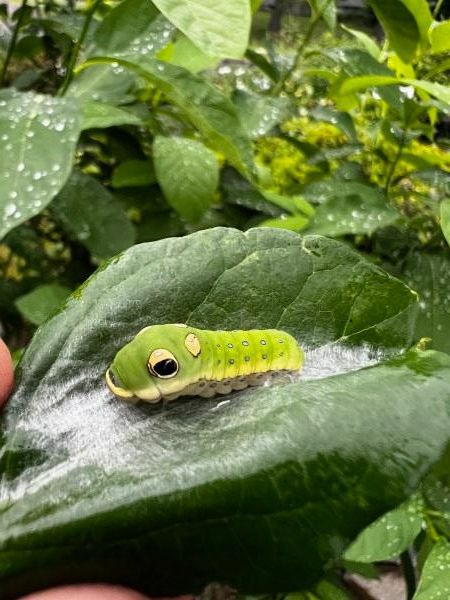
Look! A spicebush swallowtail caterpillar on a spicebush plant (Lindera benzoin)
at Natureworks. As I finish writing this email, the retail team is making an outdoor habitat for butterfly caterpillars and their larval food sources! Come check it out, bring the kids
and your camera. We always have something educational to see and learn here at the garden center.
"If you plant it, they will come!"
| |
Hop on the Bus with Nancy for a Fabulous Garden Trip! | |
|
Have you ever wanted to go to the Coastal Maine Botanical Gardens but never got the chance or didn't want to do the drive? Me too! Well, now is your chance. I am thrilled to be the guest horticulturist on a wonderful garden trip from September 12th-14th. It is sponsored by The CT Horticultural Society and Friendship Tours. You MUST register by the end of this week if you want to reserve your spot. Do it!
For the complete itinerary and registration information, click on the link below.
Maine Garden Trip with Nancy and CT Horticultural Society
| |
|
Visit our social media pages for more inspiration!
Facebook and Instagram are updated constantly!
| | | | |