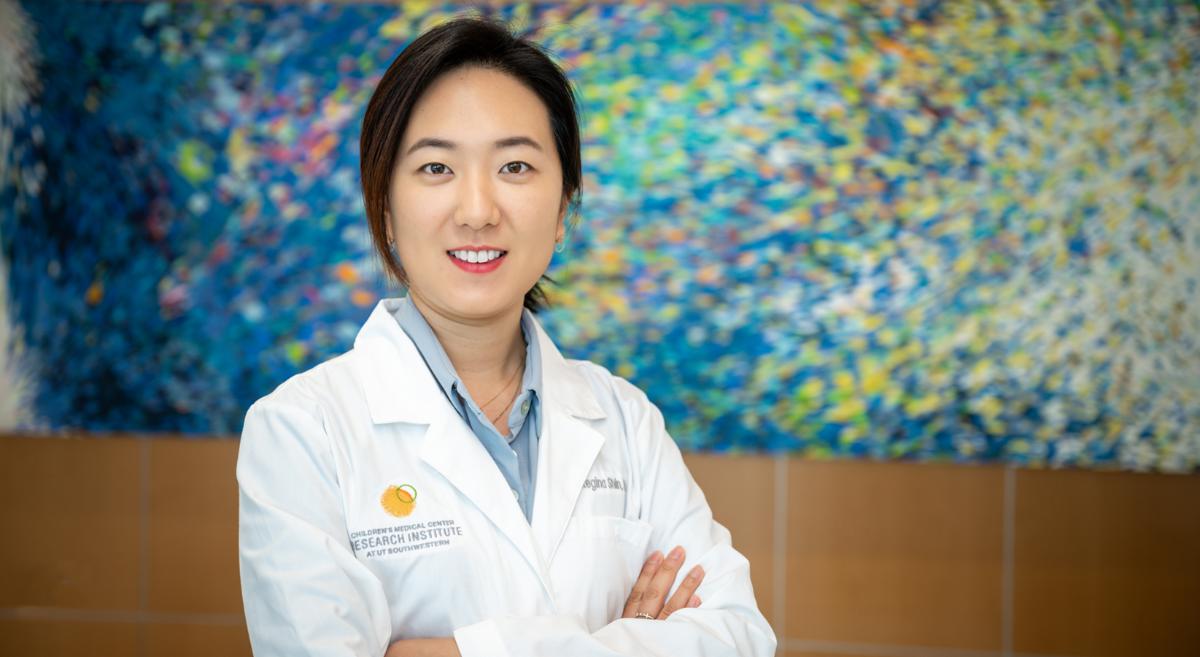
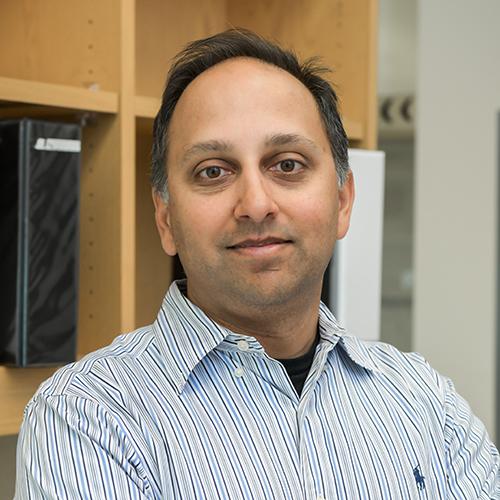
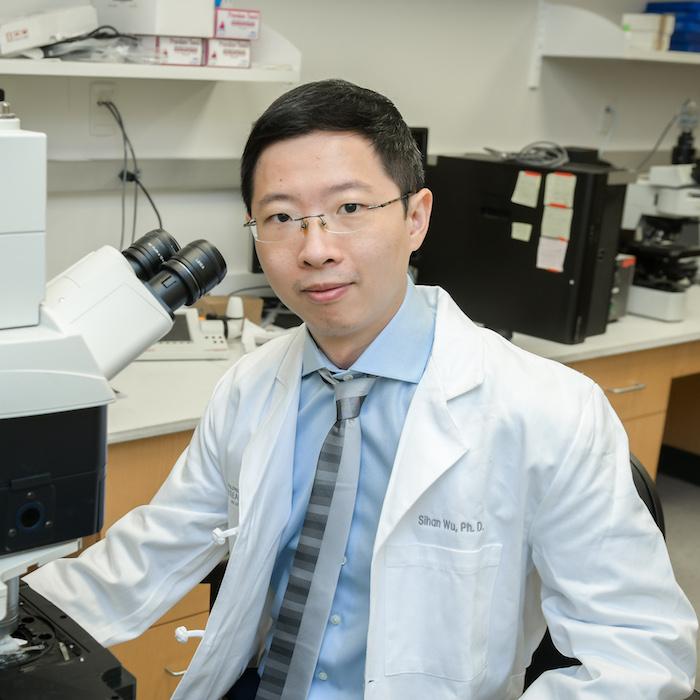
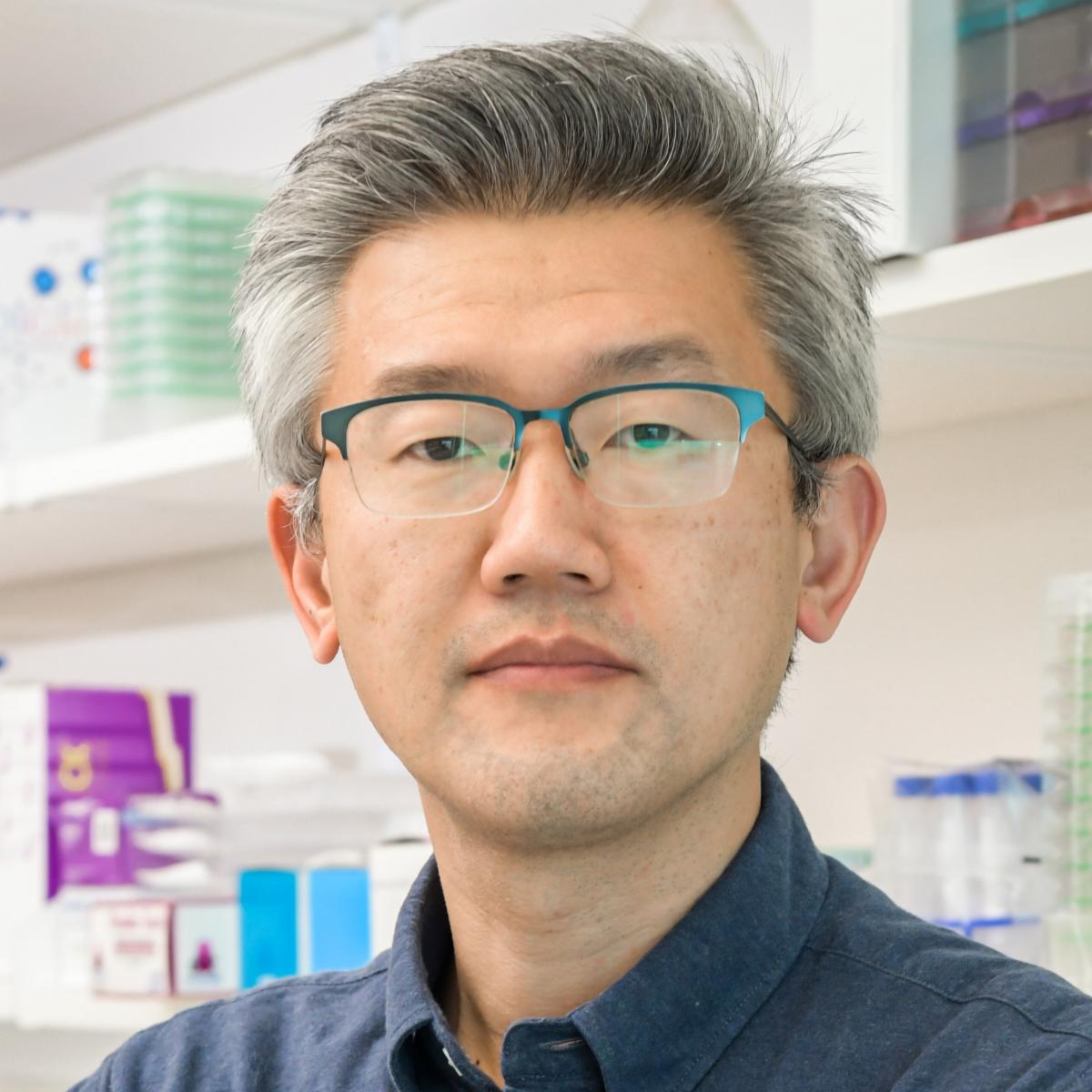
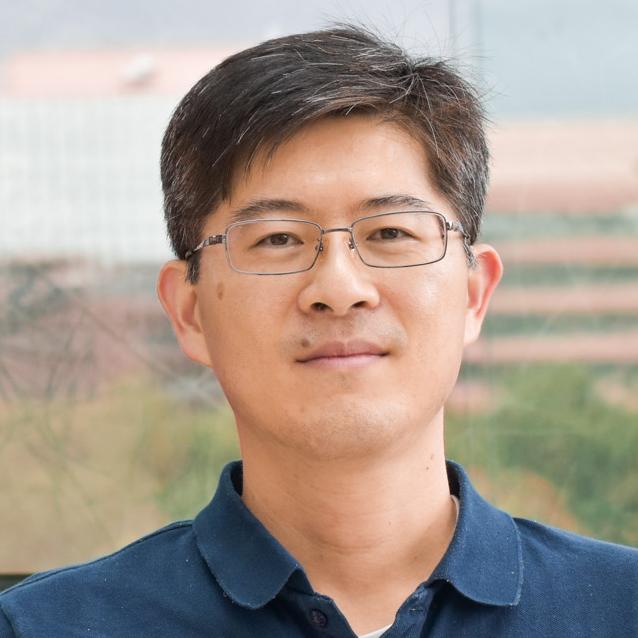
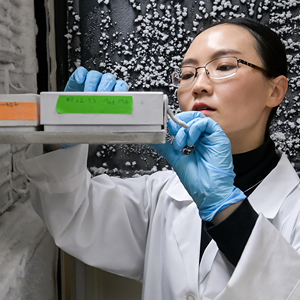
Hijai (Regina) Shin, Ph.D., is the newest faculty member, launching the Shin Lab and joining CRI's Genetic and Metabolic Disease Program. She grew up in France and earned her bachelor’s in biology and Ph.D. in molecular biology from Seoul National University in South Korea. As a postdoctoral fellow at UC Berkeley, she identified a new cholesterol sensor in lysosomes that regulates the ability of cells to grow and proliferate. The Shin Lab will focus on the intrinsic roles of lysosomes and their regulatory functions in cellular homeostasis, with the ultimate goal of identifying new therapeutic targets for a wide range of disease conditions. | |
Morrison to receive prestigious ASH 'E. Donnall Thomas Lecture and Prize'
CRI Director Sean Morrison, Ph.D., will be recognized for his paradigm-shifting contributions to hematopoietic stem cell biology. Read more...
| |
Hoxhaj awarded Vilcek Prize for 'Creative Promise in Biomedical Science'
Gerta Hoxhaj, Ph.D., was awarded a 2024 Vilcek Prize for 'Creative Promise in Biomedical Science,' which recognizes top immigrant professionals. Read more...
| |
DeBerardinis named NCI '2023 Outstanding Investigator'
Ralph DeBerardinis, M.D., Ph.D., was named one of 17 researchers honored with his contributions toward breakthroughs in cancer research. Read more...
| |
Hoxhaj Lab measures purine pathways, discovers tumor growth fueled by nucleotide salvage | |
|
Cancer cells salvage purine nucleotides to fuel tumor growth, including purines in foods we eat, an important discovery with implications for cancer therapies, according to CRI research published in Cell.
CRI Assistant Professor Gerta Hoxhaj, Ph.D., and her team have challenged the long-standing belief that tumors primarily acquire purine nucleotides — building blocks for DNA, which is required for cellular growth and function — by constructing them from scratch via de novo synthesis. Hoxhaj lab’s newest research shows tumors also significantly use the more efficient salvage pathway to acquire purines.
Read more...
| |
|
Mishra Lab identifies a metabolic inflexibility that ensures only healthy liver cells regenerate | |
|
Liver cells have a vital metabolic inflexibility during regeneration to starve dysfunctional cells and keep damage from spreading, according to CRI research published in Science.
CRI Associate Professor Prashant Mishra, M.D., Ph.D., and his lab have found hepatocytes, the cells responsible for most liver function, normally use their mitochondria to process fatty acids, a key energy source during regeneration. When their mitochondria are damaged, hepatocytes turn on PDK4 — a metabolic enzyme that restricts cells from shifting to an alternative energy source — and cells die.
Read more...
| |
|
Wu Lab finds extrachromosomal DNA can accelerate cancer formation, acquire cross-resistance after chemotherapy | |
|
CRI Assistant Professor Sihan Wu, Ph.D., and colleagues found that extrachromosomal DNA (ecDNA) — a way to amplify cancer-causing genes in small pieces of circular DNA that are not chromosomes — develops early in the transition from abnormal cells to cancer, according to CRI research published in Nature.
In continued ecDNA research, Wu and colleagues developed a model in mice to study small cell lung cancer (SCLC) tumors. While SCLC tumors are initially sensitive to chemotherapy, they acquire drug resistance and become, ultimately, fatal. Wu and team discovered ecDNA amplifications of MYC paralogs — genes that promote cell proliferation — are drivers of the drug resistance, according to CRI research published in Cancer Discovery.
| |
|
Zhu Lab discovers mutant clones in liver may fight fatty liver disease | |
|
Tissues can accumulate somatic mutations, which are genetic changes that occur after birth. In solid organs, such as the liver, cell clones containing somatic mutations can accumulate with age and chronic tissue damage. These clones, which regenerate the liver, can be visually seen as round nodules on the surface of the liver. While some somatic mutations are well-known to drive cancer, it was unknown if they might possess beneficial effects to resist disease or improve tissue function.
In research published by Cell, CRI Professor Hao Zhu, M.D., and colleagues used mice with somatic liver mutations to show some mutant clones survive because they contain genetic changes that protect them from the ravages of chronic diseases. This research shows some mutations can prevent, rather than cause, disease. The identification and understanding of somatic mutations could lead to new therapeutic strategies against chronic liver disease.
| |
|
Researchers wear stripes for Rare Disease Day | |
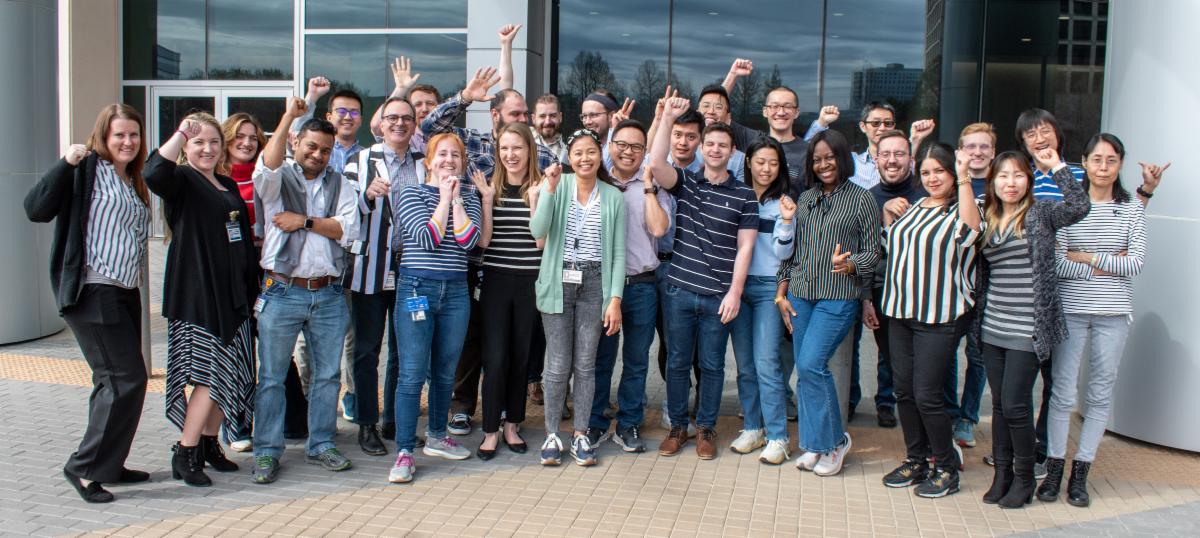
CRI's Genetic and Metabolic Disease Program (GMDP) Director Ralph DeBerardinis, M.D., Ph.D. and GMDP researchers wore stripes for Rare Disease Day, celebrated each February to promote awareness of disorders that affect fewer than 200,000 people in the United States. Some cancers, as well as inborn errors of metabolism, researched at CRI's GMDP belong to this category of diseases. Clinicians often refer to rare diseases as “zebras” because diagnosing them is like hearing hoofbeats and thinking of a zebra instead of a horse. | |
Training the next generation of world-class scientists | |
Hsu named Human Frontier Science Program fellow
Sheng-Chieh Hsu, Ph.D., a postdoctoral fellow in CRI's Garcia-Bermudez Lab, has received an international Human Frontier Science Program fellowship to develop molecular tools and map nuclear antioxidant systems and discern their significance in physiology.
| |
Li receives ASH Scholar Award to research stem cells
Yafeng Li, an Assistant Instructor in CRI's Agathocleous Lab, was one of 36 recipients who received a 2024 Scholar Award from the American Society of Hematology to map nutrient preferences of hematopoietic cell types and test their nutrient choice dependence and flexibility.
| |
Menezes named NIH predoctoral fellow
Cameron Menezes, B.A., a dual M.D./Ph.D. graduate student in CRI's Mishra Lab, has been awarded a Ruth L. Kirschstein NRSA predoctoral fellowship to research mitochondrial dysfunction and the importance of mitochondrially-derived energy in physiologic liver processes.
| |
Invest in relentless discovery; invest in the future. Research at CRI charts new pathways for understanding and treating disease. | |
|
Keep up with the latest CRI news at cri.utsw.edu or connect with us daily on social media: | | | | |