 |
SPECIAL ISSUE
|
M
ore than 95% of GM Crops grown in the U.S. are used as feed for production animals that provide meat, milk and eggs for human consumption.
Animal fe
ed contributes a large part of the inputs in animal agriculture and subsequent footprint of agriculture. Therefore, utilizing sustainable feed sources is important.
GM crops enable better harvests and more efficient use of resources maximizing each acre planted. This has a positive effect on land use and biodiversity, allowing many species of plants and animals to continue to thrive even as our population grows.
|
By J.L. Vicini. 2017. Animal Frontiers
This article provides information about why choosing animal products from animals fed GMO animal feed is good for wildlife and are just as wholesome as those fed non-GM feed. It gives insight as to why scientists and regulators are confident in food products derived from livestock that have been fed GM animal feed, including: How GMO crops used for animal feed are as safe as, and have the same nutritional value as, non-GMO animal feed, How feeding GMO crops to animals does not result in detection of transgenic DNA or proteins in the meat, milk, or eggs that the animals produce.
SUSTAINABILITY
By White, R. and M. Hall. 2017. Proceedings of the National Academy of Sciences
Some have suggested remvoing animals for food purposes from agriculture to increase acreage for plant-based foods for humans and ultimately lower greenhouse gas (GHG) emissions. Currently, animals in agriculture/food provide: energy (24% of total), protein (48%), essential fatty acids (23-100%), and essential amino acids (34-67%) for human consumption. A model was used to evaluate the environmental and nutritional shifts that would occur without animals in agriculture. Food production increased by 23% and GHG decreased by 28%. However, a shift to a plant based diet caused a change in the foods available to people in the U.S. and an increase in nutritional deficiencies.
LONG TERM STUDIES
Safety of GM Crops Over Time
By Snell et al., 2012. Food and Chemical Toxicology
A literature review from 55 peer-reviewed references was used to study the toxicity of GM diets fed to animals. The studies included long term studies (>90 days, up to 2 years) and up to five generations included several species (dairy cows, rats, mice, salmon, macaques, broiler chickens, hens, pigs, sheep, goats, quails). The review concludes that the literature does not show detrimental effects on health or growth when fed a GM diet.
By Van Eenennaam, A. L. and A. E. Young. 2014. Journal of Animal Science
Researchers used USDA data from ~ 100 billion animals' health and performance records from 1983 to 1996 and 2000-2011. This is the largest animal data set from animals prior to and after GM crops entered the market and animals consumed GM feed. The data showed that health and growth have improved over time and continue to improve annually without evidence of changes in productivity or health. Also, the USDA inspections of animals before and after processing did not show abnormalities (disease or illness).
FOOD PRODUCTS
Meat, Milk & Eggs from Animals Fed GM Feed
By Van Eenennaam, A.L. and A.E. Young. 2017.Journal of Animal Science
.
This is a review of the literature on the detection of dietary DNA and protein and glyphosate in animal products (meat, milk and eggs) and a discussion on GM labeling for products from animals that have consumed GM feed. The studies showed negligible levels of glyphosate in animal feed and no differences in dietary protein in foods from animals fed GM crops. Therefore they concluded that foods, regardless of whether the animal consumed GM or non-GM feed are "not distinguishable, nutritionally or compositionally, from animals fed non-GM feed and therefore don't pose any additional novel health risks".
|

GM Crops & Animal Feed (webpage)
By Monsanto
A collection of resources (science-based statistics, reports, infographics & key messages) about the environmental benefits, safety and nutrition of GM animal feed.
|
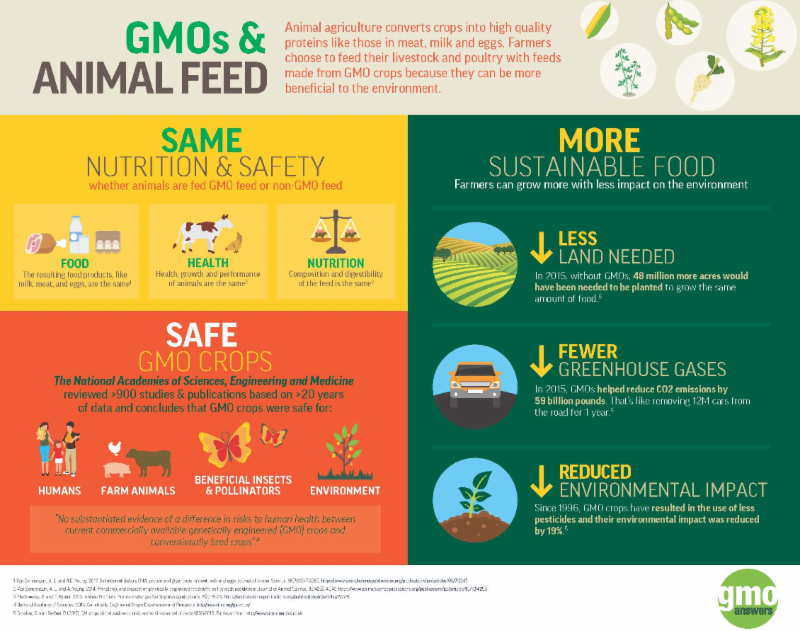
Whether animals eat GM or non-GM feed, the nutrition and safety are the same for the animal. However, using GM Crops can have environmental benefits, which is explained in this infographic.
|
GMOs in Animal Agriculture (booklet)
By GMO Answers
Experts answer questions from the public about animals and GM Crops - their health, the food they produce and more. A good resource to understand the breadth of the conversation around GM Crops in animal feed.
|
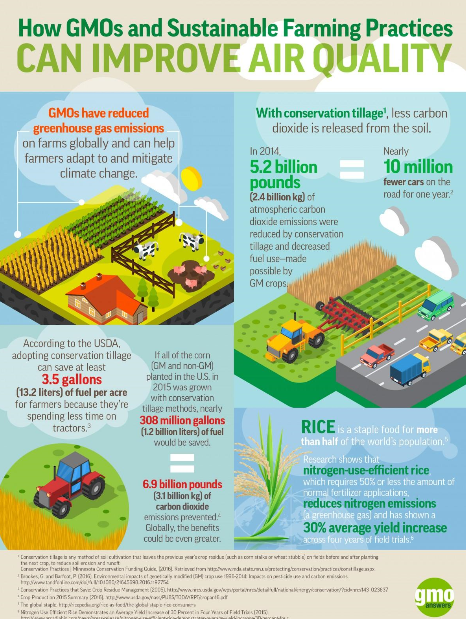
GMOs & Sustainability Farming Practices Can Improve Air Quality
By GMO Answers
GM crops have enabled conservation tillage, releasing less CO2 from the soil reducing
greenhouse gases and improving air quality.
|
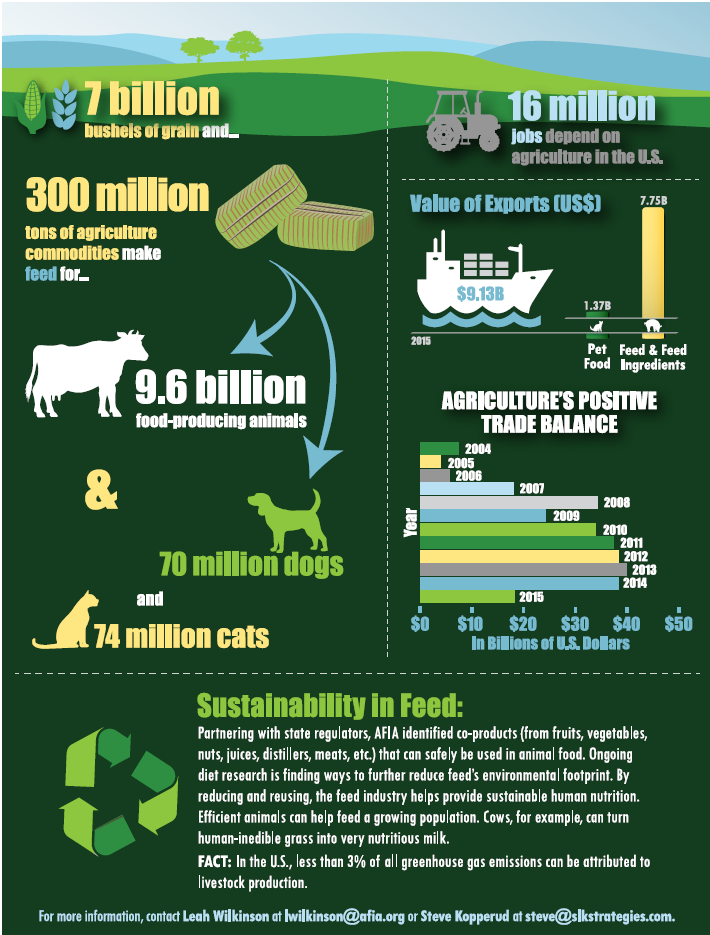
Food, Feed & Agriculture (AFIA; infographic)
By American Feed Industry Association
|
By Kevin Folta, guest host: Paul Vincelli and guest: Dr. Alison Van Eenenaam, UC Davis), Talking Biotech
This podcast discusses a technical publication,
ARTICLES
By Food Standards Agency
Is there a transfer of GM materials from feed? How is animal feed regulated? This article explains how digestion impacts incorporation of GM material in to livestock products like milk, meat and eggs and the regulatory framework in place to ensure their safety.
By Cathleen Enright, GMOAnswers on Medium
The CEO of The Pet Food Institute discusses making science based informed choices about the food we feed our pets. She explains the regulatory framework followed for U.S. pet food companies and how pet food is one of the most regulated foods in the U.S.
By Frank Mitloehner, UC Davis
University Professor and Air Quality Specialist dispels some of the common misconceptions about animal agriculture and how it contributes to air quality. He mentions that U.S. agriculture (feed and animals) has one of the lowest environmental impacts globally. Using an accurate way to assess emissions from agriculture is important to correctly calculate sustainable food systems, especially with a higher demand for protein in the future.
|
|
|
|
|
|