|
This has been the Summer of Grape Research, with the annual academic conferences of the American Society for Enology and Viticulture (ASEV) and ASEV-Eastern Section happening just a few weeks apart in late June and early July, respectively. These gatherings are terrific yearly opportunities to meet new colleagues and connect with old friends, learn what new grape research is in the pipeline—whether from tenured scientists or their aspiring students, and see how prior learnings (including from NGRA-initiated research) continue to evolve and inspire new applications and innovations. And they often offer fresh insights and perspectives that somehow land differently when delivered in person. Remarks from several speakers stuck with me this year.
The early days of Virginia’s wine industry, which Virginia Tech hired Tony Wolf to support in 1986, were defined by large, high-vigor canopies that had to be hedged two to three times per season. One of the most gratifying things about the extension-focused job, he said in his remarks accepting the ASEV Merit Award in June, was that “industry members were very receptive to having someone concerned about their enterprise.” They invited him into their vineyards, asking for his advice and counsel. They read his bimonthly “Vineyard Notes” newsletter and attended his grower meetings. And, over time, things changed. Grape-growing and winemaking improved, and the industry took off. “I guess you could say ‘influencer’ explains what we do in extension,” he said. Certainly, Tony influenced the Virginia wine industry to become one of the top 10 wine producing states, ultimately attracting the first investment on the East Coast by a top Bordeaux producer earlier this month. The Virginia Vineyards Association awarded Tony its coveted Lifetime Achievement Award in 2023, the year he retired.
Gill Giese served as Chair of ASEV-ES until this month, when he passed the torch (or ceremonial keychain, as it were) to Aude Watrelot. Gill is Assistant Professor of Plant and Soil Science at Arkansas State University—a new role he was transitioning to (from New Mexico State University Viticulture Extension) during his leadership term at Eastern Section. In his outgoing speech, Gill mentioned an article he’d recently read that compared artists to reporters. “The artist observes the world and reports back,” he said, using a visual medium versus words and language. “That’s what scientists do, too,” he said, “We observe and we report back.”
Scientists diagnose diseases and infestations. They analyze genetic composition and gene expression. They study and provide guidance on vine and/or vineyard performance in the context of production goals, the availability of resources (e.g., cash, labor, inputs), fluctuations in seasonal weather patterns or longer-term climate, and more. Their observations are made through a scientific lens and expressed via a palette of viticulture, enology, genetics, or climate, computer or social science. But their “reporting” is no less creative than an artist’s rendering of reality. In fact, coincidentally, Mark Battany, a farm advisor with UC Agriculture and Natural Resources, in his remarks while receiving ASEV’s 2024 Extension Distinction Award at the conference, talked about “flipping dimensions” to deliver extension information to growers more visually. “I feel very lucky to have had a career where I can apply my knowledge and creativity to help growers find solutions to problems we didn’t know existed,” he said.
Whether they’re influencers or artists, we’re indebted to our grape researchers for all the ways they improve and enrich our industry. May we offer up our vineyard “media” and our grape “canvas” for their ongoing expression!
| | |
|
|
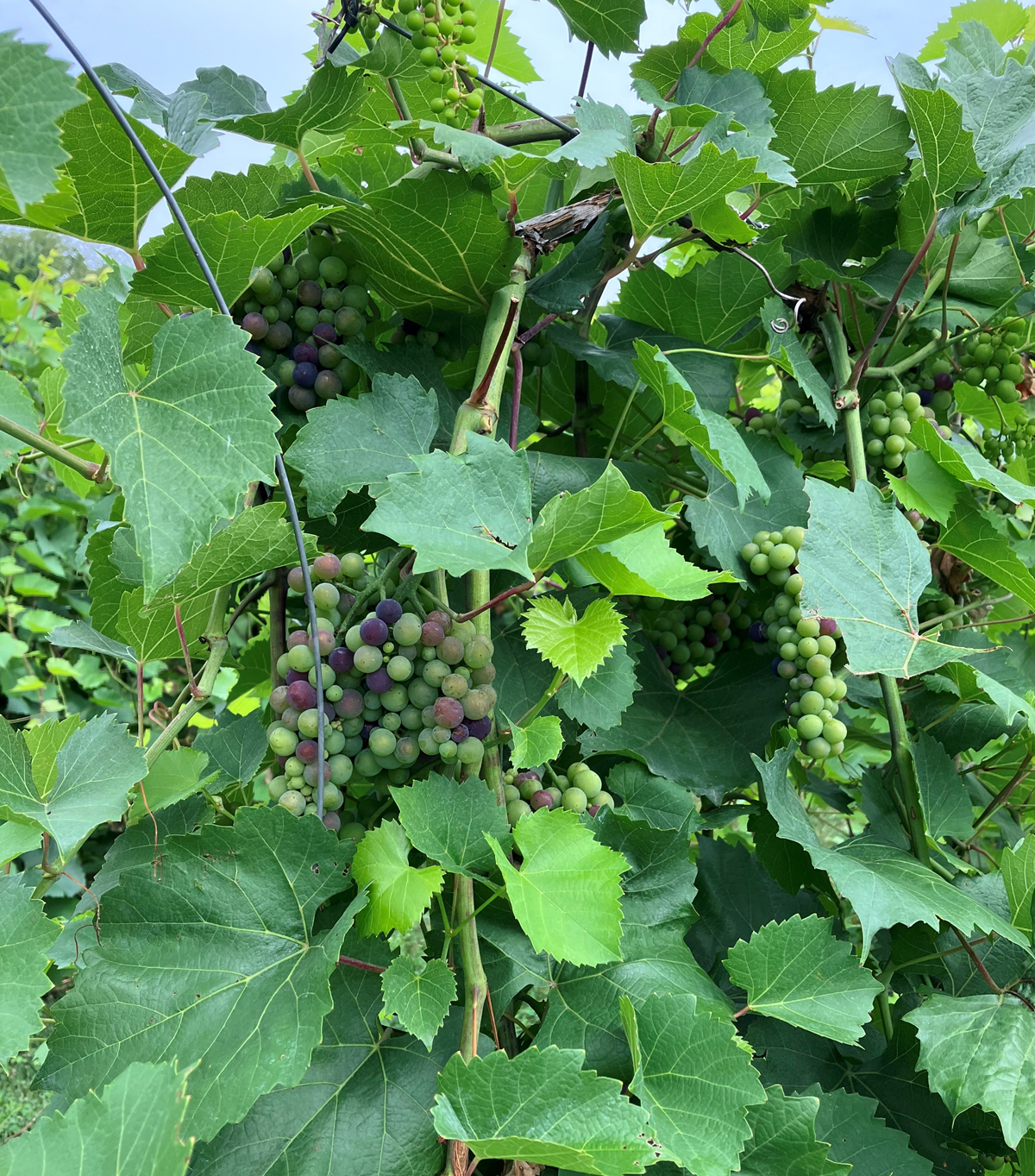
*ABOUT THE PHOTO
I snapped this photo of some very happy marquette vines beginning veraison at Gervasi Vineyards in Camden, OH, on the ASEV-Eastern Section pre-conference tour on July 9, 2024. Marquette is a cold-hardy red variety that was developed by the University of Minnesota.
| |
NGRA’s collaborative approach to finding solutions for the grape and wine industry’s most pressing problems has yielded some $65 million in funded research. Since our founding nearly 20 years ago, supporting NGRA's research mission has been an opportunity reserved for members only. But now, our wider community of friends and fans are invited to help support our work. If you care about advancing and sustaining the industry through scientific research, donate today! | |
Congress Convenes a Specialty Crop Caucus | |
In April, the bipartisan 2024 Congressional Specialty Crops Caucus was formed to educate about legislative and regulatory policies that benefit the sector and provide opportunities to address challenges specific to specialty crop production. Its primary goal in 2024 is to increase support for specialty crops in the Farm Bill. Co-chairs are Representatives David Valadao (R-CA), David Rouzer (R-NC), Jim Costa (D-CA) and Elisa Slotkin (D-MI). | |
NOAA Satellite Data Deployed for Early Wildfire Detection | |
|
The Biden-Harris Administration this month announced that the Department of the Interior and USDA’s Forest Service have signed an agreement with the Department of Commerce’s National Oceanic and Atmospheric Administration (NOAA) to use NOAA Geostationary Operational Environmental Satellite-R series (GOES-R) data to rapidly detect and report the ignition of wildfires. The $20M collaborative agreement will help the Interior and Agriculture Departments detect wildfires early, track them in real time, and provide data for public safety and air quality modeling.
GOES-R series satellites frequently can detect wildfires before they’re spotted on the ground or reported to 911. They also can be used to pinpoint the exact location of a fire after smoke reports occur. GOES-R satellite observations are not only valuable for detecting wildfires but are also critical for observing and monitoring smoke from those fires. These capabilities will improve interagency efforts to protect against increasingly devastating wildfires.
| |
Restrictions Eased for BC Wineries | |
|
Following the devastating loss of grapes from freeze and wildfires this year, wineries in Canada’s British Columbia province will benefit from a temporary stay of winemaking restrictions. Relief measures will allow BC wines to be made with grapes and grape juice from outside the province this year, enabling production of a 2024 vintage. The government action will support wine industry job security and ensure the continued availability of BC-produced wines. It will take effect April 1, 2025, and remain in force until March 31, 2026.
“Our government is committed to supporting the long-term sustainability and strength of BC’s world-class wine industry,” said Roly Russell, Parliamentary Secretary for Rural Development. “We know what a difficult time it has been. These supports for the sector will help give our wineries the certainty to plan for this year’s wine production and continue delivering the enormous value they contribute to BC’s economy.”
| |
WSU to Debut New Wine Science Curriculum This Fall | |
Starting this fall, Washington State University’s viticulture and enology undergrads will experience a revitalized curriculum that comprehensively prepares them for wine industry careers. Thanks to the efforts of the curriculum development committee and the core values they established to align with the nascent department’s new learning objectives, almost every class in the major has been redesigned, and most upper division courses now require a hands-on vineyard, winery or other lab component. Going forward, all V&E students will spend time learning small-scale winemaking practices in the Ste. Michelle Wine Estates WSU Wine Science Center, and an increased number of internship units are necessary for graduation. The new curriculum also will continue to allow flexibility for discussions around relevant topics like wildfire, climate change and grapevine diseases. | |
ASEV and ASEV-ES Install New Leaders | |
|
In July, both the American Society for Enology and Viticulture (ASEV) and ASEV-Eastern Section installed new Board members and officers.
ASEV will be led by Michelle Moyer of Washington State University as the Interim President for the 2024-2025 term. New Board members elected this year include Kristen Barnhisel (J. Lohr Vineyards & Wines), Robert Coleman (Treasury Wine Estates) and Elizabeth Tomasino (Oregon State University). In addition, Hans Walter-Peterson (Cornell Cooperative Extension) has been appointed as the new Technical Program Director, following Past President Jim Harbertson (Washington State University), who served in the role for nine years.
As announced at its annual conference, ASEV-ES will be led by Chair Aude Watrelot of Iowa State University for 2024-2025, succeeding Arkansas State University’s Gill Giese, who is now Past Chair. Nathan Eason (University of Georgia) is Chair Elect. Board members elected this year include Section Representative Anna Katharine Mansfield (Cornell AgriTech) and Directors Sarah Lowder (University of Georgia Cooperative Extension), Michael Cook (Texas A&M AgriLife Extension), Jeremy Schuster (Cornell Cooperative Extension) and Esmaeil Nasrollahiazar (Michigan State University Extension).
| |
Tracy Leskey Is a New ESA Fellow | |
|
The Entomological Society of America (ESA) this month elected four new Fellows of the Society for 2024, recognizing outstanding contributions to entomology via research, teaching, extension, administration, military service, or public engagement and science policy. Tracy Leskey, Research Leader/Station Director and Research Entomologist at the USDA-ARS Appalachian Fruit Research Station in Kearneysville, WV, is one of the four fellows. They will be recognized at ESA’s Entomology 2024 conference this November in Phoenix, AZ.
Tracy is well known to grape stakeholders for her work on some of our biggest pests of concern. She led the effort to manage the invasive brown marmorated stink bug following its devastating outbreak in the mid-Atlantic in 2010. She and her ARS colleagues identified the BMSB pheromone and, with university partners, developed behaviorally compatible trap designs and sensitive pheromone lures. Now, she and her team tackling the invasive spotted lanternfly. They are quantifying host use patterns and natural and human-assisted dispersal of the pest, and developing an areawide management program for SLF and its favored host, Tree of Heaven.
| |
Oregon State Grape Scientists Recognized | |
Congratulations to Achala KC and Joey DeShields for their recent awards from Oregon State University’s College of Ag Sciences. Assistant Professor Achala KC was the recipient of the Briskey Award for Faculty Excellence which recognizes faculty achievement. Based at the Southern Oregon Research and Extension Center (SOREC), Achala has developed a productive and impactful research and outreach program focused on plant pathology and integrated management of tree fruits and wine grape diseases in Southern Oregon. Joey DeShields received the Agricultural Research Foundation Faculty Research Assistant Award. Joey also is based at SOREC and works on research related to grapevine red blotch disease and its causative agent grapevine red blotch virus. | |
Two PhD Students Win AFRI Fellowships for Grape Research | |
NIFA Invests $1.8M in Methyl Bromide Transition Program | |
Oregon State Seeks a Postdoc in Wine Grape Physiology and Vineyard Climate Change | |
Applications are invited for a full-time postdoctoral scholar position in the Department of Horticulture at Oregon State University working at the Southern Oregon Research and Extension Center. The incumbent will independently conduct and manage several transdisciplinary applied research projects in the fields of plant ecophysiology, plant water relations, carbohydrate metabolism in the context of wine grape production and climate change. They will engage and collaborate with industry stakeholders locally and statewide. Plus, laboratory leadership and operational management is expected. The position is open until filled. Learn more and apply. | Ohio State Seeks an Enology Professor | The Ohio State University seeks well-credentialed PhD-level candidates for its Assistant/Associate/Full Professor of Enology and Fermentation Science Technology. Working in the Department of Food Science and Technology on the Wooster campus, the successful candidate is expected to build an internationally recognized program of enology for wine production, wine science, fermentation science, microbiology, and chemical and biological analysis. The individual must show dedication to excellence in research and teaching and a strong commitment to ongoing extension activities to promote the Ohio wine industry. Initial consideration will be given to applications received by August 15, 2024, and the position is open until filled. Learn more and apply. |
Work as a Part-Time Wine Research Technician in the UK | Britain’s National Institute of Agricultural Botany (NIAB) is recruiting a Wine Research Technician to join its viticulture and enology team within the Crop Science and Production Services department. The part-time incumbent will assist with delivering a range of diverse funded vineyard and wine projects involving collaborations with international research institutes, universities and businesses. The role, based at NIAB’s East Malling location in Kent, provides a unique opportunity for those keen on pursuing a career in UK viticulture and wine science research. Learn more and apply by August 15, 2024. | Comment on Research Impacting US Dietary Guidelines | |
At the request of the Wine Institute, an NGRA member-organization, and other trade associations, 24 members of the US House of Representatives this month sent a letter to George Koob, Director of the National Institute of Alcohol Abuse and Alcoholism, about its findings in support of changes related to alcohol consumption in the Dietary Guidelines.
Separately, the Interagency Coordinating Committee on Preventing Underage Drinking is seeking public comment on the proposed methodology and protocols for its research, which also will inform the 2025 Dietary Guidelines. The deadline to submit comments is August 2, 2024. Wine Institute has submitted a request for a 60-day extension, bringing the final deadline (hopefully) to October 2, 2024. As reported by WineBusiness Monthly, “the pending US Dietary Guidelines are important for the wine industry. Research confirms they do affect consumer behavior.”
|
|
|
Spotted Lanternfly Is Spreading—Here’s What You Can Do NOW
By Stephanie Bolton, PhD.
| |
|
With spotted lanternfly egg masses found in a shipment in Sonoma County in April 2024, chances are now higher than ever that SLF—an adept hitchhiker whose eggs are disguised as pale swipes of mud—is already in California or is coming soon. Over the past year, California outreach efforts have mainly focused on the SLF quarantine, creating a statewide action plan and educating people on how to identify and report the spotted lanternfly. Despite the threat SLF poses to all specialty crops (of which there are more than 400 grown in California alone), action plans and funding to combat the pest are limited, particularly via transportation agencies and railroad authorities. Here in Lodi, CA, we believe we must take action ourselves. The time to start is quite literally now. (More on that below.)
Thanks to East Coast colleagues who are already battling the pest, we know that removing its preferred host plant, the Tree of Heaven (Ailanthus altissima), from ranches and transportation routes will help to protect California agriculture. The Tree of Heaven is an invasive noxious weed that is extremely harmful to both ecosystems and infrastructure. It emits chemicals that are toxic to other plants and has been known to cause thousands of dollars of damage to underground pipes. When spotted lanternflies feed on the Tree of Heaven, they are less susceptible to predation from birds and other insects due to a protective bitter taste the plant imparts. Flor E. Acevedo, an Entomology Professor at Penn State, let us know that “research with potted plants has demonstrated that, when spotted lanternflies have access to Tree of Heaven, they develop faster, have higher survival rates and reproduce more.”
At the Lodi Winegrape Commission, we’re encouraging targeted removal of the Tree of Heaven on vineyard properties and transportation pathways this summer, and we need everyone to help with this grassroots effort. Removal of a Tree of Heaven colony usually takes several years, so there’s no time to spare. Since the Tree of Heaven is so adept at survival and proliferation, you cannot simply cut it down or dig it up or else the tree will vehemently start pushing up sprouts from its extensive underground root system. Even cutting a tree down, then injecting herbicide into the stump or cutting off branches is not recommended.
We canvassed nationwide extension publications, US Forest Service materials, YouTube videos, public advice boards and people who have direct experience with Tree of Heaven for info on how best to remove it. Most recommend removing as much of the tree as possible, since it is a quick-growing and fast-multiplying nuisance in its own right. Some sources suggest keeping one male tree around to trap and treat spotted lanternflies. Watch this free webinar shared with us by Brian Walsh, Spotted Lanternfly Researcher and Horticulture Educator from Penn State Extension, to learn more. We also found this video by Adam Downing, Virginia Cooperative Extension Forester very helpful. (Beware of misinformation suggesting you can just dig it up, which is only effective for tiny plants growing from a seed in moist soil when you can pull out the entire root system.)
The best time of year to effectively remove the Tree of Heaven is July through August (i.e., NOW), while the roots are weakest and while carbohydrates are traveling through the plant and down to the roots. Even tree lovers claim that herbicides are justified for use with the ecosystem-destroying Tree of Heaven. The key is to kill the roots with targeted herbicide so that root suckers don’t continue to sprout and multiply. They can sprout from as far as 90 feet away from the main parent trunk.
Experts state that the most effective way to kill Tree of Heaven is with active ingredient triclopyr, which is allowable on roadsides, abandoned lands, parking lots, train tracks and residential areas but not in California vineyards. Use caution when applying triclopyr as it can volatize and drift. Make sure that the temperature is below 85° F, always consult your pest control advisor and read the label for information about protective gear and wind.
In the vineyard, glyphosate carefully applied via the hack-and-squirt method is recommended for use on trees that are at least one inch in diameter or about the circumference of a quarter. Make sure the glyphosate application immediately follows the down-angled cuts within one to two minutes. For more information on Tree of Heaven removal, the best resources we have found are the videos above and the Penn State Extension website.
We’re educating our broader winegrowing community on why we need to urgently remove the Tree of Heaven and how to properly remove it AFTER inspecting it for SLF. About 75 people gathered at the Lodi Winegrape Commission’s monthly Integrated Pest Management meeting on July 2, 2024, to learn more and left armed with the knowledge they need to join in the effort. We won’t be able to stop the spotted lanternfly from entering California, but at least there is something in our power that we can do right now to help protect our vineyards. Please help us spread the word.
Dr. Stephanie Bolton is the Research and Education Director and Sustainable Winegrowing Director at the Lodi Winegrape Commission, and an NGRA Board member. This article is excerpted from her longer and very informative post on the Lodi Winegrowers blog, “What You Need To Know Right Now about the Spotted Lanternfly & the Tree of Heaven,” published July 3, 2024. Read the full text here.
| |
|
CDFA Healthy Soils Program
The California Department of Food and Agriculture’s (CDFA) Office of Environmental Farming and Innovation is accepting proposals for new conservation management practices for inclusion in its Healthy Soils Program. By providing funds to incentivize implementation of conservation management practices and on-farm demonstration projects, the program helps to sequester carbon, reduce atmospheric greenhouse gases and enhance soil health. Proposals are due August 2, 2024.
PPA 7721: Plant Pest and Disease Management and Disaster Prevention Program
The USDA’s Animal and Plant Health Inspection Service (APHIS) seeks proposals from plant health champions for fiscal year 2025 Plant Protection Act Section 7721 funding. The deadline for PPA 7721’s National Clean Plant Network funding is August 28, 2024. At least $7.5 million will support National Clean Plant Network projects.
New Technologies for Ag Extension
The New Technologies for Ag Extension (NTAE) grant program is offered by USDA-NIFA in partnership with the University of New Hampshire, and supported by the Extension Foundation (EXF). All land-grant universities are welcome to apply for funding for projects and program teams aligned with USDA and Extension Committee on Organization and Policy (ECOP) strategic goals/priority program areas. Depending on the type of project, teams may receive funding of up to $100K. Regardless of membership in the EXF, these grants provide services to NTAE awardees, such as support from EXF catalysts, coaches and key informants, that create deeper impact and greater sustainability for their projects. Apply by September 21, 2024.
NSF Graduate Research Fellowship Program
The Graduate Research Fellowship Program is a National Science Foundation-wide program that provides fellowships to individuals selected early in their graduate careers based on their demonstrated potential for significant research achievements in science, technology, engineering or mathematics (STEM) or STEM education. Three years of support over a five-year period are provided for graduate study that leads to a research-based master’s or doctoral degree. The deadline to apply is October 15-18, 2024, depending on your field of study.
| |
|
Applying for a grant? Request a letter of support!
NGRA is pleased to provide letters of support for research projects that directly address our industry research priorities. Request a letter via our online request form at least two weeks prior to the grant deadline (or any internal deadline you may have). Requests are reviewed and approved by NGRA Research Committee leadership, so processing times may vary.
| |
|
Evapotranspiration & Its Importance in Vineyards
July 22, 2024 | Lodi Growers Blog
Evapotranspiration is a common concept in vineyard management, but it can be vague and confusing. Here, viticulturist Stan Grant breaks down the process of evapotranspiration and the three components—vineyard water loss, atmospheric water demand or reference crop water loss—that apply to water stress and irrigation management decisions.
A Rediscovered Soil Archive—More Than a Century Old—Could Show How Years of Farming Alters Soil
July 22, 2024 | NPR Kansas City
In 2018, a collection of soil samples dating back to the 1860s was discovered in a dilapidated barn at the University of Illinois agricultural research farm. They were the original soil samples taken from nearly every IL county for a state soil map. The collection of some 14,000 jars, one of the “largest and the longest archive(s),” will form the basis of groundbreaking research as new samples are being taken from the same sites to make a comparison spanning up to 120 years over an entire state.
Observations of Treehoppers in Oregon Vineyards
July 22, 2024 | American Vineyard Magazine
Grapevine red blotch virus appears to be spreading in Oregon vineyards, scientists from Oregon State report. Both the three-cornered alfalfa hopper and the closely related treehopper genus Tortistilus were discovered in the state in 2016, and both are implicated in the spread of the virus. Scouting for girdling of stems and petioles can help identify active treehopper populations, they advise.
State Agriculture Department Confirms New Find of Spotted Lanternfly in the Finger Lakes
July 18, 2024 | NYS Department of Agriculture and Markets
The New York State Department of Agriculture and Markets confirmed detection of spotted lanternfly in Romulus, NY, in the Finger Lakes AVA. Although the pest has been sighted in other parts of the state, including the Long Island AVA, this marks the first sighting in the Finger Lakes. The agency is working with Cornell Cooperative Extension and New York State Integrated Pest Management at Cornell University to identify the extent of the established population in the area.
NGRA Partners with USDA-ARS to Launch New Grape Research
July 4, 2024 | Grape & Wine Magazine
In this guest editorial by NGRA President Donnell Brown, get an inside look at one of the ways NGRA and our members work closely with USDA-ARS to understand how federal scientists’ research programs support the grape and wine industry and to jointly launch new research the industry yet needs.
Smoke Treatment 2.0: Amaea Molecularly Imprinted Polymers
July 1, 2024 | Wine Business Monthly
Oregon winemaker Christopher Hudson evaluated molecularly imprinted polymer (MIP) technology to treat smoke-affected wine. The treatment involves running wine through a column containing MIP, a specially shaped filtration media designed to capture targeted smoke molecules as the wine passes through. “It’s not perfect, but it was a far better option. It treats the smoke taint and leaves the mouthfeel intact,” he said. Analysis of the processed wine showed “a 35% reduction of smoke-affected markers,” he added. “It was convincing enough to treat the wines at the production scale, and we are happy with the outcome.”
New Project Uses Hyperspectral Remote Sensing for Leafroll and Red Blotch Virus Scouting
July 1, 2024 | Wine Business Monthly
The Hyperspectral Virus Identification and Detection (HYPERVID) project, led by Fresno State’s Luca Brillante, is showing promise for the use of hyperspectral remote sensing with autonomous vehicles to detect grapevine leafroll associated viruses and grapevine red blotch virus for more efficient scouting of infected vines for rogueing and replacement. Scouting, lab testing and rogueing infected vines is expensive, Luca says. His goal is to use hyperspectral imaging “to increase the efficiency of virus detection to make the process more affordable.”
Grape Germplasm Evaluation to Identify Potential Host Plant Resistance for Vine Mealybug Project
July 2024 | California PD/GWSS Board
Research led by USDA-ARS’s Summaira Riaz seeks to understand the genetic basis for host resistance to vine mealybug. Her team is testing 19 grape species, improved varieties and rootstocks for resistance to the pest, and aims to establish molecular markers for any sources of resistance found for further breeding and population studies. Their findings could lead to improved sustainable VMB pest management strategies and help to reduce the spread of the grapevine leafroll-associated mealybugs vector.
Reducing Leaf Chlorosis of ‘Concord’ Vines: Effects of FeEDDHA and Rootstocks
July 2024 | Northwest Center for Small Fruits Research
Concord vineyards in central Washington are plagued by a leaf chlorosis problem that significantly reduces vine size, uniformity and productivity, and can even cause vine death. A three-year field trial in central WA clearly showed that applying FeEDDHA (a chelated form of Fe) significantly decreased canopy leaf chlorosis and that Concord vines grafted onto 3309, 5C and 110R had better growth, higher photosynthesis and less chlorosis than own-rooted vines at high soil pH.
Groundbreaking Discovery: Zinc Can Make Crop Yields More Climate-Resilient
June 27, 2024 | Science Daily
Working in legumes, Danish researchers have discovered that zinc plays a crucial role in the nitrogen fixation process of legumes. By understanding how zinc and the transcriptional regulator Fixation Under Nitrate (FUN) regulate nitrogen fixation, researchers might be able to enhance nitrogen delivery, improve crop yields, and promote more sustainable agricultural practices.
The Scientific Studies Showing the Health Benefits of Wine
June 27, 2024 | The Drinks Business
From its own archive, The Drinks Business shares decades of research showing that moderate wine consumption can confer a range of health benefits, from improving cardiovascular health and bone density and even preventing cancer. They conclude with a study that shows that “social drinking of wine in moderation has also been shown to be critical to the success of the world’s Blue Zones, where the average life expectancy is at its highest,” emphasizing the role of wine in community and celebration.
Trichomes and Unique Gene Expression Confer Insect Herbivory Resistance in Vitis Labrusca Grapevines
June 27, 2024 | BMC Plant Biology
Grape genetic research from The Ohio State University shows that the native North American grape species, Vitis labrusca (of which Concord is a variety), has natural defenses against Japanese beetle. This resistance—especially when compared with vinifera species—can be attributed to a combination of genetic factors, including trichomes and the expression of genes related to terpene, flavonoid and phenylpropanoid biosynthesis, and pathogen defense in response to feeding by the pest.
A Vinifera for Virginia
June 25, 2024 | Good Fruit Grower
Virginia winemakers have launched a grape breeding effort in partnership with USDA-ARS to develop grapes suited to their humid climate that make high-quality wine. Grape breeder Surya Sapkota leads the program and is well on his way to delivering grapes with vinifera-like wine characteristics that are resistant to diseases like downy mildew and black rot that thrive in the state’s warm, damp conditions. The work is funded by the Virginia Wine Board, an NGRA member-organization.
Advances in Vineyard Nutrition Monitoring
June 25, 2024 | Vineyard Underground Podcast
In this podcast, Washington State University’s Markus Keller, project director for the NGRA-initiated HiRes Vineyard Nutrition project, talks about advances in vineyard nutrition monitoring. The problem with sending samples to a lab for nutrient analysis is, “tissues are not static—they change very quickly,” Markus explains. “It’s very difficult to attach exactly the right time to compare what you find in your vineyard with some kind of standard.” Hence, the effort to identify new methods and timing of sampling and ways to use sensors to analyze nutrient status in the vineyard in real time.
Heard It through the Grapevine? New Videos Focus on Clean Plants
June 20, 2024 | Penn State
Penn State Extension, in collaboration with Cornell University, recently produced four “learn-now” videos aimed at educating grape growers about clean grapevines. “We’re trying to give a general overview and provide fundamental information about what the National Clean Plant Network is and what grapevine certification means,” said Cain Hickey, viticulture extension educator.
Vineyard Irrigation Management: Art or Science?
June 5, 2024 | OSU Viticulture Extension Vit Now! Webinar Series
Tune in to this webinar, recorded last month, featuring Oregon State University’s Southern Oregon Research and Extension Center Director Alec Levin, an expert on vineyard water stress management and irrigation scheduling. He explains how to access information to guide scheduling and all the steps required to use ET-based irrigation management. This is the first in the Vit Now! series of timely talks from Oregon State Extension specialists.
Soil Health Management Practices in New Zealand Vineyards
June 4, 2024 | Bragato Research Institute
Recognizing that there’s no consensus on metrics for soil health and methods for it, New Zealand’s Bragato Research Institute surveyed grape growers to find out how/whether they are adopting soil-health measures. 96% of respondents said they’re applying soil health-building practices, with conventional growers favoring nutrition and irrigation management, organic growers opting for cover cropping and sustainable growers choosing cover crops, nutrition and no-till practices.
Cold Hardiness of Grapevines: Interplay of Genetics, Environment and Management
May 7, 2024 | American Vineyard Magazine
Did you know that Frontenac and Frontenac Gris are cold-hardy down to -35 degrees F while Merlot can only tolerate -9? Here, Michigan State University’s Paolo Sabbatini shares considerations for nurturing grape cold-hardiness, including understanding source-sink relationships, navigating site and cultivar selection, and managing vines to maximize the expression of their cold-tolerant genes.
A New ‘Pied Piper’ Robot Protects Oregon’s Vineyards from Pests with Some Good Vibes
November 1, 2023 | Oregon Public Broadcasting
Oregon State University’s Vaughn Walton is testing the new “Pied Piper” mating disruption device on the three-cornered alfalfa hopper in an Oregon vineyard, hoping to prevent the insect from proliferating, and more importantly, spreading grapevine red blotch disease. The device, which is being developed at OSU’s Openly Published Environmental Sensing Lab, also snaps a photo of the insects it detects, enabling grape growers to confirm an incursion and to apply management techniques accordingly. The device now is being trained to target brown marmorated stink bug.
| |
Find these stories and more, published every weekday, on our Facebook and X (Twitter) feeds. You can also find us on LinkedIn. Use #graperesearch to join and grow the conversation! | |
|
August 6, 2024
Washington Winegrowers
Field Days: Optimizing and Use of Sprayers in the Vineyards
Chelan, WA
August 7, 2024
WSU/Washington State Grape Society Viticulture Field Day
Walla Walla, WA
August 8, 2024
ASEV-ES Hang Time Webinar
A Review of Grape-Growing Technologies
Virtual event
August 13, 2024
Southern Oregon Extension Center Grape Field Day
Central Point, OR
August 15, 2024
Ohio State University-Ashtabula Agricultural Research Station
Summer Field Day: Horticulture Technology
Kingsville, OH
August 22-23, 2024
Michigan State University Dirt to Glass Conference
Traverse City, MI
September 12, 2024
ASEV-ES Hang Time Webinar
What’s New in Rootstock Breeding
Virtual event
September 14, 2024
USDA-ARS Apple, Grape and Tart Cherry Germplasm Collection Tour
Geneva, NY
October 8-9, 2024
Texas Wine & Grape Growers Association’s Grape Camp 2024
Lubbock, TX
October 10, 2024
ASEV-ES Hang Time Webinar
Trellis Design and Pruning Choice: Cane vs. Spur
Virtual event
October 19-20, 2024
Whole Vine Festival
Fresno, CA
October 22-24, 2024
FIRA USA
Woodland, CA
| | | | |