Every two minutes of every single day a pregnant woman dies from childbirth. That's more than 300,000 deaths a year; and more than two-thirds of them occur in Africa. Pregnancy is risky, especially for millions of women living in a region where maternal and neonatal care is lacking, regions such as remote areas of Senegal.
To address these challenges, Africare, in partnership with Saving Lives at Birth (SLAB), is working to scale up transformative prevention and treatment approaches for pregnant women and newborns in Senegal through the Aar Leen project, which means "protect them" in the local language. Funded by a consortium of donors, which include the U.S. Agency for International Development (USAID), the Government of Norway, the Bill & Melinda Gates Foundation, Grand Challenges Canada, and the U.K.'s Department for International Development (DFID), Africare has supported mothers and newborns in the poorest regions of Senegal since 2014 by combining local engagement with cutting-edge technologies to increase access to affordable and effective maternal and neonatal care.
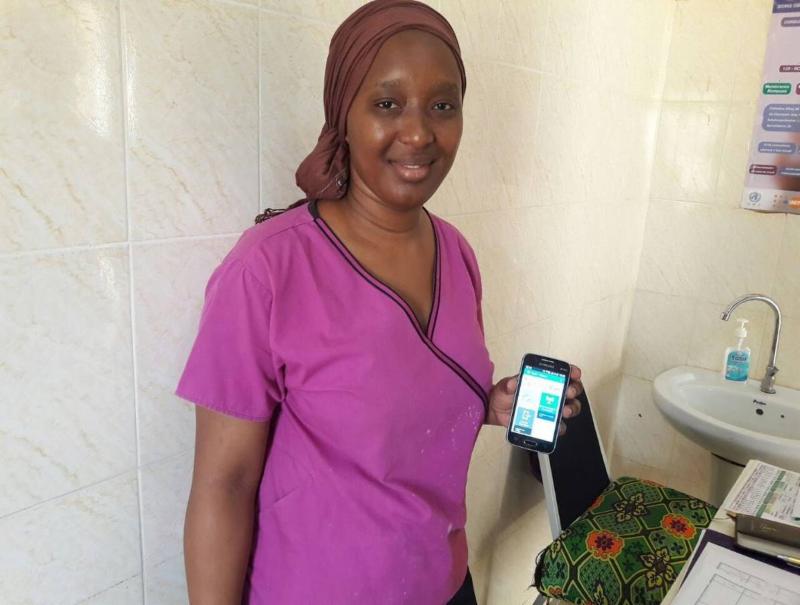
The project has been recognized by SLAB globally for integrating three effective service platforms into a single continuum of services. The first platform links community health workers, women of reproductive age, trained traditional birth attendants, and community elders together in what are called "Care Groups" to promote healthcare-seeking behaviors and best practices and to strengthen access to financial assistance during pregnancy, delivery, and the post-partum period. The second platform integrates a mobile phone application, CommCare, which Africare fine-tuned into an application for the Senegal health system called
mHealth. The
mHealth platform collects and tracks maternal data and ensures women stay connected to the care they need at the community and health facility level. This information is also monitored collectively, allowing for improved tracking of maternal health activity in the region. The third and final platform is a telemedicine platform, which facilitates remote assistance for health service providers in rural settings through e-learning. The platform is currently waiting for validation by the Senegal Ministry of Health before being fully implemented as part of the full program.
The combination of strong community engagement, local support, and mobile technology has made the Aar Leen project a tremendous success in Senegal. Care Groups are helping mothers make informed decisions about their health. By training local leaders and holding workshops, Care Groups are able to change the social norms related to maternal health, many of which are false and dangerous. The project has facilitated group discussions, social mobilizations, advocacy activities, and home visits, reaching 73,735 women of reproductive age in the region to date. During her 2017 research into the program, Dr. Maggie McDonald of York University, Canada, recognized that Africare's Care Groups "encourage women to identify pregnancies early and to support each other to follow healthy practices of pregnancy and birth."
These efforts have had a strong impact on increased access to maternal health services, thus mitigating the risk of maternal and neonatal mortality. As of February 2018, over 39,000 pregnant women in over 700 villages have been registered and monitored using this approach. In one study of sentinel sites from 2014-2017, Africare observed a 153% increase in women completing all four required antenatal visits, a 77% increase in deliveries with a skilled birth attendant, and a 248% increase in women seeking post-natal care.
Africare's SLAB participation has provided the organization with invaluable experience promoting maternal and neonatal healthcare. In addition to experimenting with mobile devices, Africare has also explored different strategies to encourage more involvement from men in the communities served to create a more supportive environment for mothers. The strategies developed in SLAB will be of use not only in Senegal but also in other countries across the African continent.