Newsletter March 2023

ISBNPA Ageing SIG

Welcome from the Ageing SIG Co-chairs

Dear members of the ISBNPA Ageing SIG,


We hope your year has started well! Preparations for the ISBNPA annual conference are in full swing. We are very excited to host our Ageing SIG business meeting during the conference. It will be held on the first day of the conference and we hope to see you there. We hope that the meeting will allow us to understand more about the research that our members do, and help us organize future events to help build collaborations and engagement within our SIG. Please make sure you come along and share your ideas.


In this newsletter, we have a few asks. We are looking to grow our leadership team and also increase our presence on social media. Please read below for more details. We hope you enjoy the March newsletter! If you have any comments, please let us know: ageing_sig@isbnpa.org Follow us on Twitter at @ISBNPA_Ageing

Best wishes,

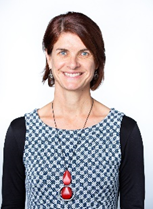
Anne Tiedemann
Co-chair ISBNPA Ageing SIG
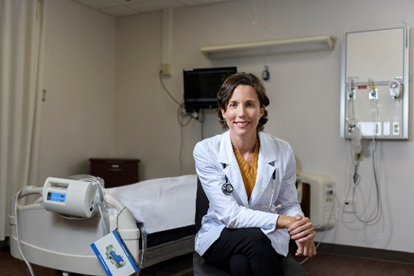
Libby Richards
Co-chair ISBNPA Ageing SIG

LOOKING FOR 2024 CONFERENCE KEYNOTE SPEAEKRS

The ISBNPA conference committee is looking for suggestions for the 2024 conference keynote speakers for the annual meeting in Omaha, Nebraska, USA. Do you have any recommendations for someone involved in Ageing and Implementation Science research? If yes, please contact Antonio Palmeira: executivedirector@isbnpa.org

CONGRATULATIONS TO OUR EARLY CAREER RESEARCH GRANT RECIPIENT

Congratulations to the recipient of our Early Career Research Grant, Claire Gough, and her team (Lucy Lewis, Stacey George, and Christopher Barr all from Flinders University). Claire will be examining if transition care programs support older adults return to physical activity after a hospital stay. 

WE ARE RECRUITNG!

The ISBNPA AGEING SIG leadership committee is currently looking for new members! Joining the SIG leadership team is an excellent way to network and collaborate with researchers with similar interests across the world. We are in particular need to grow our NUTRITION researchers in our SIG. 

We are also looking for a COMMUNICATIONS CHAIR. The communications chair will help organize newsletters (2-3 per year) and keep our members engaged through Twitter. 


If you are interested in joining or learning more about the SIG, contact Libby Richards at earichar@purdue.edu or Anne Tiedemann at anne.tiedemann@sydney.edu.au


Other members of the Ageing SIG committee and positions vacant


Newsletter: VACANT

Webinars: Shilpa Dogra and Trynke Hoekstra

Awards: Cathie Sherrington and Neha P. Gothe

Communication officers: VACANT


RECENT PUBLICATIONS

Engagement, acceptability, usability and satisfaction with Active for Life, a computer-tailored web-based physical activity intervention using Fitbits in older adults.

Stephanie J. Alley, Stephanie Schoeppe, Quyen G. To, Lynne Parkinson, Jannique van Uffelen, Susan Hunt, Mitch J. Duncan, Anthony Schneiders & Corneel Vandelanotte. International Journal of Behavioral Nutrition and Physical Activity 2023; 20(15).

https://ijbnpa.biomedcentral.com/articles/10.1186/s12966-023-01406-4


Effect of sport on health in people aged 60 years and older: a systematic review with meta-analysis.

Juliana S Oliveira, Stephen Gilbert, Marina B Pinheiro, Anne Tiedemann, Liane Brito Macedo, Laísa Maia, Wing Kwok, Leanne Hassett, Catherine Sherrington. British Journal of Sports Medicine 2023;57:230-236.

https://bjsm.bmj.com/content/57/4/230


Employing citizen science to enhance active and healthy ageing in urban environments. Wood GER, Pykett J, Banchoff A, King AC, Stathi A. Health & Place 2023 Volume 79

https://www.sciencedirect.com/science/article/pii/S1353829222002155


Association of physical activity and gait speed: Does context matter.

Elizabeth Richards, Shirley Rietdyk, Elizabeth Teas, Melissa Franks. American Journal of Lifestyle Medicine.

https://journals.sagepub.com/doi/full/10.1177/15598276231157311


Do you have a new paper you would like highlighted? Email us at earichar@purdue.edu

SOCIAL MEDIA UPDATES

Do you have new publications or announcements you would like to share on our Twitter account?


Please send any Twitter content you would like posted to earichar@purdue.edu

Spotlight on an early career researcher

One of the aims of the Ageing SIG is to enhance networking, advertise post doc positions, job opportunities and research exchanges. We would like to use the newsletter to invite one Early-Stage Researcher to talk about their PhD topic and future expectations. Suggest any of your PhD students for our next issue. Please send them to: Libby Richards at earichar@purdue.edu or Anne Tiedemann at anne.tiedemann@sydney.edu.au


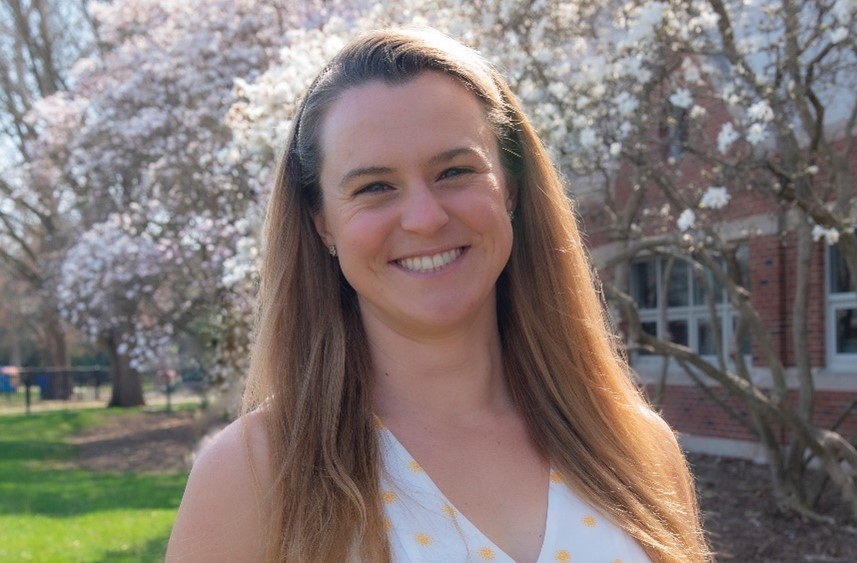
Emily Erlenbach, MS

PhD Candidate

The University Illinois Urbana-Champaign


Spotlight on Emily Erlenbach, M.S

PhD Candidate | Exercise Psychology Lab

Kinesiology and Community Health

University of Illinois at Urbana-Champaign


Tell us about your area of research for your PhD. What attracted you to this area of research?

My research focus is on the design and implementation of interventions targeting increased exercise engagement and decreased sedentary time. Early on in my graduate studies, I observed that, despite all the research uncovering the health benefits of exercise, getting adults to engage in sufficient levels of exercise to experience those benefits remains a challenge. At the same time, I learned about the “active couch potato” phenomenon- how even individuals who engage in sufficient levels of exercise also engage in dangerously high levels of sedentary time. With these insights, I knew I wanted to carry out my Ph.D. work by studying how to best design and utilize theory-based to help adults achieve an optimal daily activity profile of low sedentary time, high volumes of activity, and sufficient exercise.


What have been your most exciting achievements to date?

 I just completed my dissertation project! I designed a 12-week intervention targeting sedentary time and exercise engagement among full-time working adults. By far, the most exciting and rewarding experience I have had during my graduate work has been the amazing feedback participants have provided about their experience with the program I developed. Reading about how something I created has helped people change their lives, improve their health, and reach goals they didn’t think possible is so rewarding- and makes me excited about what to do next!


Most challenging aspect of doing a PhD?

The many hats I have worn throughout this degree! Throughout my graduate work I have been a student, researcher, instructor, project coordinator, lab manager, and mentor. At times it’s been a lot to juggle, but I have amazed myself with how I have grown and the skills I have learned along the way. 


Any tips for others completing a PhD?

Be open to new ideas and areas of research. When I first started my degree, I thought I was going to be focusing my work on the brain benefits of exercise. But as I learned more about the field of sedentary behavior research, my interests shifted a little. Then, as I became more inspired to design effective programs to help adults become and stay active, my interests shifted again. Don’t forget that you are a PhD student- so make sure to stay curious, be open to new ideas, ask questions, and discover what excites you.


Who are your greatest mentors or inspiration?

My graduate advisor, Dr. Neha Gothe, has been such an amazing mentor! From our very first chat in 2017 (when I was applying to graduate schools), she blew me away with her support of her students. She has given me so much guidance along the way and has helped create so many opportunities (such as applying for NIH grants/fellowships, being the lead instructor for a Kinesiology course at UIUC, and connecting me with external collaborators) that, under her mentorship, I feel like I have had such a fulfilling and rich graduate experience.


What are the most desirable characteristics a good supervisor should have?

It might sound a bit cliché, but I believe it is true that a good supervisor should support their graduate students’ budding curiosities and help them discover areas of research that excite them. Although my Ph.D. work is quite different from the research, I thought I would be doing when I first started my master’s with Dr. Gothe in 2018, as my interests evolved, she supported my new ideas and encouraged me to keep building off them.


What do you like to do for fun?

Triathlons! I have been competing in triathlons for almost ten years, and it is a passion that keeps growing. Swimming, biking, and running not only keep me sane and happy but also serve as great thinking time for me to work out research ideas in my head.


What do you hope to do when you’ve completed your PhD?

I am very excited to see that the health and wellness sector is growing to support employee and workplace wellness programs. While conducting my Ph.D. project, I talked with so many working adults who shared their struggles to be active, despite the desire to start a regular exercise routine. I hope to pursue a career designing, implementing, and evaluating wellness programs to help working adults sit less and move more. And then, many years from now, when I retire, I hope to open a soft-serve ice cream shop!

UPCOMING CONFERENCES

World Physiotherapy Congress, 2-4 June 2023, Dubai, UAE. https://world.physio/event/world-physiotherapy-congress-2023


Australia and New Zealand Falls Prevention Society conference and World Falls Congress (joint conference), 26-28 November 2023, Perth, Australia. https://anzfpconference.com.au/


Australasian Society for Physical Activity, 27-28 November 2023, Wellington, New Zealand. https://aspactivity.org/conference/


American College of Sports Medicine Annual Meeting and the World Congress on Exercise is Medicine and the Basic Science of Physical Activity and Aging Biology: May 30-June 2, 2023 Denver, CO, USA https://www.acsm.org/annual-meeting/annual-home