Volume 8, Issue 32 │August 23, 2024

Facebook  Instagram  Linkedin  
ASSOCIATION NEWS

The IOA recognizes a student entering their 2nd, 3rd, or 4th year of Optometry School who shows leadership skills when serving their profession and their community, as well as earning academic achievements. Students may nominate themselves or another student.


The Student of the Year will be awarded a $2,000 grant to be used at the winner's discretion and will be recognized at the IOA Annual Meeting.


Award Details:

  • Amount: $2,000 grant
  • Recognition: Awarded at the IOA Annual Meeting
  • Usage: Funds can be used at the winner’s discretion


Eligibility: Students must be entering their 2nd, 3rd, or 4th year of Optometry School. Nominations can be self-submitted or made by other peers or educators.


Application Deadline: August 30

Nominate a Student of the Year

Thank You PAC Donors!


The IOA Legislative Committee and PAC board would like to thank the following member for their recent PAC donation:

Terri Rieger, OD

Bloomington Regional Society


ANNUAL MEETING

Lindsay Sicks, OD

Dr. Sicks graduated magna cum laude from Illinois Wesleyan University in 2006 with a BA in Biology. She received her OD from the Illinois College of Optometry in 2010 and went on to complete a residency in Cornea and Contact Lenses at Northeastern State University Oklahoma College of Optometry. While in Oklahoma, she was certified in and performed therapeutic anterior segment laser and minor surgical procedures. Currently, Dr. Sicks serves as an attending optometrist for third- and fourth-year interns in the Cornea Center for Clinical Excellence. She is also involved in the didactic training of students in specialty contact lenses and ophthalmic surgical procedures including injections, minor surgical procedures, and anterior segment laser therapy. She has delivered continuing education and presented research and posters at both local and national optometry meetings. Dr. Sicks is Chair of the Faculty-Student Liaison Committee for the American Academy of Optometry and also serves on their Leadership Task Force. She is a member of the Communications Committee for the Association of Optometric Contact Lens Educators. She is also a Gallup-certified Strengths Coach.


Dr. Sicks will be speaking on Friday October 4 on Injections and will provide a basic overview of injection procedures followed by an injections workshop.


Please note: This course does not give ODs the authority to perform injections apart from the COVID-19 injection. Attendees will be practicing injections on one another during the hands-on portion.

View Speaker Schedules

ANNUAL MEETING 2024

👓 EARLY BIRD PRICING 👓

Register by August 31 to receive $25 off of registration costs! Use code EARLYBIRD24 at checkout to save!

Click Here to Register

AOA NEWS

Eye Deserve More 2024


Eye Deserve More is a multi-faceted national campaign to take a stand that every American deserves in-person comprehensive care from an AOA doctor of optometry as part of their eye health and overall health and wellbeing. 


The campaign helps people understand the critical role doctors of optometry play as a primary healthcare provider to keep our eyes and whole body healthy. In today's tech-driven world, technology has now become an indispensable part of our daily lives, whether it’s due to personal or professional use. With digital and tech driven eye symptoms, like digital eye strain, on the rise, devoting the same amount of time to our eye health as we do to technology will make tech-engaged experiences even more fulfilling. 

Technology has become a non-negotiable part of people’s daily lives. Many people prioritize upgrading their tech devices but fail to devote the same attention to their eye health, which why Eye Deserve More is educating Americans about the most advanced tech they already have – their eyes – and the benefit of in-person comprehensive eye exams to maintaining their eye and overall health.


Inspired by real anatomy and capabilities of the visual system, The Eye is a conceptual product that serves as a visually compelling educational tool to highlight the unmatched power of the human eye and the importance of in-person exams with AOA doctors.


Visit SeeTheEye.com to learn more about the components of The Eye, AOA’s new conceptual prototype.


Blink Land

Patients can level up their eye health outside of the exam room with mini games and test their knowledge with eye-related trivia. But it doesn’t stop there, Blink Land encourages players to visit our doctor locator to schedule an in-person exam with an AOA doctor.


Download Blink Land on Apple App Store and Google Play Store.

Do You Really Need Dilation at Every Eye Exam?

-Experts disagree on who needs it and when. Here’s what the evidence suggests.


The New York Times | By Michelle Crouch

August 20, 2024


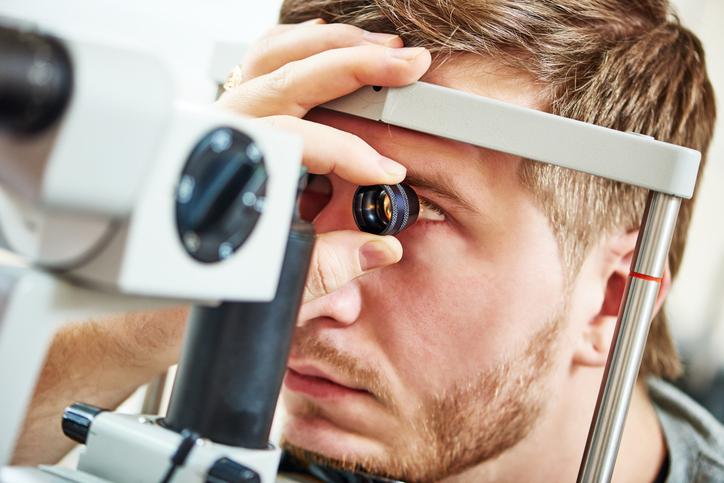
Perhaps the most unpleasant part of an eye exam is when the doctor squeezes in the dreaded drops to dilate your pupils. They sting your eyes, blur your vision and leave you squinting at screens for hours. As you blink back tears, it’s natural to wonder: Is this really necessary?

There’s no question that getting your eyes dilated can help providers catch glaucoma, macular degeneration and many other diseases. But there’s a surprising debate over who actually needs it done, and how often.


The American Optometric Association recommends that all adults have a dilated eye exam every year, even if they have no vision problems. But the guidance from the American Academy of Ophthalmology is entirely different: That group says most young, healthy adults don’t need annual dilated exams.


“This is such a hot-button issue,” said Dr. Roy Chuck, an ophthalmologist at Montefiore Einstein in New York and the director of quality of care for the American Academy of Ophthalmology. “It’s confusing, because you’re hearing different things from different doctors.”


We asked experts on both sides of the debate about the benefits and downsides of dilation.


How does dilation work?

Dilation enlarges your pupil to give your eye doctor a wider and clearer view of the retina, optic nerve and blood vessels in the back of your eye, said Dr. Andrew Morgenstern, director of the American Optometric Association’s clinical resources group.


“Looking without dilation is like looking into a room through a keyhole,” Dr. Morgenstern said. “With dilation, it’s like looking with the door open.”


Dilation can help a provider diagnose hundreds of conditions, including some that aren’t vision-related, such as high blood pressure, autoimmune diseases and cancer.


Who needs a dilated exam, and when?

Eye experts all agree that dilated eye exams are crucial for patients who are experiencing symptoms such as floaters, flashes of light, eye pain, double vision or a dramatic change in vision. These can be signs of an issue that threatens your sight, such as glaucoma, macular degeneration, diabetic retinopathy or a detached retina.


Experts also generally agree that it’s important to get a dilated exam every year or every other year if you have certain risk factors. These include having diabetes, high blood pressure, being older than 55, or having a family history of eye disease.


Beyond that, the recommendations of optometrists and ophthalmologists diverge.


To understand the debate, it’s helpful to know the differences between the two types of eye providers: Optometrists hold doctor of optometry degrees and are trained to perform eye exams, prescribe corrective lenses and diagnose and manage certain eye conditions. Ophthalmologists, who have medical degrees, perform most eye surgeries and handle more complex medical conditions.


The American Optometric Association began recommending annual dilated exams for all patients in 2023. Dr. Steven Reed, the association’s president, said this helps providers detect problems sooner.


“Saying ‘Can I skip dilation?’ is kind of like going to dentist and saying, ‘Can I just open my mouth a little bit?’” Dr. Reed said.


Dr. Morgenstern, who helped write the new optometry guidelines, added that rising rates of type 2 diabetes and glaucoma, along with an aging population at risk of falls from cataracts, were key considerations. Glaucoma, a major cause of irreversible blindness in the United States, can start to damage your eyes years before you notice symptoms.

“We are seeing diseases at younger and younger rates every single year,” Dr. Morgenstern said.

Ophthalmologists agree that eye exams are important, but many argue that yearly dilation is not necessary for most younger adults with no symptoms or risk factors.


Instead, the American Academy of Ophthalmology has said that everyone should have at least one dilated eye exam in their 20s and two in their 30s. When you turn 40, you should get a base line exam that your doctor can use to track changes over time, followed by more frequent dilated checkups according to your provider’s advice.


Your 40s are “a pivotal time, when some of the eye diseases start showing early signs,” said Dr. Andrew Iwach, an ophthalmologist at the Glaucoma Center of San Francisco and an academy spokesperson. Dr. Iwach said the ophthalmology guidelines aim to find a balanced approach that takes into account the frequency of eye diseases at different ages.


So, what does the research show?

For something as widely recommended as dilated eye exams, there’s relatively little research on their benefits and risks for young, asymptomatic patients.


Dr. Morgenstern noted that no studies have compared the benefits of having a dilated eye exam every year versus having one every two, three or five years. In its recommendation, the optometry association acknowledged “a gap in the evidence,” but Dr. Morgenstern said the consensus was that the best way to prevent serious eye problems was with early detection.


Ophthalmologists point to research that suggests dilation rarely uncovers significant issues in asymptomatic patients. In a 1998 analysis of 1,094 patients with no symptoms or risk factors, eye exams identified potentially concerning eye issues in only 30 patients. Nearly all of those issues could have been detected without dilation, the authors said. And a 2014 study that followed 592 older patients for 10 years found that while 34 patients developed eye conditions that required treatment, all but one had symptoms at the time of diagnosis.


“What the evidence does show is that our ability to find things is not that great until the later ages,” said Dr. Chuck, who helped write the ophthalmology guidelines.

The U.S. Preventive Services Task Force, an independent expert panel, hasn’t weighed in on dilation specifically, but said in 2022 there wasn’t enough evidence to back routine glaucoma screening in adults aged 40 and older.


More recent research has focused on the promise of retinal imaging devices, which photograph the inside of the eye. Some doctors now offer the technology as an alternative to dilation and even market “no dilation” exams. While this imaging can be useful, experts said it can’t fully replace dilation.


Health insurers typically pay only for dilated eye exams to detect suspected disease, but most vision plans cover the cost of an annual eye exam, with or without dilation.


For patients who don’t have risk factors or symptoms, the choice comes down to whether the inconvenience of dilation outweighs the reassurance that, in rare cases, it might detect an issue.


Beyond the temporary effects, “there’s no harm in doing a complete dilated exam,” Dr. Chuck acknowledged. But if “everything is totally fine [and] you have no family history, just know that the chances that you’ll find anything are just extremely low.”

Consumer Alert: Eye Color Changing Eye Drops


AOA | Press Release

August 12,2024


The American Optometric Association (AOA) is issuing a new alert urging consumers to consult with their local AOA doctor of optometry before purchasing or using over-the-counter (OTC) eye drops that claim to change eye color. The alert comes after the U.S. Food and Drug Administration (FDA) issued a warning letter to a company producing these products.


The AOA takes an active role in providing accurate information regarding eye health and vision care to the American public. As new direct-to-consumer products enter the market, it’s critical for the public to be aware of potential limitations. Patients should work with their doctors to make use of health technologies that enhance care, and not be misled by questionable marketing claims that undermine it.


Are color-changing eye drops safe to use?

There are no FDA-tested or approved color-changing eye drops on the market today. The AOA does not recommend the use of these products.


FDA-approved eye drops are safe when manufactured and used properly. If you have questions about the use of eye drops or have used eye drops claiming to have color-changing benefits, please contact your local AOA doctor of optometry.


When talking with a doctor of optometry, it’s important to share any prescribed and over-the-counter medications currently in use and ask for their professional opinion. This can also help ensure that the correct treatment plan is in place.


What do I do if I used these drops?

Patients that have used these products and experience any new and/or prolonged irritation in their eyes should visit AOA.org to book an appointment with an AOA doctor of optometry.


The AOA works 24/7/365 to safeguard the quality care standards for eye, health and vision care and supports the doctor-patient relationship as the foundation for healthy outcomes. To find an AOA doctor of optometry near you, visit the AOA.org Doctor Locator.

Access the Labor Law Posters

Report illegal and unsafe contact lens sales to the FDA & FTC

Report Vision Plan Abuses to the IOA


The IOA recognizes that this legislation constitutes a significant stride forward for optometry. However, it doesn't signal the conclusion of our efforts to champion fair contracting with vision plans. In the next few years, our members will be renewing and amending their contracts to reflect the changes in the new law. Throughout this process, we will gain valuable insight directly from our members regarding instances of vision plan abuses.


If you encounter vision plan abuses, we ask that you fill out the form below to report abuse. The IOA will collect this information to prevent further vision plan abuses on behalf of our members.

Vision Plan Abuse Reporting Form


8/27/2024- Fox Valley Optometric Society Meeting & CE


10/3 - 10/5/2024 - IOA Annual Meeting

Check out the newest IOA classifieds here!


ODs Wanted:


Central IL:

Optometrist position available in a large multi-specialty ophthalmology practice (Read more)


OD needed in Champaign, IL offering highly flexible, family-friendly scheduling arrangements (Read more)


Chicago IL:

Optometrist Needed at University of Chicago's Department of Ophthalmology and Visual Science (Read more)


Immediate need for short- and long-term needs for optometrist in Chicago area (Read more)


Chicago Suburbs:

Optometrist with commitment to patient care needed in the Chicago suburbs (Read more)


Part-time or Full-Time OD needed in the Western Suburbs of Chicago (Read more)


Looking for Full Time OD (30+ hrs) in Highland Park (Read more)

FEATURED MEMBER BENEFIT
Medicare Fee Schedules:
Email Your Question Here
We want to hear from YOU!
Do you have a business question or a dilemma we can answer for you? Others may have the same inquiry. Ask away! We will answer your question in an upcoming issue.
(Don't worry, we won't include your name.)

Member Benefit: Save for the Future with Laurel Road’s 5.00% Annual Percentage Yield (APY) High Yield Savings Account


Hundreds of AOA members have trusted Laurel Road, AOAExcel’s student loan refinancing partner, to help manage their student loan debt. But did you know that Laurel Road can also help AOA members plan for the future with a highly competitive High Yield Savings account?

Financial planning is critical for doctors of optometry, and a competitive savings account is a great place to start. The Laurel Road High Yield Savings account earns 5.00% Annual Percentage Yield (APY).+ AOA members can open an account at no cost—and receive a $100 bonus+—with no minimum required balance or monthly maintenance fee.+


A High Yield Savings account is also a great way to start and grow an emergency fund. Having funds set aside for unexpected expenses, like home repair or medical bills, is a good idea even for doctors with steady income streams. As financial planning becomes an even more important focus for medical professionals, tools like the Laurel Road High Yield Savings account provide AOA members with valuable options as they chart their financial roadmap—find out more and open your account today.


AOAExcel partners with Laurel Road to provide AOA members with personal financial tools that allow them to practice with confidence. In addition to High Yield Savings, Laurel Road provides AOA members with other financial tools, such as complimentary, one-on-one student loan guidance. Learn more about how Laurel Road’s offerings can benefit you at laurelroad.com/partnerships/aoa-excel.


+see important disclaimers at laurelroad.com/partnerships/aoa-excel/#disclaimers

INDUSTRY NEWS

Model May Help Predict Onset of Myopia in Children up to Age 14 Years


Healio | By Kate Young Fact Checked by Heather Biele

August 19, 2024


Refractive error, age, sex and race/ethnicity can be predictive factors in determining the probability of myopia onset in prepubescent children, according to a study published in Optometry and Vision Science.


“A predictive model would be useful for sample size planning in myopia prevention clinical trials, providing estimates of the likelihood of conversion from emmetropia to myopia, given different sample configurations of age, sex, race/ethnicity, baseline refractive error or other significant covariates,” Donald O. Mutti, OD, PhD, FAAO, the E.F. Wildermuth Foundation Professor in Optometry at The Ohio State University College of Optometry, and colleagues wrote. “A predictive model would help the clinician advise an individual child and their family on the probability of future refractive error.”


Using data from the multicenter Collaborative Longitudinal Evaluation of Ethnicity and Refractive Error (CLEERE) Study, Mutti and colleagues modeled the probability of myopia onset among children in the United States on a year-by-year and cumulative basis using spherical equivalent refractive error, the horizontal/vertical component of astigmatism, age, sex, race and ethnicity. They included 4,027 nonmyopic study participants aged 6 to 14 years at baseline (49.9% girls), who were monitored for 1 to 7 years through eighth grade.


According to results, the proportion of children who developed myopia by age 14 years was highest among those who were younger at baseline, with 18.9% of those aged 6 years and 19.9% aged 7 years developing myopia compared with 5% aged 13 years at baseline. Younger Asian girls had the highest probability of developing myopia, while older white boys had the lowest.

Lower amounts of hyperopia and less positive values of horizontal/vertical component of astigmatism also were associated with greater likelihood of myopia onset.


“Efforts toward harmonization of prediction calculators will be useful as more longitudinal studies become available,” Mutti and colleagues wrote. “In addition to providing a consensus predictive model, another aspect of harmonization of various longitudinal datasets would be to determine if the probabilities attached to the various risk factors have changed over time.”

Anxiety, Mood Disorders More Prevalent in Adolescents with Myopia


Healio | By Kate Young Fact Checked by Heather Biele

August 21, 2024


Adolescents with myopia have up to a twofold increased risk of experiencing anxiety and mood disorders, and the odds for both conditions increase with myopia severity, according to a study.


Data from 891,505 Israeli adolescents evaluated before military service were analyzed. The age range of participants was between 16 and 20 years, and 57.7% were male. A total of 279,419 subjects had myopia, which was mild (–0.75 D to –3 D) in 19.3% of the cases, moderate (–3 D to –6 D) in 9.6% and severe (–6 D or more) in 2.5%.


Anxiety was diagnosed in 8,683 subjects (1%) and mood disorders in 4,163 subjects (0.5%). Prevalence of anxiety and mood disorders was higher in adolescents with myopia as compared with those without (1.2% vs. 0.9% for anxiety and 0.6% vs. 0.4% for mood disorders) and increased with myopia severity. No differences were reported in relation to sex, best corrected visual acuity and health status.


The authors noted that, despite vision correction, myopia, especially high myopia, significantly affects quality of life in terms of “physical discomfort, limitations in daily activities and psychosocial effects, especially during the vulnerable period of adolescence.”


“Our findings underscore the importance of early identification and prevention of myopia progression in children to address both its direct vision-related outcomes and broader psychosocial implications during adolescence,” they wrote.

They also suggested that psychological counseling could be beneficial as a part of myopia management.

NATIONAL NEWS

Federal Judge in Texas Strikes Down FTC Noncompete Ban

-Rule would have invalidated millions of employment contracts


SHRM | By Roy Maurer

August 20, 2024


The U.S. District Court for the Northern District of Texas on Aug. 20 set aside the Federal Trade Commission’s (FTC’s) proposed ban on most noncompete agreements. This means the rule will not be enforced or take effect on Sept. 4 as intended.


Judge Ada E. Brown ruled that the FTC didn’t have the authority to issue such a broad action and that the rule was arbitrary and capricious.


“The Commission’s lack of evidence as to why they chose to impose such a sweeping prohibition ... instead of targeting specific, harmful noncompetes, renders the rule arbitrary and capricious,” Brown wrote.


She ruled in favor of the plaintiffs in the case: tax services and software provider Ryan LLC; the U.S. Chamber of Commerce; the Business Roundtable; the Texas Association of Business; and the Longview Chamber of Commerce. Her decision renders the injunction against the rule permanent and nationwide.


The FTC proposed the rule in April, stating that noncompete clauses suppress wages and constitute an unfair method of competition. The agency estimated that about 20% of U.S. workers (approximately 30 million people) are bound by a noncompete agreement.


The FTC’s ban would have covered all existing and new noncompete agreements for U.S. workers, with exceptions for certain industries (airlines, financial services, and nonprofits). In addition, it would have prohibited employers from creating new noncompete agreements with “senior executives,” defined as people earning more than $151,164 annually who are in a “policymaking position.”


The rule would have also required employers to provide notice to current and former workers that their noncompete clauses are no longer in effect.

Continue Reading

INDUSTRY PARTNERS

THANK YOU TO OUR INDUSTRY PARTNERS!
Illinois Optometric Association
217-525-8012
Connect with us
Facebook  Instagram  LinkedIn