Volume 7, Issue 14│April 07, 2023
|
|
|
OIG Advisory Opinion on Free CE – Reminder that optometrists are subject to Anti-Kickback Statute
The Office of the Inspector General (OIG) has been investigating ophthalmology groups that host free CE for ODs. In 2022, the OIG released an advisory opinion on ophthalmologists providing free CE to optometrists and potential violations of the Anti-Kickback Statute (AKS). In the opinion, the OIG advised that it is potentially considered a kickback when an ophthalmology practice provides free CE to ODs who refer patients to the clinic. If an OD knows they are receiving something of value from a surgical, ophthalmology, or optometry practice (free CE, meals, entertainment, etc.), any referrals they make to that practice in the future may be viewed as a kickback for the free items received.
The good news is that so far, the OIG’s focus of enforcement has been on the entities seeking referrals and not on the doctors receiving the CE. That said, optometrists should still be aware of any actions that may violate the AKS.
The safest way for an optometrist to protect themselves is to refuse anything of more than de-minimis value from a practice to which they refer patients. Remember there is no such thing as a free lunch; always make sure you are paying fair market value for CE courses. Patient referrals should always be made in the best interest of the patient.
|
|
Mid-Session Legislative Update
The Illinois General Assembly has adjourned for spring break. Last week was the Third Reading Deadline for Senate Bills. The Senate has passed 265 bills over to the House and the House has passed 443 bills to the Senate. The Legislature will reconvene on April 18-20th.
IOA Lobby Day
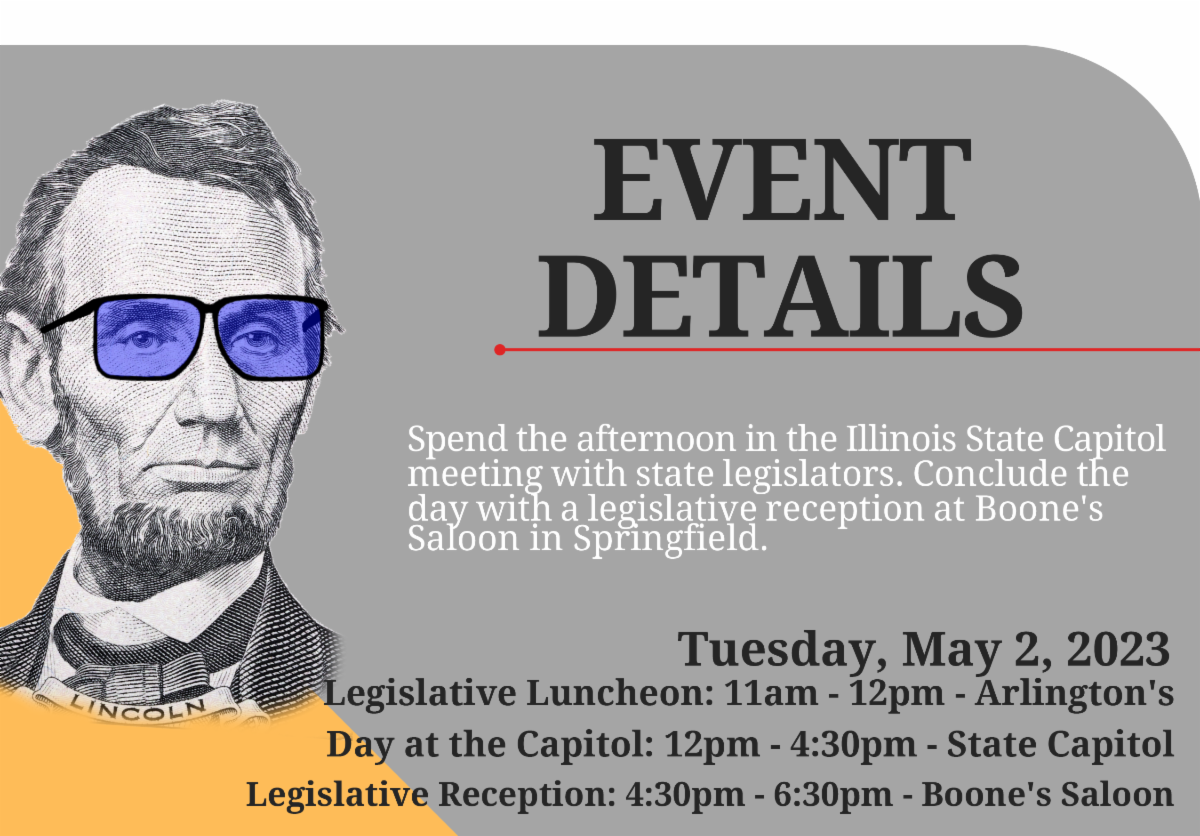
The IOA will be hosting a Lobby Day and Legislative Reception on Tuesday, May 2nd. Optometrists across Illinois will come to Springfield to advocate for the passage of the Vision Plan Regulation Act.
|
|
Special Olympics Lions Club International Opening Eyes Program - June 9-10, ISU Campus, Normal, IL
We are back to hosting a 2-day event at the Special Olympics Illinois State Games this year! I wanted to personally request your help at the Special Olympics Illinois State Summer Games. The event is always well-received by the athletes, their families, and coaches; and it is a great way to “get the word out” about the benefits of annual eye care.
June of 2022 marked the twentieth year that optometry was represented at the SOILL State Summer Games in Normal. The vision assessment was held for one day and 144 athletes were screened in that short time. 155 pieces of eyewear were prescribed, (everyday Rx & sport goggles). The event was a great success for both the athletes who participated and the volunteers who made it run so smoothly!
We need your help again this year! It would be wonderful to have even more volunteers this year, since we are expecting even more athletes to come to our event. Of particular need are volunteers for Saturday, since it is a full day of screening. As always, your families and friends are welcome to participate, and we need help from opticians and optical technicians. Make it an office and/or family event!
Special Olympics is an international year-round program offering sports and athletic competitions for children and adults with intellectual disabilities. Athletes must be at least eight years old to participate. The goal of the Special Olympics Lions Club International Opening Eyes Program is to bring quality vision care to this special population. Our assessment consists of visual acuity testing, cover test, extraocular motility testing, pupils, color vision, stereopsis, non-contact tonometry, slit lamp evaluation, and ophthalmoscopy. If the athlete is determined to need glasses, they are given a full refraction with subjective testing.
Event Details:
Redbird Arena, Illinois State University Campus, Normal, IL
Friday, June 9, 2023 12:00pm – 4:00pm
Saturday, June 10, 2023 9:00am – 4:00pm
Please help us make this year’s SOOE program as successful as past years! Once you have signed up, you will receive more information as the event draws nearer.
To participate, please send the following information to Dr. Christine Allison at callison@ico.edu by May 26:
- Name of volunteers:
- Phone:
- Email address:
- Address:
- Availability: June 9, June 10, or both
Or, you may mail the form linked below to:
Christine L. Allison, O.D.
3241 S. Michigan Ave.
Chicago, IL 60616
|
|
On-Demand CE Series
Did you know that IOA members receive all their required courses FREE on the On-Demand CE platform?
Sign up now to complete all six required courses FOR FREE.
Required courses:
- 1 hr of implicit bias awareness
- 1 hour of sexual harassment training
- 1 hour of Alzheimer's/dementia training for all ODs who see patients 26+
- 3 hours of safe opioid prescribing for those renewing a controlled substance license
All six hours may be taken online. CE rules allow for implicit bias and sexual harassment to count as regular hours. Safe opioid prescribing and Alzheimer's training count as online hours.
|
|
U.S. Rep Mike Bost Fundraiser
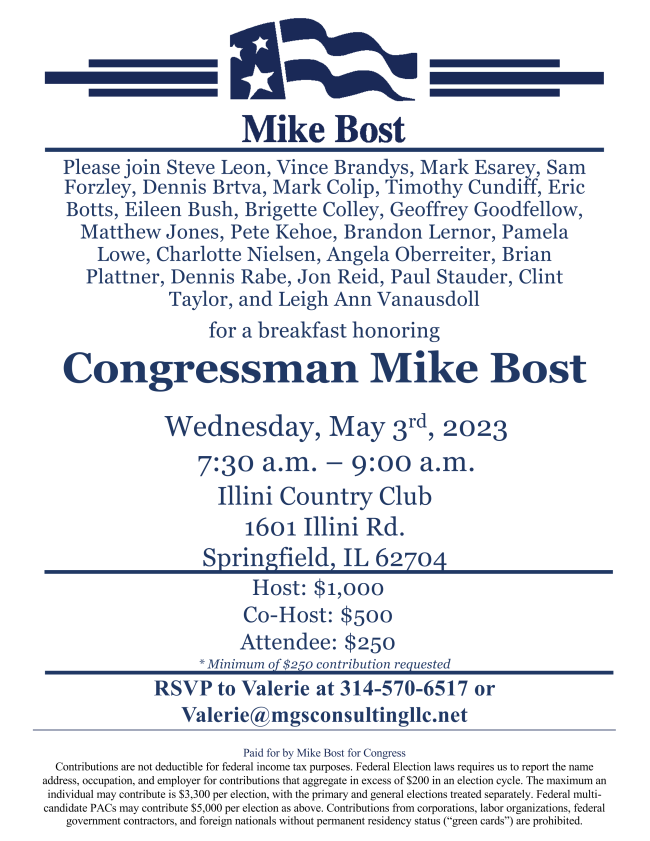
Please join Illinois optometrists on Wednesday, May 3, for a fundraiser in support of Congressman Mike Bost (R-Murphysboro). Congressman Bost has a long history of supporting optometry, having served for two decades in the Illinois House of Representatives prior to his election to Congress.
All IOA members are welcome to attend. If you are unable to attend, please consider contributing to the event. Below is a form where you can make a donation via check or a link to make a donation via credit card. If you plan to attend the event, please RSVP to Valerie at Congressman Bost's office at 314-570-6517 or valerie@mgsconsultingllc.net.
Event Details:
Date: Wednesday, May 3, 2023
Time: 7:30am - 9:00am
Location: Illini Country Club
1601 Illini Rd
Springfield, IL 62704
|
|
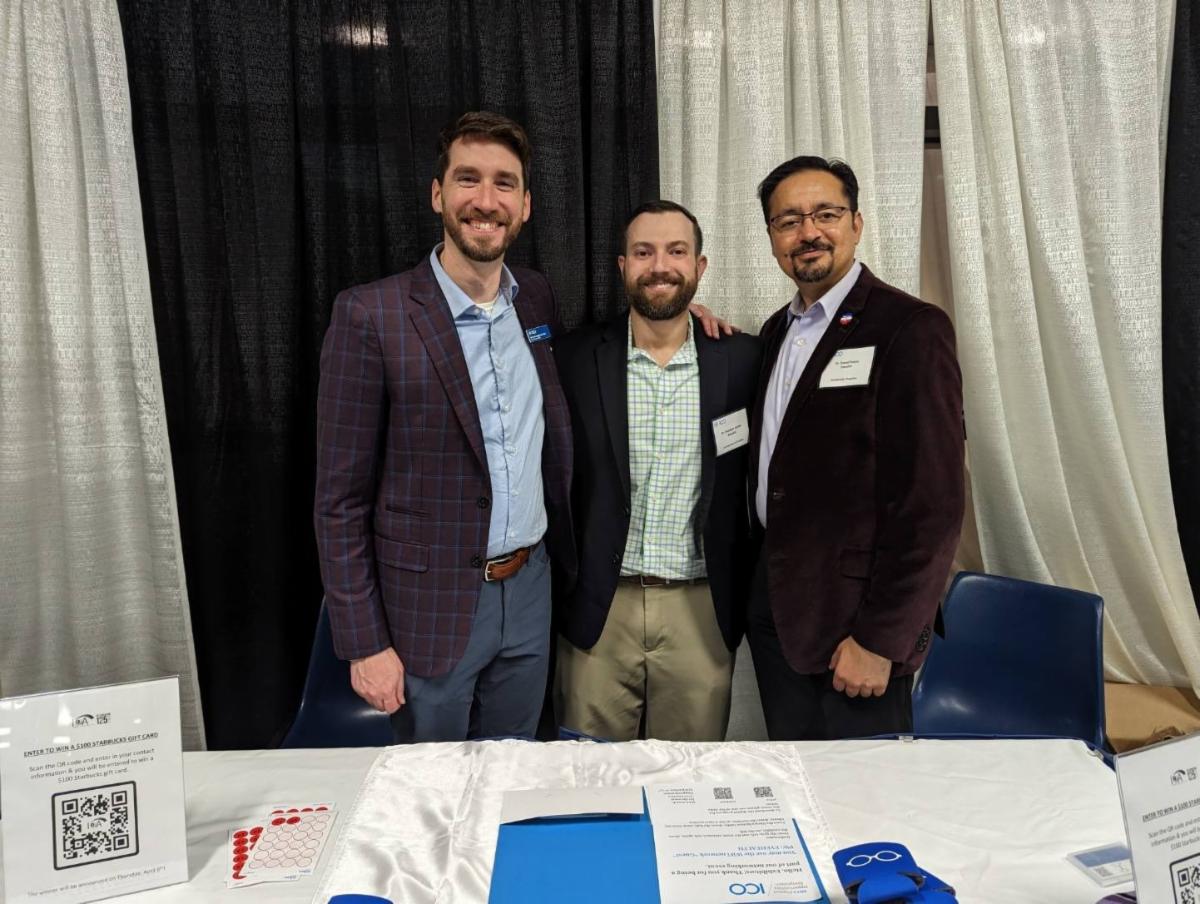
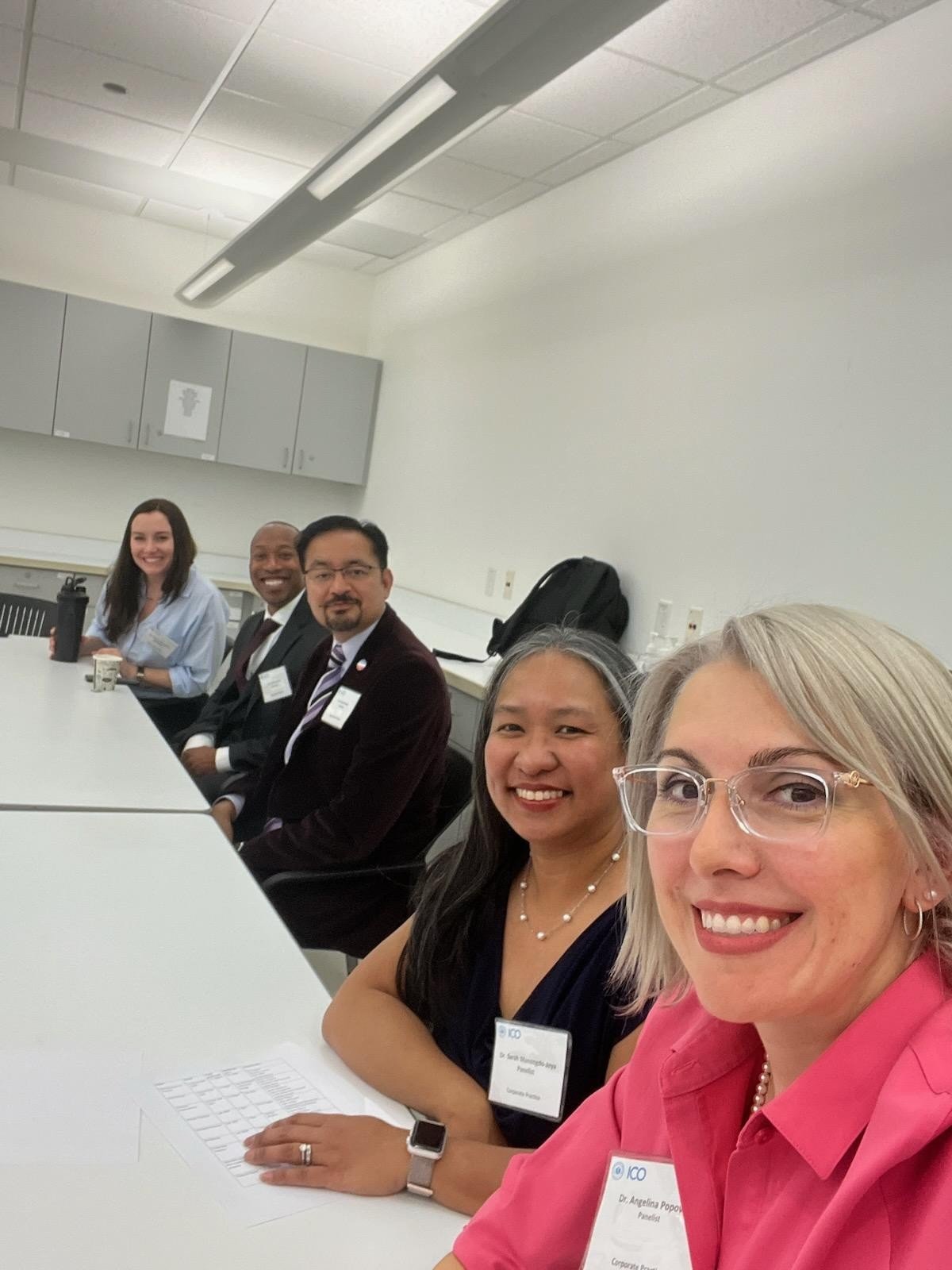
The IOA was well represented at ICO’s Practice Opportunity Symposium on Friday, March 31. IOA members Dr. Erik Mothersbaugh, Dr. Brandon Lernor, and Dr. Toseef Hasan hosted an IOA booth where students could learn about the IOA. Dr. Hasan later participated in a panel on practicing in a corporate setting along with fellow IOA members Dr. Angelina Popovic and Dr. Jeffrey Lewis. Thank you to ICO for hosting this wonderful event and to the students who attended. The future is bright!
|
|
|
AOA revises guidelines to reinforce importance of annual eye exams, comprehensive eye care
The American Optometric Association has issued an updated, evidence-based clinical practice guideline to emphasize the importance of annual in-person eye exams.
According to an AOA press release, more than 1 million people in the U.S. were legally blind in 2015, and up to 8.2 million were affected by uncorrected refractive errors. Those numbers are expected to double by 2050.
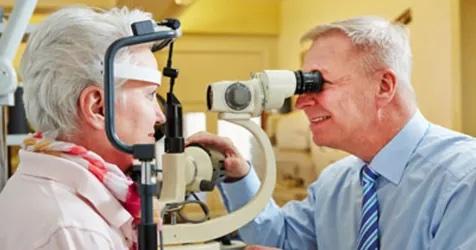
AOA guideline recommends comprehensive eye exams for adults annually. Image: Adobe Stock
“Comprehensive eye exams provide the opportunity for early detection of eye health and visual performance problems, as well as the prevention of vision loss,” AOA President Ronald L. Benner, OD, said in the release. “Linked to decreased quality of life, eye and vision disorders can alter an individual’s overall physical and mental well-being, which has broad implication for the entire health care system.”
The new guideline recommends annual, comprehensive eye exams with a doctor of optometry for adults aged 18 to 64 years, noting these exams “optimize visual function, evaluate eye changes and provide for the early detection of sight-threatening eye and systemic health conditions.”
“The updated guideline offers doctors of optometry the means to provide quality comprehensive eye exams, which directly result in a patient’s improved visual function and quality of life,” Benner said in the release.
|
|
2023 Paraoptometric Resources, Education Included as AOA Member Benefit
Are you taking full advantage of your AOA member benefits? Enrolling paraoptometrics/optometric staff at your office as AOA associate members—at no cost to the AOA member doctor or staff—grants them access to the full range of associate member benefits and resources, including:
-
CPC- and AOA-approved continuing education, professional development, practice training and certification materials available in AOA EyeLearn.
- Member rates for AOA events.
- Volunteer and networking opportunities on a national level.
-
All CPC, AOA publications and newsletters.
How to enroll staff
-
AOA member doctors should login (AOA username and password) to your ‘My AOA’ profile at aoa.org.
-
Select ‘Manage Staff’ tab.
- Enter the requisite information for each staff person (non-doctor).
Paraoptometric staff who work for AOA member doctors may request membership here.
|
|
We want to hear your memories of the IOA! In celebration of our 125th anniversary in 2023, the IOA is collecting your stories about the organization.
Please share your thoughts on the importance of IOA membership, favorite memories from IOA, or your thoughts on the history of the IOA.
|
|
|
|
Report illegal and unsafe contact lens sales to the FDA & FTC
|
|
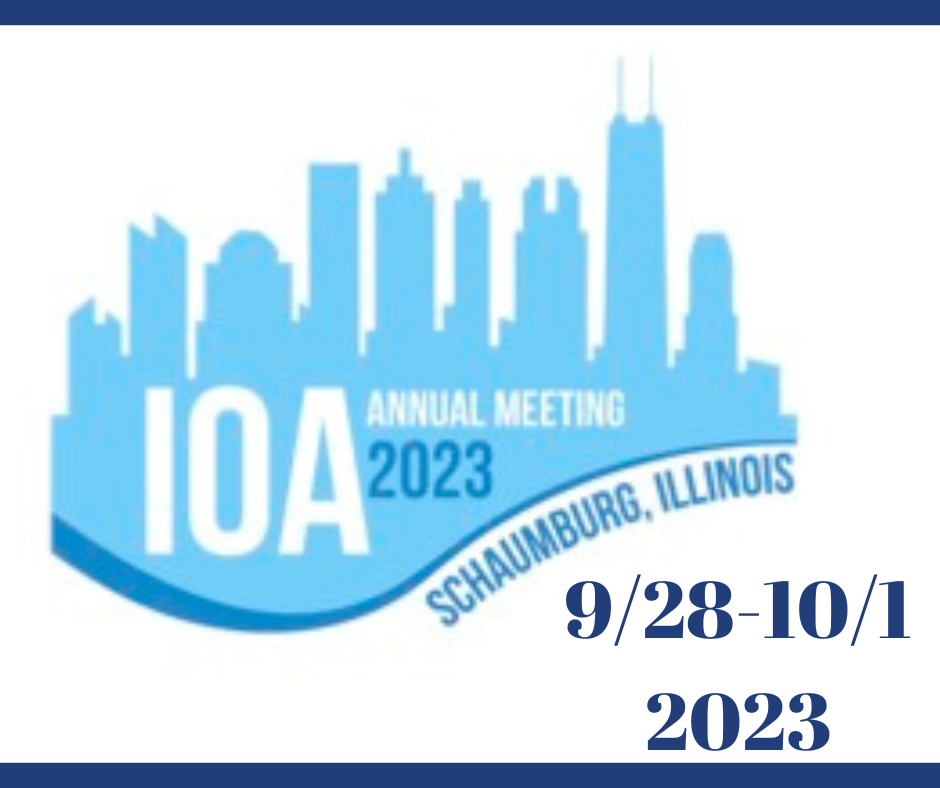
September 28-October 1, 2023 - IOA Annual Meeting
Renaissance Schaumburg Convention Center Hotel | Schaumburg, IL
Up to 18 hours TQ CE
Registration opens mid-July
November 2023
Southern IL CE
6 Hrs TQ
Details coming soon!
|
|
Check out the newest IOA classifieds here!
At Clarkson Eyecare, our optometrists focus on maintaining the health and development of our patient's eyes ( Read more)
Lucrative Opportunity! Heartland Vision is looking for a dedicated Optometrist interested in full time and/or part time employment in Kokomo, Indiana.
|
|
Create a Press Kit
Create a basic press kit so you have it on hand and are easily able to provide it when opportunities arise. This should include brief biographies of you and any other doctors in your office, high-quality professional headshots, high-resolution versions of your logo in PDF, JPG, and PNG formats, a fact sheet about your practice, and other relevant information, such as awards and recognitions relating to your field of expertise. Store all of this in its own, easily accessible online, so you can quickly share it upon request. You never know when you might be contacted for an interview. It is best to be ready.
|
|
Illinois Medicaid Recipients at Risk of Losing Coverage
Fox 32 News
CHICAGO - A pandemic era law that helped uninsured Americans get healthcare coverage has come to an end.
Now, states have a little over a year to determine who still qualifies to be in the Medicaid program, which means millions will be left without coverage again.
This "Medicaid cliff" could leave up to 700,000 Illinoisans uninsured starting this week.
Illinois' Medicaid enrollment grew by about one-million enrollees during the pandemic. But extra federal funding expired last month.
The state now has up to 14 months to remove people who don't qualify.
Medicaid, of course, is a health insurance program for poor and disabled people that is jointly funded by the federal government and the states.
With more than 15 million Americans health coverage at stake, experts fear many could be wrongfully denied this benefit.
"Many people will be disenrolled, even though they remain eligible simply because they face administrative barriers with completing the renewal process. Maybe they don't get the notice in the mail. Maybe they get it, but it's not in a language they understand," said Jennifer Tolbert, Director of State Health Reform, Kaiser Family Foundation.
So, what can recipients expect?
First, be on the lookout for your renewal notice. You will have at least 30 days to respond to the request.
Each state will have a slightly different process, but in general they will want updates on things like income, address, and number of dependents. The information will come through the regular channels, by mail, phone, email or by website for individuals who have set up online Medicaid accounts.
In Illinois, the Department of Healthcare and Family Services also says it is working to those affected find health insurance elsewhere.
|
|
One of the Greatest Advancements in Eyecare History Earns ‘Landmark’ Status
It has been 102 years since American Optical changed the optical industry with the launch of this transformational device.
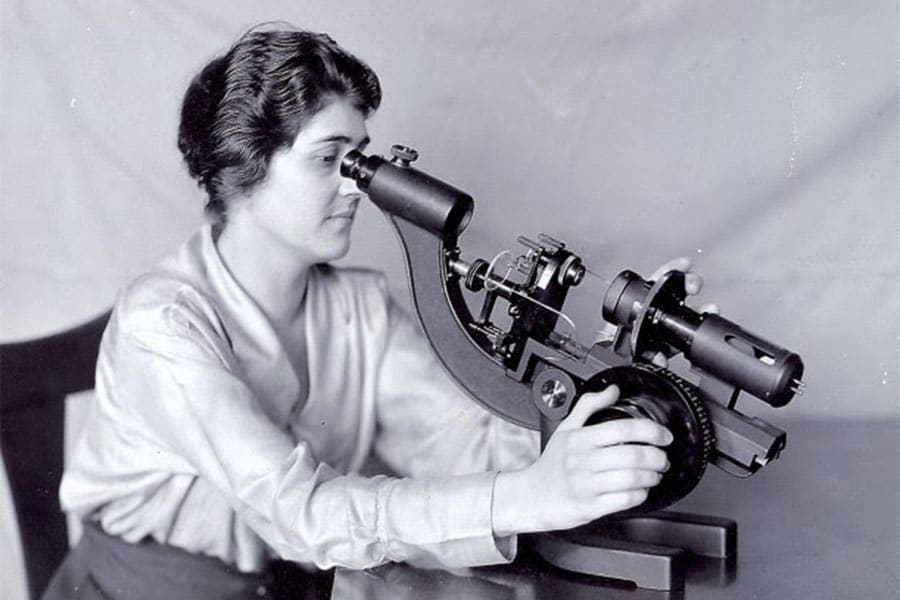
The 1921 AO Lensometer was the first commercial instrument that allowed opticians to accurately verify eyeglass prescriptions on an affordable device.
Courtesy: Optical Heritage Museum
Where would the field of optometry be without the Lensometer? Heck, where would civilization be without American Optical’s breakthrough device?
Most likely in a much blurrier and darker place!
But, seriously, today’s cutting-edge optical industry technology is made possible by the developments of the past. And the 1921 American Optical (AO) Lensometer recently received some due credit for its historical significance.
The American Society of Mechanical Engineers (ASME) has designated the AO Lensometer as a Historic Mechanical Engineering Landmark. A ceremony was held in celebration of the achievement in March at the Optical Heritage Museum in Southbridge, MA. The museum has on display the oldest operational unit in the world.
“It’s amazing to see the Lensometer being recognized 100 years on from its launch,” said Dick Whitney, the Director of the Optical Heritage Museum, in a press release. “Almost everything you use relating to eyeglass lens dispensing in today’s industry can trace its heritage back to the success of the 1921 AO Lensometer.”
Dr. Estelle Glancy and Dr. Edgar Tillyer were instrumental in developing the lensometer. Both worked for the American Optical Company, with Dr. Tillyer serving as the director of research at the time.
According to Whitney, it took 10 years of development before the device was ready. But once it launched, it transformed the optical industry. For the first time, opticians had access to an accurate and affordable commercial instrument to verify eyeglass prescriptions.
ASME’s Landmark designation is a notable feat. Less than 300 artifacts in the world have been so designated. From the ASME website:
“Landmarks, sites and collections of historic importance to mechanical engineering are designated by ASME through its History and Heritage Landmarks Program. Landmark status indicates that the artifact, site or collection represents a significant step forward in the evolution of mechanical engineering and is the best known example of its kind.”
American Optical was founded in 1833. The Lensometer was just one of many advancements that helped the company earn a strong reputation in the industry. SOLA purchased AO in 1996. SOLA/AO then merged with ZEISS Vision Care in 2005. The ASME dedication ceremony at the museum was sponsored by ZEISS.
Historical optical artifacts from American Optical, SOLA and ZEISS are among the more than 3,000 items display at the Optical Heritage Museum. The museum is open Wednesday-Friday from 10 a.m. to 4 p.m., or by appointment. The museum shared photos from the dedication ceremony in the gallery below. You can see more photos from the event here.
|
|
Reading and Visual Health
Reading plays an important role in our lives, but can also compromise visual health
STATE UNIVERSITY OF NEW YORK COLLEGE OF OPTOMETRY
Reading plays an important role in our society and is a fundamental component of our education system. However, reading can also compromise our visual health. Children and adolescents spend many hours reading at a developmental stage when their eyes are adjusting their growth based on visual input. A large body of research demonstrates that reading increases the risk of developing myopia (nearsightedness), a visual disorder that blurs vision at far distances. Research also demonstrates that myopia is not just an inconvenience that can be solved by wearing lenses. It is a serious condition that is increasing at an alarming rate across the world and is associated with sight-threatening diseases such as retinal detachment, myopic maculopathy, or glaucoma. We know that reading increases the risk of myopia progression, but we do not know why.
In a new paper that will be published in the Journal of Vision, scientists at State University of New York (SUNY) College of Optometry demonstrate that the images formed by our eyes during reading lack the diversity of contrasts, luminance transients, visual motion and visual change needed to activate major visual pathways signaling light stimuli, generally known as ON pathways (responsive to ‘light on’). The study compared the eye visual input and visuomotor activity generated by humans performing two visual tasks that are associated with different risk of myopia progression, reading (high risk) and walking (low risk). The results indicate that multiple factors including low light, low contrast, and the lack of self-motion make reading less effective at driving ON pathways than walking. Based on these results, the paper proposes a mechanism of myopia development that requires ON pathways to be strongly activated along the day to properly adjust eye growth. Under this mechanism, sustained reading for prolonged periods of time reduces the activation of ON pathways making the eye grow beyond its focus plane and blurring vision at far distance.
ON pathways are extremely well preserved during evolution and are present in all animal eyes that can generate images, from flies to humans. These pathways are also carefully calibrated across species to be maximally activated by different visual environments. For example, in animals with high visual acuity such as primates and birds of prey, ON pathways are best stimulated by bright high-resolution images moving slowly within central vision (e.g. images in the eye of a bird seeing a prey one mile away from the sky). Conversely, in animals with low visual acuity such as nocturnal rodents, ON pathways are best stimulated by dim low-resolution images moving at fast speeds (e.g. images in the eye of a mouse seeing the walls of a narrow cave a few inches away while running). The visual activation of ON pathways provides an ideal signal to adjust the eye size based on the spatiotemporal properties of each visual environment. If the mechanism proposed by the authors is correct, their work could open new lines of myopia prevention and treatment based on visual diets that boost ON pathway activation. The research was done by Sabina Poudel, Hamed Rahimi-Nasrabadi and collaborators in the laboratories of Jose-Manuel Alonso at the SUNY College of Optometry. It will be published on April 4th at 10 am Eastern Time in the Journal of Vision (notice: press embargo will be lifted on this date and time).
For more information about this study, a press packet can be downloaded here.
|
|
NeuroVoices: Anastasia Vishnevetsky, MD, on Key Research Needs and the Potential for FDA-Approved Treatments for MOGAD
Apr 5, 2023
Anastasia Vishnevetsky, MD, an immunology fellow at Brigham and Women’s Hospital, provided insight on the latest research initiatives in MOG-antibody associated disease, including the potential for the first FDA-approved therapy.
Myelin oligodendrocyte glycoprotein (MOG) antibody disease (MOGAD) is an autoimmune disorder discovered in 2007 that causes inflammation and potential damage in the optic nerve, spinal cord, brain and/or brainstem. Unlike multiple sclerosis (MS) and aquaporin-4-IgG-seropositive neuromyelitis optica spectrum disorder (NMOSD), in which multiple clinical attacks characterize relapsing forms of disease, individuals with MOGAD can have either monophasic or relapsing course.
Each year, in April, the clinical community, including those at the Seigel Rare Neuroimmune Association (SRNA) and Sumaira Foundation, celebrate MOGAD Awareness Month as a way to highlight the disorder and continue conversations to further treatment. MOGAD incidence is 1.6-3.4 per million people per year, and prevalence is estimated at 20 per million, although these numbers are expected to rise with the increase in recognition and availability of testing, including identification of patients with mild disease, monophasic disease, and atypical presentations.
There have been advances in the diagnosis and care for MOGAD, most notably through a recently published diagnostic criteria, led by an international panel of pediatric and adult neurologists, neuroimmunologists, and researchers. As part of MOGAD Awareness Month, NeurologyLive® sat down with Andrea Vishnevetsky, MD, an immunology fellow at Brigham and Women’s Hospital, to discuss the current understanding of the disease and the needed efforts to raise awareness. She spoke specifically about hot topics in MOGAD-related research, the potential for a first FDA-approved therapy, and how the clinical community learns from diseases like MS and NMOSD. Additionally, she provided context on conversations around neurodegeneration, remyelination, and why there is still much to learn about the moments following a relapse.
|
|
WCO and Alcon Introduce Dry Eye Tool
04 April 2023
The interactive tool will be launched in a webinar on 9 May, concluding a global series of online education on dry eye disease mitigation, measurement and management
The World Council of Optometry (WCO) and Alcon will launch a new tool to help eye care professionals in the diagnosis and treatment of dry eye disease.
The new tool will be launched on 9 May during the webinar: Dry Eye Spotlight 4: WCO Alcon Dry Eye Wheel.
The online event marks the culmination of a series of global dry eye disease educational webinars hosted by WCO and Alcon.
Dr Sandra S. Block, president-elect of the World Council of Optometry, commented: “The three experts, Professors Craig, Wolffsohn and Jones, have been amazing in how they shared their expertise in treating dry eye disease and addressing the problems for optometrists globally.”
“This final webinar will culminate in a practical tool, the WCO Alcon Dry Eye Wheel, which will allow clinicians to integrate mitigation, measurement and management of dry eye disease into practice immediately,” she continued.
A live demonstration of the tool and question and answer session will follow the launch.
Previous webinars have focused on dry eye disease mitigation, measurement and management respectively.
Carla Mack, Alcon Global and US head of professional education and development, said: “The prevalence of dry eye symptoms and those who have dry eye disease means as optometrists we will encounter this daily in practice.”
Mack suggested the new tool could help “deliver a great deal of knowledge and an easy-to-apply approach in eye care practices worldwide.”
“Alcon is proud to partner with the World Council of Optometry and our expert faculty as we work to raise awareness of dry eye and support optometrists in helping those who suffer,” Mack continued.
|
|
FEEL GOOD STORY OF THE WEEK |
|
Marine Veteran Doesn't Let Blindness Get in the Way of Running Goals
DAYTON, Ohio - For a lot of people, the idea of running a full or even a half marathon is difficult enough.
Imagine doing it — and doing it pretty well — without your sense of sight.
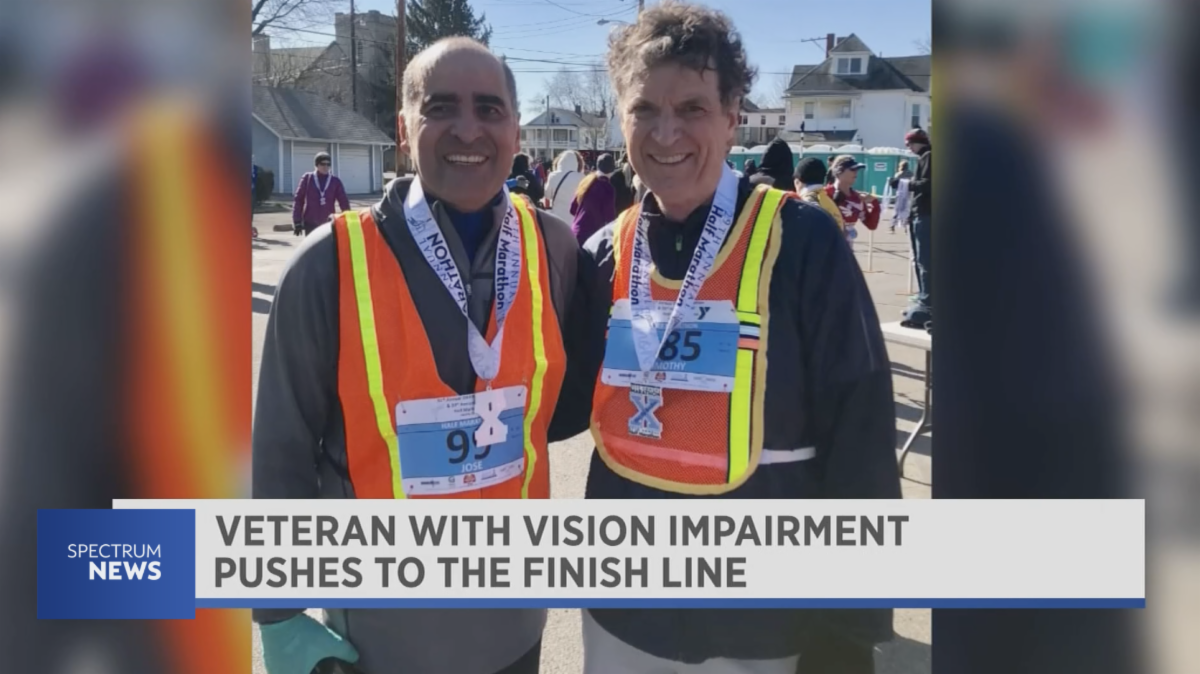
67-year-old Marine Corps veteran Jose Centeno has been legally blind for over five years.
When he started losing his vision, he began seeing Dayton VA Medical Center Optometrist Dr. Tim Morand. The two share a love of running and have completed almost ten races together.
Most of the races they do are marathons or half marathons.
Centeno is able to run side-by-side in tandem with Morand with the help of a simple band. Now, they’re looking to finish this Sunday’s half marathon in Xenia in under 2 hours and 15 minutes.
Centeno says the most important thing for him is to stay active. “Don’t just feel sorry for yourself. Go out and do something for yourself, for your life,” he said.
He learned a lot of his resilience through his twenty years of service in the military.
When he trains, he likes to run on the treadmill or on familiar trails around his neighborhood. When he’s not racing with Morand, his son runs by his side, guiding him every step of the way.
|
|
Governors’ Top Health Priorities In 2023 State Of The State Addresses
As the country continues to recover from the effects of the COVID-19 pandemic, Governors have highlighted the need to continue to invest in and support the health and well-being of their constituents through this year’s State of the State addresses. Issues at the top of mind for Governors include investing in the healthcare workforce, developing policy to improve maternal and child health outcomes, as well as expanding behavioral health services and supports.
The highlights outlined here represent key themes that emerged from a scan of 2023 State of the State addresses as well as budget submissions delivered by state and territorial Governors.
A link to each Governors’ address is available on the NGA 2023 State of the State page located here.
|
|
Nasal COVID-19 Vaccine Heads for Human Testing
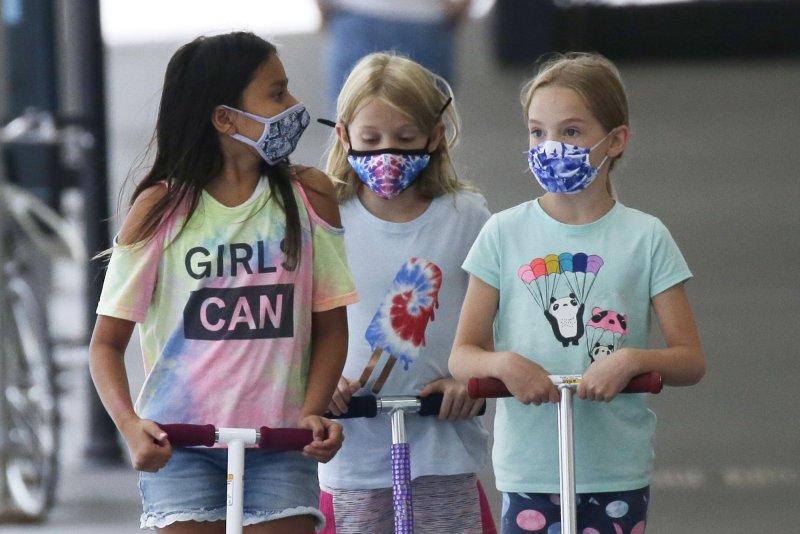
Three children on scooters wear face masks to protect from and prevent the spread of coronavirus as they move together on the sidewalk in New York City in August 2020. A new study said a new nasal vaccine could provide better protection against COVID-19. File Photo by John Angelillo/UPI
April 3 (UPI) -- Researchers in Germany said a trial of COVID-19 vaccination administered through the nose has shown great promise in animal testing, and they are preparing for first-stage clinical trials in humans.
The results of the nasal vaccine research were published Monday in the scientific journal Nature Microbiology.
Authors from the Freie Universität Berlin, Max Delbrück Center and Charité - Universitätsmedizin Berlin said they developed a nasal vaccine that attacks COVID-19 where it often enters the body.
The body often expels droplets of saliva containing the virus while breathing and talking, coughing, sneezing or laughing. Other people then breathe in the airborne pathogens and become infected.
Researchers said India and China had already approved nasal vaccination formulations last fall. They took modified adenoviruses, which typically cause respiratory or gastrointestinal illnesses, that either replicate poorly or stop replicating altogether, therefore never triggering the disease.
In nasal vaccination tests on hamsters, scientists found after two doses of the vaccine that COVID-19 could no longer replicate itself. They said hamsters are a key model in research because they are infected similarly to humans and develop the same symptoms. "It is here, therefore, that we need local immunity if we want to intercept a respiratory virus early on," said a study co-author, Dr. Jakob Trimpert, a veterinarian and research group leader at the Institute of Virology at Freie Universität Berlin.
The scientists said they believe a nasal treatment helps fight COVID-19 where it first takes on in the human body -- in the mucous membranes of the nose, mouth, throat, and lungs. "Nasal vaccines are far more effective in this regard than injected vaccines, which fail or struggle to reach the mucous membranes," said Dr. Emanuel Wyler, a study co-author.
Researchers said that their vaccine stimulates the formation of the antibody immunoglobulin A or, IgA, which prevents infection from occurring in the first place. The antibody is the most common immunoglobin in the mucous membranes of the airways.
"Memory T cells that reside in lung tissue play a similarly useful role to antibodies in the mucosa," Geraldine Nouailles, an immunologist and research group leader at the Department of Pneumology, Respiratory Medicine and Intensive Care Medicine at Charité.
"These white blood cells remain in affected tissue long after an infection has passed and remember pathogens they have encountered before," said said. "Thanks to their location in the lungs, they can respond quickly to viruses that enter through the airways."
Researchers said the nasal vaccine used in India and China has not been approved in Europe. They said, though, that future study is needed because the vaccines would be inexpensive to produce with a much longer shelf life than current options.
The study comes as cases in the United States continue to drop. According to the Centers for Disease Control and Prevention, 139,991 cases were diagnosed for the week ending March 29, down from 154,244 the previous week.
That represents some of the smallest weekly infection numbers since summer 2021, when cases were below 100,000.
|
|
THANK YOU TO OUR INDUSTRY PARTNERS! |
|
|
|
|
|
|