A glimpse into the Program in Human Biology at Stanford University | | |
|
Director's Message
Dear Human Biology Alumni, Students, and Friends,
Welcome to spring! I hope this message finds you all well. I'm excited to share with you all the latest edition of HumBio Highlights, showcasing the remarkable achievements, courses, and work happening within our community. As we prepare for spring quarter, I look forward to the new energy, discoveries, and celebrations it will bring. Happy reading!
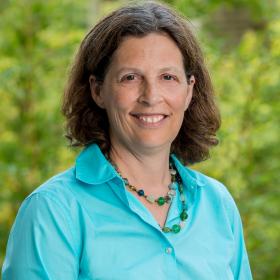
Lianne Kurina
Bing Director of the Program in Human Biology
| | |
|
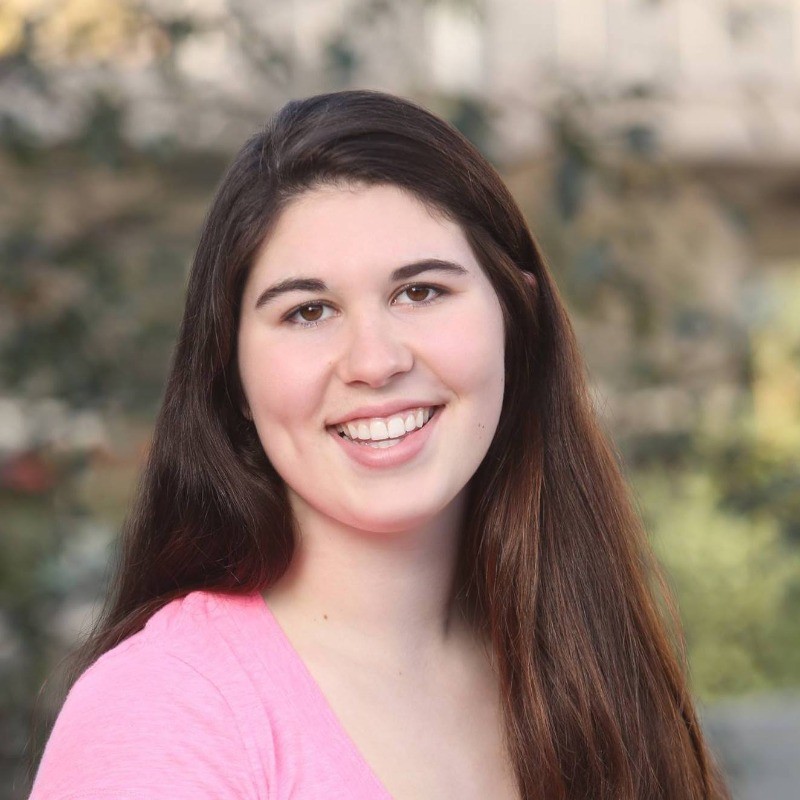
Julia Rathmann-Bloch '21 Named 2024 Gates Cambridge Scholar
Congratulations to HumBio Class of 2021 alumna Julia Rathmann-Bloch, who was recently named a recipient of the 2024 Gates Cambridge Scholarship.
Rathmann-Bloch will pursue a PhD in psychology and plans to investigate the neural underpinnings of consciousness as a function of age and Alzheimer's disease.
Image credit: Office of Global Scholarships
| |
|
New Research on Children's Drawing Recognition Abilities
In this new study senior authored by Dr. Michael Frank, researchers found that children's ability to draw recognizable objects and recognize others' drawings improves as they grow older. This improvement in recognition occurs concurrently with and seems tied to their ability to draw.
Frank is the David and Lucile Packard Foundation Professor of Human Biology and a professor of psychology and, by courtesy, linguistics. Frank teaches in the HumBio core (HumBio 4B, Behavior, Health, and Development).
Image credit: Nick Gamurot
| |
|
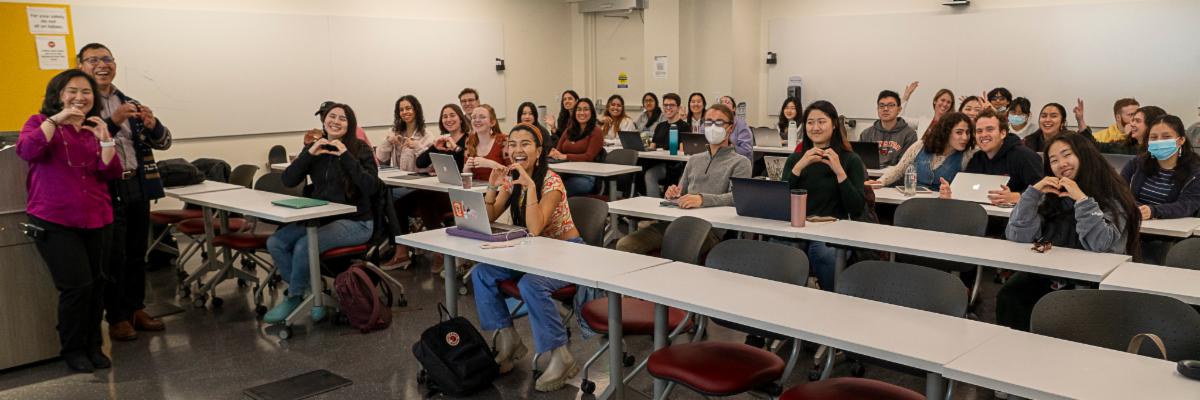
When students enter the classroom of HumBio 122H, Social and Environmental Determinants of Health, they are taken on a journey that blends theory with community-based service and empowers them to engage with community partners to tackle pressing health disparities. HumBio 122H was developed over seventeen years ago by Dr. Lisa Chamberlain (as Peds 150/250) in collaboration with others at the Stanford Medical School. Initially designed for medical and graduate students, the course introduced students to social determinants and health equity. Because of growing student interest in health equity, the course expanded its reach in 2022 to include more undergraduates, opening doors for a diverse range of learners to dive into this important topic. Read more.
| |
|
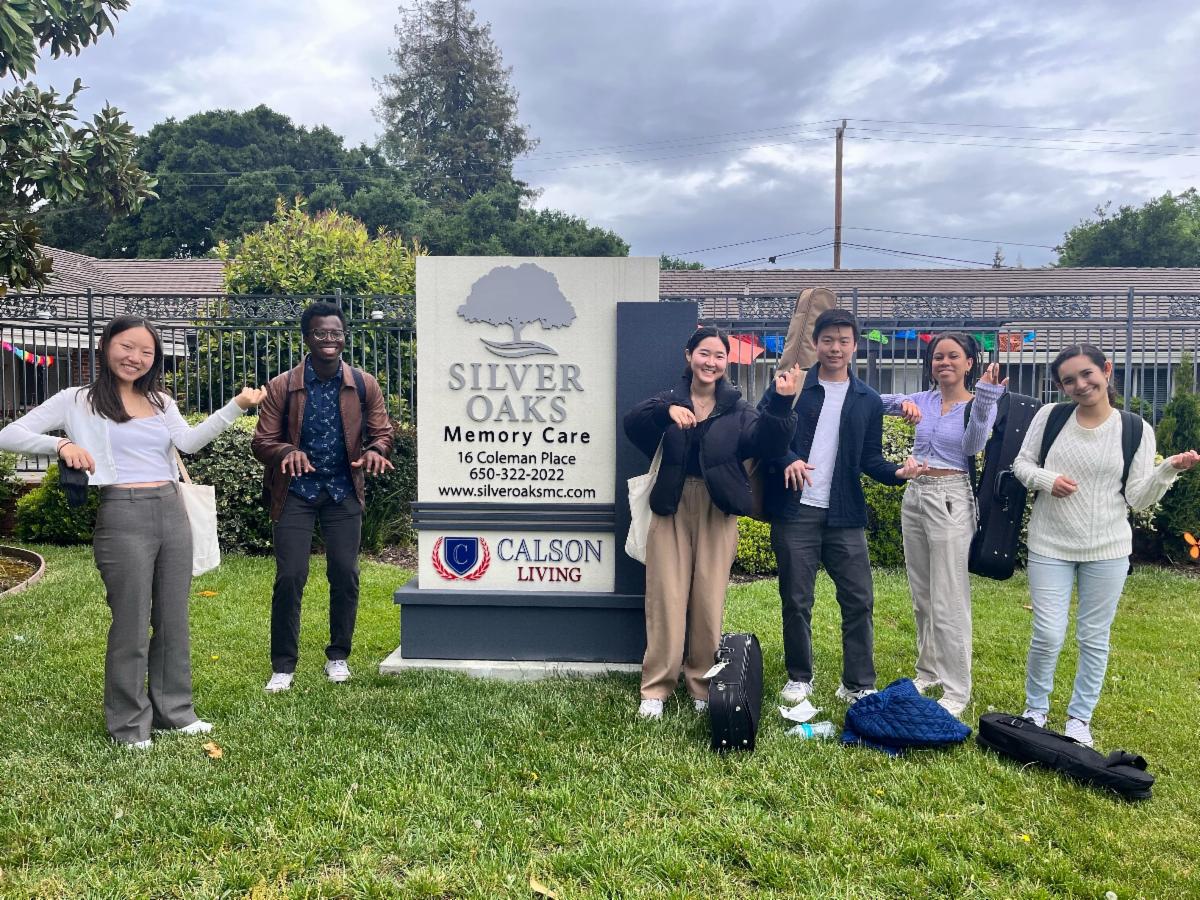
Music brings people together in profound ways; it transcends boundaries, fosters unity, and forges lasting connections among individuals. At Stanford, this transformative potential is found in Healing Harmonies, a student-led organization that integrates music with a compassion spirit of service and community. By playing heartfelt melodies, classical compositions, and timeless classics at senior centers, Healing Harmonies leverages the power of music to foster connection and joy amidst the shadows of isolation for senior citizens. At the heart of Healing Harmonies is Human Biology senior Lenae Joe, the group's co-founder and co-president. Read more.
| |
Human Biology’s committed faculty come from across the School of Humanities and Sciences and the Medical School. Our faculty have long been at the forefront of groundbreaking research, innovation, and creativity. Expand your knowledge, build on your HumBio degree, and learn from these leading scholars from the comfort of your own home in these recorded presentations, panels, and seminars. You never know what you might discover! | |
|
Julie Parsonnet: Practicing Medicine at the Bottom of the World
Together with her husband and fellow professor of medicine, Dean Winslow, Parsonnet spent six months working as a civilian doctor in Antarctica's McMurdo Station. In this presentation, she shares how she ended up there, her experiences, the kinds of medical work they did, and the challenges they faced living there.
Julie Parsonnet is the George DeForest Barnett Professor of Medicine and a professor of epidemiology and population health specializing in adult infectious diseases. She co-teaches HumBio 57, Epidemic Intelligence with Dr. Catherine Ley. She also mentors students pursuing research and honors in Human Biology.
| |
|
Jonathan Pritchard: Human Genetic Variation and Evolution
Traditionally genetics has focused on simple or single-gene traits; however, most phenotypic variations are complex. Pritchard discusses his lab's work on understanding the genetic architecture of complex traits and the implications of these traits in understanding evolution.
Jonathan Pritchard is the Bing Professor of Population Studies and a professor of genetics and biology. Pritchard teaches in the HumBio core (HumBio 2B, Culture, Evolution, and Society), where he covers topics such as the evolution of life on earth, primates and the human organism, ancient DNA and ancestry, human genetic structure and variation, and genome-wide association studies (GWAS).
| | | | |