A glimpse into the Program in Human Biology at Stanford University

Director's Message


Dear Human Biology Alumni, Students, and Friends,


It is hard to believe how quickly this year has passed and that we will be celebrating another incredible cohort of Human Biology students in just a few short weeks. Despite starting their Stanford journey remotely, the class of 2024 have demonstrated resilience and adaptability, forged strong bonds, and achieved remarkable milestones together.


As we continue to navigate the challenges and opportunities that lie ahead, let us remain steadfast in our commitment to supporting one another and fostering a culture of inclusivity, curiosity, and collaboration. I hope you enjoy this new edition of HumBio Highlights.


Lianne Kurina

Bing Director of the Program in Human Biology

Community News

Headshot of Michael Frank

Michael Frank Elected to American Academy of Arts & Sciences


Congratulations to Dr. Michael Frank, who was recently elected to the American Academy of Arts & Sciences, which honors exceptional scholars who discover and advance knowledge and who apply knowledge to the problems of society.


Frank is the Benjamin Scott Crocker Professor of Human Biology and a professor of psychology and, by courtesy, linguistics. Frank teaches in the HumBio core (HumBio 4B, Behavior, Health, and Development).

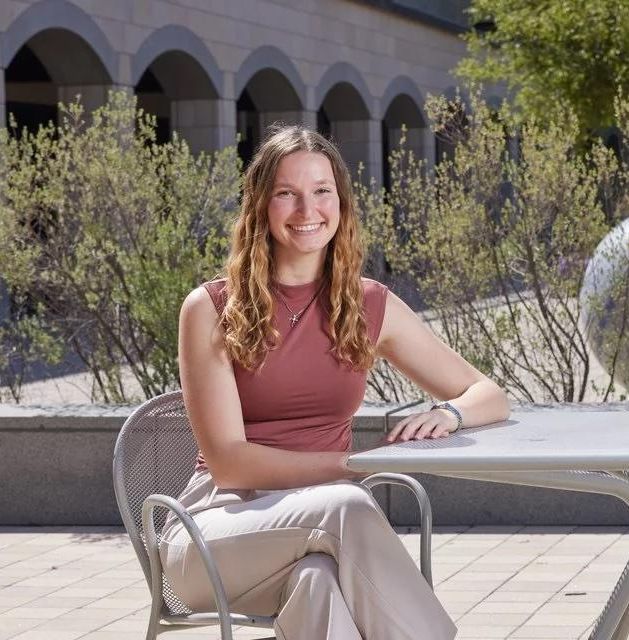
Emily Blackwell on Sustainability Practices at Stanford

Emily Blackwell '23: On Advancing Sustainability Practices at Stanford


In honor of Earth Day, the Doerr School of Sustainability sat down with HumBio Class of 2023 alumna Emily Blackwell to discuss her work improving sustainability practices at Stanford and beyond.


Currently pursuing a masters in Sustainability Science and Practice, Blackwell is working on expanding and improving sustainability practices in areas such as event planning, procurement, space utilization, and increased stakeholder engagement.

Class Spotlight

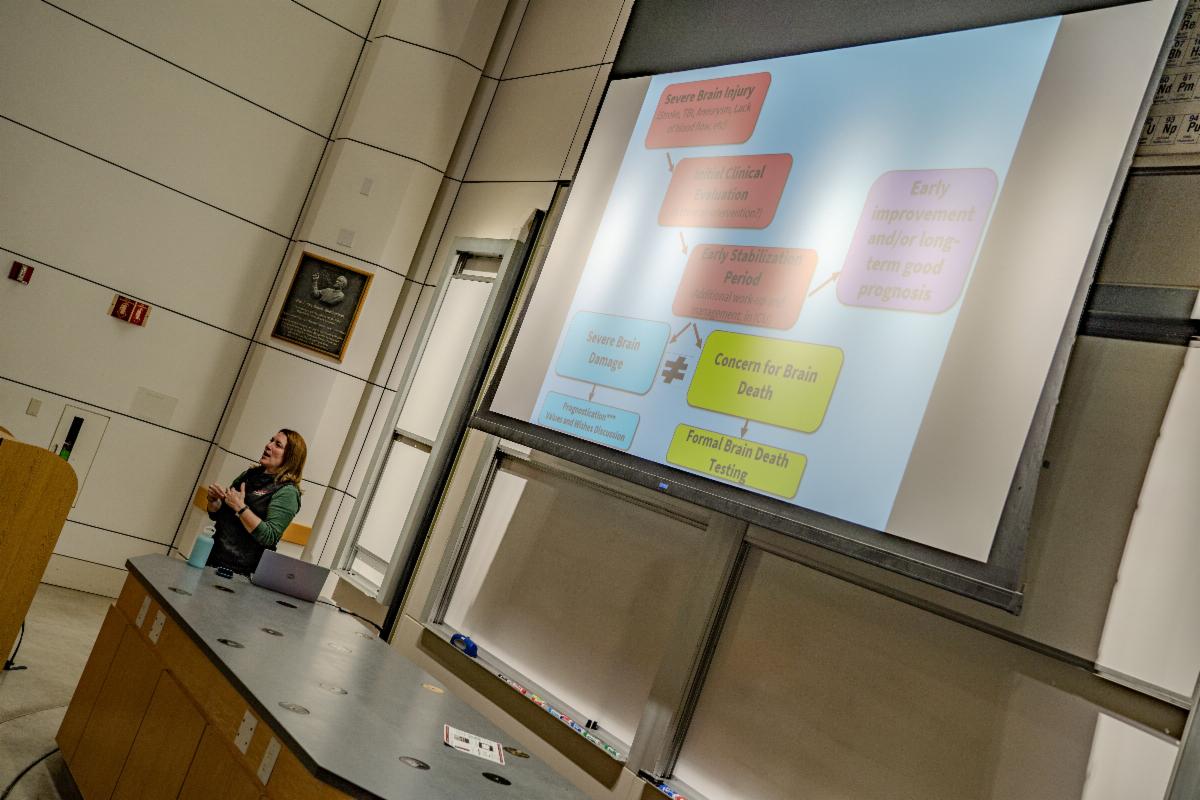
Unpacking Neuro-Ethical Challenges


Imagine a scenario where a person has a horrific accident resulting in severe brain injury and is now declared brain dead. Now consider this: the accident occurred in the US and care is taking place in the US, but the patient is originally from a country where brain death is not widely accepted, and organ donation is rare and often met with mistrust. As the patient's care team, how do you manage the differences in cultural, legal, and ethical perceptions and implications of brain death between the United States and the home country? How do you talk to the family about removing life support? And what about the question of organ donation? Read more.

Student Spotlight

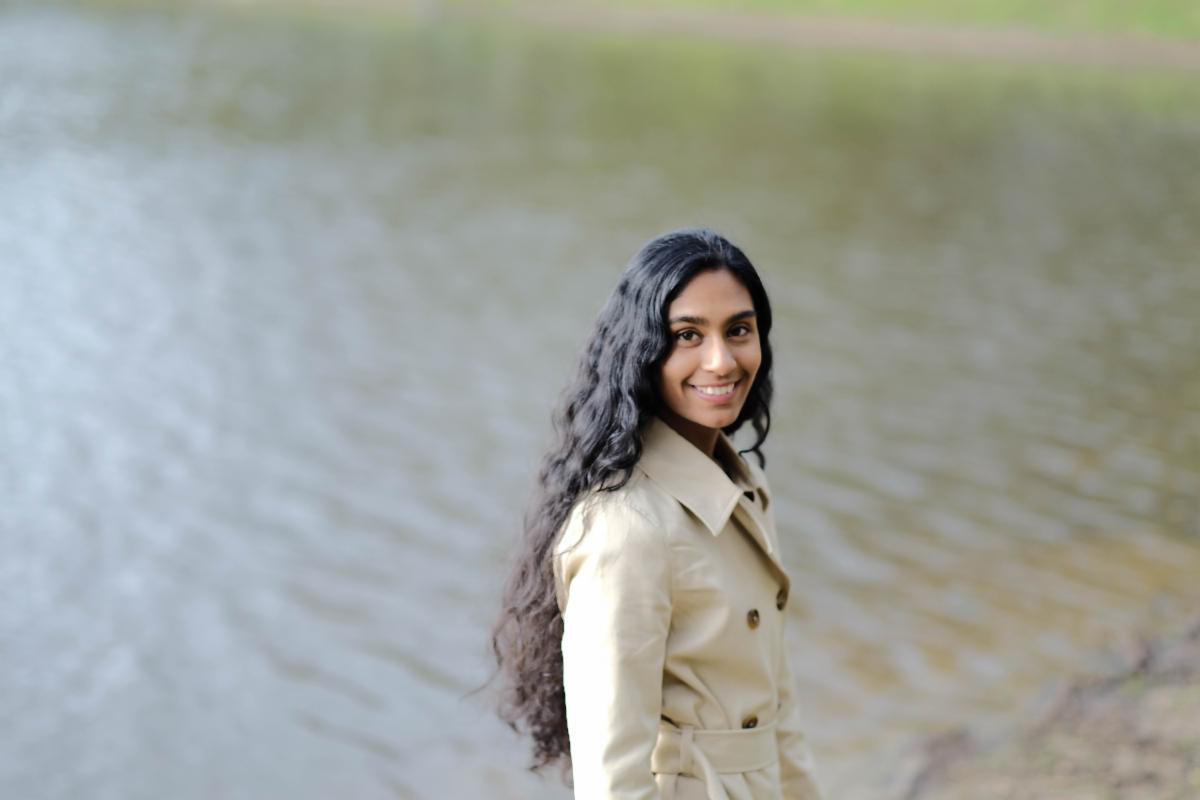
Grey to Green: One Student's Mission to Promote Water Sustainability


Human Biology junior Shreya Ramachandran's journey into exploring water issues and promoting conservation began in middle school. While visiting Central California in 2015, during the height of one of the state's most severe droughts, she witnessed communities grappling with extreme water shortages, with residents trucking in water for basic needs such as drinking and bathing. Ramachandran recalled witnessing a similar water scarcity crisis while visiting her grandparents in India, where access to clean water was a daily struggle and people often relied on water tankers. These experiences ignited a desire to take action and find solutions for water reuse and conservation. Read more.

Learn from the Experts

Human Biology’s committed faculty come from across the School of Humanities and Sciences and the Medical School. Our faculty have long been at the forefront of groundbreaking research, innovation, and creativity. Expand your knowledge, build on your HumBio degree, and learn from these leading scholars from the comfort of your own home in these recorded presentations, panels, and seminars. You never know what you might discover! 

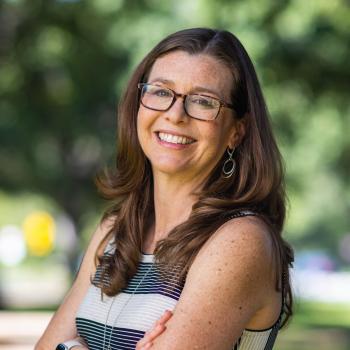
Lisa Goldman Rosas: What Would it Take to Provide All People with Medically Supportive Food and Nutrition?


In this conversation series from the Stanford Impact Labs (SIL), Goldman Rosas talks about healthy and affordable food options that can improve health outcomes.


An assistant professor (research) of epidemiology and population health, of medicine, and by courtesy, of pediatrics, Lisa Goldman Rosas focuses her research on addressing disparities in chronic diseases such as diabetes and heart disease among racial/ethnic minority families. In Human Biology, she mentors students pursuing honors research projects.

Rodolfo Dirzo: Biological Annihilation, The Ongoing Sixth Extinction


What is the sixth extinction and why is it significant? Why is biological diversity critical and how do we mitigate biodiversity loss? In this talk, Dirzo discusses these pressing questions and more.


Rodolfo Dirzo is the Bing Professor of Environmental Science, a professor of earth system science, and the Associate Dean for Integrative Initiatives in Environmental Justice. He studies species interactions in tropical ecosystems in California, Latin America, and other tropical areas. He teaches HumBio 112, Conservation Biology: A Latin American Perspective.

Did someone forward you this newsletter? Want to stay updated on all things HumBio but not yet on our mailing list? Subscribe to HumBio Highlights now.

Facebook  Instagram  LinkedIn  Web