|
Understanding the Basics
Acids, such as sulfuric, hydrochloric, and nitric acid, are highly reactive and can cause burns, release toxic fumes, and react violently. Understanding their properties is crucial.
Safety Measures
- Risk Assessment: Regularly identify and mitigate potential hazards.
- Safety Protocols: Establish guidelines for handling, transferring, and disposing of acids.
Proper Storage Conditions
- Appropriate Containers: Use compatible materials (e.g., glass or plastic).
- Labeling: Clearly label containers with chemical names, concentrations, and hazard symbols.
- Ventilation: Store in well-ventilated areas to prevent fume buildup.
Segregation and Separation
- Separate Storage Areas: Keep acids away from bases, oxidizers, and flammable materials.
- Secondary Containment: Use trays or spill pallets to contain leaks.
Personal Protective Equipment (PPE)
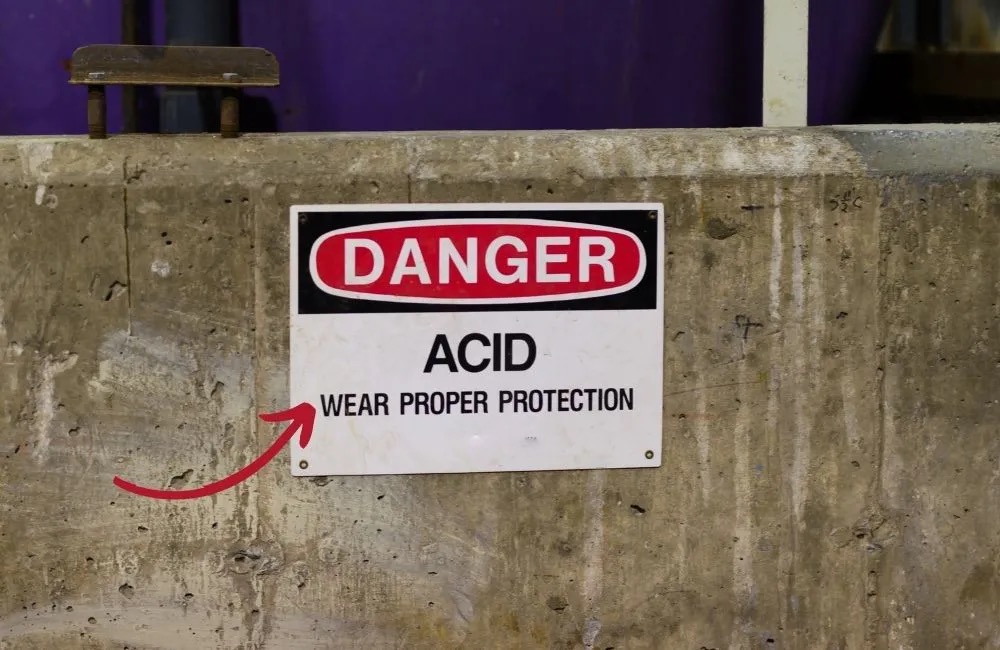
- Protective Clothing: Provide acid-resistant gloves, aprons, and face shields.
- Eye Protection: Use chemical-resistant goggles or face shields.
- Respiratory Protection: Provide masks or respirators in areas with acid fumes.
Emergency Preparedness
- Spill Kits: Equip with neutralizing agents, absorbents, and PPE.
- Emergency Showers and Eyewash Stations: Ensure accessibility and regular maintenance.
- First Aid Training: Train employees in acid exposure procedures.
Waste Disposal
- Neutralization: Neutralize acids before disposal.
- Hazardous Waste Disposal Services: Partner with certified services for compliant disposal.
In Summary
Safe acid storage involves understanding properties, implementing safety measures, ensuring proper conditions, segregating substances, using PPE, and preparing for emergencies.
LEARN MORE:
Read the full article on our blog!
|