How Difficult and Prickly Behavior is Provoked
Difficult behavior is provoked for different reasons and with varying degrees of frequency and intensity. Some prickly behavior isn't intended with malice. Actually, people are sometimes unaware that their behavior is causing problems for others and wonder why life just seems to be problematic for them. We have divided prickly behavior into three categories to differentiate different manifestations of difficult behaviors:
* Stress-related (temporary). Occasionally, people may exhibit prickly behaviors as coping reactions to some of life's stresses. These are considered within the range of normal responses to stressful events, albeit not pleasant or engaging ones. When people are at their wit's ends because their needs aren't being met, or they're in a crisis situation, or when life presents them with unexpected, distressful obstacles, it can bring out their "prickles." Their reactions may even be out of character for them, but they reach a breaking or a boiling point, and resort to prickly behavior as a coping mechanism.
For example, any of the following situations would boost your stress levels: You've just arrived for your sister's wedding, and your luggage is lost ... a computer virus zaps your system and you've got a critical report due the next day, but the computer tech can't fix the problem ... you've had a tough quarter, sales continue to decline, and your job is on the line ... your colleague feels he's been upstaged and starts some juicy rumors about you ... your friend didn't back you up at work like she promised, leaving you to fight the battle alone. Or major life stressors may take you to the edge-you're going through divorce, your son's on drugs, you've been diagnosed with cancer, and you just lost your job. When stress becomes unbearable, people often act out their frustrations in unpleasant ways. Fortunately, as the stress level subsides or becomes more manageable, the prickly behavior does, too.
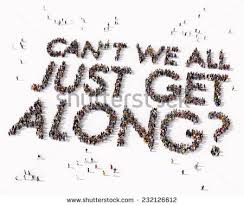
* Bad chemistry. In some cases, prickly behavior may manifest as a result of "bad chemistry" between two people who are not on the same wavelength and far from the Connection Zone. More than likely, both are exasperated by their frequently plagued or thwarted interactions. They may be "oil and water," rub each another the wrong way, set off each other's "buttons," or be a total mismatch of energy and interests. Each may get along fine with others, but the two of them together is definitely not "get along" territory.
* Persistent. Persistently prickly people may have well-known reputations for being chronically difficult and stirring up trouble, whether at the office, at home, elsewhere, or maybe even every- where. They may have psychological, personality, or biological disorders that inhibit their expression of better behaviors and prevent them from learning how to behave more agreeably. Their abusive, obnoxious behavior is destructive to their relationships, and often with corresponding impact on the health and well-being of those who regularly interact with them. Since they are not interested in getting along, the Persistently Prickly are especially challenging to handle.
The handling of Prickly People requires caution, special knowledge, and constant vigilance. Strategies and tips for managing your interactions and ongoing relationships with them are discussed throughout the remaining sections of this chapter.
Arnold Sanow, MBA, CSP works with Leaders and Teams to help them get along better with customers, co-workers, colleagues and team members. He is the author of 6 books, to include, "Get Along with Anyone, Anytime, Anywhere" and "Present with Power, Punch and Pizzazz." He has delivered over 2,500 professional development programs to more than 500 different organizations worldwide. He was recently named by Successful Meetings Magazine as one of the top 5 best "bang for the buck" speakers in the USA and was rated by his peers as one of the top 30 "global gurus" in communication. www.arnoldsanow.com
www.speakingcoach.com - speaker@arnoldsanow.com