DONATE >

Weekly Newsletter

October 25, 2023

Quote of the Week:

“If you want to go fast, go alone. If you want go far, go together.”

— African Proverb

Helpful Tips for Reducing Language Barriers

caused by Communication Challenges

Welcome to this week's newsletter! In this edition, we're excited to feature an enlightening recap of our recent caregiver webinar, "Helpful Tips for Reducing Language Barriers caused by Communication Challenges," presented by Roberta J. Elman, Ph.D., CCC-SLP, BC-ANCDS, the President & Founder of the Aphasia Center of California.

Click play to watch the Caregiver Webinar recording below:

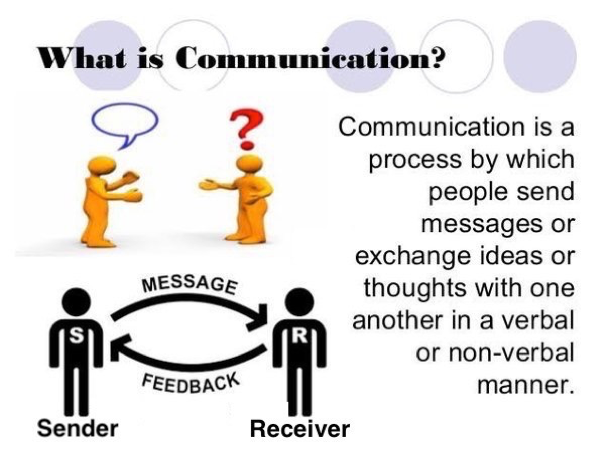
What is Communication?

  1.  “It’s a 2-way street”
  2. There are many ways to communicate: 
  • Spoken words (speaking & understanding)
  • Written words (reading & writing) 
  • Gestures
  • Pictures

Here are some of the challenges to communication:  


1. Language barriers:


  • The listener (caregiver) can’t understand the speaker (client) 


  • The speaker (client) can’t use or understand language normally 


Could be one of these or both.


a. Speaking a different language (obviously). Get a translator, whenever possible!


b. Expressive aphasia — result of brain damage often due to stroke. The speaker knows what they want to say, but has trouble using words to express something to someone else. This can impact spoken words or written words (or both). May not have any other cognitive impairment.


c.  Environment is too noisy — Go to a quieter place!

d. Receptive aphasia —Patients usually understand that you are trying to communicate with them, but they can’t understand the words you are using, even if the words are simple and they used to be able to understand those words. Can impact spoken words or written words (or both). Often due to a stroke.  


Try other modalities like writing key words or using gestures/drawing/other modalities. (Keep reading for more on other modalities…) May not have any other cognitive impairment.


e. Most people with aphasia have some expressive AND some receptive aphasia but there is usually more of one than the other. This depends on where in the brain the stroke/damage is located.


*Note: Having aphasia does not indicate memory loss or dementia. More than two million (2,000,000) people in the United States have aphasia!


Some other causes of aphasia: traumatic brain injury (TBI), brain tumor, gunshot wound, primary progressive aphasia (and others).


2.  Hearing Loss:

a. Environment is too noisy — Go to a quieter place


b. Hearing aid isn’t working — Check that the battery is working. Make sure the hearing aid is turned on. Cup your hands around the hearing aid. If the hearing aid squeals, the battery works and the aid is turned on/functioning.


c. Arrange or encourage the person to get a hearing test.


d. If you know that hearing is a problem, and all else fails, try other modalities. (Keep reading for other modalities…)

What’s it like to not be able to communicate? 


Quote from Gal Sont who died of ALS:


"Communication is everything. While all other functions that are required to live, like eating, drinking, moving, and even breathing can be replaced by machines or a caregiver, no one can say 'I love you' to my daughter for me," Sont said.

Read more >

Other Modalities of Communication

Work-arounds = other modalities for communication


  1. There is no one solution or “fix”
  2. The caregiver must be resourceful, patient, respectful, and compassionate
  3. The basics: try to avoid environmental distractions (noise or too much visual activity).
  4.  Allow time (patience). Speak slowly enough and give the person time to respond.
  5. Be a keen observer.
  6. VERIFY - Did they understand you? Did you understand them?


Ways to be respectful:

  1. Avoid speaking to “surrogate” (like doctor, or family member) if possible, speak to the person themselves.
  2. Use normal tone of voice that is adult (not childish) and loud enough (but not shouting)
  3. Compassionately let the person know you see that it is difficult for them to communicate. 


Be to the point. Clear. Concise. Ask questions as simply as possible. 


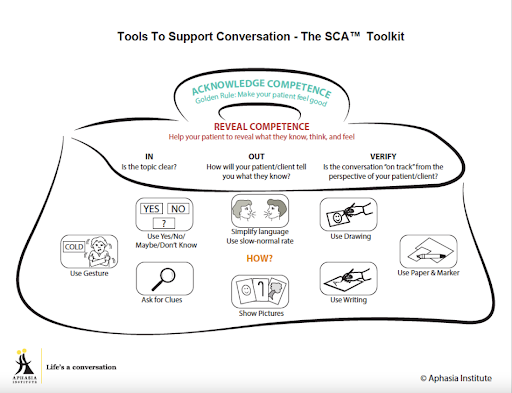
Some other modalities to consider using:

  • Gestures
  • Pictographs
  • Photographs
  • Facial expressions
  • Writing key words (Be sure to have a pad of paper and pen nearby)

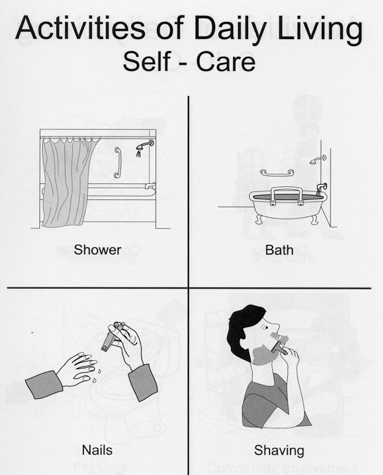
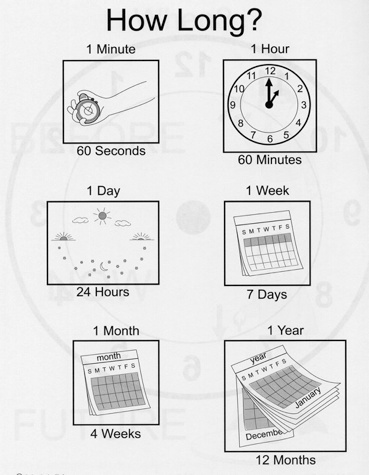
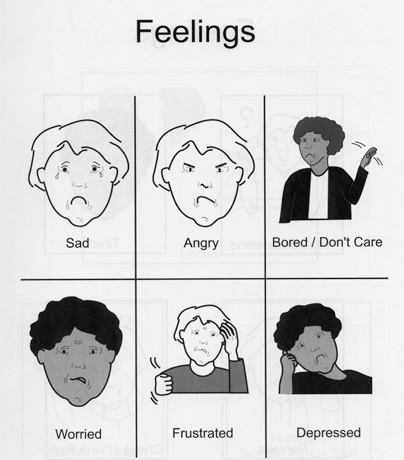
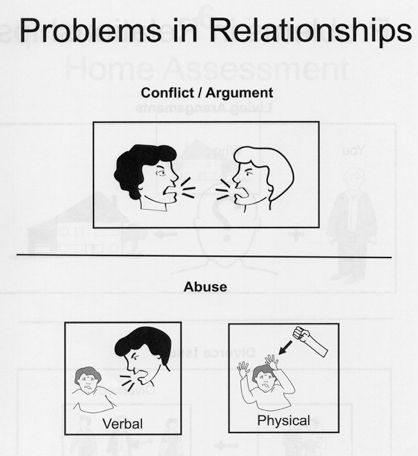
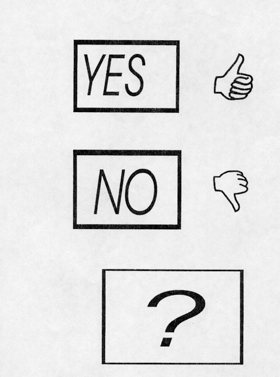
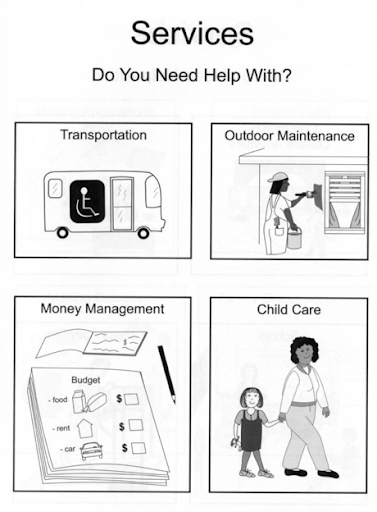
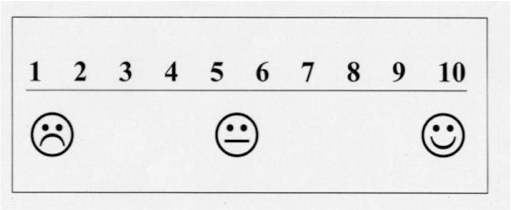
Here are some examples of pictographs:

Communication challenges — When

there IS cognitive impairment

Here are some techniques to try when there is cognitive impairment:


1. Modify what you do depending on the degree of cognitive impairment. You may need to use some “trial and error” and keen observation skills to figure out what works best.


2. Use some or all of the techniques we’ve mentioned above AND try to:

  • Avoid distractions (auditory or visual)
  • Use other modalities like photos, pictographs, gestures, written key words, facial expressions, drawing, music, touch, and dance. 
  • Be creative, compassionate, take your time. 

“Rome wasn’t built in a day!”

Great resources referred to in this webinar:

1. Aphasia Institute: 

www.aphasia.ca/

www.aphasia.ca/participics/


2. Aphasia Center of California (ACC):

To learn more about the Aphasia Center programs, click on this link: aphasiacenter.net


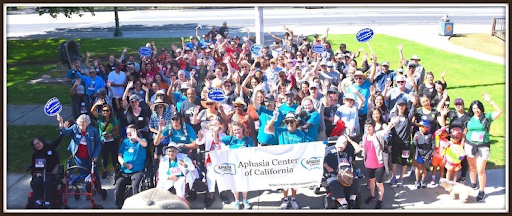
The Aphasia Center of California was the first independent Aphasia Center in the United States. 

  • The Aphasia Center of California (ACC) opened its doors in 1996.
  • The ACC is a not-for-profit, 501(c)3, charitable organization
  • The mission of the ACC is to enhance communication skills, quality of life, and overall well-being for all those affected by aphasia.


Mailing Address: 3996 Lyman Road, Oakland, CA 94602

Phone: (510) 336-0112

Visit Aphasia Center of California

Follow Aphasia Center of California on Facebook

Follow Aphasia Center of California on Instagram: @aphasia_acc

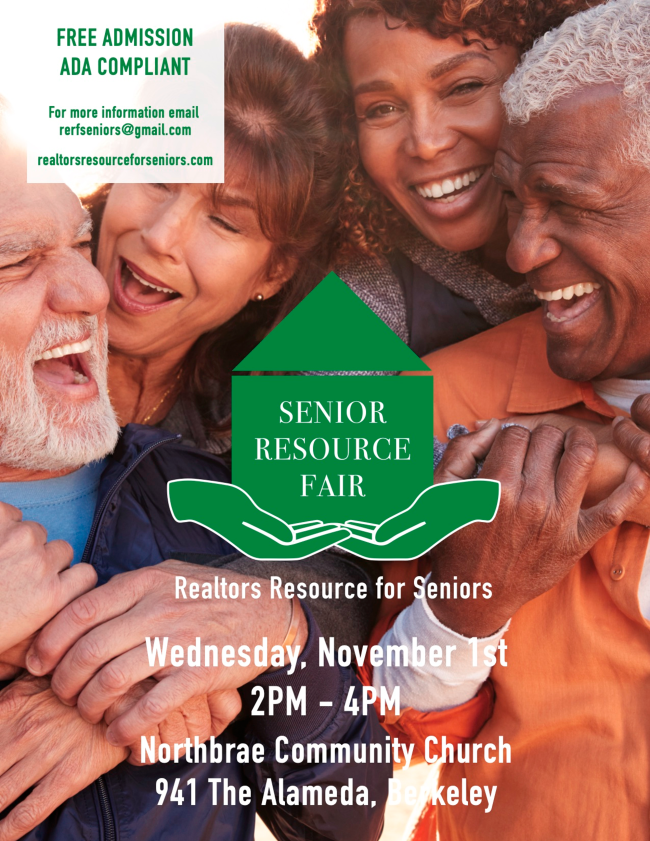
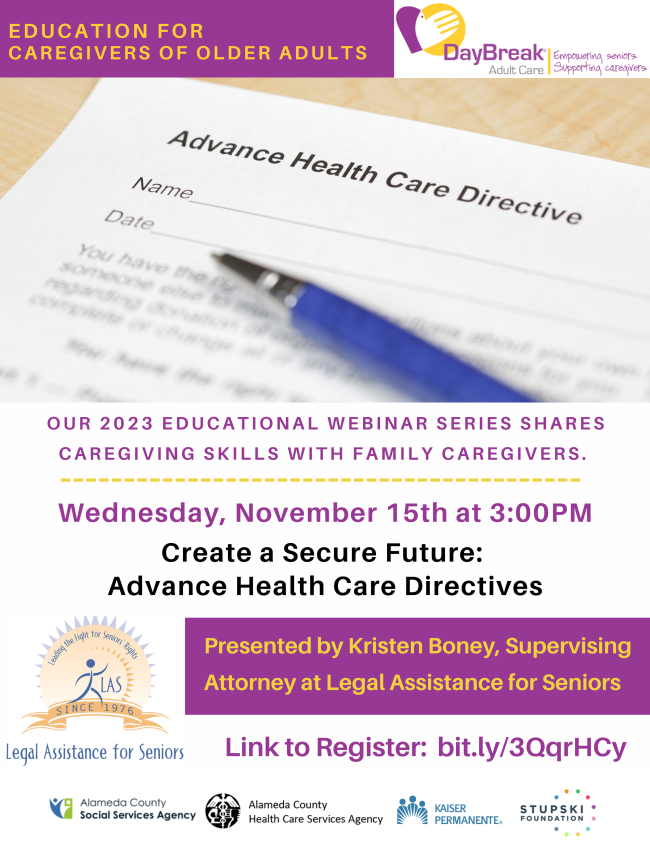
Upcoming Events & Workshops:

Empower Change through Giving: 

Together, we can make a meaningful difference in the lives of

elders and the caregivers who selflessly support them.

DONATE NOW >>

DayBreak is committed to offering essential support to elders and caregivers navigating diverse difficulties. If you know a senior in need of our care and coordination services, or if you're aware of a caregiver seeking assistance,

encourage them to reach out to us at:

510-834-8314

Web  YouTube  Facebook  Instagram