Health Matters
A quarterly publication of the
Farmington Valley Health District
Summer 2023
| |
|
Serving the towns of:
Avon
Barkhamsted
Canton
Colebrook
East Granby
Farmington
Granby
Hartland
New Hartford
Simsbury
| Connect with us on Social Media | Visit our website at www.fvhd.org | |
95 River Road
Canton, CT 06019
860-352-2333
| |  |
Important Changes in Connecticut’s Childhood Lead Program | Effective January 1, 2023, the Connecticut Department of Public Health updated their guidance for childhood lead screening. The revisions lowered the blood level for retesting from 5ug/dL to 3.5ug/dL in children under 6 years old. | Lead paint on a radiator in an older home | |
|
What do you need to know?
Childhood lead poisoning is the most common public health problem in children, yet it is entirely preventable. Lead can harm a child’s nervous system and is associated with reduced IQ, behavioral problems, learning disabilities, and other serious health outcomes. Once a child has been poisoned, the impairment is irreversible. While lead paint in homes built before 1978 continues to be the most common source of lead exposure, there are other sources of lead that can poison a child or adult. No amount of lead is safe for the body.
How often are kids routinely tested?
A simple blood test can tell if you or your child has an elevated lead level or lead poisoning. In Connecticut, testing is required yearly for all children between nine and 35 months of age. Most children are tested in the doctor’s office at ages one and two. You might want to get it done more often if you live in an older home or if siblings have had elevated levels in the past. The doctor may suggest testing for older kids who haven’t been checked. Testing is covered by insurance, including Medicaid.
What happens if an elevated lead level is found?
A child’s lead level can be tested in the doctor’s office by using a finger or heel stick. Results of 3.5ug/dL or greater are reported to the state and local health department. The doctor’s office provides information for follow up testing to be done by getting a venous (blood from the arm) sample at a lab within three months. When elevated levels of lead are found in a child, the local health department provides information on reducing lead risks and may conduct a phone interview to determine possible sources of lead exposure. Local health departments have certified lead inspectors that can visit the home to identify, evaluate, and test for lead hazards. Children with very high levels of lead (45 μg/dL or more) in their blood will need medical intervention to lower the lead in the child's body and reduce the lead levels.
Who is at risk?
All children can be at risk because lead can be found in many substances and structures. Young children are particularly vulnerable because they put items in their mouth and chew on painted surfaces such as window ledges (at child’s height) or furniture.
| |
Some Sources of Lead Poisoning
-
Lead-based paint. This is the main cause of lead poisoning. The federal government outlawed it for use in new homes in 1978, but it can still be found in older homes and presents risk during remodeling and repair work when lead containing surfaces are disturbed.
-
Household dust. It’s a problem for older homes that once had lead paint. Lead dust may come from home remodeling or when lead paint is improperly removed.
-
Soil. Particles from lead-based paint used on the exterior of a house and leaded gasoline can land in the soil and stay there.
-
Water pipes. Older homes often have lead pipes or solder. Sometimes brass or copper plumbing fixtures or pipes are welded with lead. Lead can also be found in newer homes if the water service lines are old.
-
Imported canned goods, candy, and herbal or folk remedies. Some countries still use lead to seal food cans. Candies from Mexico made with tamarind might also contain lead. The traditional Hispanic medicines greta and azarcon, along with remedies from China, India, and other countries, are tied to lead poisoning.
-
Toys. You can find lead paint on older toys and those from other countries that have yet to ban lead paint.
-
Pottery. Glazes and paint used on pottery, cookware, china, and porcelain can contain lead.
-
Jewelry. Imported jewelry such as amulets or charms can contain lead.
-
Lead bullets. This is more likely for people who spend time at a firing range or reload ammunition.
-
Certain occupations. People most likely to be exposed to lead or bring it home on their clothes are those who work in auto repair, mining, pipe fitting, plumbing, battery manufacturing, painting, and construction.
-
Hobbies. Stained glass, jewelry making or repair, fishing (lead sinkers), soldering, pottery making, and some paint sets may contain lead.
-
Cosmetics. Tiro, a brand of eye makeup from Nigeria, was linked to lead poisoning. Kohl, Henna, and Ceruse may also contain lead.
What can you do?
Get your child tested. The effects of lead poisoning last forever so it is very important to find children most at risk and prevent it. Lead poisoning harms a child's ability to learn and this affects a child's behavior. Although the body will remove the lead over a period of time, if the lead in the home is reduced, the potential for harm is also reduced. Preventing lead poisoning by keeping lead-based paint in good condition, cleaning the home with wet cleaning methods, and offering a healthy diet rich in iron, Vitamin C, calcium and zinc is the key to help lower blood lead levels.
Additional Information
| |
The Farmington Valley Community Health Improvement Plan is Underway! | |
|
What is a community health improvement plan?
The community health improvement plan (CHIP) is a collaborative, action-oriented plan that outlines how identified priority health issues will be addressed. The CHIP includes goals, strategies, action steps, and indicators for each identified priority area. Community members and organizations are engaged in a collaborative process to develop, support, and implement the plan.
How is a community health improvement plan developed?
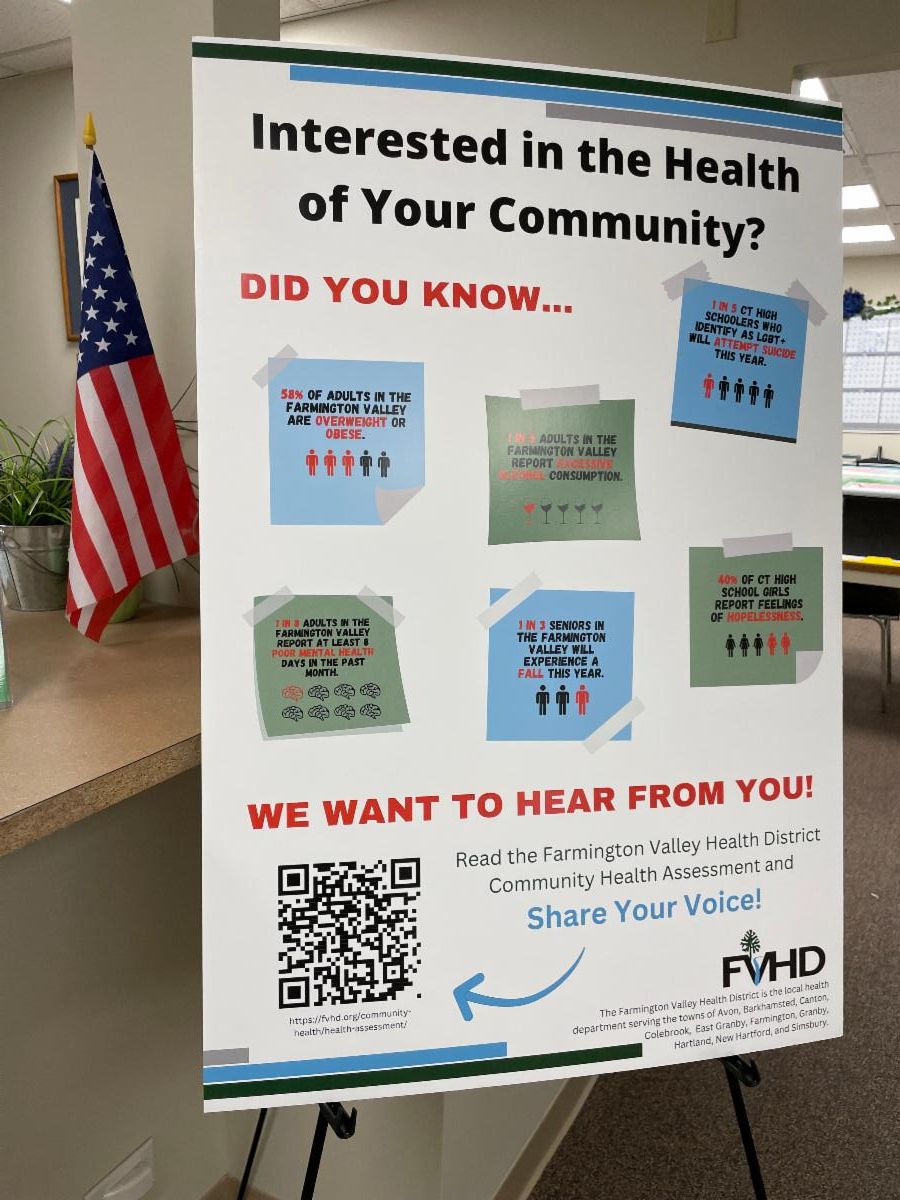
Findings from the recently completed Farmington Valley Health District Community Health Assessment (CHA) as well as feedback from the community through our Share Your Voice! survey have been used to determine the priority health areas for improvement in our communities. FVHD will convene working groups with subject matter experts and passionate community members and organizations around each priority area to begin to develop the CHIP.
Why is a community health improvement plan important?
The CHIP serves as a tangible vision for the health of the community. It is used to guide decision-making related to community health improvement to ensure all residents are able to live their healthiest lives in their communities.
How Can You Get Involved?
Join a working group! Individuals, organizations, and agencies with an interest or expertise in a priority area are encouraged to participate in a working group. We are currently looking for members to join the following working groups, which will begin convening in June 2023:
- Mental health
- Substance use
- Healthy Eating/Active Living
Additional working groups may be convened in the future. If you are interested in joining a working group, please email Olivia at omorris@fvhd.org and Kirsten at kcarew@fvhd.org or call the FVHD at 860-352-2333.
| |
Service Highlight: Public Bathing Areas | |
|
Planning to cool off this summer by going for a swim? Rest assured that the Farmington Valley Health District (FVHD) keeps you safe in public pools and natural bathing areas with routine water sampling.
How often are water samples taken?
Each public bathing area will be tested at least three times over the course of the summer. If contamination levels come back high, we will conduct additional sampling and make decisions in collaboration with the bathing area owners regarding temporary closures of the bathing area to the public.
Keep in mind that each sample is just a snapshot in time. Pools conduct regular water testing to ensure adequate chemical balances, but natural bathing areas such as ponds, lakes, streams, and other natural bodies of water will vary, particularly after heavy rains.
| |
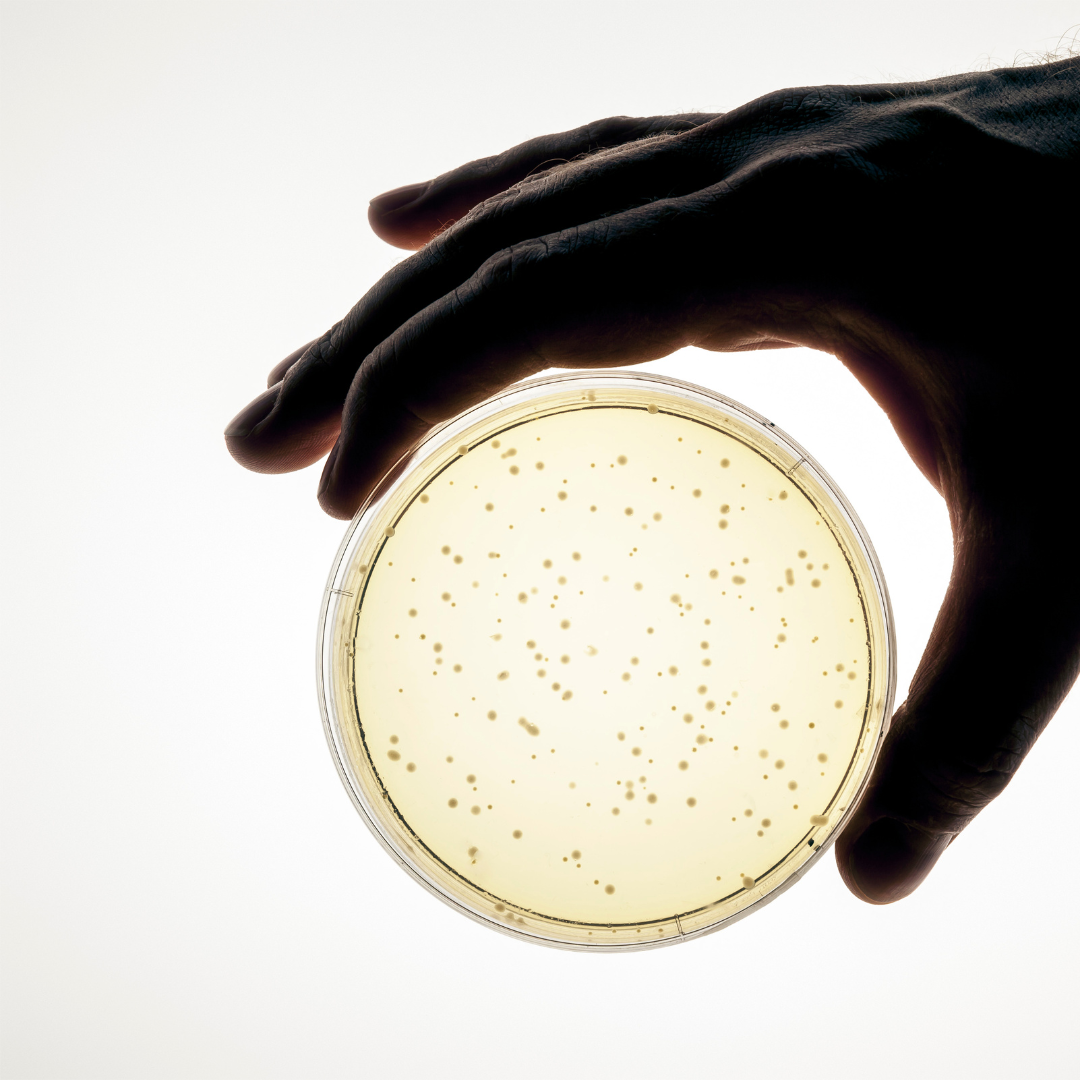
A petri dish with bacteria colonies. Each dot is counted as a CFU. | |
|
What contaminants are we looking for?
We are looking for a bacteria called Escherichia coli, commonly abbreviated to just E. coli. This germ lives in the intestines of warm-blooded mammals, including humans. It can find its way into bathing areas through water runoff after a rainstorm or be shed by bathers.
The Environmental Protection Agency (EPA) measures the concentration of E. coli in Colony Forming Units per 100mL, or CFUs. You can think of CFUs as the number of dots that grow on a petri dish. The more dots, the higher the level of contamination. The EPA and State Health Department use 235 CFUs per 100mL as the cutoff for acceptable levels of contamination, so that is the level we look for as well.
| |
|
How can you keep your family safe?
- Obey posted signage about bathing area closures.
- Avoid getting water in your mouth or swallowing water while swimming, particularly if you have a weakened immune system.
- Avoid swimming with an open wound or cut or while experiencing lower GI symptoms.
- Avoid swimming after heavy rains.
Enjoy your summer swimming and be safe!
| |
Planning international travel? Protect Your Health Aboard! | |
|
Don’t forget to plan for possible vaccinations or medications to keep you safe and well on your journey. Advisories or requirements vary by your destination, but some common travel vaccines include typhoid, hepatitis A, and yellow fever. Medication can be ordered to prevent malaria and is usually started several days before you depart.
Where do I find travel recommendations?
Check out the health recommendations for your potential travel destination on the CDC website. You can find a list, by country, of recommended vaccinations and/or medications needed prior to your trip, as well as routine vaccinations you may need updated regardless of your travel plans.
Where do I go for travel vaccines and medications in Connecticut?
Travel health clinics usually require appointments and there may be costs that are not covered by insurance. It is best to verify that they carry the vaccine(s) you will need. Plan to obtain necessary travel immunizations 4 to 6 weeks before your trip.
Additional Resources
| |
Get Outdoors!
To Strengthen Your Mind and Body
| |
Unstructured playtime is on the decline. The American Academy of Pediatrics recommends that children play outside as much as possible. Outdoor play helps children in many ways. Most importantly outdoor play is associated with more physical activity, which can help fight against childhood obesity and heart disease. Outdoor play also allows children to socialize, understand their bodies better, engage their imaginations and it provides a break from devices, reducing the risks of a sedentary lifestyle. | | |
|
|
Benefits of getting outside for all ages include:
- Reduced stress hormones
- Lower blood pressure
- Increased vitamin D
- Better sleep
- Increased overall well-being
- Improved creativity
| |
|
If you’re looking for places to go to engage in outdoor activities check your town’s parks and recreation website for some fun places to visit like public parks, trails, and recreation facilities.
Fun activities to try with your family:
- Have a scavenger hunt
- Do leaf rubbings
- Make an obstacle course (this can be fun with pets)
- Plant something or just dig in the dirt
References
Bento, G., & Dias, G. (2017). The importance of outdoor play for young children's healthy development. Porto biomedical journal, 2(5), 157-160.
Burdette, H. L., & Whitaker, R. C. (2005). Resurrecting free play in young children: looking beyond fitness and fatness to attention, affiliation, and affect. Archives of pediatrics & adolescent medicine, 159(1), 46-50.
Burriss, K., & Burriss, L. (2011). Outdoor play and learning: Policy and practice. International Journal of Education Policy and Leadership, 6(8), 1-12.
| |
|
With warmer weather, more people are gathering for outdoor picnics, barbeques, and get-togethers of all sizes. Unfortunately, rising temperatures can quickly raise the number of bacteria multiplying in improperly stored food.
To protect yourself, family and friends from foodborne illness, follow these precautions:
Handwashing
- Wash hands between each task when prepping food (e.g., cooking hamburgers and then prepping a salad).
- All surfaces should be washed between tasks.
| |
|
|
Pack and transport food safely
-
Transport food in coolers with ice or frozen gel packs in order to maintain a safe temperature of 41oF or less.
- Use separate coolers for beverages and foods such as meat, pasta salads, etc.
- If transporting raw meats, separate them further from ready to eat foods such as salad.
- Keep coolers closed to ensure temperature is maintained.
Prepare and store food safely onsite
- Reference the "Safe Cooking Temperatures" infographic above for proper cooking temperatures for meat.
-
Hot foods should be served immediately or kept at 135oF or greater.
- Do not reuse platters that were used for raw foods to store cooked foods to avoid cross contamination.
- Marinate food in the fridge, not on the counter to ensure proper temperature.
- Cold food should be stored on ice during service.
Know when to discard food
-
Hot and Cold food should not sit out longer than 2 hours (1 hour when temperatures are above 90oF) or it must be promptly discarded.
| |
|
|
Eating out? Don't stress!
The Farmington Valley Health District is responsible for permitting food vendors to operate food trucks or food booths at temporary events that occur throughout the district. Menus and equipment are required to be submitted in advance of the event. Our health inspectors then conduct inspections on-site the day of the event to make sure that food is transported, prepared, cooked and served safely.
| | | |
Social Connectedness: Together We Thrive | |
|
Humans are fundamentally social creatures. Although many species in the animal kingdom are observed to cooperate and live in groups, humans are the only ones to have developed the capacity for language, allowing us to connect with one another in a deep and unique way. In fact, social connection is arguably necessary for our survival. Most of us can go without contact with other humans for short periods, much like we can go without food or water for some length of time, but the deprivation will eventually have negative consequences for our physical and mental health.
Loneliness can lead to increased stress levels, depression, and anxiety, all of which can negatively impact your physical health. It can also lead to a weakened immune system, making you more susceptible to illnesses and diseases. Overall, the impact of loneliness on our health is greater than the impacts of obesity, tobacco, or high blood pressure. That's why the surgeon general has recently identified increasing rates of loneliness as an emerging public health issue.
Social connection has numerous benefits for mental and physical health. Having meaningful relationships with others can:
- Lower levels of depression and anxiety,
- Strengthen your immune system,
- Increase self-esteem,
- Better your emotional regulation,
- Bolster your resilience, and
- Help your problem-solving skills.
So, what can you do to increase your connection with others and combat loneliness? Here are some tips:
-
Join a club or group. Whether it's a sports team, book club, or volunteer organization, joining a group with shared interests can be a great way to find people with common interests.
-
Attend events. Attend events that interest you, such as concerts, festivals, or art exhibits. These events provide opportunities to engage with others and meet new friends.
-
Volunteer. Volunteering can be a great way to not only give back to your community but also meet new people and build connections.
-
Reconnect with old friends. Reach out to old friends or acquaintances and make plans to catch up. Even if it's just a phone call or text message, it can be the start of rekindling a meaningful connection.
-
Use technology. Technology can be a great way to connect with others. Join online communities or use social media to stay in touch with friends and family.
-
Meet your neighbors. We can live in a community and never really know the people who live right next door! Reach out and get to know the people who live near you.
-
Seek professional help if you're struggling with loneliness. A therapist can help you develop coping mechanisms and build stronger relationships.
Loneliness is a serious problem, but it is one where progress is possible. Although it takes time and effort to build strong social connections, it is worth it! Having strong interpersonal bonds can improve your mental and physical health, and it can make your life more enjoyable.
Further Reading
ABC News - 'Epidemic of loneliness and isolation' has US Surgeon General calling for action
CNN - Surgeon general lays out framework to tackle loneliness and ‘mend the social fabric of our nation’
| |
|
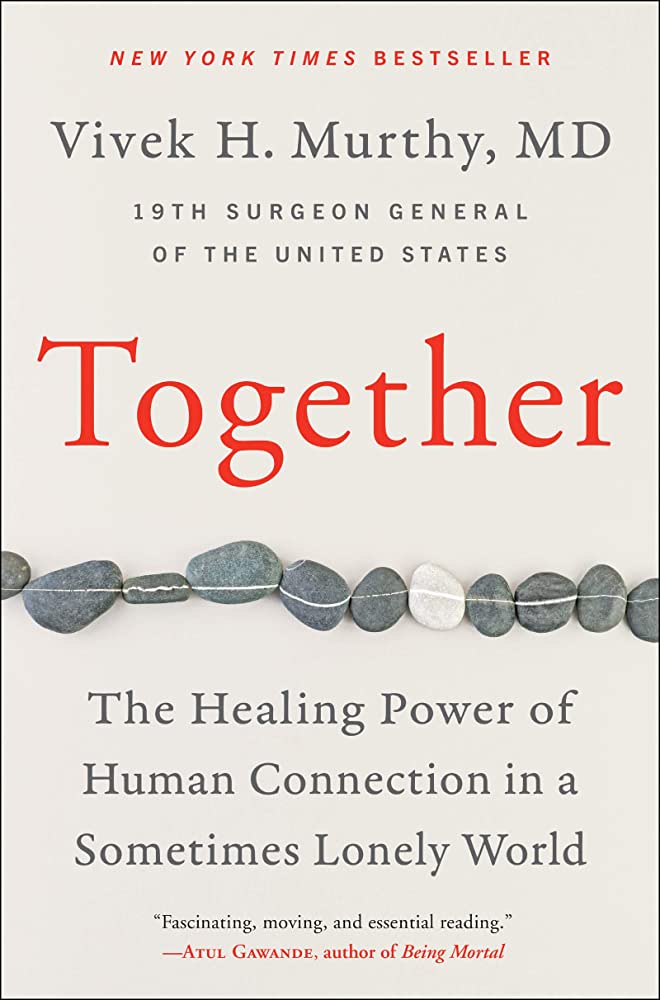
Together: The Healing Power of Human Connection in a Sometimes Lonely World
Vivek H. Murthy, MD
In a world where we can communicate faster than at any other time in history, why do feelings of loneliness and disconnection seem rampant?
Surgeon General Dr. Vivek Murthy explores what contributes to this phenomenon, the toll it takes on our relationships, communities, and mental health, and most importantly, what we can do to reverse course. The message of this book is an uplifting and positive one, examining the power of human kindness and collaboration in bridging the invisible divides that separate us in our rapidly digitizing world.
| | |
|
The Whole World Inside Nan’s Soup
Hunter Liguore and Vikki Zhang
Ages 4-8
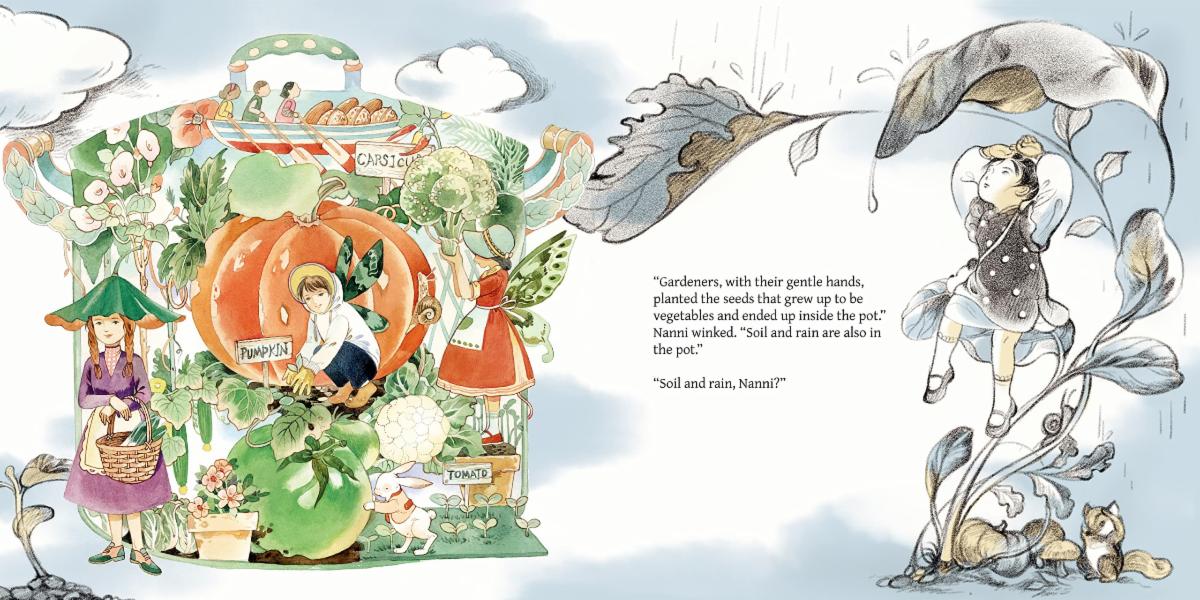
This book details a beautiful conversation between a child and her grandmother about how a bowl of soup came to be. From the seeds that grow, to the workers that pick the vegetables and sell them at the market, one simple dish becomes a celebration of the interconnectedness of our world.
| |
From the UConn Center on Aging: | |
The health department strives to prevent disease outbreaks and conditions that give rise to poor health, promote health programs and policies that support good health, and protect members of our community from health threats. | | | | |