Register Now for Fall Care Coordination Training -- Governor Hochul Announces Funding for SUNY Community Colleges -- This Simple 2-Minute Exercise Can Lower Your Blood Pressure -- Stealthy Cholesterol -- Your Blood Type May Indicate Your Risk of Early Stroke

Pictures not showing? Click "Download Images" or click here to view as webpage.

Register Now for Fall Care Coordination Training 

Interested in receiving a Care Coordination training certificate or enrolling your employees in training programs?  The Southern Tier West Health Workforce Partnership is now looking for participants to enroll in fall Care Coordination training cohorts.


There are two options available: 

  • An online asynchronous (self-paced) opportunity offered by Western New York Rural Health Education Center (WNY R-AHEC).
  • An online synchronous (simultaneous learning) opportunity offered by CUNY/Lehman College, with the next cohort starting in late August/early September. 


To learn more about these opportunities and to sign up, contact Kylea Andreano at kylea.andreano@chq.health.  

Governor Hochul Announces Funding for SUNY Community Colleges to Prepare the Health Care Workforce, Meet Student Mental Health Needs

Governor Kathy Hochul today announced $8 million in recurring annual funding for the State University of New York’s 30 community colleges — the first increase in nearly a decade — to advance health care and mental health goals for New York State and the SUNY system. $5 million will be used to support investments by community colleges to increase enrollment in and completion of health care educational programs, supporting the Governor’s goal of increasing the State’s health care workforce by 20 percent over the next 5 years. The remaining $3 million will be used to expand mental health support for SUNY students, which is consistently identified as a critical campus need.


“This investment in our community colleges is another massive step to building the best public education institution in the country, meeting the needs of our students to succeed in high demand jobs across our state,” Governor Hochul said. “Leading in health care is critical for New Yorkers, and this funding is setting up more students to succeed with strong academic programs and resources for their own mental health and wellbeing.”


State Senator Toby Ann Stavisky said, “This funding will help bolster enrollment by investing in the growing need for health care workers. The SUNY Community Colleges will have the opportunity to educate students in an area that is in need of an educated workforce to help reduce projected shortages. All New Yorkers will benefit.”


Assemblymember Patricia Fahy said, “Investing in our community colleges means investing in our communities across New York and in student success. As a first-generation college graduate, community college was vital in my path towards attaining a higher education and unlocks doors for thousands of students every year, especially those from disadvantaged and untraditional backgrounds. This year’s funding increase is a reflection of the important role community colleges play here in New York State, and I look forward to working with my colleague Senator Toby Ann Stavisky and more to continue this progress and secure further aid in the future.”


SUNY Chancellor John B. King Jr. celebrated this significant investment in community colleges with a visit to SUNY Broome’s Decker Health Science Center. SUNY Broome will invest its $450,000 allocation to expand its nursing education program to serve 45 percent more students each year — from 132 this recent academic year to 192 students by 2026-2027 — and to hire a case manager who will focus on the mental health needs of students.


SUNY Chancellor John B. King Jr. said, “Increased state investment in SUNY’s community colleges will prepare students for high-demand health care careers – helping to fill a critical shortage – and expand mental health services to increase student well-being and success. I extend my appreciation to Governor Hochul and the State Legislature for their continued investment in the success of SUNY and the students we serve, and ultimately the success of our entire state.”


For full article click here

This Simple 2-Minute Exercise Can Lower Your Blood Pressure

You’re going to want to sit down for this one.


A study, published in the British Journal of Sports Medicine, found that isometric exercises may help reduce blood pressure more effectively than other type of exercise.


Isometric exercises are low-impact exercises that work to build muscular strength and endurance as the muscles tighten or contract while being held frozen in a steady position for short amounts of time.


That means holding one position — specifically a wall sit — is actually better at lowering one’s blood pressure than running, cycling and other forms of cardio.


The analysis found that about eight minutes of isometric exercise, three times a week, can lead to a healthy reduction in blood pressure.


And you don’t need to attempt anything too intimidating. You can start with just taking a seat — but an invisible one.


A wall sit, or simply holding a seated position against a wall, was found to be the most effective exercise for lowering one’s blood pressure.


A regular isometric routine of wall sits — holding for two minutes, resting for two minutes and repeating that four times — lowered systolic blood pressure by 10 mmHg and diastolic pressure by 5 mmHg, according to the research.


A wall sit, or simply holding a seated position against a wall, was found to be the most effective exercise for lowering one’s blood pressure.


“Our main message is that actually engaging in exercise is fantastic and any exercise might reduce your blood pressure,” Jamie O’Driscoll, the senior author of the study, told the Washington Post.


Isometric exercises in general lower blood pressure most efficiently because contracting a muscle and holding the position temporarily reduces blood flow to that muscle, which then prompts blood vessels to relax easing blood flow, effectively reducing blood pressure, researchers explained.


For full article click here

A Stealthy Cholesterol is Killing People, and Most Don’t Know They’re at Risk

Millions of Americans are born genetically predisposed to extremely high levels of a type of cholesterol that cause deadly heart attacks and strokes by middle age, yet they are almost always unaware of their risk.


The cholesterol is called lipoprotein(a), or Lp(a). Like low-density lipoprotein — LDL, or the “bad” cholesterol — it leads to plaque buildup in arteries. But Lp(a) has a second nasty trick that makes it even more dangerous: it causes blood clots. And unlike LDL, it’s entirely genetic, which means diet and exercise have no effect on Lp(a) levels.


Yet shouldn’t you be worried about skin cancer if you expose yourself to the sun? Dermatologists always recommend protecting your skin with sunscreen, but will it affect vitamin D synthesis? Are we really stuck between picking one or the other?

In this article, we dive into the research and ask medical experts whether they should be worried about a vitamin D deficiency when using sunscreen.


The result is a high likelihood of life-threatening heart disease that runs in families, killing parents, aunts, uncles and siblings in their 40s and 50s.


“Everybody in their family has had a heart attack or stroke or bypass surgery or stent in their 40s,” Dr. Steven Nissen, chief academic officer of the Heart, Vascular & Thoracic Institute at Cleveland Clinic, said of his patients with high Lp(a). “They’re scared to death.”


As many as 64 million Americans have elevated Lp(a) levels. Anyone can have it, though it is most common among people of African and South Asian descent.


Routine blood cholesterol tests could look for Lp(a) but do not — largely because there is no effective treatment for it. Similar to other forms of high cholesterol, there are no symptoms with high Lp(a).


For full article click here

Your Blood Type May Indicate Your Risk of Early Stroke


An ischemic stroke is a medical emergency that occurs when the blood supply to the brain is blocked or reduced. The brain cells are then unable to get oxygen and nutrients and begin to die. A stroke can happen suddenly, without any warning. There are notable factors that increase people's risk of stroke, such as age, high blood pressure, high cholesterol, and family history. But now, there is another genetic factor that is linked to a higher risk of stroke: blood type.


The Rise of Early Strokes


A meta-analysis recently published in the journal Neurology included 48 studies and over 600,000 subjects. This included all available data from genetic studies regarding ischemic strokes occurring in people aged 60 and younger. (This type of stroke is much more common than a hemorrhagic stroke.)


"The number of people with early strokes is rising," said Steven J. Kittner, MD, MPH, a professor of neurology at the University of Maryland School of Medicine, and senior author. "These people are more likely to die from the life-threatening event, and survivors potentially face decades with disability. Despite this, there is little research on the causes of early strokes."


Blood Type and Strokes


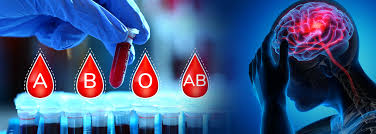
The researchers analyzed the studies, which involved a total of 16,700 stroke patients and 599,237 participants who've never had a stroke. There they discovered a link between a stroke occurring before age 60 and the gene that determines blood type. Furthermore, they found that people who suffered an early-onset stroke were more likely to have blood type A (and less likely to have type O). People who had early and late strokes were more likely to have blood type B compared to the control group.


Overall, the researchers found that people with blood type A had a 16% higher risk of early stroke compared to other blood types. Plus, people with type O had a 12% lower risk of stroke compared to the others. 


For the full article click here

Did someone forward this to you?

We want to keep in contact. Please consider signing up on our mailing list. Keep up to date with health workforce development information when you add your name to our growing list.

Sign up here

Do you have care coordinator news?

Let us know about your program, event or best practice we can share with our regional list. We would love to highlight your good work.


Did you initialize a new practice that is working well? An unsung partner? Any compliance issue bite you recently that we could all benefit from? Share the knowledge!


Email us at the link below.

Email us!

This e-newsletter is for anyone in, and interested in, care coordination and accountable referral Chautauqua County. We'll look at resources and educational opportunities in the area with the goal of increasing care coordination, wellness and overall quality of life in the Southern Tier; please forward this email freely!


Your feedback is important. Drop us a line and let us know what you want to hear more about.

Issue 2407