|
This is potentially important today because bonds (and especially intermediate and shorter duration bonds) are appearing increasingly close to this point of escape velocity. In fact, most short-term government bonds have already achieved this escape velocity. But the basic thinking is that once upside interest rate risk starts to subside during a high interest rate environment the current high yields mitigate future potential interest rate risk. So, for instance, if you buy a 10-year T-Note yielding 4.2% today you have a duration of about 8. If interest rates rise to 5.2% you will lose 8% of principal as rates rise and earn 4.2% of interest every year. This means you’ll earn a total return of -3.8% after the first year. Not great, but not the end of the world either. More importantly, you’ll continue to earn 4.2% every year despite this one-time negative hit of -8% from the interest rate change. This is a very different environment from the one we encountered just a few years ago.
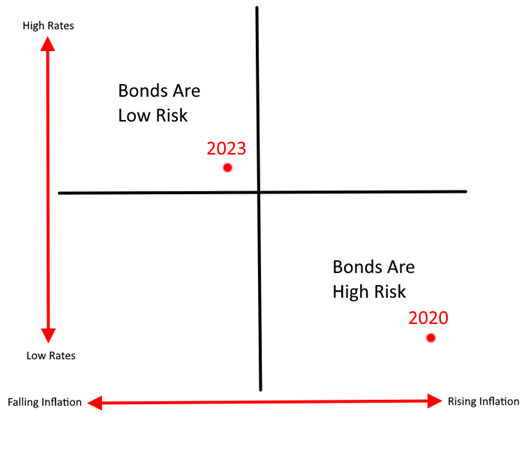
For reference, 10- year yields have moved from 0.5% in 2020 to 4.2% over 3 years. This is the worst of all worlds because you had high interest rate risk and a low starting yield. As a result, a 10- year T-note falls 25%+ because the starting and average yield cannot offset the duration of 8 over 3 years of rising rates. But the math starts to change substantially when yields are 4.2% and the Fed is approaching their terminal rate (peak interest rate) because the starting yield is relatively high and the probability of short-term principal losses declines as the Fed reaches their terminal rate.2
One way to think about this is that zero credit risk instruments like T-Notes become riskier when rates are low (and inflation risk rises) and less risky when rates are high (and inflation risk falls, which is where we seem to be headed now). So, the potential risk adjusted return dynamics are very different in a world where rates are high and unlikely to keep rising.
But the crucial question today is “how much upside is there in interest rates” given that the Fed appears closer to their stopping point?
Fed Funds Futures say that the terminal rate for the Fed is 5.5% or roughly where we are today. This would mean that the asymmetric risk in bonds is starting to skew from the downside to the upside. This is especially true in shorter duration instruments like T-Bills where the inflation and risk adjusted returns now look fantastic. It’s less true in super long duration bonds, but anything in the intermediate duration range is approaching escape velocity. Our view is that the majority (and perhaps entirety) of the interest rate risk is behind us and that bond investors should experience much smoother sailing going forward as a result.
In short, bonds with a duration under 5 have likely already reached escape velocity. T-notes in the 5-10 year duration range are close to escape velocity, but not quite there yet. And long bonds are still far from escape velocity. As a result, the US government bond market looks increasingly attractive on the whole and we’d argue that anything in the intermediate and shorter duration range looks especially attractive now and is likely to generate much better risk adjusted returns going forward.
NB – Here at Discipline Funds (and at Focus Financial as well) we like to think of bonds specifically as principal protection instruments rather than inflation protection instruments. You use bonds to create certainty across specific time horizons whereas you use stocks and real assets to protect you from inflation across longer time horizons. So, it’s reasonable to accept the fact that bonds will often generate negative real returns in exchange for greater short-term principal stability than stocks often provide.
1 – Duration refers to interest rate risk. For every 1% rise in rates a bond will fall in value by its duration
2 – In our All Duration research we found that long duration bonds operate like insurance. That is, they generate low real returns on average, but can generate very high asymmetric returns in the case of deflation and rate cuts. This is the most logical argument for owning long-term bonds these days – using bonds as a form of insurance to hedge against an asymmetric risk like a deflation shock that forces the Fed to cut rates rapidly.
|