|
|
|
Shabbos
Candle-lighting Time

This week, candle-lighting will be at 7:50pm*
* The Happy Minyan begins Shabbos early in the summer, prior to candle-lighting, with Mincha on Friday evening at 6:30pm.
If you begin Shabbos early, be sure to recite Shema (again) after nightfall.
|
|
|
 |
Miriam, Aaron, and Moshe: the Merit of the Righteous
This week's parasha, Chukas, marks a transition in the journey of the Children of Israel in the desert. The Sin of the Golden Calf, the Sin of the Spies... everything until this point, took place within the first two years in the desert. In Chukas, we read about the death of both Miriam and Aharon which took place just before the Children of Israel were about to enter the Land of Israel, which is 38 years later.
The passing of Miriam and Aharon is not just significant for the loss of these two righteous leaders. Their deaths also marked the end of the ability of the Children of Israel to wander in the desert. Each of the three leaders in the desert - Miriam, Aharon and Moshe - had merit so great that it not just elevated everyone, but actually allowed for the People to survive in the desert for 40 years.
We are taught that in their merit, we had three vital things: in Miriam's merit, we had the Well that provided water for us to drink as well as to wash; in Aharon's merit we had the Clouds of Glory that both provided shelter and indicated when and where to travel (or rest); and in Moshe's merit we had the magical nourishment of Manna. It would have been impossible to survive without the food, water and shelter. Indeed, the very next thing the Torah tells us after Miriam dies is that the people complained to Moshe that they needed water.
The significance of each of these three things being in the merit of these three leaders has a greater implication. How have we managed to survive all these centuries - millennia! - since their passing? In whose merit do we have our ability to survive today? Who are the great leaders whose merits cause our hunger to be satisfied, our thirst to be quenched, and our safety to be assured with shelter? Do we have - did we ever have since?!- leaders like the great Moshe, Miriam and Aharon? Well, each generation according to its level - yes. The Rambam asserts that the blessings of the world come on account of the talmidei chachamim - the sages dedicated to Torah study - of the generation. Rebbe Nachman teaches extensively of the importance to draw near to a Tzadik, a righteous person, in whose merits we receive blessing. We might not know who these great sages and righteous people are, but they are here in this world, making the difference for us all, every day. Really, there are people who we've never met, never spoken with, causing blessings for me and you! There really are great people in this world who pray for every Jew with such sincerity every day. Others do random acts of kindness in the name of all of the Jewish People. Others study Torah daily just to bring merit to the world. Amazing.
Good Shabbos! Good Shabbos!
|
|
|
|
|
|
|
|
|
|
|
Happy Minyan News and Upcoming Events
|

* "Early Shabbos" Mincha & Kabballas Shabbos Davening Time:
Mincha on Erev Shabbos is now at
6:30pm through the summer.
Kabballas Shabbos and Maariv follow Mincha.
* Happy Minyan Simcha Buddies:
Simcha Buddies meets upstairs at the Happy Minyan every Shabbos morning, from 10:15am-12:15pm, and features our highly popular Parsha Puppets, led by Adam Silver.
This week only, our regularly scheduled "My Gym" outdoor activity has been cancelled.
And... as of next week, our teen counselors are all on summer break through August. Therefore...
***ALL children, regardless of age, MUST be supervised by a parent.
Do not leave your child in the back play area or upstairs unattended. Thank you!***
* Singles & Young Couples Shabbat Dinner, Friday Night, 6/26:

Great News! We're almost at full capacity, but there are a few spots left! Hurry - space is limited!
Singles & Young Couples (Ages 21-38) Shabbat Dinner, hosted by Rabbi Zvi and Nomi Freeman,
on the topic of Happiness!
6:30pm Early Mincha
7:00pm Kabbalat Shabbat (with Yehuda Solomon from the Moshav Band)
8:00pm Kiddush & Delicious Shabbat Feast!
*Rabbi David Aaron will be joining the Happy Minyan on Shabbos Day, 6/27:
We are honored to have Rabbi David Aaron of
Isralight
joining us and sharing words of Torah on Shabbos Day, 6/27.
To sponsor the Shabbos Day Kiddush with Rabbi Aaron, please send an email to:
info@happyminyan.org and let us know!
* Annual Farbrengen with Rabbi Mordechai "Big Mo" Siev of Tzfat, Tuesday, 6/30, 8:30pm

* Mazel Tov: to Bina and Rabbi Shlomo Katz and family on the birth of their baby girl, Ahava T'mima!
* Happy Birthday, Happy Minyan!

20 years ago was the first time there was a "Happy Minyan"... right here in LA! Now, there are dozens of Happy Minyan's - ie. "Carlebach-style" davening - B"H, that in some way were inspired by us, and hundreds and thousands of Jews around the world experience the special "ruach" we enjoy every week. (May our Rebbe, Reb Shlomo, ztz"l have much nachas from us, and smile down on us from Shamayim!) And now, we intend to celebrate this milestone all year long! The celebration has already begun on
Facebook with the creation of two photo albums called
"Historical Happy Minyan". The
first album spans 1995-2006, and also includes some pictures of Reb Shlomo Carlebach with our chevrah in the early 90's. The
second album spans 2006 - 2015. Pictures will be added to the albums every (Throwback) Thursday, BE"H, all year long! If you have pictures to contribute to the Happy Minyan archives, please email the pictures, (or send a message letting us know if there are too many pictures you have to send and we'll get together!) to
info@happyminyan.org
.
* BUY Bentzion Simmond'
s New Book SOULAR POWER and help support the minyan!
Woohoo!
Soular Power - Unlocking the Eight Gates to Joy and Abundance
is a fun, empowering spiritual handbook that helps you shift from fear to love in as little as 60 seconds. It's your personal ego-soul ON-OFF switch!
***And 10% of the book sales will be donated to the Happy Minyan!***
* Refuah Shleimah: Chana Anna bas Adina, *Yehoshua Yehochanan Yedidyah bar Chana*, Gila bat Frances, Tziporah bat Gila, Chayim Yechiel ben Malka, Yosef Chaim ben Sara Bracha haLevi, Lieba Shoshana bas Masha, Miriam bas Yetta, Dona bat B'era, Sarah Chaya bat Birtha, Zev Zvi ben Baila, Gila Meira bas Feiga Leah, Shlomo Yosef ben Esther, Shlomo Eliezer Ben Pesia, Shoshana Chaya bas Miriam, Shaul ben Sarah, Sara Tovia bas Rahel Mira, Morasha Arielle bas Rahel Mira, Ezra Avraham ben Chasha, Benyomin Refoel Menachem Mendel ben Tova Chana, Shimon ben Tikvah, Yehudit Miriam bat Celia, Hendy bas Chaya Raiza, Chaya bas Sarah Henya ...b'soch sh'ar cholei am yisroel.
*Reb Yedidya Blanton (
Yehoshua Yehochanan Yedidyah bar Chana) is currently at
and will continue teaching his weekly Likutei Moharan class there!
Sunday nights, 8:00pm-9:30pm
|
|
|
|
| |
Parshas Chukas - Davening For A Gift
Imagine I am learning something and I don't understand what I am learning - happens all the time. The question is, do you keep on thinking about what you are learning because you want to be able to say "I understood it so well"? You know what happens then, even if you get it - you will never get it.
Reb Nachman says the real explanation of the Torah, the mefarshei haTorah, comes from such a deep place; where my mind doesn't reach. All I have to ask G-d is "Please give it to me as a gift." If you ask G-d (for water, to which Torah is compared) on the level of merit, water isn't coming out.
So Moshe Rabbeinu hit the stone, he wanted to force it. If you want to get water with power, you don't get it. So G-d says to him "Don't hit the stone," because the flowing of the stone, which is the explanations of the Torah, cannot come by force. Not even from Moshe Rabbeinu who was holy force. It has to come from davening, from rachamim, from compassion.
Then he (Rebbe Nachman) says Moshe Rabbeinu hit the stone, twice. Moshe Rabbeinu made a mistake, twice. What were the two mistakes? One mistake was that he wanted to force it. He said "You got to give it to me because I deserve it." You can't, even Moshe Rabbeinu can't get it by force. The second thing is that by force means I want it right now.You can ask G-d, but while you ask you have to say to G-d "Whenever the time is right - give it to me." So therefore Reb Nachman says don't force G-d, just ask.
G-d says to Moshe "Ya'an Lo He'emantem Bi L'Hakdisheyni", G-d asks Moshe "Why didn't you make me holy'. So Reb Nachman says that 'holy' means if I'm only asking for a gift. Therefore Moshe Rabbeinu didn't go to Eretz Yisrael, because Eretz Yisrael is mamesh called 'holy'. Holy means it's only as a gift, and since Moshe Rabbeinu wanted to force it, he couldn't go in.
I'll tell you something very deep. When I'm asking you something on such a deep compassionate level without any force, you give it to me right away. But if you tell me 'you got to do it for me right away' than you are already taking it back a little.
|
|
|
|
|
|
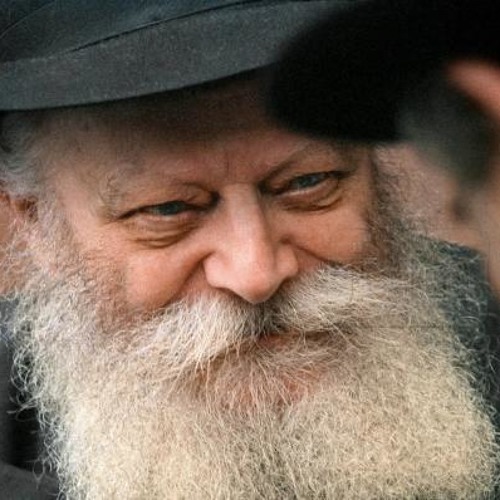
| Chukat - What Did Moshe Rabbeinu Leave For Us (A Tribute to the Rebbe) |
|
|
|
|
|
Why did Moshe hit the rock? What would have happened if he spoke to it instead? What was he supposed to say to it? A new look at one of the most perplexing incidents in the Torah!
David Sacks teaches every Shabbos morning at 8:30am at the Happy Minyan, 9218 West Pico Blvd, and every Sunday morning at 9:30 am at Congregation Mogen David, 9717 W. Pico Blvd.
You can also listen to David Sacks online anytime by going to his website Spiritual Tools for an Outrageous World.
|
|
|
|
Miriam's Well
The people had rebelled against Moshe and Aharon because there was no water and they felt like they were going to die from thirst. The rock-fountain, known as "Be'eir Miriam"- Miriam's Well - had left the people after she passed away. Rebbe Nachman teaches that all the Torah lessons we were receiving at that time were in the merit of Miriam - for her soul was the fountain-soul not only for water, but also for Torah lessons. Consequently, without Miriam's Well, there arose arguments among the scholars, students and teachers.
To draw water from Miriam's Well, today, means to draw Torah lessons - living water from her fountain. In the Alter Rebbe's Shulchan Aruch, (Orach Chaim 299:20), it says: "A few have the custom to draw water every Motzo'ei Shabbos [Sat. night] from wells or springs, because the Well of Miriam passes through all the wells every Motzo'ei Shabbos. Whoever drinks from it will be healed from all his illnesses."
The Lubavitcher Rebbe says that though this custom was not practiced in the House of the Chabad Rebbes, nevertheless it does apply spiritually - learning and studying this practice on Motzo'ei Shabbos will positively influence the coming week both physically and spiritually.
Rav Sholom founded Yeshivat Simchat Shlomo in Reb Shlomo Carlebach's honor in 2001, where he teaches daily and weekly classes in Chasidut. To learn more about the Yeshiva or to sign up for his emails, go to
shlomoyeshiva.org and to watch the yeshiva classes online, go to
Yeshivat Simchat Shlomo Youtube Channel.
|
|
|
|
|
Rachel Landsman on Parshas Chukas
|
An Unreasonable Reason In Chukas
The (Written) Torah contains 613 mitzvos, commandments. Of these 613 commandments, some make sense to just about everyone, and some make sense to almost no one. The kind that most people can understand are called "mishpatim" - laws. The ones with no obvious logic are called chukim - statutes. This week's parsha, Chukas, starts off with the description of the ultimate beyond-rationale commandment, the Red Heifer. The mitzvah, in short, is that one who becomes impure through contact with the dead (this impurity is a spiritual concept that is beyond human reason) is purified through the ashes of a red heifer (Wait, what? Ashes? Red Heifer? How does this make any sense???) The ashes are acquired through the slaughter and thorough burning of a red heifer until all that is left is ashes. The Cohen prepares those ashes according to G-d's direction, and sprinkles the impure person with them, rendering them pure. The Cohen, on the other hand, who was pure at the outset is rendered impure by this process and must subsequently ritually purify himself. Not only is this mitzva hard to understand, it's also paradoxical in that the performance of it purifies the impure and makes the pure impure all at the same time.
There is something further paradoxical about all the Chukim, and most prominently, this one. The great philosopher, Maimonides, among other Sages, encourage us to seek understanding of the mitzvos in order to enhance our observances and inspire us. The Sages also teach us that ultimately, we should strive to fulfill all mitzvos - the chukim and the mishpatim - on the level of "beyond comprehension", on the level of chukim. Not because we understand the reason for any commandment, but simply believe that G-d instructed us to perform them all. So which is it? The paradox is that we are meant to simultaneously both seek understanding of the mitzvos and fulfill them without necessarily having any understanding of the commandments at all.
When we are sick and go to the doctor, we take the medicine the doctor prescribes us - even if it is not obvious why the medicine will make us feel better. Presumably that's because we trust what the doctor says we should do even if we don't know why the doctor tells us to do it. And, generally, we don't really care why it works, just that it does. People who are sick want to heal more than they want to understand "why" they are healed. Similarly, there are plenty of people in the world that do not understand things like how electricity or technology like the internet work. This doesn't prevent these people from turning on lights or browsing the internet. This is because the enhancement of our lives is more important to us than understanding why something that enhances it works.
So, too, with mitzvos. Divine logic cannot be understood by human logic. Any attempt to understand why G-d commands us to do (or not do) anything would just limit the Infinite One.(More paradox.) So what does Maimonides want us to understand about the mitzvos, then? - Perhaps he is encouraging us to discover not the reason behind the commandments, but the reason the commandments are commanded. You could say, instead searching for a reason, we are searching for the purpose. The purpose can be seen in the result. Spiritually speaking, some commandments are healing in that we become kinder, more generous people. Some of them, we become more disciplined, more alert and conscientious. The reason why some mitzos cause this? Who knows? Does it matter, as long as it works?
Ashreinu! - How fortunate are we to have the gift of the Torah, filled with many mitzvos, each with their own valuable purpose. Ashreinu, ma tov chelkeinu! |
|
|
|